

Every nursery has an opinion about what Australians plant. We had a year of orders instead, so we counted them.
Between September 2025 and August 2026 we shipped 20,604 plants across 3,165 orders to gardens in Queensland, New South Wales, Victoria, South Australia, Western Australia and the ACT. That covered 1,015 different plants, from single tubestock to advanced trees on a truck. What follows is the whole picture, including the parts that surprised us.
Two things to know before the numbers. We counted plants, not dollars, so a hedge order of forty lilly pillies carries more weight than one feature tree. And we are one nursery whose orders lean towards the east coast, so our Queensland sample is much deeper than our South Australian one. We have flagged that wherever it matters.
The ten plants Australia ordered most
| Plant | Plants |
|---|---|
|
Lilly Pilly Resilience
|
3,763 |
|
Straight and Narrow Lilly Pilly
|
697 |
|
Express Lilly Pilly
|
619 |
|
No Mow Grass
|
304 |
|
Compact Yellow Buttons
|
303 |
|
English Box
|
285 |
|
Star Jasmine
|
242 |
|
Mock Orange
|
234 |
|
Climbing Fig
|
218 |
|
French Lavender
|
197 |
The scale of the gap at the top is the story. Lilly Pilly Resilience took 18 per cent of every plant we shipped, more than five times the next variety. Add the two lilly pillies behind it, Straight and Narrow and Express, and a single genus accounts for close to a quarter of a national year of planting.
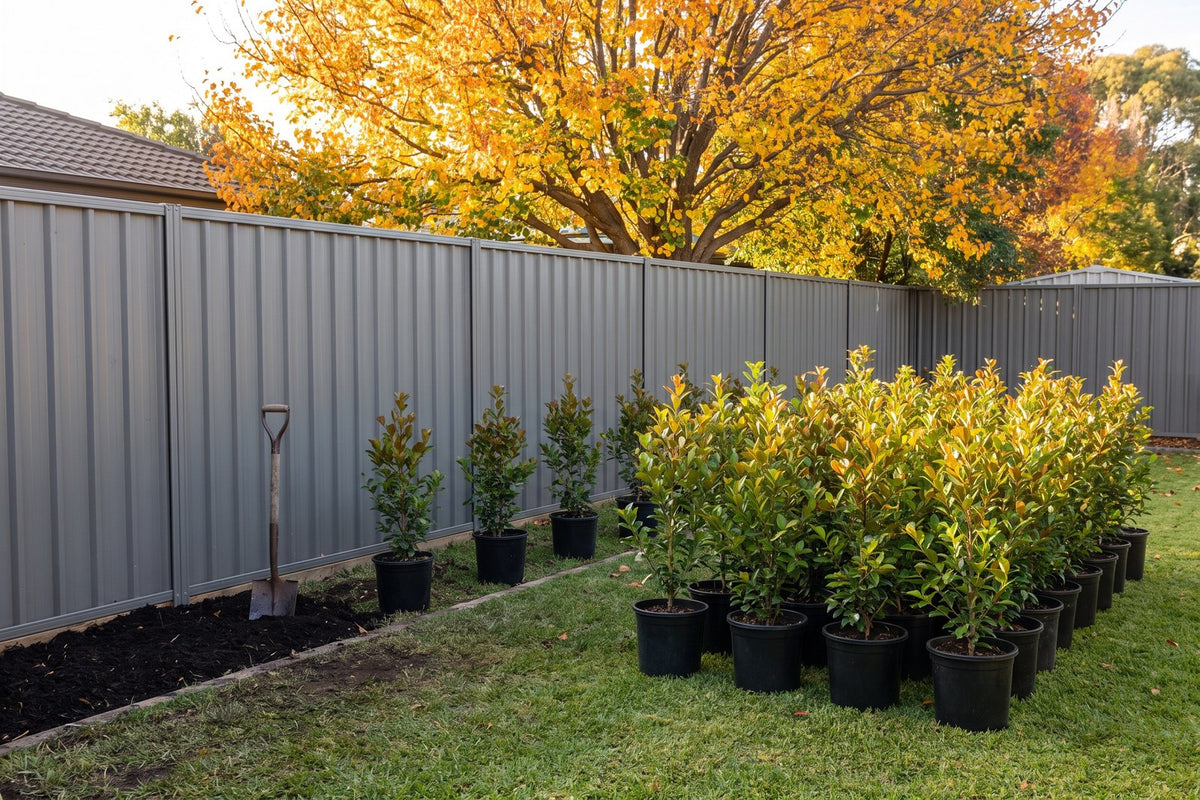
Resilience earns it. It is a Syzygium bred for resistance to psyllid, the sap-sucking insect that turns older lilly pilly leaves into a bumpy mess, and it holds a dense screen from the ground up. If you have driven past a new fenceline hedge anywhere on the east coast in the last five years, you have probably driven past this plant. Our troubleshooting guide for it is one of the most read pages we publish, which tells its own story.
Below the lilly pillies the list turns practical rather than fashionable. No Mow Grass, English Box, Star Jasmine, Mock Orange, Climbing Fig. These are the plants people buy in tens, to solve something: a boundary, a bare fence, a strip along a driveway. The top ten together made up a third of everything we sent.
Every state plants a different garden
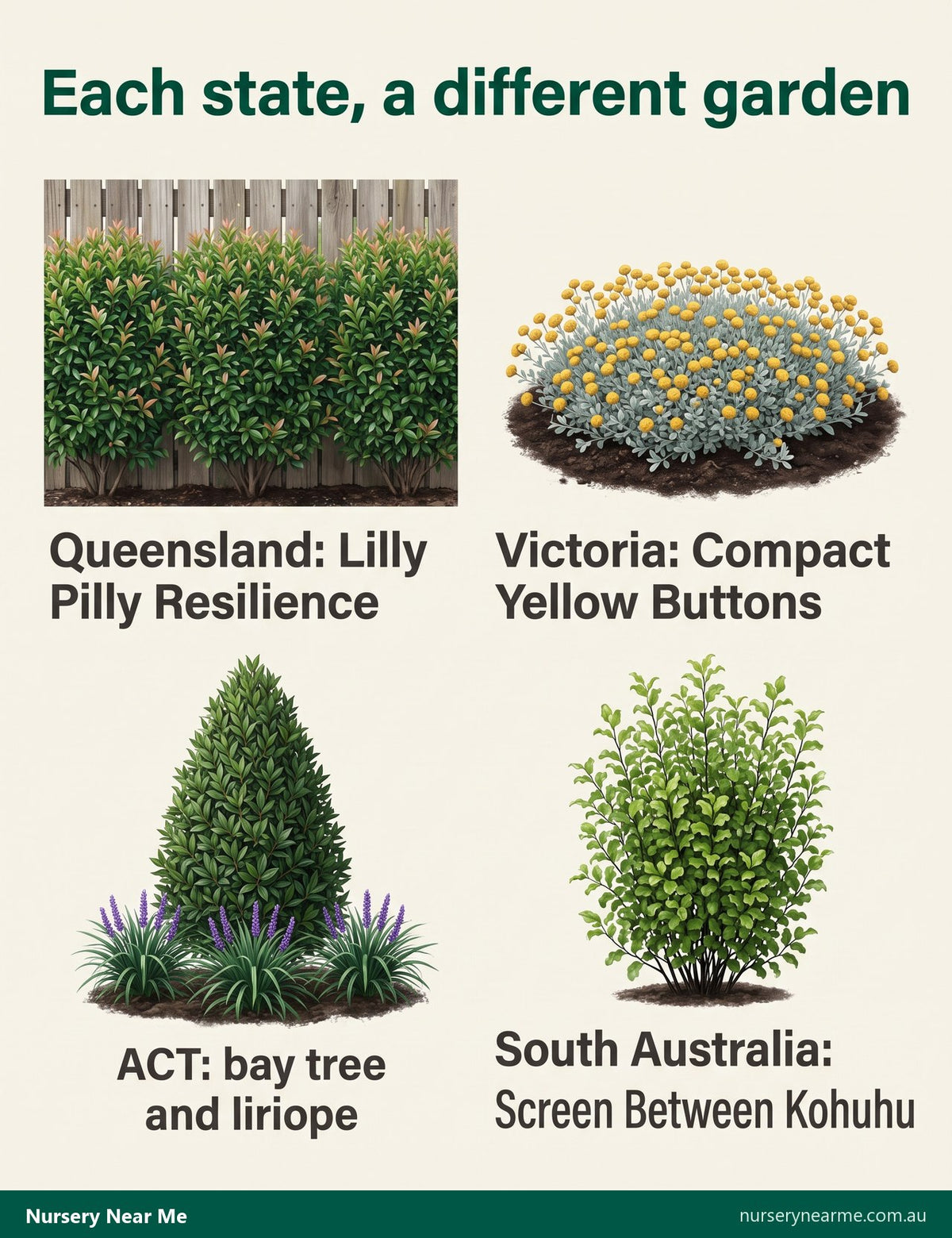
This is where the averages fall apart. Put the state lists side by side and they barely overlap.
Queensland
1,575 orders, 10,721 plants
| Plant | Plants |
|---|---|
|
Lilly Pilly Resilience
|
2,284 |
|
Straight and Narrow Lilly Pilly
|
421 |
|
English Box
|
273 |
|
No Mow Grass
|
172 |
|
Mock Orange
|
170 |
|
French Lavender
|
157 |
New South Wales
1,012 orders, 6,199 plants
| Plant | Plants |
|---|---|
|
Lilly Pilly Resilience
|
1,080 |
|
Express Lilly Pilly
|
537 |
|
Straight and Narrow Lilly Pilly
|
253 |
|
Spear Grass
|
100 |
|
No Mow Grass
|
90 |
|
Sweet Viburnum
|
81 |
Victoria
291 orders, 2,072 plants
| Plant | Plants |
|---|---|
|
Compact Yellow Buttons
|
288 |
|
Lilly Pilly Resilience
|
226 |
|
Cut Leaf Daisy Pink
|
150 |
|
Cut Leaf Daisy 'Mauve'
|
150 |
|
Tussock Grass
|
100 |
|
Star Jasmine
|
38 |
Western Australia
131 orders, 653 plants
| Plant | Plants |
|---|---|
|
Lilly Pilly Resilience
|
100 |
|
Climbing Fig
|
32 |
|
Agapanthus 'Blue'
|
29 |
|
Viburnum 'Quick Fence'
|
25 |
|
Viburnum 'Dense Fence'
|
25 |
|
Long Leaf Lomandra
|
22 |
Act
64 orders, 598 plants
| Plant | Plants |
|---|---|
|
Lilly Pilly Resilience
|
67 |
|
Evergreen Giant Liriope
|
38 |
|
Bay Tree
|
33 |
|
Asiatic Star Jasmine
|
33 |
|
Mondo Grass
|
32 |
|
Mundi Coastal Rosemary
|
30 |
South Australia
74 orders, 357 plants
| Plant | Plants |
|---|---|
|
Screen Between Kohuhu
|
22 |
|
Viburnum 'Thin Fence'
|
20 |
|
Fountain Grass
|
16 |
|
Black Mondo Grass
|
15 |
|
Setsugekka Camellia
|
15 |
|
Rose 'White Drift'
|
12 |
Queensland and New South Wales are hedging states. Their lists are dominated by screening plants bought in quantity, and the two read almost identically apart from the New South Wales appetite for Express Lilly Pilly, which is faster and looser than Resilience and suits a boundary someone wants covered this year rather than next.
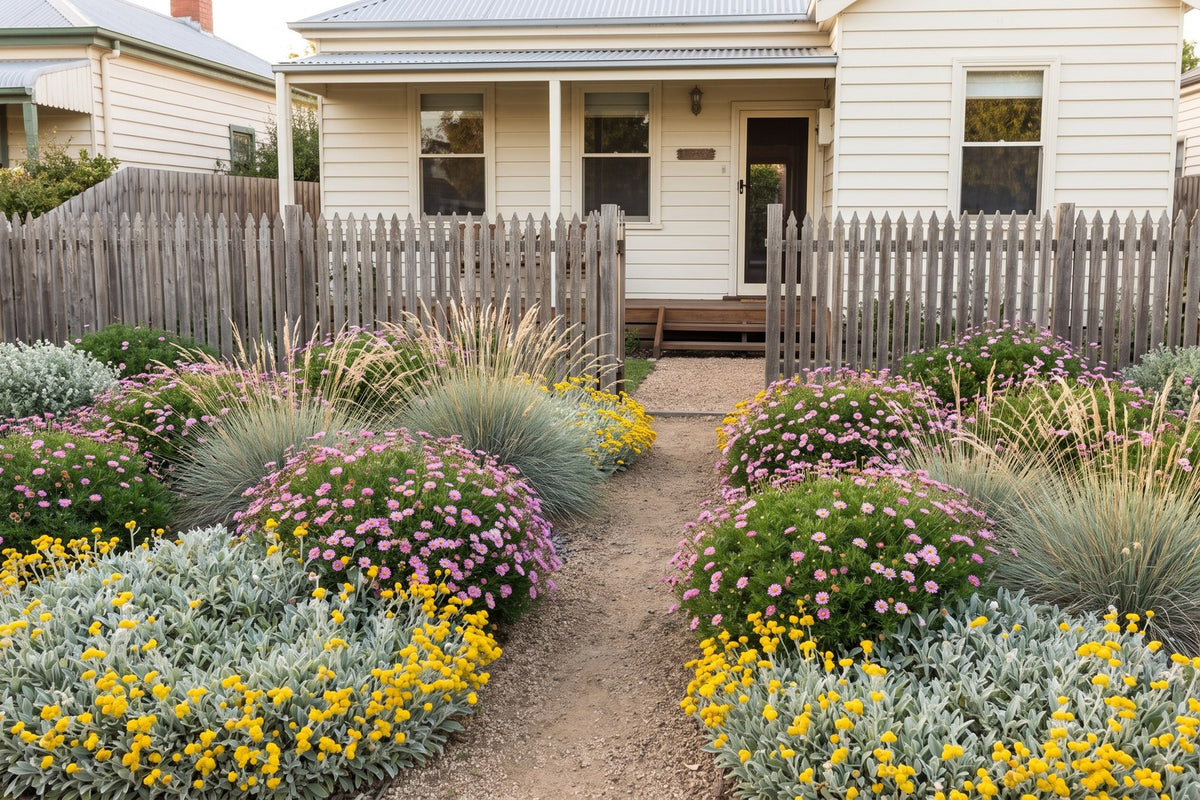
Victoria is a different country. Not one of its top five appears anywhere in the Queensland top ten. Compact Yellow Buttons, two cut leaf daisies, Chrysocephalum and tussock grass: these are small, tough, mostly native plants bought in flats for mass planting and borders, not screens. Victorian gardeners on our books are planting meadows where Queenslanders are planting walls.
The three smaller samples each hint at something. Western Australia leans hard on screening, and Viburnum turns up twice under two different selections. The ACT buys structure that survives frost, including bay trees, liriope and mondo grass. South Australia is our thinnest data, 74 orders, so treat its list as a sketch rather than a ranking, but the theme is heat and drought tolerance with a camellia for shade.
The native surprise
We expected Queensland to top the native table. It came third.
Three in five plants shipped to Victoria were Australian natives, against roughly one in two for New South Wales and Queensland. The subtropics have the reputation for native gardens, and the cool south is quietly doing more of it.
The likely reason is what natives are asked to do in each place. In Queensland a native is often a lilly pilly hedge, one job, one species. In Victoria natives are being used across the whole garden, as groundcover, border, grass and feature, which spreads the order across more native lines. South Australia sits low here at 12 per cent, though on 74 orders that number could move a long way with one big planting.
If you are starting a native garden, our native range is filtered by climate zone, and there are free care guides for the ones people ask about most: banksia, kangaroo paw, callistemon and lomandra.
What people are actually buying plants for
Every plant we sell carries tags for what it is good at. Rolled up across a year, they show the job each state is hiring plants to do.
| State | Most common purpose | Then | Then |
|---|---|---|---|
| Queensland | Feature Planting | Hedging | Pots & Containers |
| New South Wales | Hedging | Screening & Privacy | Feature Planting |
| Victoria | Pots & Containers | Mass Planting | Borders & Edging |
| Western Australia | Screening & Privacy | Hedging | Feature Planting |
| Act | Pots & Containers | Borders & Edging | Mass Planting |
| South Australia | Pots & Containers | Feature Planting | Borders & Edging |
Hedging and screening lead in the two hot, humid states and in Western Australia. Victoria, the ACT and South Australia all put pots and containers first, which fits smaller blocks, courtyards and renters, and Victoria follows with mass planting and borders.
One feature outranked everything, everywhere, by a wide margin: low maintenance. It was the most requested quality in all six states without exception. After that the pattern splits again. Queensland and New South Wales buyers want bird attracting and pet friendly plants; Victoria, the ACT and South Australia want bee and butterfly plants. Nobody is planting for difficulty.
When Australia plants
Orders through the year, with the busiest month set at 100.
Two peaks, not one. Autumn is the bigger of them, with April the busiest month of our year, and spring runs a close second through October and November. The gardening cliché is that spring is planting season. Our orders say autumn beats it, which makes sense in a country where the real enemy of a young plant is its first summer, and an autumn planting gets a full cool season to put roots down first.
The troughs are just as clear. July runs at a fifth of the April peak, and December drops away as everyone stops gardening and starts shopping. If you want plants established before the heat, the work happens in March and April.
How we counted, and where to be careful
- Source: 3,165 paid orders placed on nurserynearme.com.au between 1 September 2025 and 31 August 2026, covering 20,604 individual plants. Garden supplies, pots and gift cards are excluded, so these are plants only.
- We counted plants, not revenue. Hedging is bought in multiples and will always look large on a unit count.
- Our range reflects the growers we can reach, so Queensland is over-represented against population and our subtropical range is deeper than our cool climate one.
- Western Australia, the ACT and South Australia each sit under 150 orders. We have described them rather than ranked them, and you should read them as indicative.
- The median order was 3 plants and the average 6.9, so a small number of large hedging and landscaping orders pull the average up.
- We do not ship live plants to Tasmania or the Northern Territory, so neither appears here. That is a quarantine limit, not a comment on their gardens.
The short version
- One plant, Lilly Pilly Resilience, took 18 per cent of a national year of planting.
- Queensland and New South Wales plant walls. Victoria plants meadows.
- Victoria is the most native-planting state on our books at 61 per cent, not Queensland.
- Low maintenance beat every other quality in every state.
- Autumn outsells spring.
If you are working out what to plant where you live, our range is filtered by state and by climate zone, and the care guide library is free and written for Australian conditions. Start with hedging and screening if you are after privacy, or Australian natives if you want the garden to look after itself.
Journalists and researchers: the underlying figures in this article are free to reproduce with attribution to Nursery Near Me. We are happy to break the data down further on request, by state, plant type or season. Email sales@nurserynearme.com.au.
Journalists and editors: the key numbers and every chart from this study are on our media kit page, free to use with attribution and a link back.


