

No other flower on earth looks like a kangaroo paw. The velvety, furred tubular blooms that split into a six-fingered paw at the tip are so distinctive that Western Australia put one on its state emblem, and honeyeaters treat every flowering stem as a personal invitation. Modern compact hybrids, bred largely from the hardy Anigozanthos flavidus, have transformed the kangaroo paw from a fussy wildflower into a reliable garden and pot plant that flowers for months on end.
The species comes from the sandplains of the south west, which tells you nearly everything about its needs: full sun, sandy free-draining soil and no wet feet. Add one decisive annual cut back and kangaroo paws will repay you with flower spikes from spring right through summer, and often beyond.
Quick facts
| Botanical name | Anigozanthos hybrids |
| Type | Evergreen strappy perennial |
| Height | 0.5 to 1.2m in flower |
| Position | Full sun |
| Soil | Sandy, free draining |
| Flowers | Spring through summer, often longer |
| Climate | Temperate and subtropical; some frost tolerance |
Choosing a kangaroo paw

Compact colour for borders and pots
The Bush Gems series was bred in Australia specifically for garden toughness and disease resistance, and it shows. Anigozanthos Bush Ballad, from $22.95, is a tidy compact form with rich red flowers that keeps pumping out spikes over a long season. Anigozanthos Bush Coral brings warm coral pink tones that are hard to find anywhere else in a native garden, while Anigozanthos Bush Bonanza covers the golden yellow end of the spectrum. For soft pink, Anigozanthos Bush Princess is a favourite for pots by a sunny door.
For cold districts and tall displays
Anigozanthos Frosty Red, from $24.95, is the pick for frost-prone gardens, a taller, vigorous red-flowering hybrid selected for cold tolerance well beyond the average paw. Anigozanthos Bush Elegance and Anigozanthos Aussie Spirit round out a mixed planting; drifting three or five plants of a single colour reads far better in a garden bed than one of everything.
Kangaroo paws also happen to be outstanding cut flowers, lasting up to two weeks in a vase, so a row along the fence quietly doubles as a florist's bench. Cutting stems for the house even encourages the plant to push up more, which is the rare chore that pays you twice.
Kangaroo paw is one of the anchors of a low-water native bed, and our step-by-step guide to a low-maintenance native garden covers how to build the rest of the planting around it.
Planting
Full sun is the first rule, and it is not negotiable: a kangaroo paw in half shade produces floppy leaves, few flowers and its best impression of a disappointed houseplant. Choose an open position with air movement, which also keeps fungal spots away.
Drainage is the second rule. Sandy and loamy soils suit them as they are; on clay, plant into a mound or raised bed 20cm high, or grow them in pots of native mix where drainage is guaranteed. Plant at the same depth as the pot, space compact varieties 40cm to 60cm apart and taller types 70cm to 80cm, water in well and mulch with gravel or coarse mulch rather than soggy fine mulch against the crown.
For colour combinations, our guides to native plants with yellow flowers and red flowers cover the species that flower alongside it.
Ongoing care
Watering: Water weekly through the first summer. Once established, a deep drink every week or two in dry weather keeps flowering strong; paws are drought tolerant but flower noticeably better with some summer moisture.
Feeding: A light application of low phosphorus native fertiliser in early spring is all they want. Overfeeding produces lush leaves, weak stems and fewer flowers.
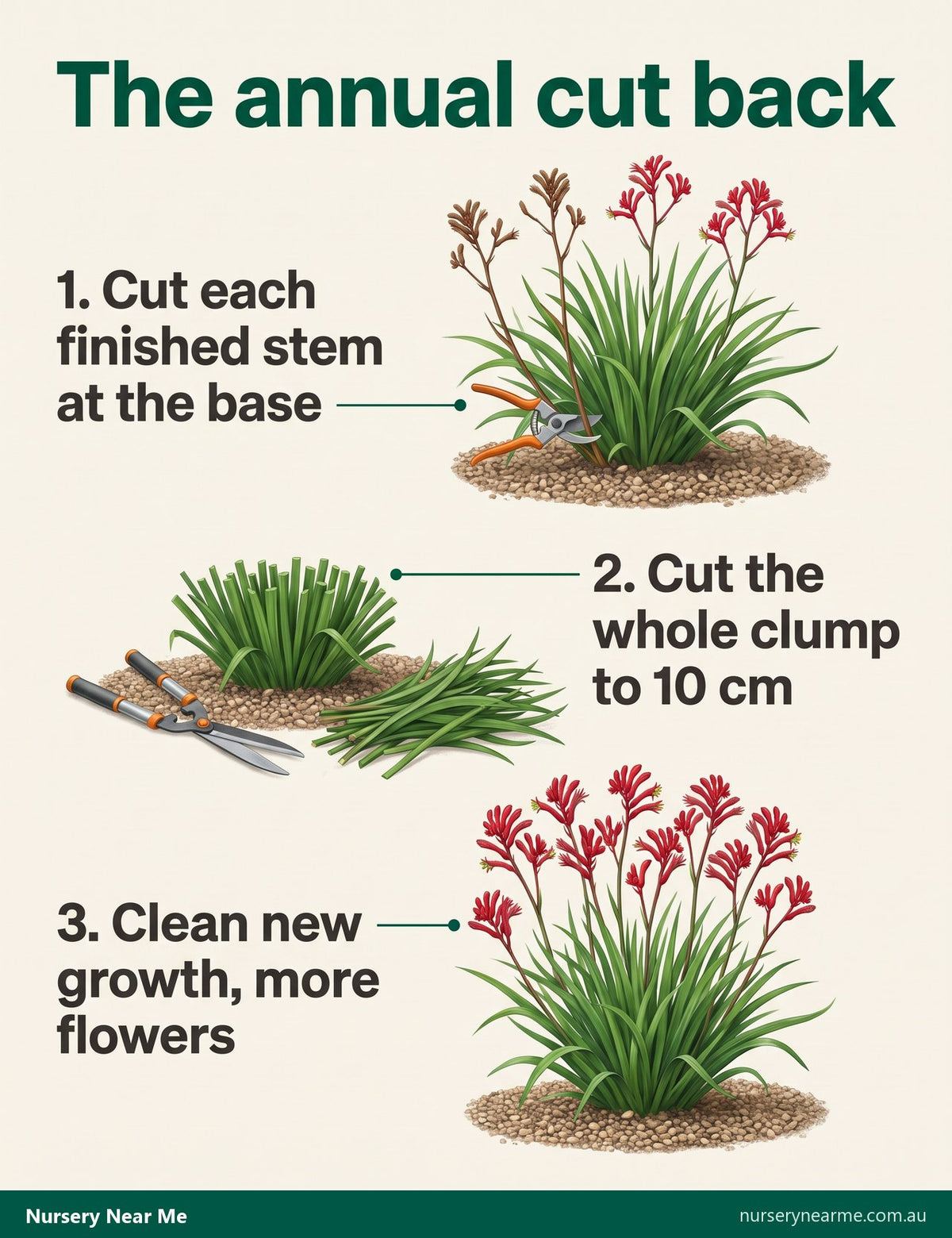
Cutting back: The single most important job. As each flower stem finishes, cut it right at the base. Then once a year, in late autumn or winter, cut the entire clump back hard to about 10cm from the ground. It feels vandalous the first time, but this removes old leaves harbouring ink spot disease and triggers fresh growth and a bigger flush of flowers.
Dividing: Every three or four years, lift and divide congested clumps in autumn, replanting the strongest outer sections. Clumps left undivided slowly flower themselves into retirement.
Like grevilleas, kangaroo paws are sensitive to phosphorus, so use a native-specific fertiliser. Our grevillea care guide explains the phosphorus rule in full.
Common problems
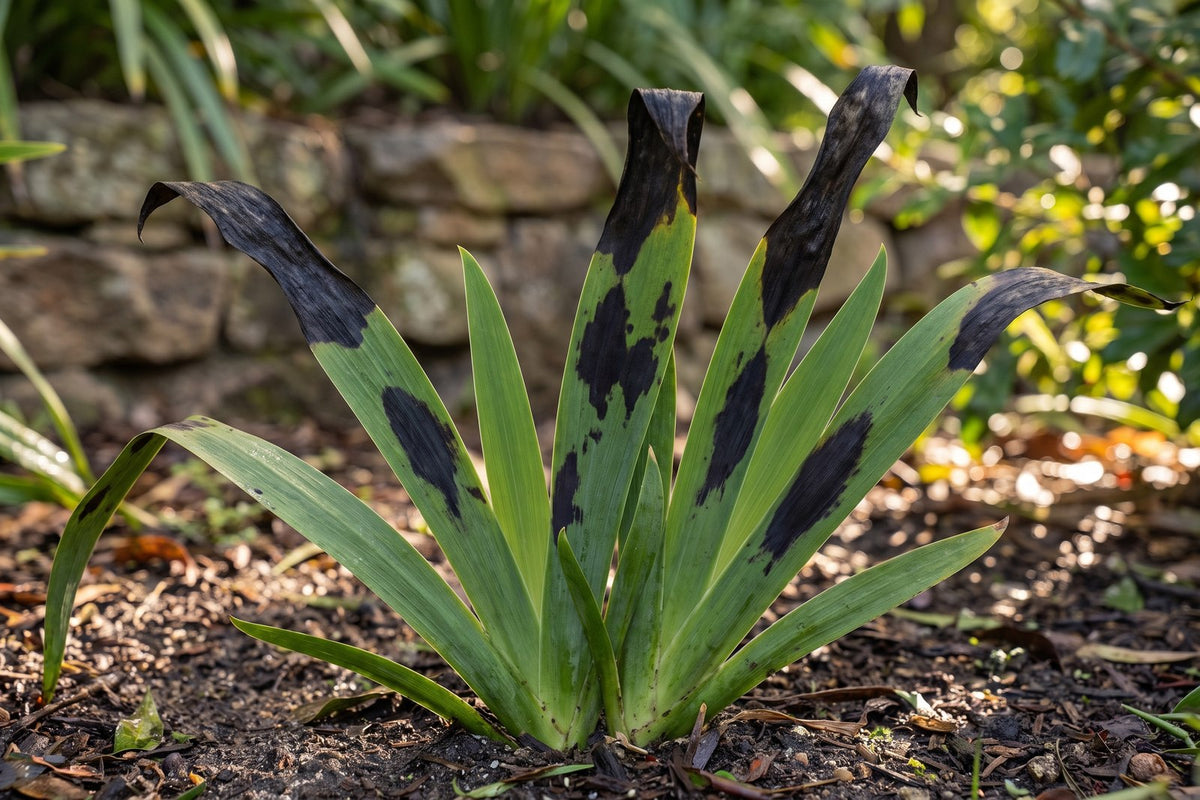
Ink spot disease: Spreading black blotches on leaves, worst in humid, still, shaded spots. Cut affected foliage out hard, improve sun and airflow, and rely on the annual cut back for a clean restart. The Bush Gems hybrids resist it far better than old seedling strains.
Snails and slugs: They rasp the flower stems and new shoots, sometimes felling a spike overnight. Bait or hand collect when spikes are emerging.
Rotting crowns: A collapsed, mushy clump means water sitting around the crown, from heavy soil, over-mulching or overwatering. Replant survivors higher on a mound.
Few flowers: Shade, overfeeding or an old congested clump. Fix the sun first, then divide.
The nectar-rich flowers are a genuine draw for honeyeaters, which puts kangaroo paw firmly on the list in our guide to bird-attracting native plants.
Where kangaroo paws grow in Australia
Kangaroo paws are Western Australian - the entire genus Anigozanthos occurs naturally only in the southwest of WA, and the red and green kangaroo paw is that state's floral emblem. Everything about growing them elsewhere in Australia follows from that origin.
| Location | How they perform |
|---|---|
| Perth and southwest WA | Their home. Outstanding, and largely self-sufficient |
| Adelaide | Excellent - a Mediterranean climate suits them closely |
| Melbourne | Very good with sharp drainage and full sun |
| Sydney and coastal NSW | Good in a sunny open position; watch for ink spot in wet spells |
| Brisbane and southeast Queensland | Harder. Humidity brings disease; modern hybrids cope best |
| Tropical north | Not suited. Wet-season humidity is too much |
Ink spot disease
The main problem outside Western Australia is ink spot, a fungal disease that blackens the foliage from the tips down. It thrives in humidity and still air, which is why it is far worse in Brisbane and Sydney than in Perth or Adelaide.
It is manageable rather than fatal. Cut affected foliage right back to the base, improve airflow by not crowding plants, water at the base rather than overhead, and remove old foliage after flowering. The modern Anigozanthos hybrids bred for garden use are noticeably more resistant than the wild species.
Cutting back is not optional
Kangaroo paws are among the few plants that genuinely benefit from being cut to the ground. After flowering, remove the spent stems and the oldest fans of foliage right back to soil level. The plant reshoots vigorously with clean new growth and flowers better the following season.
Left uncut, clumps accumulate dead leaf, become congested, flower less and are far more susceptible to ink spot. An annual hard cut back, usually in late autumn in most of Australia, keeps them productive for years.
Drainage and feeding
Sharp drainage is essential everywhere outside their sandy native range. On clay soils in Melbourne or Brisbane, plant on a raised mound or in a large pot rather than in a flat bed. Use a low-phosphorus native fertiliser - kangaroo paws are not as phosphorus-sensitive as the Proteaceae but still perform better on a native blend than on general garden fertiliser.
Frequently asked questions
Do kangaroo paws grow well in pots?
Brilliantly, and pots suit them better than garden beds on clay soil. Use a native potting mix, a pot at least 30cm wide and the sunniest spot you have.
Are kangaroo paws frost hardy?
Compact hybrids tolerate light frost to about minus 2 degrees; Frosty Red was selected to handle noticeably colder nights. In cold inland gardens, grow them in pots you can shift in winter.
How long do kangaroo paws live?
Modern hybrids live and flower well for many years if cut back annually and divided every three to four. Treat the divisions as free plants and the clump is effectively immortal.
Why are my kangaroo paw leaves turning black?
Black blotches are ink spot, a fungal disease encouraged by shade, humidity and old foliage. Cut back hard, move the plant into full sun and the new growth usually comes away clean.
Ready to plant?
Pair paws with the rest of our native plants, add height from the flowering plants range, and pot them up with something from pots and planters. Check our delivery page for dispatch details to your area.
If you are planting for pollinators you are in good company. Bee and butterfly friendly was a top-three requested quality in Victoria, the ACT and South Australia when we counted a year of orders in What Australia Planted in 2025-26.


