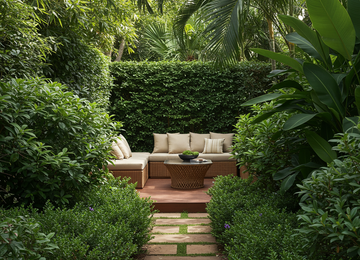
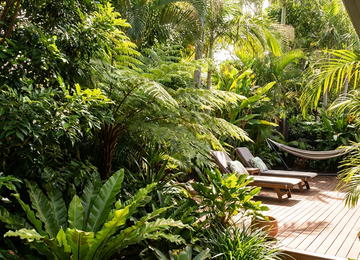
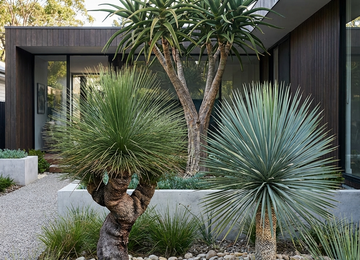
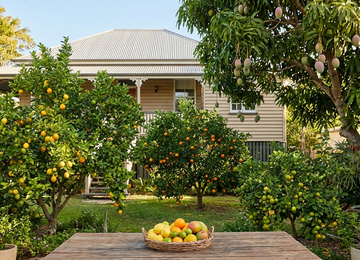
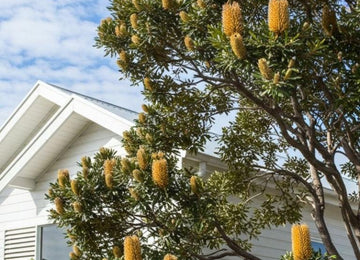


Native gardens got stuck with an unfair reputation somewhere in the 1970s, straggly, brown, worthy. The modern native garden is nothing of the sort: velvet kangaroo paw spikes against silver westringia, banksia candles at ankle height, honeyeaters commuting through it all morning. Done with design intent, it's the most alive garden style there is.
The idea
Treat natives exactly as a designer treats any palette: structure first, drifts not dots, and flowers as scheduled events through the year. The bonus rules are ecological, nectar across all four seasons keeps the birds resident rather than visiting, and dense groundcover gives the small skinks and blue-tongues cover to move in.
The palette
The verticals: Callistemon Slim along the fence, one Native Frangipani for perfumed height, one Blueberry Ash for its fairy-floss bells. Screening, scent and a feature tree, all bird-fuelled.
The colour engine: Kangaroo Paws massed in ten. Nothing in horticulture beats a backlit drift of paws. Cut spent spikes and they repeat for months.
The nectar bank: Grevillea Forest Rambler and Banksia Roller Coaster. Groundcovering, nearly ever-blooming, and between them feeding honeyeaters twelve months of the year.
The texture: Westringia Blue Gem drifts, Cousin It spilling over edges, Native Violet carpeting the shade. Three foliage characters that make the flowering moments land.
How to plant it
Natives want drainage and dislike rich fertilisers, plant into mounded beds if your soil is heavy, feed only with native-safe low-phosphorus food, and mulch with fine bark. Water the first summer like anything else; after that, this garden runs on weather. The reward curve is steep: by year two it hums, literally.
Good to know
The bird-maximised version of this design is the wildlife-minded garden; the low-water version is the water-wise garden. Explore the whole Australian natives range and bird-attracting plants, or size this pack for your beds in the garden pricer.
Ready to make it real? Your instant garden pack is just below: every plant in this design, live-priced from today's stock, one click to add the lot to your cart or open in the garden pricer and make it yours.
