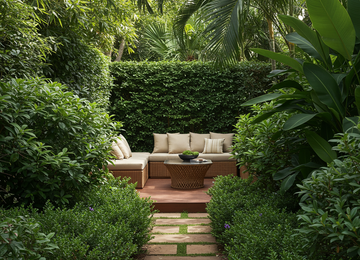
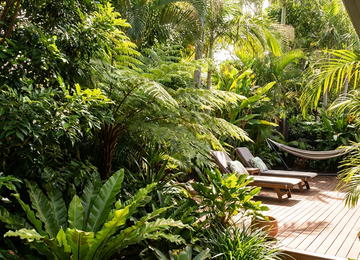
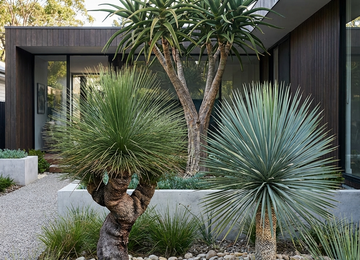
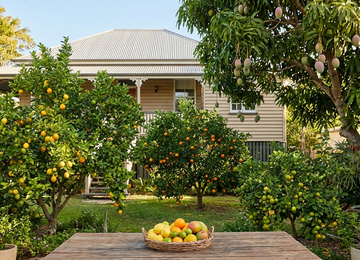


A garden can be beautiful and busy at the same time. This design's KPI isn't just kerb appeal, it's the morning commute of honeyeaters, the blue-banded bees working the westringia, the skink population in the lomandra. Habitat isn't a compromise on style; layered properly, it is the style.
The idea
Wildlife needs three things a tidy modern garden often deletes: food in every season, cover at every height, and safe corridors between them. So this palette staggers nectar across the calendar, keeps dense shrubbery at bird-height, and carpets the ground so small creatures can cross without crossing open ground.
The palette
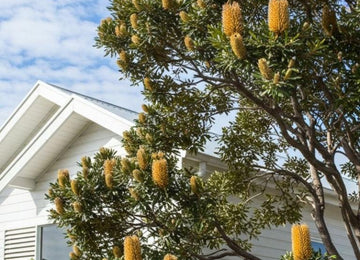
The canteen: Grevillea Forest Rambler, Banksia Roller Coaster, Callistemon Slim. Between them: spring brushes, summer spikes, autumn-through-winter candles. No hungry gaps, which is the whole trick.
The colour and the buzz: Kangaroo Paws and Westringia Blue Gem. Paws for the honeyeaters and the photographs; westringia as the year-round bee magnet that never stops flowering long enough to be ignored.
The cover: Lomandra tussocks and two Blueberry Ash. Tussocks are the ground-floor apartments, skinks, frogs after rain, while the small trees give small birds the mid-height refuge they need between dashes to the feeders you'll no longer need.
How to plant it
Cluster, don't scatter: a dense corner of shrubs beats the same plants spread thin, because small birds won't cross open ground to reach isolated food. Add a shallow water dish in the shrub shadow, skip insecticides (the birds are your pest control now), and let the lomandra keep its skirts. Within a season the garden starts announcing itself at dawn.
Good to know
This is the habitat-first cousin of the native showpiece: the two blend seamlessly. Family yard? Everything here passes the family garden toughness tests too. Browse all bird-attracting plants or price the pack below in the garden pricer.
Ready to make it real? Your instant garden pack is just below: every plant in this design, live-priced from today's stock, one click to add the lot to your cart or open in the garden pricer and make it yours.
