
Citrus Trees
Live plants delivered Australia wide. 30 day healthy plant guarantee.

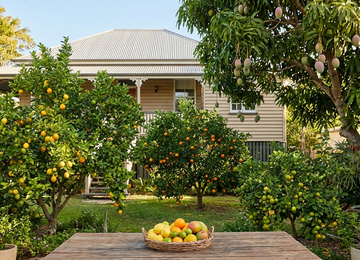
This is the citrus tree range in full: lemons, limes, oranges, mandarins, kumquats, grapefruit and pummelo, with dwarf grafted forms alongside full sized trees. Two decisions matter. Pick the fruit your kitchen actually uses, then match the tree to your winter, because most citrus tolerate light frost only. Nearly everything here also thrives in a large pot, which puts a lemon within reach of a balcony in any capital city.
Which size? How many?
Size ladder: what each pot looks like on arrivalHeights on arrival sit under every size on the product page. Freight is quoted with multiple freight companies and passed on at cost.

Eureka Lemon Tree Citrus limon 'Eureka'
6 sizes, 200mm to 150L
29% offFrom $261.95$368.95Unit price /Unavailable-
Lemonicious Lemon Tree Citrus limon 'Lemonicious'
3 sizes, 140mm to 250mm
49% offFrom $54.49$107.65per plant, packs of 6Unit price /Unavailable 
Persian Lime Tree Citrus latifolia
12 sizes, 140mm to 500L
60% offFrom $255.95$642.95Unit price /Unavailable-
Washington Navel Orange Tree Citrus sinensis
9 sizes, 200mm to 400L
45% offFrom $214.95$391.95Unit price /Unavailable -
Imperial Mandarin Tree Citrus reticulata
7 sizes, 200mm to 300L
22% offFrom $247.95$317.95Unit price /Unavailable -
Tahitian Lime Tree Citrus latifolia 'Tahitian'
12 sizes, Tube to 500L
35% offFrom $264.95$407.95Unit price /Unavailable -
Meyer Lemon Tree Citrus × meyeri
2 sizes, Tube to 400mm
34% offFrom $22.95$34.95On backorderUnit price /Unavailable -
Kaffir Lime Tree Citrus hystrix
7 sizes, 140mm to 300L
20% offFrom $181.95$227.95Unit price /Unavailable -
Cara Cara Orange Tree Dwarf Citrus sinensis
6 sizes, 140mm to 100L
48% offFrom $247.95$476.95Unit price /Unavailable -
Lisbon Lemon Tree Citrus limon 'Lisbon'
6 sizes, 200mm to 200L
44% offFrom $214.95$383.95Unit price /Unavailable -
Pummelo Citrus Tree Pummelo Citrus maxima
2 sizes, 500mm to 400L
25% offFrom $478.95$638.95Unit price /Unavailable -
Star Ruby Grapefruit Tree Citrus paradisi 'Star Ruby'
35% off$79.95$123.95On backorderUnit price /Unavailable -
Scotts Osmocote 25L Citrus And Fruit Premium Potting Mix
35% off$30.95$47.95Unit price /Unavailable -
Dwarf Meiwa Kumquat Citrus japonica 'Meiwa' Dwarf
2 sizes, Tube to 200mm
36% offFrom $17.95$27.95On backorderUnit price /Unavailable -
Meiwa Kumquat Citrus japonica 'Meiwa'
2 sizes, Tube to 200mm
25% offFrom $17.95$23.95On backorderUnit price /Unavailable


More information
Lemon, lime or something less common
Most gardens only need one lemon, so choose it carefully. Eureka (Citrus limon 'Eureka') is nearly thornless, fruits close to year round and finishes about 4m tall. Lisbon is more vigorous and handles heat and wind better, which suits hot inland gardens, but it carries serious thorns. The Meyer lemon is the pick for cooler regions: a smaller tree at about 3m and the most cold tolerant of the common citrus.
Among the limes, Tahitian is seedless, thornless and reaches about 3.5m, while Kaffir lime is grown for its leaves rather than juice and needs a frost free spot. Washington Navel remains the classic backyard orange at 3m to 4m, Imperial is Australia's most popular early season mandarin, and the Meiwa kumquat is the sweet one you eat whole, skin and all.
Where citrus trees grow well
Citrus thrive from the subtropics through warm temperate and Mediterranean climates, so most of the country qualifies. The honest limit is frost. Nearly every tree here is rated for light frost only, so in cold inland and southern gardens, plant against a north facing wall, protect young trees with frost cloth for their first two winters, and favour Meyer lemon or a kumquat. In the tropics, limes and pummelo (Citrus maxima) are the most reliable performers.
Growing citrus in pots
Any citrus on dwarf rootstock will live for decades in a container. The dwarf Meiwa kumquat stays near 1.5m, dwarf Cara Cara orange and Lemonicious lemon hold close to 2m, and even a full sized Imperial mandarin can be kept to 2m in a big pot. Start with a 50 litre container minimum, use a quality mix such as the Osmocote citrus and fruit potting mix, and accept that potted trees need more frequent water and feeding than their in-ground siblings.
Planting and the first year
Full sun, free draining soil, and a hole twice the width of the pot but no deeper. Leave 3m between full sized trees and keep them clear of paving so the canopy has room. Water deeply twice a week through the first summer, mulch 75mm deep while keeping mulch off the trunk, and feed with citrus fertiliser in late winter and again in late summer. Remove any fruit that sets in the first year so the tree puts its energy into roots. Our guide to growing citrus in an Australian backyard walks through the routine.
Common questions
Why are my citrus leaves turning yellow?
Usually hunger or cold. Yellowing across the whole tree in winter is normal in cooler regions, while yellow leaves with green veins point to a magnesium or iron shortage. Feed in late winter and the flush usually comes back green.
Can I keep a citrus tree at 2m?
Yes. Buy a dwarf grafted form, or prune a full sized tree lightly each year straight after harvest. Citrus fruit on new growth, so regular light pruning costs far less crop than one heavy cut.
Are citrus trees safe for pets?
No. Citrus foliage and oils can upset cats and dogs, so none of these trees carry our Pet Friendly flag. Most animals leave them alone, but plant away from a determined chewer.
How do citrus trees arrive?
Delivered Australia wide, with delivery from $29.95 and no minimum order. Advanced and large stock is freighted at cost, and every tree carries our 30 day healthy plant guarantee. The wider citrus and fruit collection adds figs, avocados, mangoes and berries.
