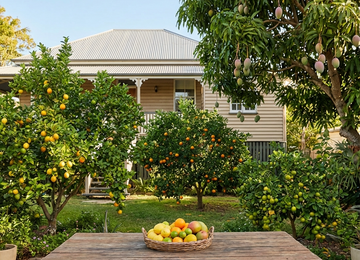


A citrus tree is the most productive plant most backyards will ever hold, and it fruits in every Australian capital if the variety suits the climate. This guide covers which citrus trees to choose, how to plant, water and feed them, how to grow them in pots, and what to do about the usual pests.
Choosing a variety for your climate
Cold is the limit. Kumquats, Meyer lemons and mandarins take the most frost; limes and grapefruit want the most heat. In frosty districts, plant against a north facing wall and cover young trees on cold nights.
| Tree | Suits | Fruit | Notes |
|---|---|---|---|
| Meyer lemon | Everywhere, including Victoria and Tasmania | Most of the year | Compact, milder juice, the best lemon for a pot |
| Eureka lemon | Warm and temperate areas with light frost | Most of the year | The classic sharp lemon, nearly thornless |
| Lisbon lemon | Cooler and inland areas | Main crop in winter | Vigorous and thorny; hardier than Eureka |
| Tahitian lime | Queensland, northern NSW, Perth; a warm wall further south | Autumn to winter | Seedless; pick green |
| Washington Navel orange | Warm summers; most mainland districts | Winter | Seedless eating orange. Valencia follows in summer for juice |
| Imperial mandarin | Most of Australia | Late autumn | Early, easy to peel; tends to crop heavily every second year |
| Meiwa kumquat | Everywhere, including cold districts | Winter | Small tree, eaten skin and all, very good in pots |
| Star Ruby grapefruit | Hot summers | Winter to spring | Needs heat to sweeten |
The native finger lime is the one for something different: a thorny, slow shrub from the rainforests of the east coast, with fruit full of small juice beads. More choices are in the lemon, lime and orange ranges, and each has its own guide: lemon tree care, lime tree care and orange tree care.
Planting
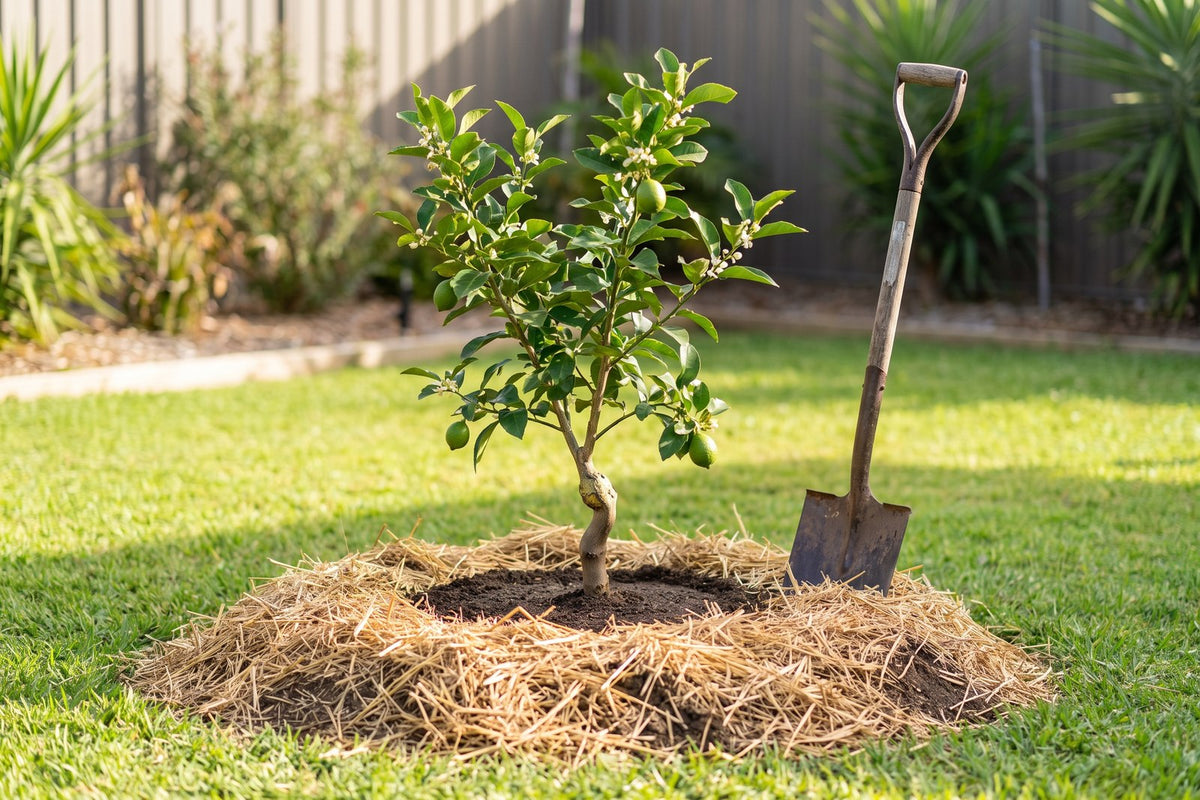
- Pick the sunniest spot. Citrus needs at least six hours of direct sun, and shelter from strong wind.
- Check the drainage. Citrus roots rot in wet soil. In clay, plant on a mound 30 cm high or in a raised bed.
- Time it. Plant in spring in cool districts, once frosts are over. In warm districts autumn is as good.
- Keep the graft above the soil. Plant at the same depth as in the pot, with the graft union well clear of soil and mulch.
- Give it room. Allow three to four metres for a full sized tree and two metres for a dwarf one.
Citrus roots are shallow and not aggressive, but before any tree goes in near the house, read our guide to planting near pipes: it sets out what Australian water utilities say about root behaviour, what can go directly over a sewer line, and which trees to keep well away.
Watering
The feeding roots sit in the top 30 cm of soil and dry out quickly. Water deeply once a week, and two or three times a week in hot, dry weather, wetting the whole area under the canopy. Uneven watering causes fruit to split and drop. Mulch out to the drip line, but keep the mulch 10 cm back from the trunk, because a wet trunk invites collar rot. Keep lawn and other plants out from under the tree; citrus does not compete well.
Feeding
Citrus is a hungry tree. Feed with a citrus fertiliser in late winter, late spring and late summer, scattered under the canopy and watered in. Small feeds often do better than one large one.
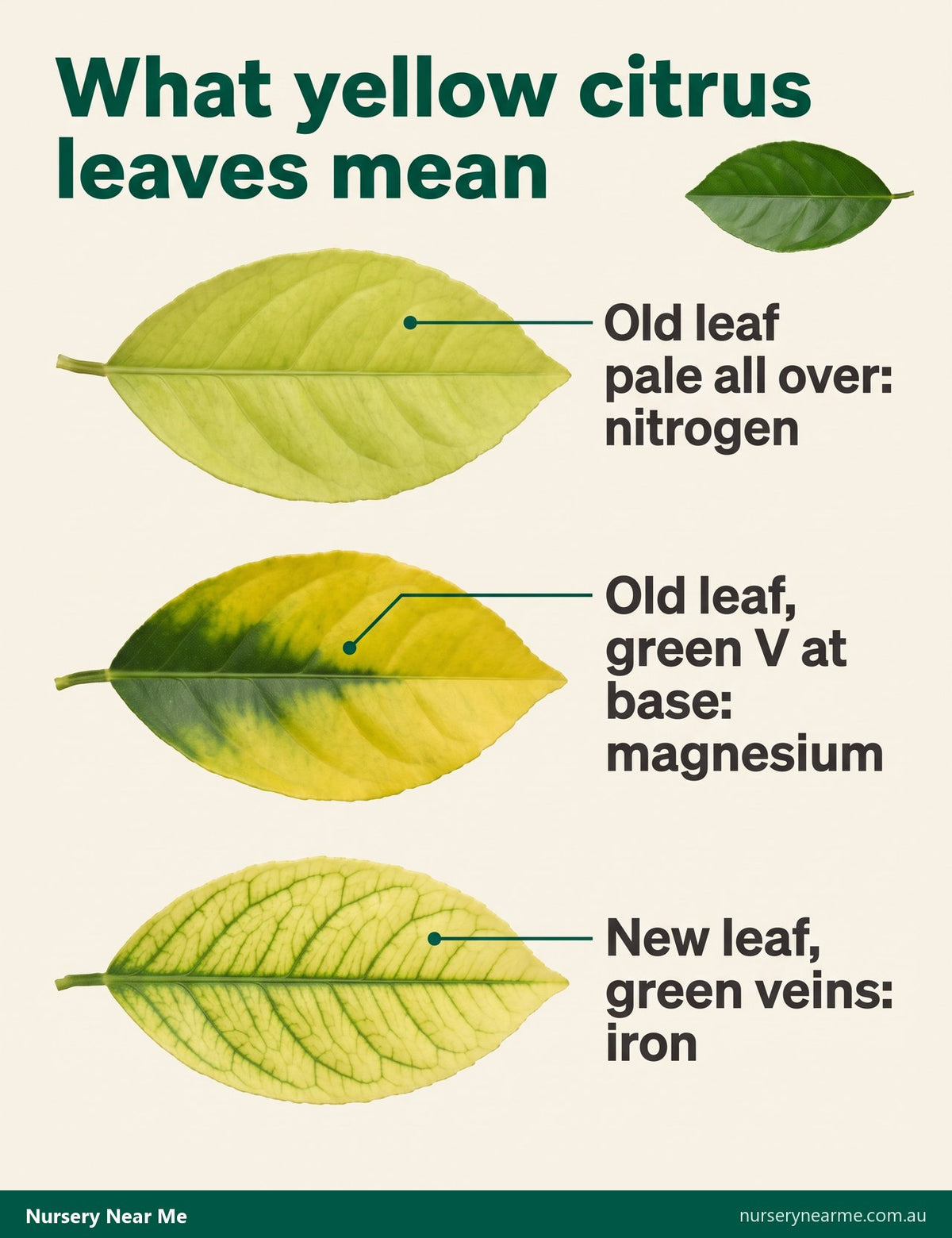
Yellow leaves tell you what is missing:
- Old leaves pale all over: nitrogen. Feed the tree.
- Old leaves yellow with a green V at the base: magnesium. Water in Epsom salts.
- New leaves yellow with green veins: iron or other trace elements, common in alkaline soil. Apply iron chelate or a trace element mix.
- General yellowing in winter: cold soil. It usually greens up in spring without help.
Citrus in pots
Dwarf citrus, grafted onto a rootstock that keeps the tree to about two metres, fruits well in a pot at least 40 to 50 cm wide. Use a mix made for the job, such as citrus and fruit potting mix, water every day or two in summer, feed lightly every six to eight weeks from spring to autumn, and repot into fresh mix every two or three years. Meyer lemons, kumquats and Tahitian limes are the easiest in containers.
Pruning and the first years
Citrus needs little pruning. Remove any shoot from below the graft as soon as it appears, lift the lowest branches clear of the soil, and take out dead or crossing wood after harvest. For the first two years, pick off most of the young fruit so the tree builds a frame first.
Common pests and problems
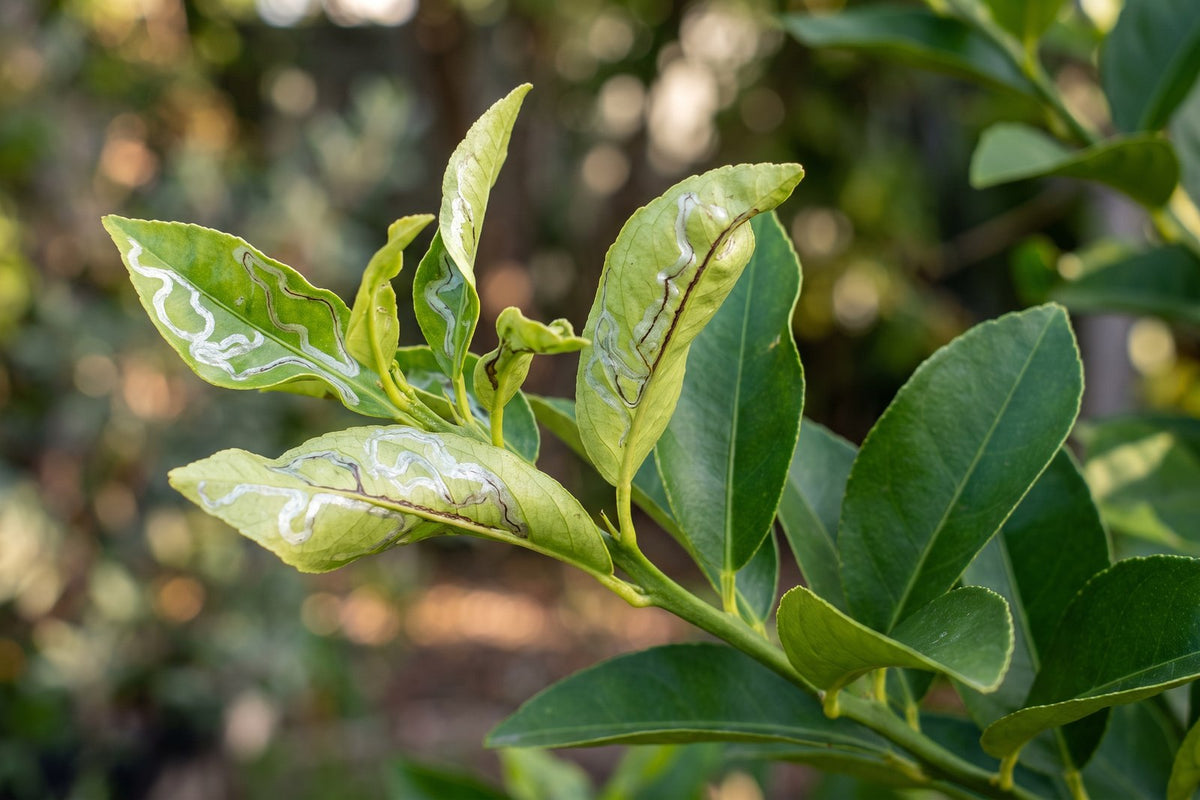
| Problem | What you see | What to do |
|---|---|---|
| Citrus leaf miner | Silvery trails and curled new leaves in summer and autumn | Cosmetic on an established tree. Spray new growth with horticultural oil on young trees |
| Scale and sooty mould | Bumps on stems, black film on leaves, ants running up the trunk | Horticultural oil, and control the ants |
| Aphids | Clusters on soft new tips | Hose off; ladybirds and lacewings do the rest |
| Citrus gall wasp | Woody swellings on young branches | Cut the galls off before the end of winter and bin them |
| Bronze orange bug | Large, foul smelling bugs on new growth in the eastern states | Knock into soapy water, wearing eye protection |
| Fruit fly | Stung, rotting fruit | Pick up fallen fruit, and follow your state's fruit fly rules |
| Collar rot | Bark splitting and oozing at the base | Improve drainage and keep mulch off the trunk |
Some states restrict the movement of citrus plants and fruit to keep pests out of growing districts, so check your state's biosecurity rules before taking a tree or fruit across a border.
Common questions
What is the easiest citrus tree to grow?
A Meyer lemon. It takes more cold than other lemons, stays compact and fruits for most of the year.
How long until a citrus tree fruits?
A grafted tree usually carries a worthwhile crop in its third or fourth year. Fruit set earlier is best removed.
How much sun does citrus need?
At least six hours of direct sun a day. Less sun means fewer and sourer fruit.
Why are the leaves on my citrus yellow?
Hunger is the usual cause, followed by wet roots and cold soil. Check the drainage, then feed in spring.
Can citrus grow in Melbourne, Canberra and Tasmania?
Yes. Choose Meyer lemon, kumquat or mandarin, plant in the warmest position you have, and protect young trees from frost.
Ready to plant?
Browse the full citrus range, or the wider fruit trees collection for something to plant beside it.


