



November is the last comfortable month before summer in most of Australia, and the jobs you do now decide how the garden copes in January. Mulch goes down before the heat, not during it. New plants go in now in the south and go in now or wait until autumn in the north. Storm season opens across Queensland and northern New South Wales, the fruit fly season opens everywhere warm, and the first heatwaves arrive without much notice. This checklist works through the month by region and by job, so you can do the right things in the right order.
Quick facts
| Region | What November is like | The one job that matters most |
|---|---|---|
| Subtropical and tropical coast (Brisbane north, northern NSW) | Hot, humid, storm season starting; the wet is weeks away | Get everything mulched and staked before the first storm |
| Warm temperate (Sydney, Perth, Adelaide, coastal NSW) | Warm days, soil warming fast, first hot spells | Plant now, water deeply, mulch before the heat |
| Cool temperate (Melbourne, Hobart, Canberra, tablelands) | Frost finished, the main planting window is open | Plant the summer garden and the hedges |
| Inland and arid | Already hot and dry by the end of the month | Mulch, shade new plantings, water before dawn |
Mulch, water and soil before the heat
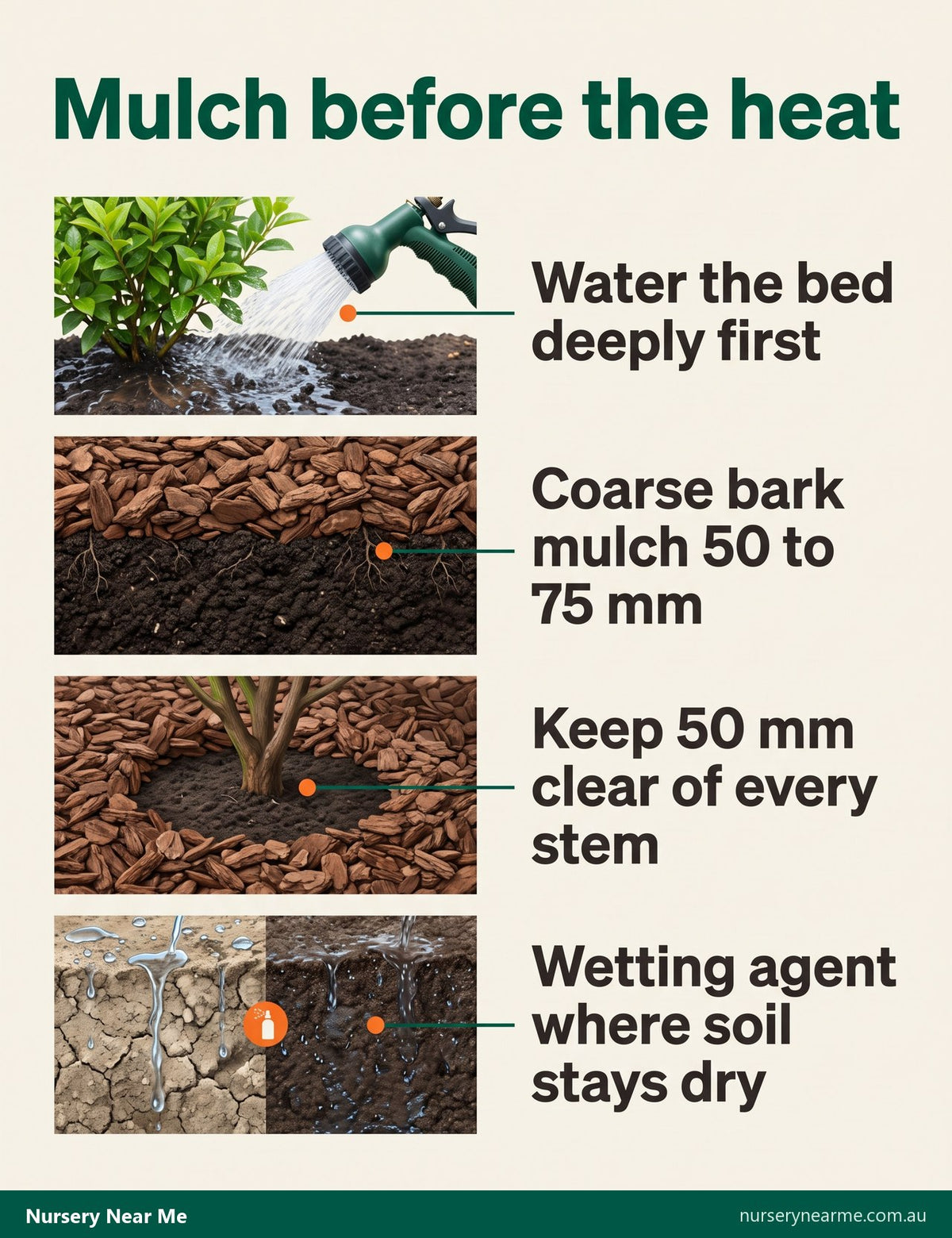
Top up every bed to 50 to 75 mm of coarse mulch while the soil is still moist from spring. A coarse hardwood or pine bark mulch such as Richgro hardwood mulch lets storms through and lasts the summer; fine mulches crust and shed water. Keep it 50 mm clear of trunks and stems so collar rot never gets a start. Mulch laid in November on damp soil holds that moisture through December; mulch laid in January on dry soil seals the drought in.
Check whether the soil is actually wetting. Water a bed for ten minutes, wait an hour, and push a trowel in. If the top is damp and the soil beneath is dust, the bed has gone water repellent, which is common on sand, on old potting mix and under long-mulched beds. Apply a wetting agent such as Plant Doctor's liquid soil wetter and water it in before you mulch, so the summer rain and irrigation go where they should. Our guide to watering properly covers how much and how often.
Shift watering to deep and infrequent. Twice a week deeply in beds, every second day for pots once the days pass 30 degrees, always early morning. Daily light sprinkling keeps roots at the surface, which is exactly where the January heat will cook them.
Feed once, now. A spring feed in November carries most shrubs and trees through summer. Use a low-phosphorus native fertiliser on natives and a complete slow-release fertiliser on everything else, watered in. Do not feed in a heatwave, and do not feed natives with lawn food.
What to plant in November
Cool and warm temperate gardens: plant almost anything. This is the month hedges, screening plants, fruit trees and flowering shrubs go in across Melbourne, Sydney, Adelaide, Perth and Canberra, because the soil is warm, the frost has finished and there are four months of growing weather ahead. Lilly Pilly Resilience planted now at a metre apart will be a recognisable hedge by autumn; our spring planting guide lists what else to put in. Plant in the evening, water the hole before and after, and mulch the same day.
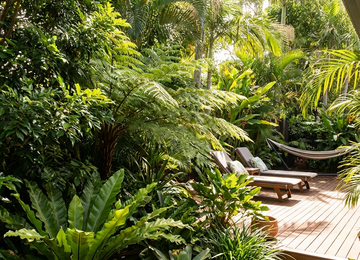
Subtropical gardens: plant early in the month or wait. Brisbane, the Gold Coast and the northern rivers can plant through November, but a shrub planted in the last week faces the hottest six weeks of the year with no roots in the ground. Either plant in the first half of the month and commit to watering, or hold the order until March. Tropical foliage goes in now with no trouble: shell ginger, cordylines, heliconias and palms want exactly the heat that is coming. The exception is anything drought-sensitive on a hot west wall; leave those for autumn.
Plant the summer flowers. Frangipani cuttings and potted plants go in now that the soil is warm, and hibiscus planted in November flowers through to May. Both want full sun and sharp drainage.
Pots. Repot anything root-bound now rather than in January, when a disturbed root ball cannot keep up with the heat. Our guide to repotting covers the sizes and the mix.
Pruning and hedges
Tip-prune the hedges after each flush. Lilly pillies, murraya, viburnum and photinia are flushing hard now. A light trim every four to six weeks through the warm months builds the density that one big cut in autumn never will, and on lilly pillies it removes the soft growth the psyllid lays its eggs in. Take no more than a third of the new growth each time. The method is in our guide to creating a great hedge.
Prune spring-flowering shrubs as they finish. Azaleas, may bush, and the early callistemons flower on last year's wood, so trim them straight after flowering and not later, or you cut off next spring's show. Leave the summer flowerers alone: crepe myrtles, hibiscus and frangipani are about to perform.
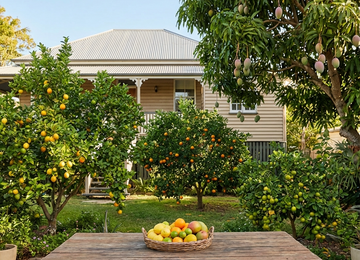
Deadhead and thin. Take spent flower spikes off kangaroo paws and agapanthus to keep them producing, and thin heavy fruit sets on citrus and stone fruit to one fruit per hand span so the branches do not break in a storm.
Storm season, fire season and the first heatwave
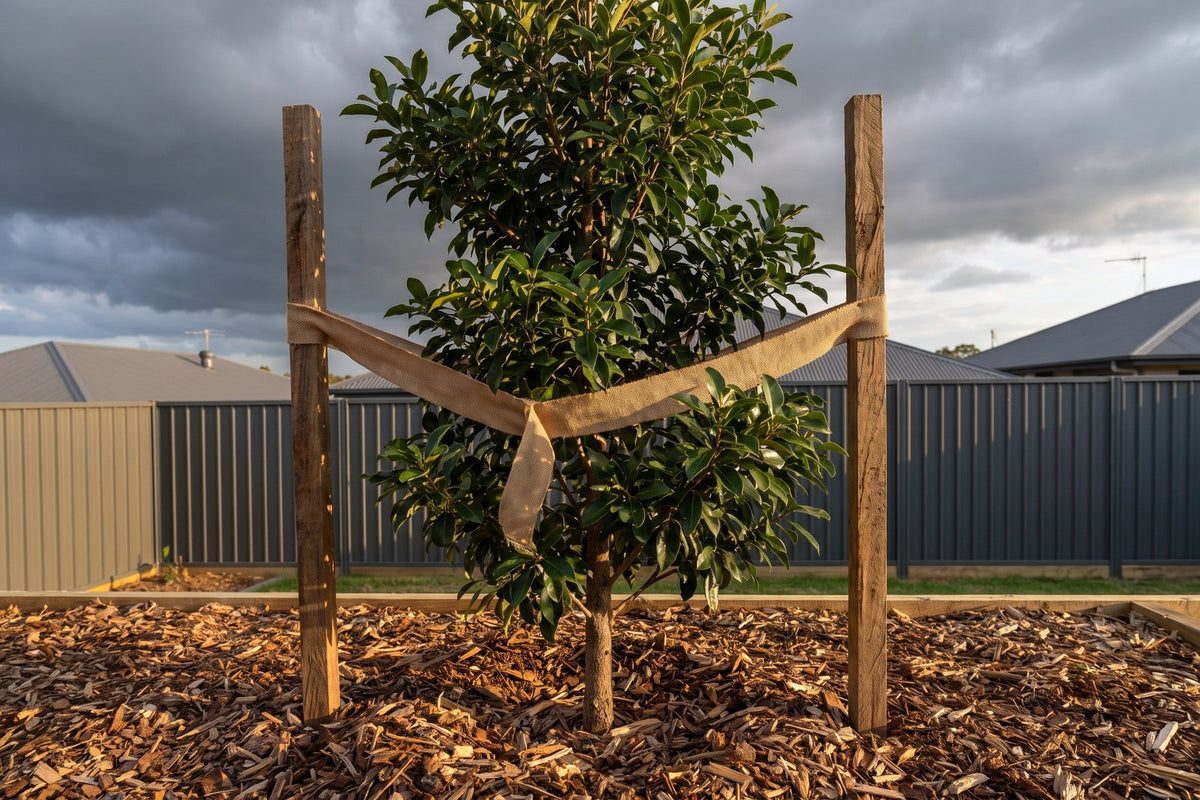
Stake and tie new trees. Across Queensland and northern New South Wales the first storms arrive this month. A tree planted in spring with a loose root ball goes over in the first strong gust. Two stakes either side with a soft tie that lets the trunk move a little is the standard; our guide to preparing the garden for storm season has the full list, including what to lift off the ground and what to tie down.
Thin heavy canopies. A dense, top-heavy tree catches wind like a sail. Lift the lower branches and open the crown a little now rather than after it splits.
Clear the fire fuel. In bushfire-prone districts, rake up leaf litter and bark, clear the gutters and mow long grass before the first total fire ban. Our guide to bushfire-wise planting explains which plants near the house are worth keeping and which to move.
Be ready for the first 38-degree day. Have shade cloth and pegs on hand for seedlings and pots, water everything deeply the evening before a forecast heatwave, and move pots off hot paving and into afternoon shade. A heatwave does its damage in the first afternoon; a plant that goes into it dry does not recover. Our summer maintenance guide covers what to do once the heat has settled in.
Pests to watch this month
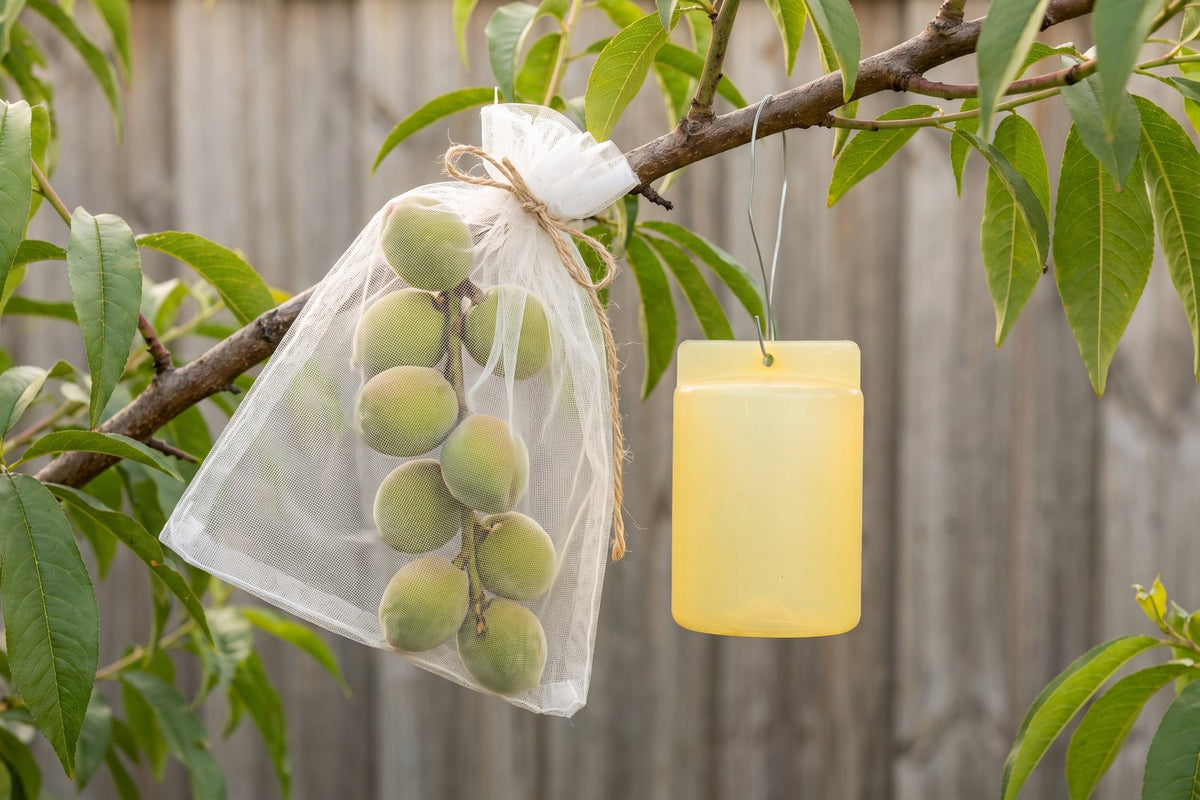
Fruit fly. The season opens in November across the warm half of the country. Hang baits and traps now, before the fruit colours, bag or net early stone fruit, and pick up every fallen fruit. Once the flies are in the crop it is too late for that season.
Psyllid on lilly pilly. The pimpled new growth appears on older hedges with the spring flush. Trim it off and let the next flush come through; if the hedge is one of the old seedling types, the long-term fix is in our lilly pilly troubleshooting guide.
Aphids and scale on new growth. Hose aphids off or squash them; treat scale with a horticultural oil on a cool morning, never on a hot day. Ants running up a stem usually mean scale or mealybug above.
Lawn armyworm and curl grub. Brown patches that spread overnight from late November are usually armyworm; a lawn that lifts like a carpet is curl grub. Both are treatable, and a healthy, well-fed lawn recovers; the lawn care range has the feed. For the wider list, read our guide to identifying common pests and diseases.
Common problems and fixes
New plants wilting every afternoon. Normal for the first fortnight in warm weather as long as they recover by morning. If they do not, water deeper, shade them with a square of cloth for a week, and check the root ball is actually wet: a dry pot-shaped core inside damp soil is the usual cause.
Mulch floating off in the first storm. The layer was too fine or too deep, or it was laid on a slope. Use a coarse grade, keep it to 75 mm, and on a bank plant a groundcover to hold it.
Yellow new growth on natives. Usually lawn fertiliser or a complete fertiliser drifting into the bed. Stop, flush with water, and use a native formulation from now on.
Pots drying out in a day. The mix has gone water repellent or the plant has filled the pot. Soak the pot in a bucket until bubbles stop, apply a wetting agent, and repot if roots are circling the base.
Frequently asked questions
Is November too late to plant a hedge?
Not in the temperate south: Melbourne, Sydney, Adelaide, Perth and Canberra gardens plant hedges all month. In Brisbane and north, plant in the first half of November and water it through, or wait for March. A hedge planted now needs deep water twice a week for its first summer wherever you are.
Should I mulch before or after the first heat?
Before, and on damp soil. Mulch locks in whatever moisture is under it, so lay it on a bed you have just watered deeply. Laid on dry soil in January it keeps the rain out as efficiently as it keeps moisture in.
When does fruit fly season start?
It is active from November in Queensland, northern New South Wales and the warmer parts of the other states, earlier in the tropics. Baits and traps go out as the fruit begins to size, not when it ripens.
Can I fertilise in November?
Yes, once, early in the month, and watered in. It is the last good feed before summer. Skip it during a heatwave and never feed a plant that is drought-stressed; water first, feed a week later.
What should I do with pots before a heatwave?
Water them deeply the evening before, move them off hot paving into afternoon shade, group them so they shade each other, and mulch the surface. Terracotta pots dry fastest; slip them inside a larger pot or a bucket of water for the worst afternoons.
Ready to plant?
The mulch and fertiliser range and the soil wetters cover the first job on this list. For the planting, browse hedging and screening plants for the southern spring window and tropical plants for the north, and keep our best time to plant a tree guide handy if you are weighing up a November planting against waiting for autumn.


