




Curled leaves, sticky residue, speckling and sudden yellowing each point to a different culprit, and the right treatment depends on naming it. This guide works from the symptom to the pest or disease, sets out which problems you actually face in each part of Australia, and keeps the treatments in order from the least toxic to the last resort. Start with the diagnosis, because most of what looks like a pest here is not one.
Diagnose before you spray
Most garden problems in Australia are not pests at all. Before reaching for anything, rule out the physical causes, which are far more common:
- Sunburn: bleached papery patches, worst on the western side.
- Wind burn: browning uniformly along the windward face.
- Salt burn: brown margins working inward, in coastal gardens or from bore water.
- Fertiliser burn: sharply defined brown edges within days of feeding.
- Nutrient lock-out: yellow leaves with green veins, usually a soil pH problem rather than a shortage.
- Root rot: yellowing and collapse with wet soil, which no spray will fix.
Fungicides do nothing for any of those, and spraying a physically damaged plant adds stress to a plant that is already struggling.
Identifying common insect pests
- Aphids: clusters of small green, black or pink insects on soft new growth, curled tips and a sticky residue below. Hose them off, squash them, or spray with horticultural soap.
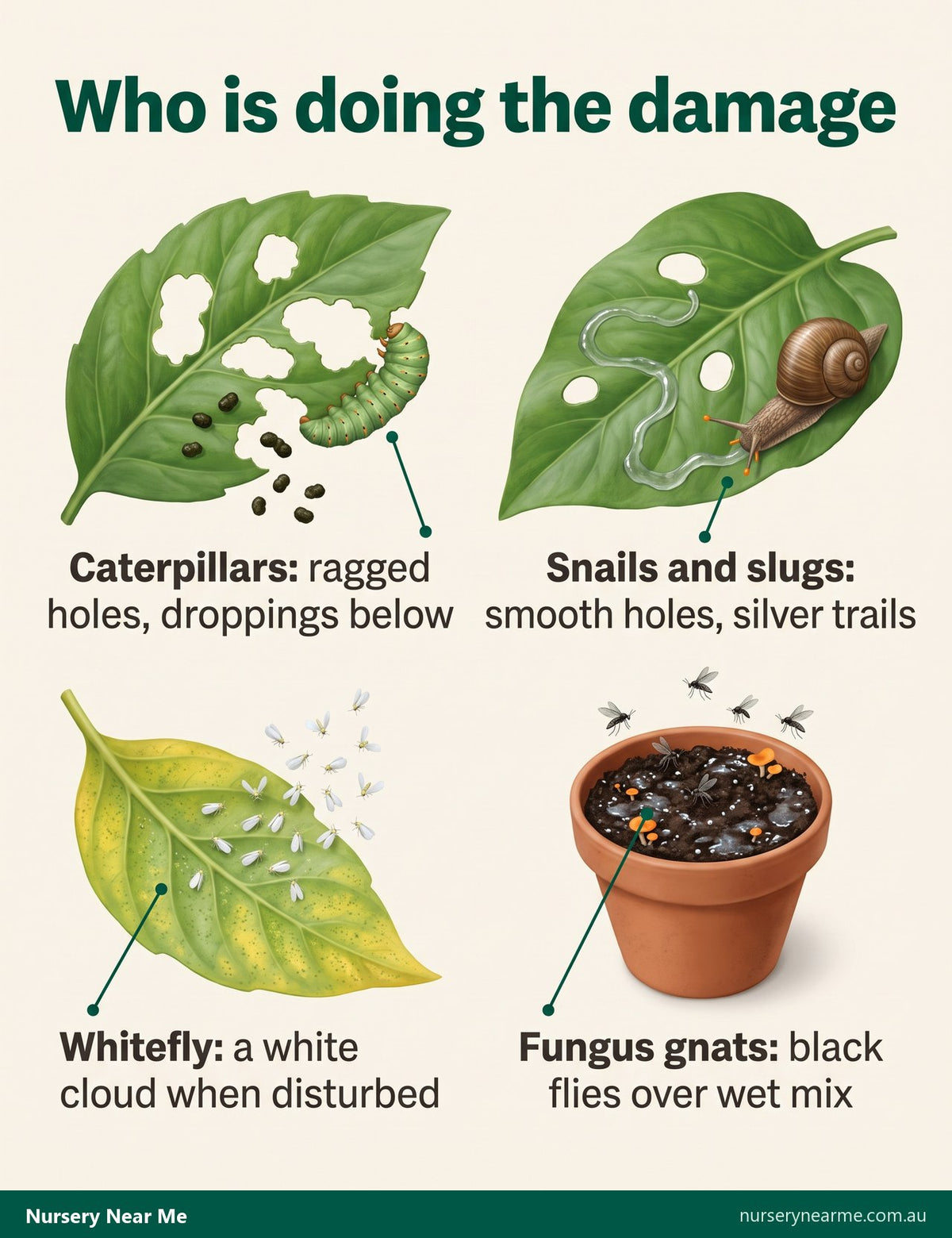
- Whitefly: tiny white insects that rise in a cloud when a leaf is disturbed, leaves yellowing and sticky. Yellow sticky traps and soap or oil sprays on the undersides.
- Mealybugs: white cottony tufts in leaf joints and on stems, worst on indoor plants and succulents. Dab with methylated spirits on a cotton bud, then oil spray.
- Scale: brown, grey or white bumps fixed to stems and leaf veins that do not brush off, with sticky leaves and sooty mould. Scrape off with a fingernail or a soft toothbrush and spray with horticultural oil twice, a fortnight apart.
- Spider mites: fine pale speckling on the leaf surface and faint webbing underneath, worst in hot dry weather and on plants near a hot wall. Rinse the foliage, raise the humidity and oil spray.
- Caterpillars: holes and ragged edges in leaves, droppings on the leaves below, and the culprit usually on the underside. Pick them off or use a Bacillus thuringiensis spray, which affects nothing else.
- Snails and slugs: smooth-edged holes and silver trails, overnight. Hand-pick at dusk, or use iron-EDTA pellets, which are safe for birds, lizards and pets; never metaldehyde.
- Fungus gnats: tiny black flies rising from potting mix that stays wet. Let the mix dry further between waterings and top-dress with coarse sand.
Identifying common plant diseases
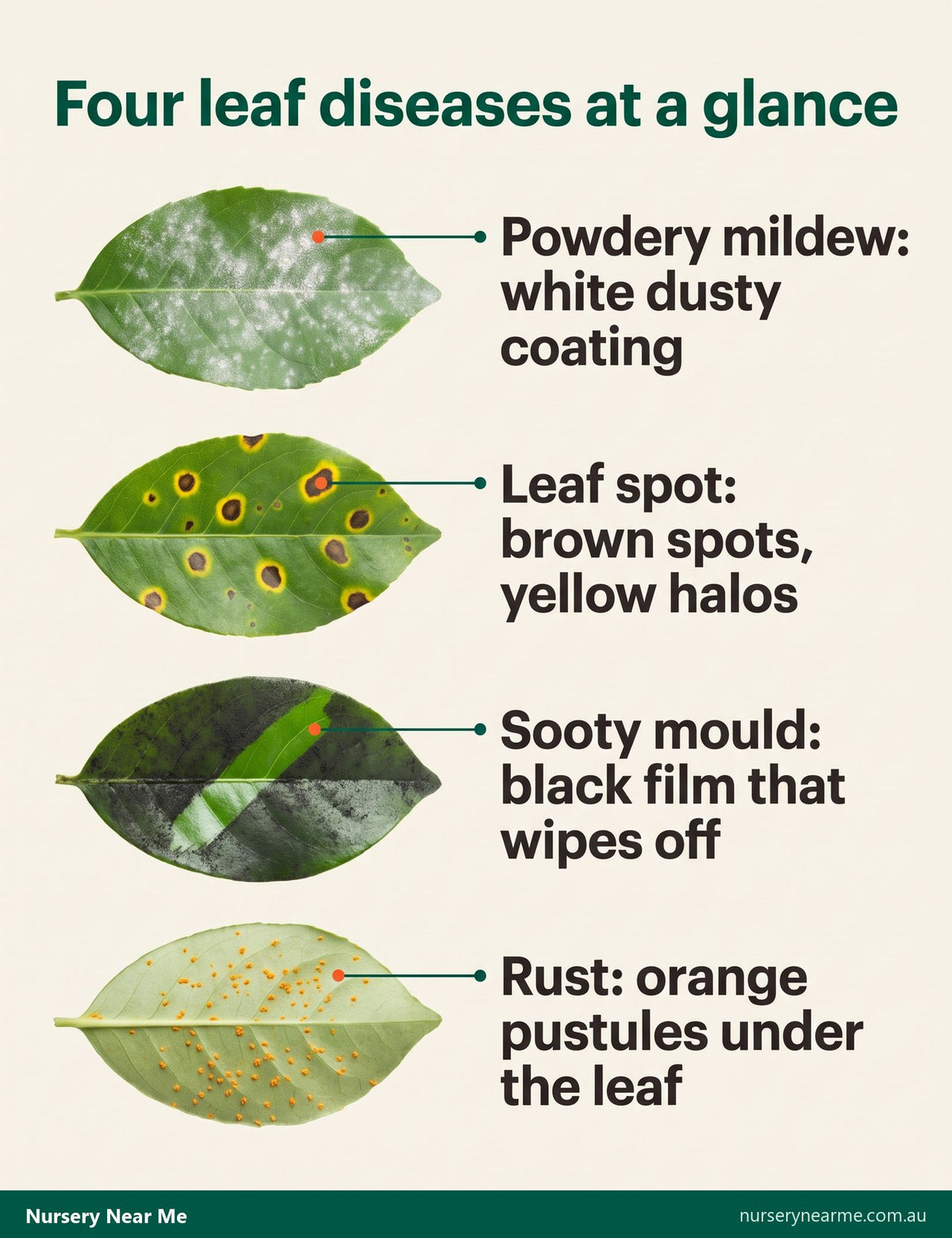
- Powdery mildew: a white dusty coating on leaves of roses, cucurbits, crepe myrtles and hydrangeas, in warm days and cool nights. Improve airflow, water the soil not the leaves, and spray with a potassium bicarbonate or milk solution early.
- Leaf spot and anthracnose: brown or black spots, sometimes with yellow halos, spreading in wet weather. Remove affected leaves, stop overhead watering and thin the plant for air.
- Sooty mould: a black film on leaves that wipes off. It grows on the sweet residue of aphids, scale or mealybugs; treat the insect and the mould goes.
- Rust: orange or yellow powdery pustules on the undersides of leaves. Remove and bin affected leaves; see myrtle rust below, which is notifiable.
- Root rot and collar rot: wilting in wet soil, soft dark stems at the base. A drainage problem, not a spray problem.
Pests and diseases by Australian climate
Which problems you actually face depends heavily on where you garden. Humid subtropical gardens fight fungal disease; hot dry gardens fight mites and scale.
| Region | Most common problems |
|---|---|
| Brisbane, Gold Coast, tropical Queensland | Fungal leaf spot, sooty mould, fruit fly, scale, psyllid |
| Sydney and coastal NSW | Citrus gall wasp, bronze orange bug, scale, powdery mildew |
| Melbourne and Adelaide | Aphids, powdery mildew, snails and slugs, earwigs |
| Perth | Mediterranean fruit fly, mealybug, mites in dry heat |
| Canberra and cold inland | Aphids, cabbage moth, frost damage mistaken for disease |
Pests that are specifically an Australian problem
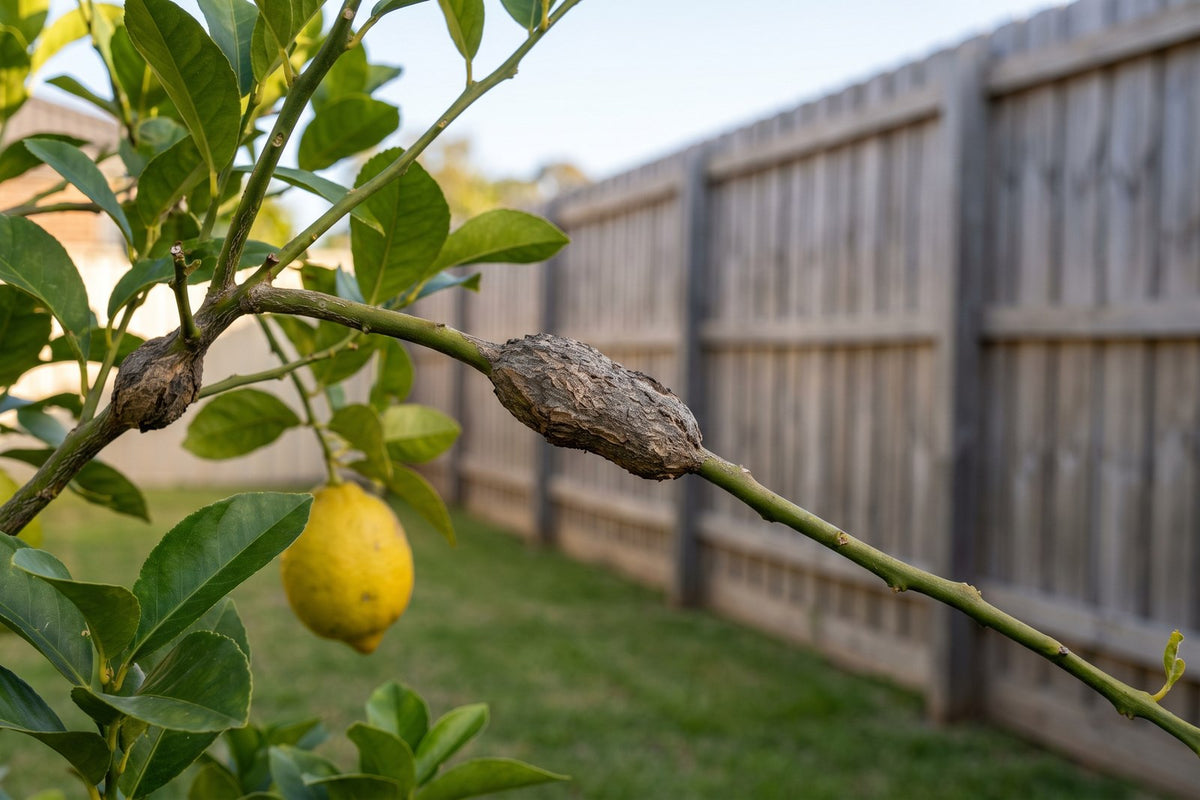
- Citrus gall wasp: woody swellings on citrus stems, serious in Sydney and southeast Queensland and spreading in Victoria. Cut out and destroy galls before spring emergence; do not compost them.
- Bronze orange bug: the stink bug on citrus in spring in warm districts. Remove wearing eye protection, since the spray it emits burns skin and eyes.
- Lilly pilly psyllid: pimpled, distorted new growth. Prevented by choosing resistant lilly pilly cultivars rather than treated.
- Queensland fruit fly and Mediterranean fruit fly: both are notifiable in parts of Australia and subject to movement restrictions. Check your state's requirements if you grow fruit, and net or bait as fruit colours.
- Pandanus planthopper: has killed large numbers of pandanus along the Queensland and northern New South Wales coast.
- Myrtle rust: a serious disease of the Myrtaceae, affecting lilly pillies, melaleucas, eucalypts and callistemons across eastern Australia. Yellow powdery pustules on new growth. It is a notifiable disease in some states; report suspected cases rather than only treating them.
Least-toxic first
Horticultural oil handles scale, mealybug and aphids and is safe for most beneficial insects once dry. Improving airflow and stopping overhead watering resolves most fungal leaf problems in humid Australian gardens without chemicals at all. Encourage predators: ladybirds, lacewings, parasitic wasps and small birds all do real work, and broad-spectrum insecticides kill them alongside the pest, which usually makes the next outbreak worse. Neem oil, soap sprays and Bacillus thuringiensis cover most of what is left. Keep chemical insecticides and fungicides for a named pest that the gentler options have failed on, follow the label, spray in the evening when bees have gone, and never use a systemic insecticide on a flowering plant.
Routine checks
Walk the garden once a week and turn over a few leaves on each plant, looking at the new growth and the undersides. Most outbreaks start small and are easy to deal with in the first fortnight; the ones that get away are the ones nobody looked at for a month. Isolate a new plant for a week before it joins a collection indoors, and clean secateurs between plants when cutting out diseased material. Many pest problems begin with a poorly established plant. How to plant a new garden bed covers the preparation and first-season care that prevent most of them.


