
Plant size guide
What each pot size looks like when it arrives
A 200mm pot of groundcover is a finished plant. A 200mm pot of fig tree is a baby. The ladder below shows the typical height on arrival for every size we sell, by plant type, so you buy the right starting point.
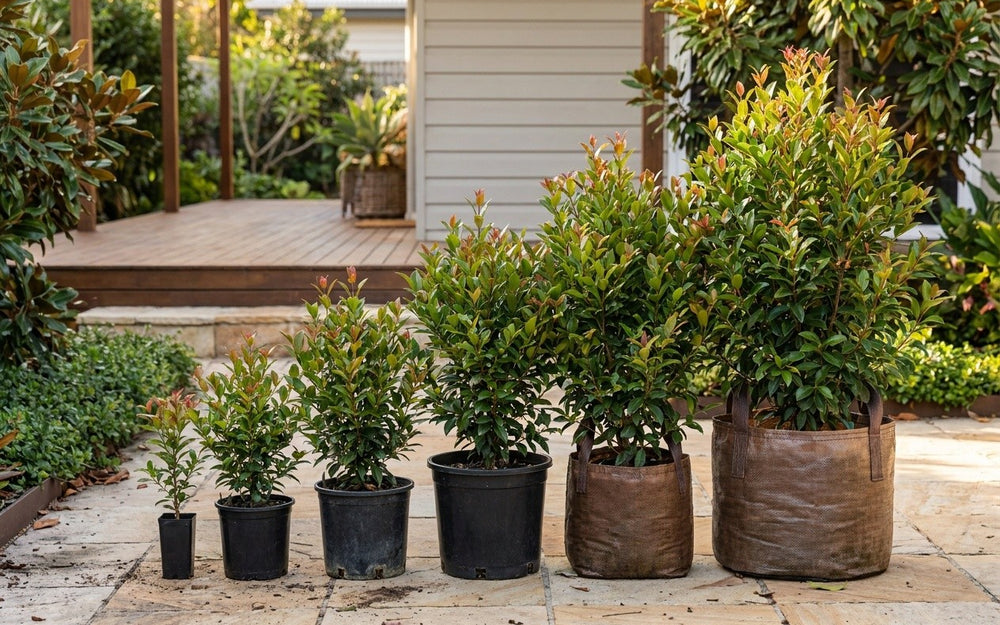
The size ladder
Pick your plant type. Heights are typical on arrival.
Drawn to scale beside a 1.7m person. Every plant varies with the season and the batch, so treat these as the range to expect, and the size picker on each product page repeats the same figures.
Long hedges, best value
Borders and hedges with a head start
The everyday size
Established shrubs, small features
Advanced shrubs and young trees
Trees and screens with presence
Advanced trees, instant screening
Mature specimens
Long hedges, best value
Borders and hedges with a head start
The everyday size
Established shrubs, small features
Advanced shrubs and young trees
Trees and screens with presence
Advanced trees, instant screening
Mature specimens
Long hedges, best value
Borders and hedges with a head start
The everyday size
Established shrubs, small features
Advanced shrubs and young trees
Trees and screens with presence
Advanced trees, instant screening
Mature specimens
Long hedges, best value
Borders and hedges with a head start
The everyday size
Established shrubs, small features
Advanced shrubs and young trees
Trees and screens with presence
Advanced trees, instant screening
Mature specimens
Long hedges, best value
Borders and hedges with a head start
The everyday size
Established shrubs, small features
Advanced shrubs and young trees
Trees and screens with presence
Advanced trees, instant screening
Mature specimens
How to read a size
Four kinds of size, one rule: the number is the pot, not the plant
A 50mm tube with a young, fast-establishing root system. Packs of 10. The best value per metre of hedge and the fastest to settle in, if you can wait two to three years for a dense screen.
100 to 330mm is the pot's diameter. 200mm is our most bought size: established enough to look like a garden on day one, young enough to travel well and take off quickly.
A 400 or 500mm pot, or a 25 to 110L bag, holds the years a grower has already put in: real height, often a trunk, and presence from the first day.
Mature trees that need a truck with a tailgate or a crane. We confirm the freight for your address before anything is dispatched, so there are no surprises.
Which size should you buy
Match the size to the job, not the budget
Tubes or 140mm pots for anything over ten metres. They cost a fraction of advanced stock, suffer less transplant shock and usually catch bigger plants within two or three seasons. Work out quantities.
45L and up. A 45L lilly pilly arrives 1.2 to 2m tall and only has to knit together. Plant at 1m spacing and the gaps close within a season.
45 to 100L gives you a trunk and a canopy you can stand under. Smaller trees catch up in vigour, but a 100L magnolia or crepe myrtle looks like it has always been there.
Smaller is genuinely fine. Grafted fruit trees crop within a year or two whatever the starting size, indoor plants are sold at display size, and groundcovers spread to full cover in a season.
After planting
How fast it grows from there
Typical growth a year with sun, water and feeding as covered in our care guides.
| Plant | Growth a year |
|---|---|
| Bamboo | 1 to 3m |
| Fast hedging: viburnum, lilly pilly | 60cm to 1m |
| Murraya, photinia, sasanqua camellia | 30 to 60cm |
| Feature trees: magnolia, crepe myrtle | 30 to 60cm |
| Slow formal plants: buxus, conifers | 10 to 25cm |
Sold by pot size only
Plants where height means nothing
A 140mm pot of groundcover is already a full plant, and a climber's height depends on what it is tied to. These ranges show pot sizes without a height, on purpose.
Common questions
Sizes, packs and what arrives
Are the heights exact?
No. They are typical ranges at dispatch for that plant type, measured from the top of the pot. Plants vary with the season and the batch, and where a product page lists its own height that figure wins.
Is a bigger plant always better?
Not for hedges and groundcovers. Smaller plants establish faster and catch up within a few seasons, so quantity beats size on a long run. Bigger pays off when you want privacy or a feature tree this year.
What is tubestock?
A plant grown in a 50mm tube, usually 10 to 30cm tall with a young root system that establishes fast. Sold in packs of 10. Tubestock hedging reaches a dense 1.5m hedge in two to three years with feeding.
How tall is a 45L plant?
It depends on the plant. A 45L hedge plant is typically 1.2 to 2m, a 45L tree 1.5 to 2.5m, a 45L palm 1.5 to 2.5m to the frond tips, a 45L fruit tree 1.2 to 1.8m. The ladder above shows each type.
What do Pack of 10, 6 and 3 mean?
Smaller pots travel in packs so the freight makes sense: tubes and pots under 165mm in tens, 200mm pots in sixes, 250mm pots in threes. From 300mm up, and every bag size, plants are sold singly.
What happens with 150L and ex ground stock?
They are mature trees that need a truck with a tailgate or a crane. We confirm freight to your address before dispatch and tell you the cost, and nothing leaves the grower until you have agreed.
Ready to size up your garden?
Every plant page shows these heights under its sizes. Freight is quoted with multiple freight companies and passed on at cost.
