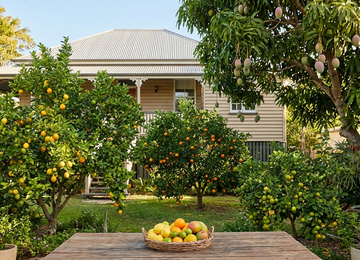


Ask any Australian gardener what fruit tree to plant first and the answer is almost always a lemon. One healthy tree supplies more fruit than most families can use, fruits nearly year round in warm areas, and asks for little beyond sun, food and decent drainage.
Quick facts
| Botanical name | Citrus limon |
|---|---|
| Type | Evergreen fruiting tree |
| Height | 2 to 4m depending on variety |
| Position | Full sun, sheltered from strong wind |
| Soil | Rich, free draining |
| Harvest | Winter peak, with fruit much of the year in warm climates |
| Climate | All of Australia, with frost protection when young in cold areas |
Choosing your lemon
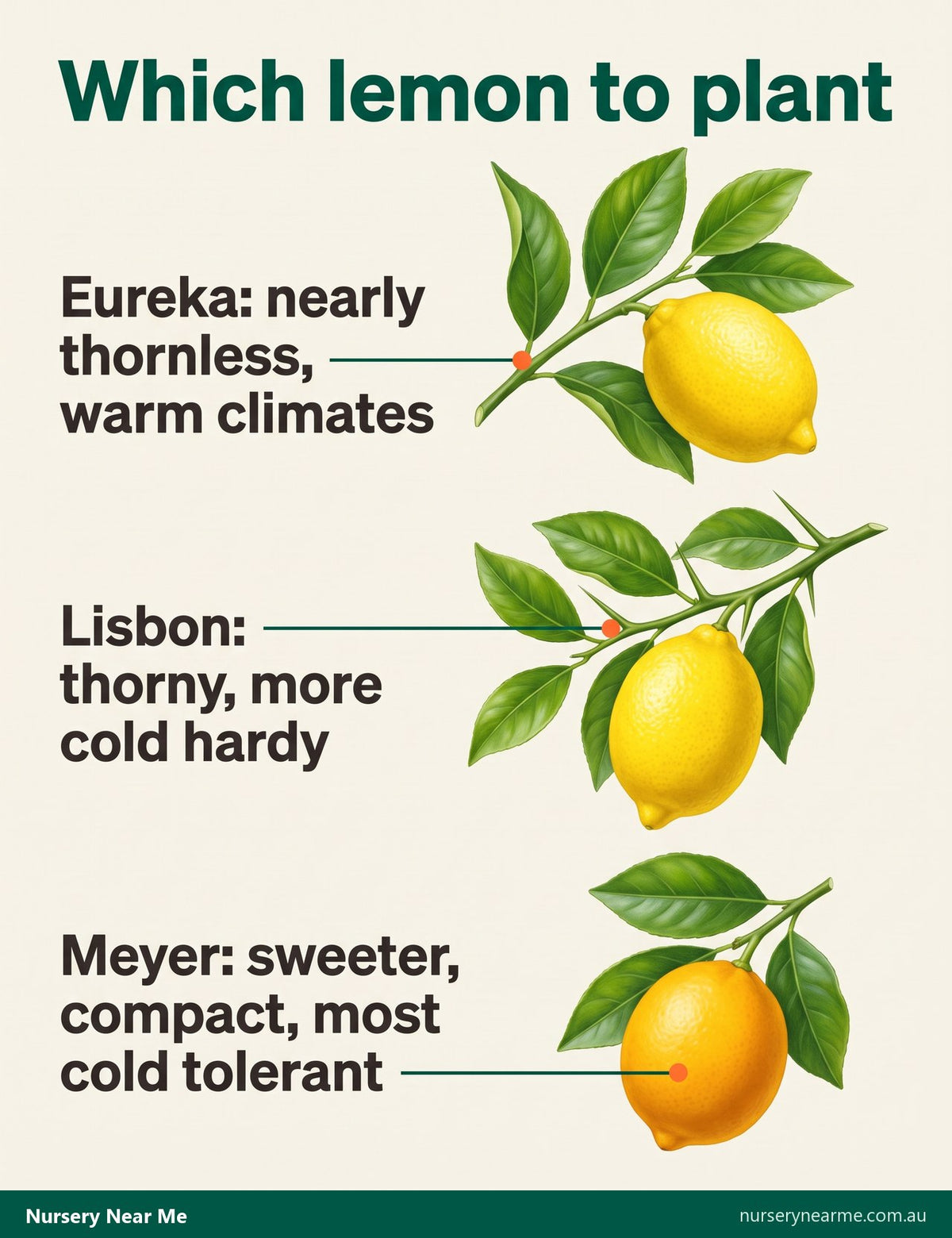
Eureka is the classic thick skinned true lemon and the pick for warm coastal gardens, fruiting through much of the year. Meyer from $22.95 is sweeter, thinner skinned and the most cold tolerant, ideal for pots and southern states. Lemonicious is a heavy cropping modern selection that stays compact. Our guide to growing citrus trees in your Aussie backyard compares the whole family before you commit.
For something uniquely Australian, Lemon Scented Myrtle is not a citrus at all but a beautiful native tree whose leaves carry an intense lemon fragrance for tea and cooking. If you are planting a full citrus corner, our lime tree care guide and orange tree care guide cover the two natural companions.
Planting
Position: Minimum six hours of direct sun. The north facing side of the house is citrus real estate.
Soil: Citrus hate wet feet. Plant into a mound of compost enriched soil on clay sites. In pots, use a premium citrus mix and the biggest container you can manage.
Watering in: Deep soak at planting, then twice weekly through the first summer.
Ongoing care
Feeding: Lemons are hungry. Feed with citrus fertiliser in August, November and February, watered in well. A fed lemon is a productive lemon; an unfed one turns yellow and sulks. Feeding habits are similar across the subtropical fruit trees, as our mango tree care guide shows.
Watering: Deep weekly watering in dry weather, more for pots. Irregular watering causes fruit drop and split fruit.
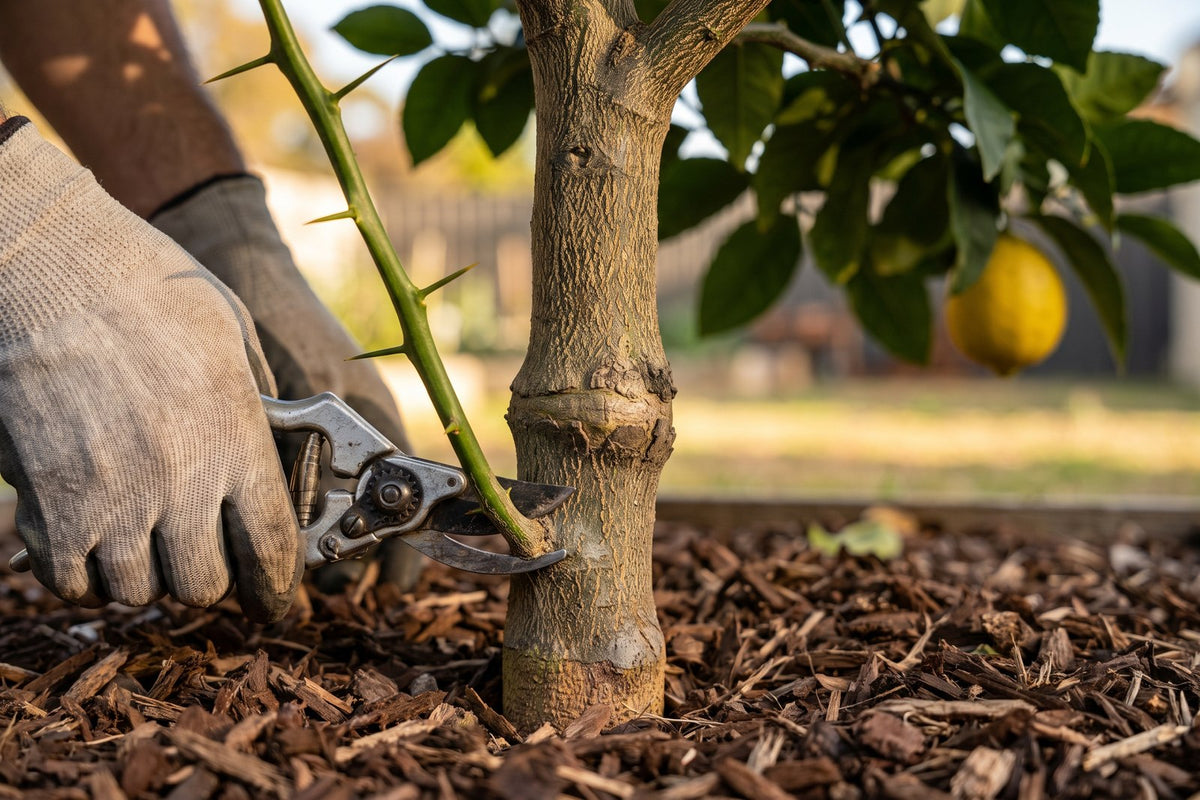
Pruning: Light shaping after harvest, removing dead wood and crossing branches. Skirt the tree to keep fruit off the ground. Remove any vigorous thorny shoots from below the graft immediately.
Common problems
Yellow leaves: Hungry tree, wet feet or magnesium deficiency. Feed first, check drainage second, apply epsom salts third.
Citrus leaf miner: Silvery squiggles in new leaves. Spray new flushes with horticultural oil in summer.
Fruit drop: Normal in early summer to some extent; excessive drop means inconsistent watering.
Gall wasp lumps: Prune out swollen stems before August and bin them, do not compost.
Where lemons grow in Australia
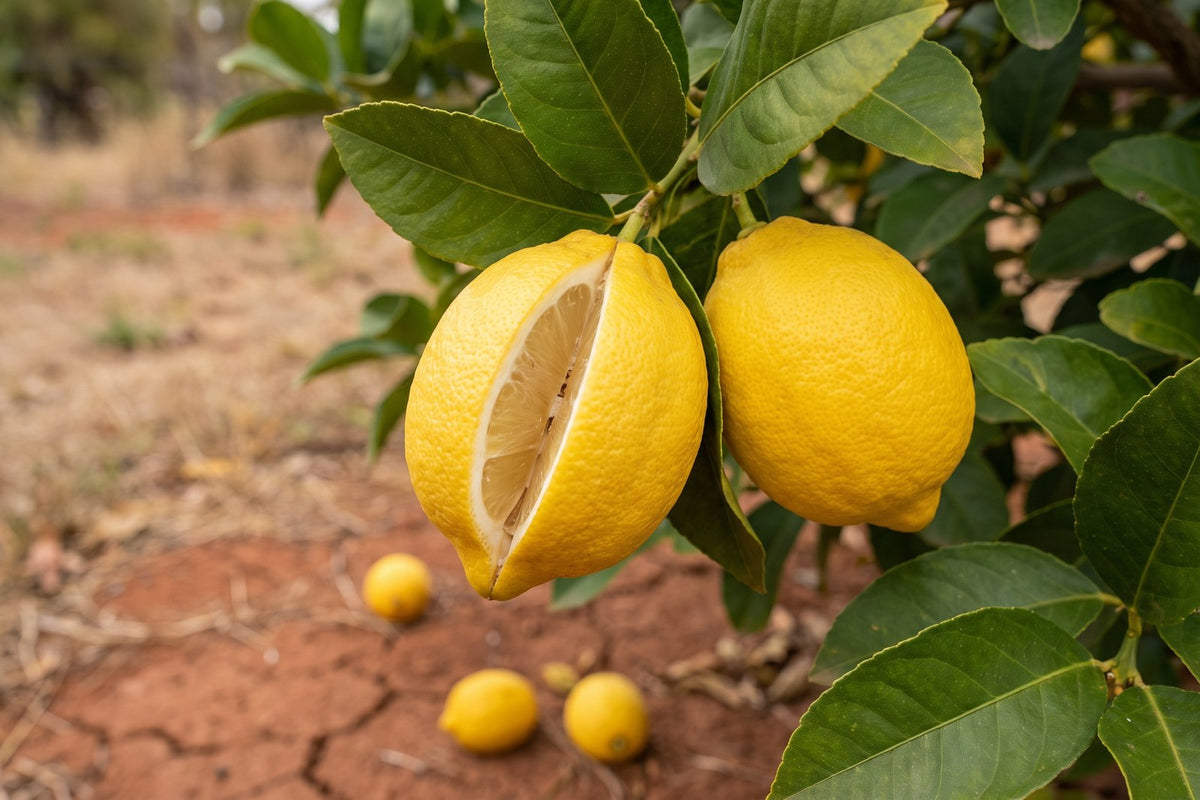
The backyard lemon is close to a national institution, and it grows across most of the country. Frost is the main limit, and the variety choice matters more than most people realise.
| Location | How it performs |
|---|---|
| Brisbane, Gold and Sunshine Coasts | Excellent, cropping heavily with minimal fuss |
| Sydney and coastal NSW | Very good; watch for gall wasp |
| Perth and southwest WA | Excellent - a classic backyard tree there |
| Adelaide | Very good in a warm sheltered spot |
| Melbourne | Good against a north-facing wall; Meyer is the safest choice |
| Canberra and cold inland | Marginal. Protect young trees from hard frost |
A north-facing position against a brick or rendered wall is worth several degrees of frost protection, and in Melbourne or Canberra it can decide whether the tree crops or struggles.
Which lemon to plant
- Eureka - the classic thick-skinned juicy lemon, nearly thornless, and it crops for much of the year in warm climates. The least frost tolerant of the three.
- Lisbon - more vigorous and considerably more cold hardy, with a heavy main crop. The better choice in Melbourne, Adelaide and cooler districts. It is thorny.
- Meyer - technically a lemon-mandarin cross, sweeter and less acidic, compact and the most cold tolerant. The best option for pots, small gardens and cold areas.
Buy a grafted tree. Seedlings from a supermarket lemon take many years to fruit and will not resemble the parent.
Feeding is what makes the difference
Citrus are heavy feeders and most disappointing backyard lemons are simply underfed. Apply a dedicated citrus fertiliser three times a year - late winter, late spring and late summer - spread out to the drip line rather than against the trunk, and water it in well.
Keep grass and weeds clear of the root zone. Citrus have shallow feeding roots and compete poorly with lawn, and a mulched circle out to the drip line makes a noticeable difference to a struggling tree.
Reading yellow leaves
- Yellow between green veins on new growth - iron, common in alkaline sandy soils around Perth and coastal Adelaide. Use chelated iron.
- Yellow between green veins on older leaves - magnesium. Epsom salts at label rate.
- Uniform pale yellow - nitrogen. Feed.
- Yellowing with leaf drop and wet soil - root rot. Do not feed; fix the drainage.
Pests to expect
Citrus gall wasp causes woody swellings on stems and is serious in Sydney and southeast Queensland, and increasingly in Victoria. Cut out and destroy galls before spring emergence - do not compost them.
Bronze orange bug, the stink bug, appears in spring in warm districts. Remove wearing eye protection, because the spray it emits burns skin and eyes.
Citrus leafminer makes silvery trails through new growth in the warm months. It looks alarming and rarely harms an established tree.
Watering and drainage
Consistent deep watering through fruit development - irregular watering causes fruit drop and splitting, which is a common complaint in Perth and Adelaide where summer dry spells are sharp. But drainage matters equally: citrus die readily of root rot in wet ground, so plant on a mound on clay soils.
Frequently asked questions
How long until a lemon tree fruits?
Grafted trees often carry fruit in their first or second year. Expect meaningful harvests from year three. For a broader view of what fruits when, see our guide to fruit trees for every season.
Can I grow a lemon in a pot?
Absolutely. Meyer is the best pot variety. Use at least a 50cm pot, citrus mix, and feed little and often.
Why are there flowers but no fruit?
Young trees shed excess fruit naturally. Persistent failure usually traces to cold winds at flowering or erratic watering.
How much frost can lemons take?
Established trees shrug off light frost. In cold inland areas plant against a warm wall and protect for the first two winters.
Ready to plant?
Browse all our fruit trees, from lemons and limes to mangoes and figs. Check what size to expect with our pot and bag size guide, and see our delivery page for Australia wide shipping. You can also browse the citrus trees range on its own if lemons, limes and oranges are all you are after.


