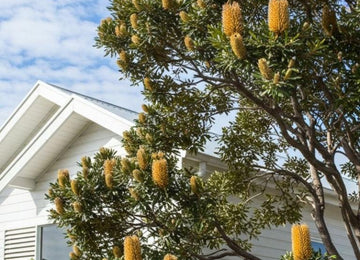


A banksia in flower is a working ecosystem. The big brush-like flower spikes, filled with nectar through autumn and winter when little else is blooming, pull in honeyeaters, wattlebirds, lorikeets and native bees from streets away, which is why banksias head almost every list of bird-attracting native plants for Australian gardens. Add the sculptural seed cones that follow, the distinctive saw-toothed or fine needled foliage, and a toughness bred into them by some of the poorest soils on earth, and banksias earn a place in any Australian garden, native themed or not.
The genus runs from ground-hugging spreaders to 15m coastal trees, so the real skill is matching species to site. Get two things right, sharp drainage for most species and a strict low-phosphorus feeding regime, and banksias are among the lowest maintenance shrubs you can plant and an obvious first choice when you are building a low-maintenance native garden from scratch.
Quick facts
| Botanical name | Banksia species |
| Type | Evergreen native shrubs and trees |
| Height | 1m to 15m depending on species |
| Position | Full sun |
| Soil | Sandy, well drained; B. robur tolerates wet |
| Flowers | Mainly autumn and winter |
| Climate | Coastal and temperate Australia wide |
Choosing a banksia
For flower power
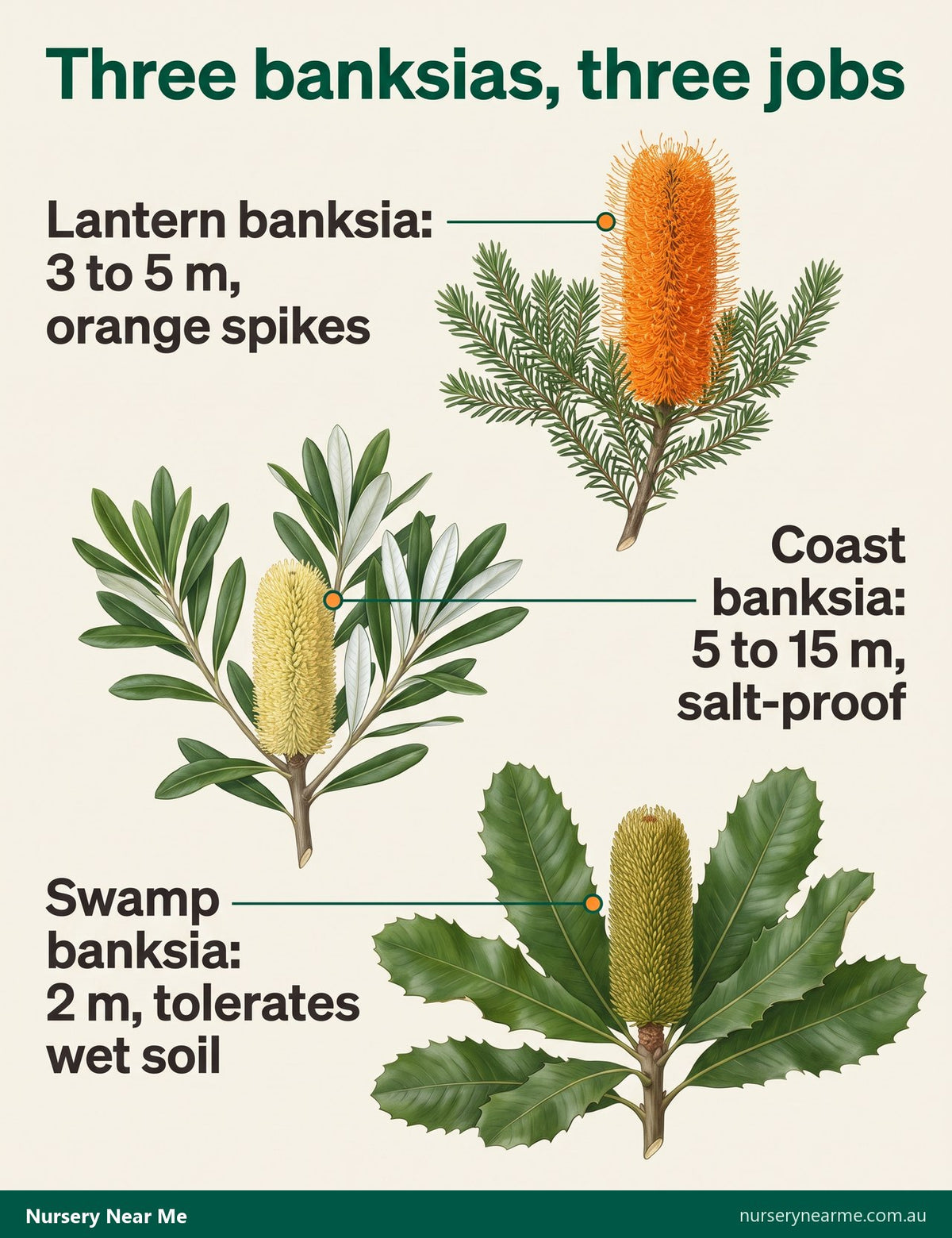
The Lantern Banksia (Banksia ericifolia) is the showpiece: fine soft foliage on a dense 3m to 5m shrub, lit up from autumn through winter with orange flower spikes up to 25cm long. It makes a spectacular informal screen and the honeyeaters will file a change of address the week it starts flowering.
For coastal and larger gardens
The Coast Banksia (Banksia integrifolia), from $10.95 in tubestock, is the salt-proof workhorse of the east coast, growing into a 5m to 15m tree with pale yellow flowers and leaves silvered underneath. It handles front-line salt spray, sand and wind that defeat almost everything else, and it appears again in our roundup of the best plants for coastal gardeners.
For damp or sandy problem spots
Most banksias demand drainage, but the Swamp Banksia (Banksia robur), from $10.95, breaks the rule, thriving in heavy or periodically wet soil with huge leathery leaves and green-gold flower spikes on a 2m shrub. For deep coastal sand, the Wallum Banksia (Banksia aemula) is the specialist, a gnarled character shrub straight from the sandplains.
Companions from the same family
If you are building a full protea-family bed, the silky Albany Woollybush (Adenanthos) adds soft, touchable silver-green texture between banksias, and the Queensland Waratah Tree (Alloxylon flammeum) brings flame-red spring flowers on a rainforest-edge tree for a dramatic backdrop. Both share the banksia's dislike of phosphorus, which keeps feeding simple. The same rule governs their close relatives, so it is worth reading our grevillea care guide before you buy fertiliser for the whole bed.
Planting
Full sun and free-draining soil are the defaults for every species here except swamp banksia. On clay, plant on a mound 20cm to 30cm high or in a raised bed; banksias on waterlogged clay rarely see their second birthday. Do not add manure or standard fertiliser to the hole.
Plant at the same depth as the pot, firm gently and water in well. Space screening plants like lantern banksia 1.5m to 2m apart, and give coast banksia 4m or more from structures. Tubestock establishes remarkably fast, often overtaking larger pots within two seasons, so it is the economical way to plant in numbers. Mulch with gravel or coarse bark, not manure-based products.
Ongoing care

Watering: Water weekly through the first summer, then taper off. Established banksias in the ground need little to no supplementary water except in severe drought, and overwatering causes far more grief than neglect.
Feeding: This is the non-negotiable. Banksias evolved on phosphorus-starved soils and standard fertilisers can kill them. Use only a native slow-release fertiliser low in phosphorus, once in spring, and even that is optional in reasonable soil.
Pruning: Lightly trim behind the spent flowers each year to keep shrubs dense; banksias that are never touched grow leggy with age. Do not cut back into bare, leafless wood on fine-leaf species like ericifolia, as most will not reshoot from it.
Common problems
Sudden collapse: A banksia that yellows and dies in weeks has almost always been hit by root rot in poorly drained soil. There is no cure; replant a robur in that spot, or rebuild the drainage with a mound.
Yellow new growth: Iron deficiency, common in alkaline soils. Apply iron chelates and switch mulches to an acidic one like pine bark.
Fertiliser burn: Scorched leaf edges soon after feeding points to phosphorus toxicity. Water heavily to flush, and swap to a native-specific product.
Few flowers: Usually too much shade. Banksias flower on sunshine; a plant getting under half a day of direct sun will sulk. Prune surrounding growth or move the plant while young.
Where banksias grow in Australia
Banksias are among the most distinctly Australian plants there are - around 170 species, all but one endemic to Australia, and the great majority found only in the southwest of Western Australia. That geography drives almost everything about growing them.
| Location | What to plant |
|---|---|
| Perth and southwest WA | The western species, in their native conditions. Unbeatable |
| Adelaide and dry inland | Western and arid species with very sharp drainage |
| Melbourne and coastal Victoria | B. marginata, B. integrifolia and other eastern species |
| Sydney and coastal NSW | Eastern species - B. ericifolia, B. integrifolia, B. serrata |
| Brisbane and southeast Queensland | Eastern species only. B. robur for damp ground |
| Tasmania | B. marginata is native there and thrives |
Western species usually fail on the east coast
This is the single most useful thing to know. The spectacular large-flowered Western Australian banksias evolved in a Mediterranean climate with dry summers and sandy soils, and they are highly susceptible to Phytophthora root rot in the humid summers of Sydney and Brisbane. Gardeners on the east coast who buy a western species on its own roots usually lose it within a season or two.
Stick to eastern species east of the divide, or buy grafted plants where they are available. The eastern banksias are magnificent in their own right - coast banksia grows on exposed dunes, heath banksia flowers through winter, and swamp banksia handles ground too wet for almost anything else.
Phosphorus is lethal
Banksias are Proteaceae, adapted to the ancient phosphorus-depleted soils that cover most of Australia. They form specialised cluster roots to extract phosphorus that is barely present, and they cannot regulate that uptake when suddenly given plenty.
Ordinary garden fertiliser, lawn fertiliser drifting into a native bed, mushroom compost or fresh manure will kill a healthy banksia. Use only a certified low-phosphorus native fertiliser, and keep lawn feeding well away from native beds. Nothing else kills more banksias in Australian gardens.
Feeding the birds
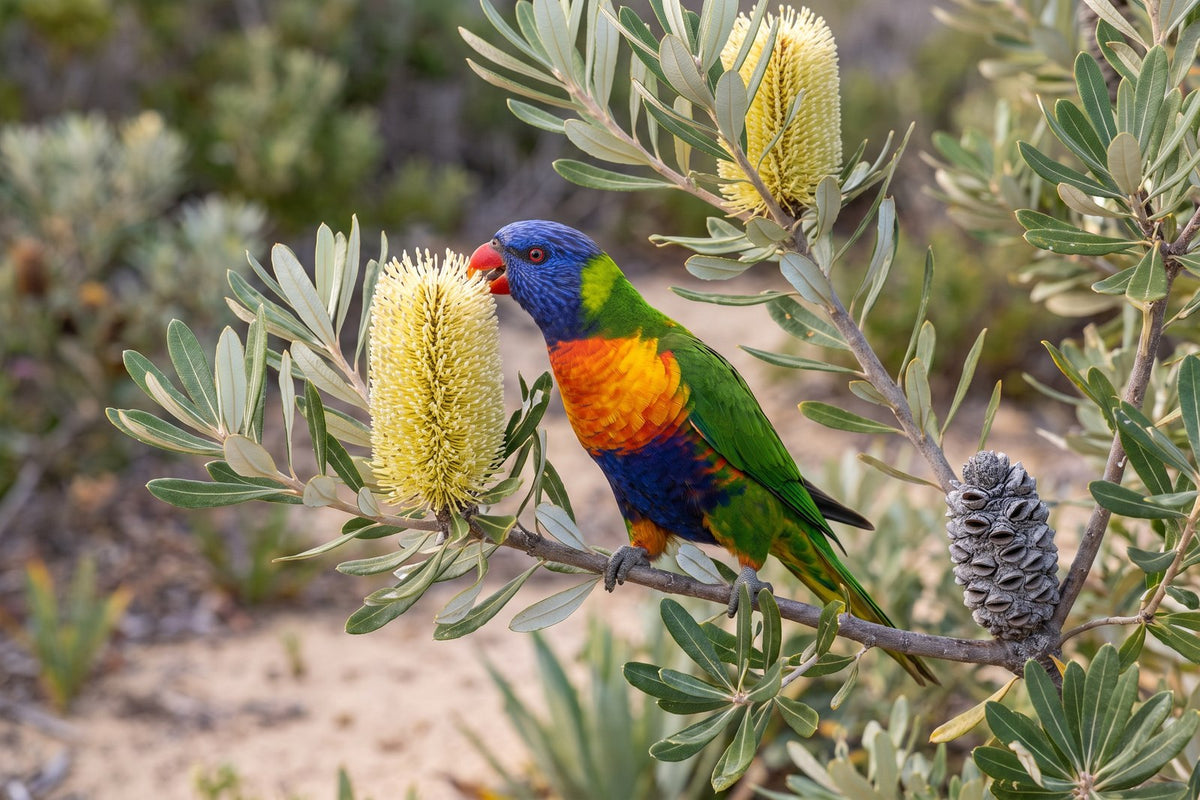
Banksia flower spikes are among the richest nectar sources in the Australian bush, and a mature plant draws honeyeaters, wattlebirds, lorikeets and native bees continuously while in flower. Several species flower through autumn and winter, when little else is available, which makes them genuinely valuable in a suburban garden rather than merely ornamental.
Frequently asked questions
How fast do banksias grow?
Moderately fast once established, typically 30 to 50cm a year for shrub species. Coast banksia is quicker and can put on a metre a year in good coastal conditions.
Are banksias frost tolerant?
Banksia ericifolia, integrifolia and robur all handle moderate frost to around minus 5 degrees once established. Protect young plants for their first winter in cold districts.
Can I grow a banksia in a pot?
Yes, compact forms and young plants do well in large pots of native potting mix with sharp drainage. Feed only with low phosphorus native fertiliser.
Do banksia roots damage pipes or foundations?
Shrub banksias are not a root threat. Give the tree-sized coast banksia the same respect you would any 10m plus tree and keep it at least 5m from structures.
Ready to plant?
Build out the habitat garden with our full native plants collection, plant a whole screen affordably from tubestock, or browse trees for larger natives. Every order is backed by our 30 day satisfaction guarantee.
Native planting is growing fastest where you might not expect. Our year of order data, What Australia Planted in 2025-26, found Victoria the most native-planting state at 61 per cent, ahead of Queensland.
If native bees are part of the plan, our native bee plants collection holds 295 plants with a documented native bee record, rather than a general bee friendly tag.


