

Cordylines are the shortcut to a tropical garden. While flowering plants come and go, a cordyline's colour is in the leaves, burgundy, hot pink, orange, chocolate and striped combinations of all four, and it is on display every single day of the year. Grouped around a pool, layered under palms or standing in a bold pot, they deliver more reliable colour per square metre than almost anything else you can plant.
The single most important thing to know is that cordyline is not one plant. The vivid Cordyline fruticosa types are true tropicals that resent frost and hot direct sun; Cordyline australis from New Zealand laughs at cold and thrives in full sun; and Australia's own native palm lilies quietly handle dry shade under trees. Match the type to your situation and cordylines are genuinely easy.
Quick facts
| Botanical name | Cordyline fruticosa, australis, stricta, petiolaris |
| Type | Evergreen architectural foliage plant |
| Height | 1 to 4m depending on species |
| Position | Bright shade for fruticosa; full sun for australis |
| Soil | Rich, moist, well drained |
| Growth rate | Moderate |
| Climate | Fruticosa frost free; australis to cold temperate |
Choosing a cordyline
Tropical colour (frost free gardens)
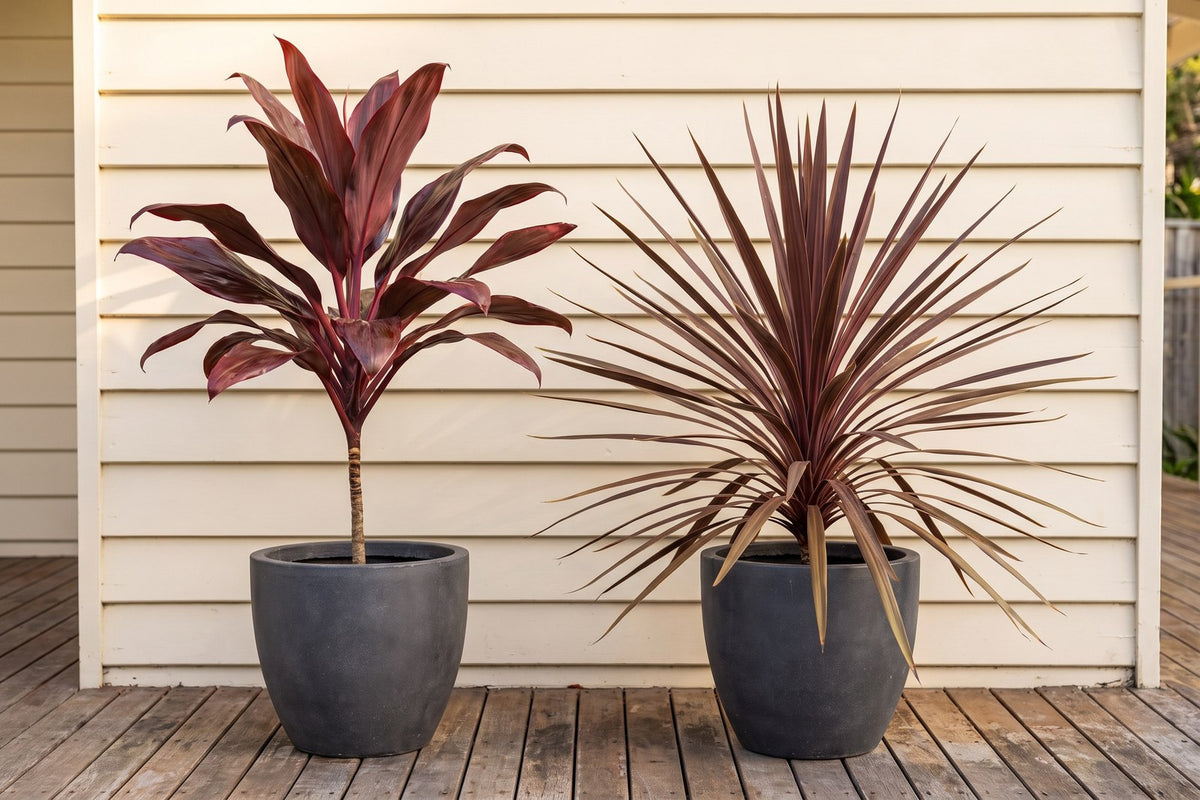
The fruticosa varieties are the painters of the group. Cordyline Rubra is the timeless burgundy-red classic seen in every good tropical garden from Coffs to Cairns. Caruba Black Cordyline, from $17.95, brings glossy near-black chocolate foliage that makes everything planted beside it look brighter, while Tangelo Cordyline glows in coppery orange tones. For the full fireworks, Hilo Rainbow Cordyline streaks green, pink and cream through every leaf, and the green-leafed Ti Plant is the calm backdrop that lets the coloured forms shine.
Cold climate and full sun
Red Sensation Cordyline, from $17.95, is the frost-hardy answer: a spiky-headed Cordyline australis form with bronze-red blades that handles full sun, wind, drought and cold that would flatten a fruticosa, eventually forming a palm-like trunk. It is the cordyline for Melbourne, Adelaide, Canberra and coastal exposure.
Native palm lilies for shade
Two Australian rainforest natives round out the family. Cordyline stricta forms slender bamboo-like canes of deep green in dry shade where little else grows, and the Broad Leaved Palm Lily (Cordyline petiolaris) adds lush wide leaves and sprays of purple berries beneath established trees.
Planting
For fruticosa types, choose bright dappled light or a spot with gentle morning sun; deep shade dulls the colour and harsh afternoon sun scorches it. Shelter from wind keeps the leaves unblemished. Red Sensation goes in full sun anywhere, and the native palm lilies take genuine shade.
All cordylines like rich, free-draining soil, so dig through compost before planting. Set plants at the same depth as the pot, space fruticosa varieties 60cm to 80cm apart for a layered mass, or plant in odd-numbered groups of three or five for the classic resort look. Water in well and mulch. In marginal climates, plant in spring so the root system is established before its first winter.
Cordylines are also natural pot plants, with compact roots that are happy for years in a 40cm container of premium mix. A pair of coloured fruticosa in matching pots flanking a shaded entry, or a single Red Sensation as the thriller in a sunny mixed planter, delivers a lot of style for very little upkeep, and a potted plant can be shuffled under cover for winter in cold districts.
Ongoing care
Watering: Keep fruticosa types evenly moist in the warm months, roughly two waterings a week in dry weather, and drier in winter. Australis and the natives are far less thirsty once settled.
Feeding: Feed in spring and midsummer with a controlled release fertiliser. Well-fed cordylines colour more intensely and hold more leaves down the stem.
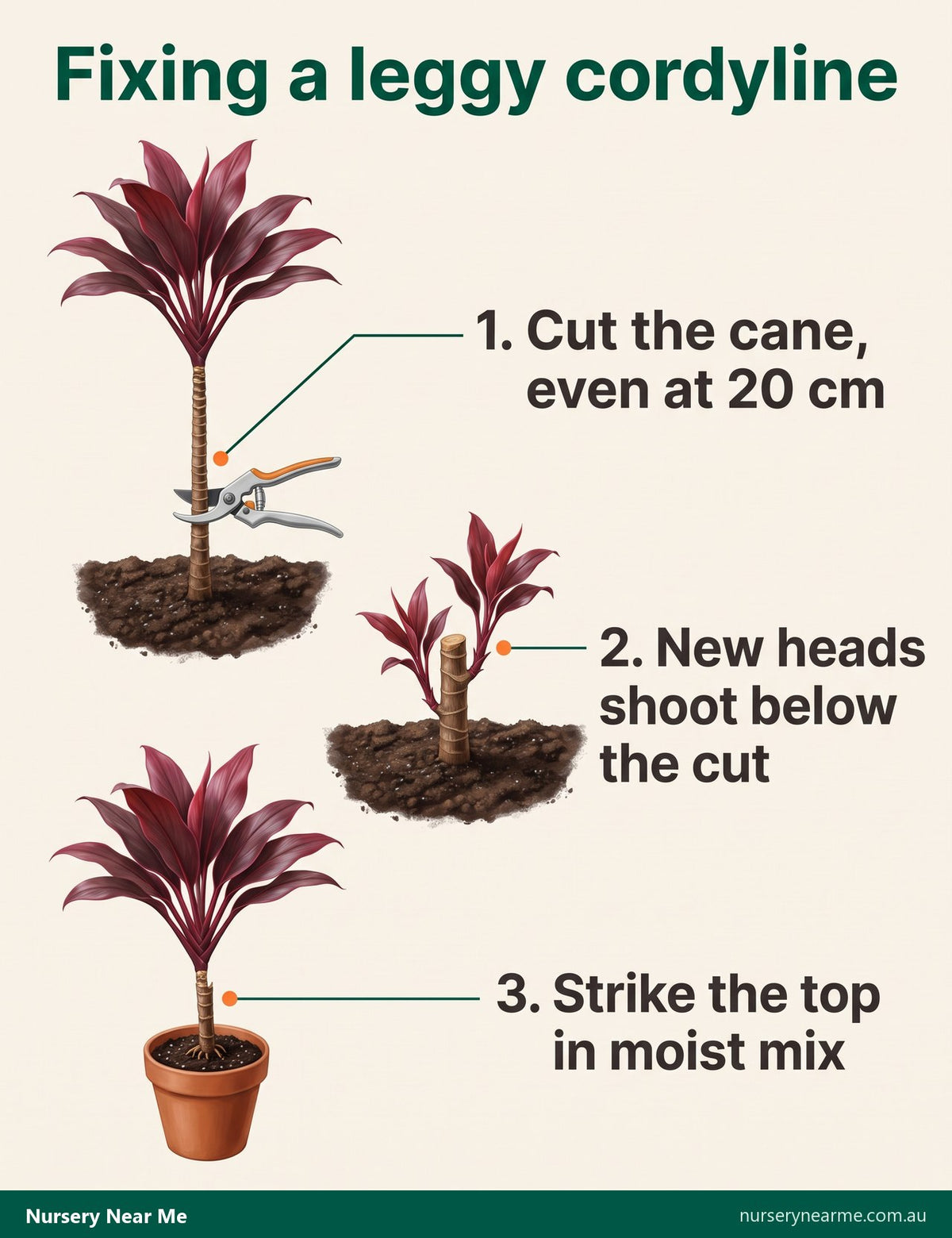
Pruning: When a cane grows leggy or bare, cut it off at whatever height you like, even 20cm from the ground, and it will reshoot below the cut, usually with multiple new heads. The removed top can be re-struck in a pot of moist mix; cordylines are so obliging about this that one plant quickly becomes a hedge if you let it.
Common problems

Scorched, bleached patches: Too much direct sun on fruticosa varieties. Move the plant or provide high shade; new leaves will emerge clean.
Cold damage: Blackened, collapsed foliage after a cold snap. Leave the damage in place as insulation until spring, then cut affected canes below the damage and let them reshoot.
Spider mites: Fine speckling and webbing on leaves, usually on dry, sheltered plants or indoors. Hose foliage regularly and treat with horticultural oil.
Rotting stems: Mushy canes at soil level come from cold wet soil. Improve drainage, water less in winter and re-strike healthy tops as insurance.
Frequently asked questions
Are cordylines frost tolerant?
Cordyline australis forms like Red Sensation handle frost to around minus 7 degrees. Fruticosa types are damaged below about 5 degrees and need a frost free spot, a warm microclimate or a pot that moves.
Can cordylines grow indoors?
Fruticosa varieties make excellent indoor plants in bright indirect light near a window. Colour fades in dim corners, so give them the brightest spot you have.
Why is my cordyline losing lower leaves?
Steady lower leaf drop is normal; cordylines naturally carry foliage at the top of an extending cane. If it looks too leggy, cut the cane low and let it reshoot bushier.
How big do cordylines get?
Fruticosa varieties reach 2 to 3m of slender cane over many years, easily kept lower by pruning. Red Sensation eventually forms a trunked head 3 to 4m tall.
Ready to plant?
Build the whole scene with our palms and tropical collection, add structure from shrubs, or bring the look inside via indoor plants. Our pot and bag size guide shows what to expect at delivery.


