

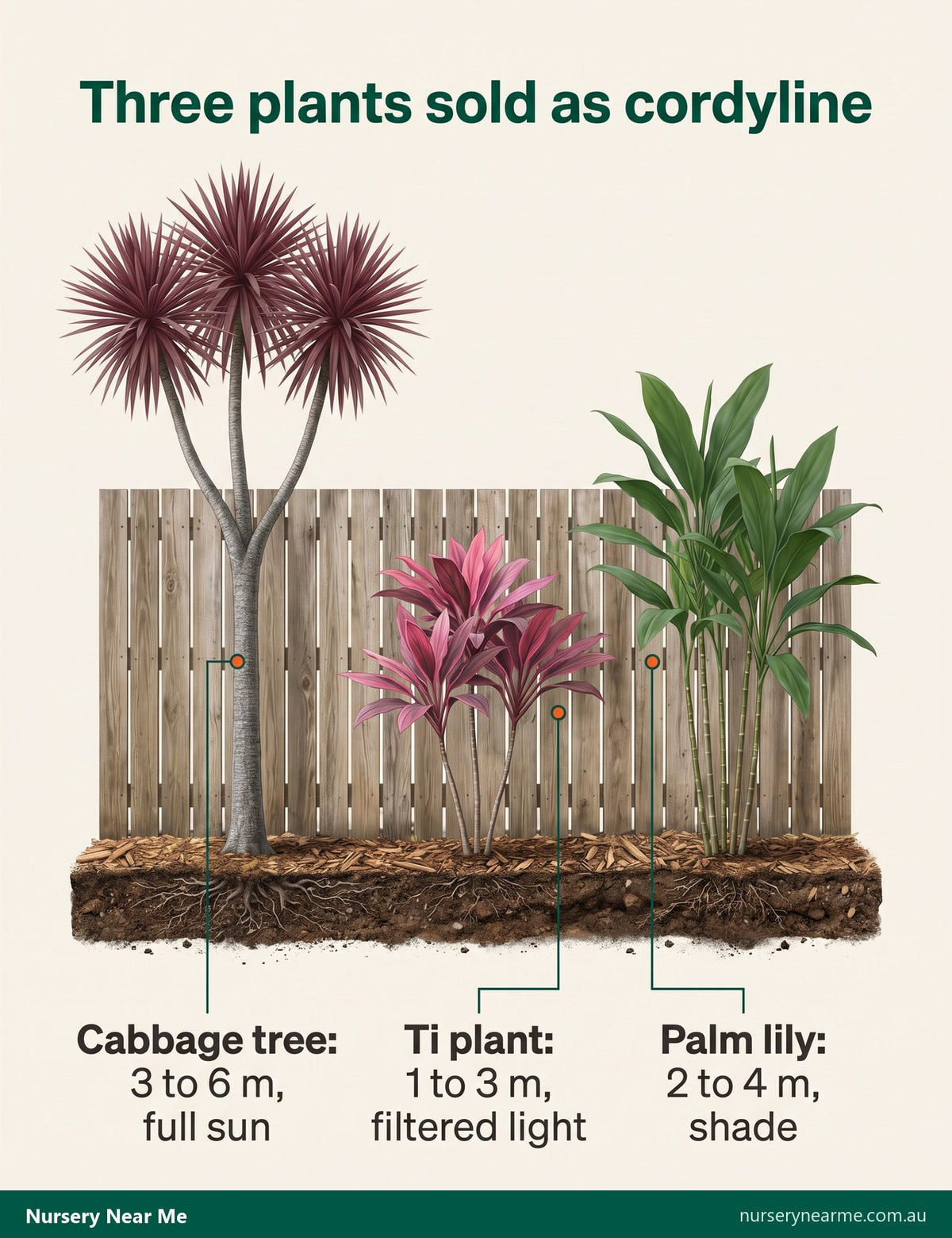
Cordyline is really three different plants sold under one name, and almost every problem Australian gardeners have with them comes from not knowing which one they bought. One group is a cold-hardy New Zealand tree that shrugs off Melbourne frost. Another is a tropical shrub that dies at the first cold snap. The third is an Australian rainforest native that wants shade. Sort out which you are dealing with and cordylines become one of the easiest colour plants in the garden.
The three groups at a glance
| Group | Origin | Size | Cold | Light |
|---|---|---|---|---|
| C. australis - cabbage tree | New Zealand | 3-6 m tree | Hardy to about -5°C | Full sun |
| C. fruticosa - ti plant | Tropical Pacific | 1-3 m shrub | Tender below 5°C | Part shade to filtered sun |
| C. petiolaris / C. stricta - palm lily | Australian rainforest | 2-4 m clump | Moderately hardy | Shade to part shade |
Cordyline australis: the hardy one
This is the plant to choose in Melbourne, Adelaide, Canberra, Tasmania or anywhere that gets real frost. Cordyline australis is the New Zealand cabbage tree, and it grows into a genuine multi-trunked tree three to six metres tall with a spiky architectural crown.
Red Sensation and Red Star both carry deep burgundy foliage and hold it in full sun, which the tropical types cannot do. They are drought hardy once established, tolerate coastal wind and salt, and need essentially no maintenance beyond removing dead lower leaves.
The catch is size. These are trees, not shrubs, and a plant bought in a 200 mm pot for a courtyard will eventually be far too big for it.
Cordyline fruticosa: the colourful one
This is what most people picture - the ti plant, with broad strappy leaves in pink, cream, burgundy, near-black and every combination between. It comes from the tropical Pacific and is the mainstay of subtropical planting in Brisbane, Darwin and northern New South Wales.
The colour range is the point. Choose by what the position needs:
- Near-black and deep burgundy - Negra and Caruba Black for dramatic contrast against green foliage or pale walls.
- Pink and cream variegation - Pink Diamond and Pink Champion for lifting a shaded bed.
- Multi-toned - Hilo Rainbow and Tangelo for warm pink, orange and green together.
- Classic red - Rubra, the reliable old standard.
Ti plants are frost tender and will be badly damaged below about 5°C, which rules them out of open gardens in Melbourne, Canberra and Adelaide except in pots that can be moved.
Palm lily: the Australian natives
The two natives are the least known and often the most useful. Cordyline petiolaris and Cordyline stricta grow naturally in rainforest and wet sclerophyll forest along the east coast of Australia, which means they are adapted to shade, leaf litter and root competition.
They make upright clumping plants two to four metres tall, carry berries that birds take (red on Cordyline petiolaris, purple-black on Cordyline stricta), and tolerate deep shade far better than either of the other groups. In a shaded courtyard or under established trees, they do a job the imported cordylines cannot.
Where they grow in Australia
| Location | Best choice |
|---|---|
| Brisbane, Gold and Sunshine Coasts | All three. Ti plants at their best |
| Darwin and tropical Queensland | C. fruticosa - fastest growth and strongest colour |
| Sydney and coastal NSW | All three; ti plants need a sheltered warm spot |
| Melbourne, Adelaide, Canberra | C. australis in the ground, ti plants in pots |
| Tasmania | C. australis only |
| Perth | C. australis in sun, ti plants in sheltered shade with water |
Getting the light right
This is the second most common mistake after buying the wrong group. The two are not interchangeable:
- C. australis wants full sun. In shade it grows lanky and the burgundy forms fade to dull green.
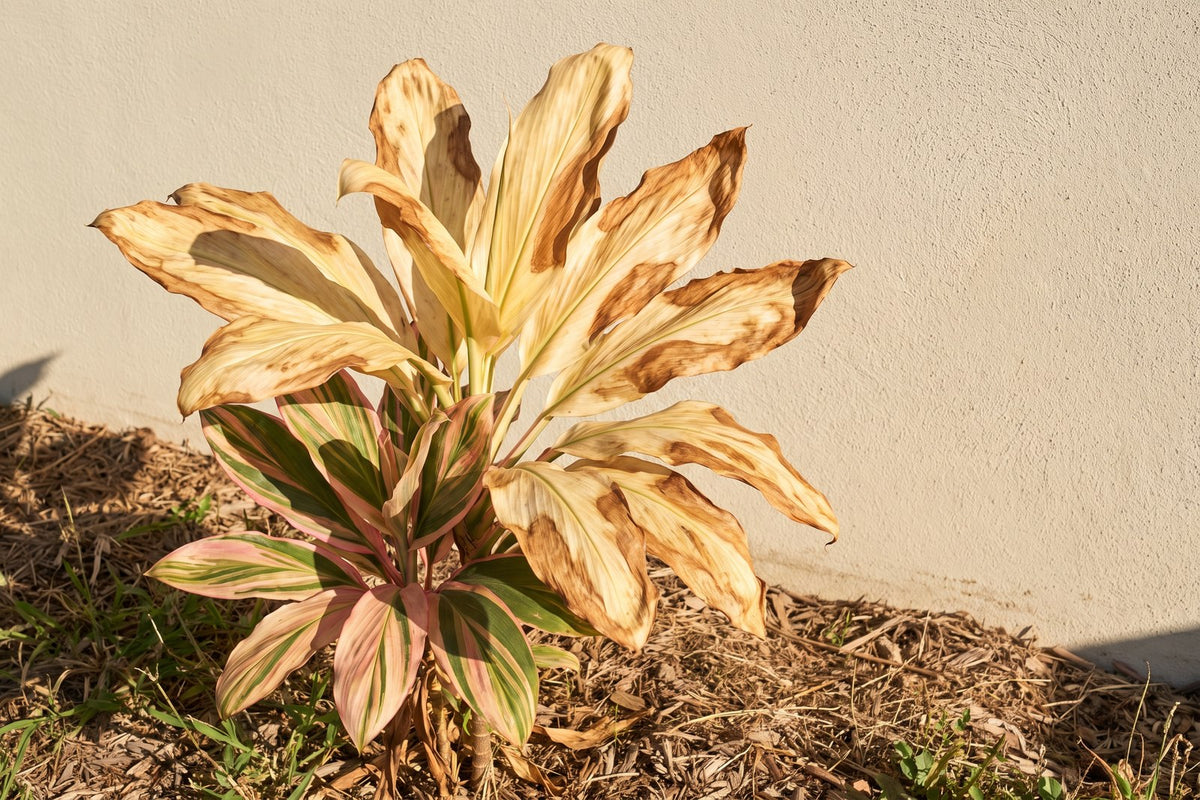
- C. fruticosa wants filtered light or morning sun. Full Australian afternoon sun bleaches and scorches the leaves, especially on pale and pink cultivars.
- Palm lilies want shade to part shade and will burn in an open sunny position.
If a colourful ti plant is looking washed out and scorched, it is almost always in too much sun. If a burgundy australis has gone green, it is in too little.
How to plant
- Plant in spring for tropical types so they establish in warmth. Autumn also works for C. australis.
- Match light to the group using the guide above - it matters more than soil.
- Ensure free drainage. All cordylines rot in waterlogged soil. On clay, plant on a raised mound.
- Enrich with compost for ti plants and palm lilies; C. australis is happy in poorer soil.
- Mulch to 50 mm, kept clear of the stem.
- Water regularly through the first summer, then reduce for C. australis and maintain for the others.
Ongoing care
Watering and feeding
Ti plants and palm lilies like consistent moisture through summer and less in winter. C. australis is genuinely drought tolerant once established. Feed all of them in early spring and again in midsummer with a controlled-release fertiliser; colour intensity in the variegated ti plants noticeably improves with feeding.
Keeping them bushy
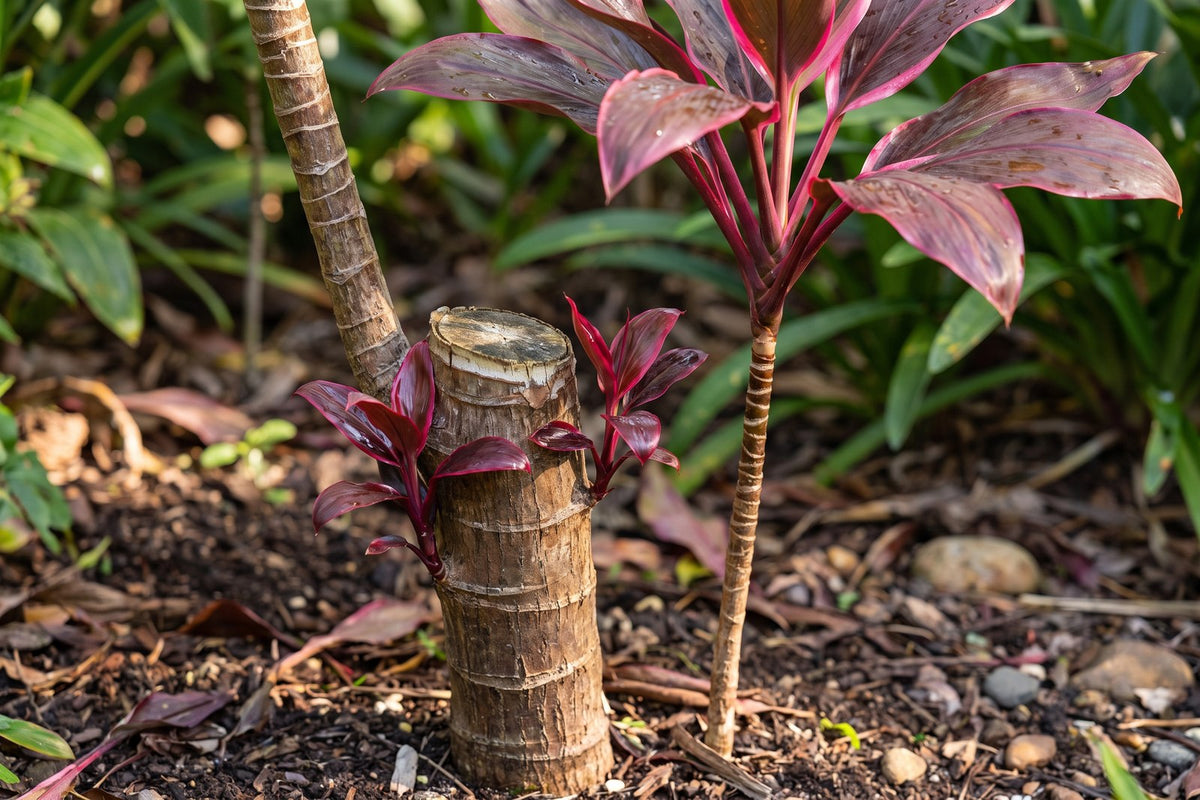
Cordylines naturally lose lower leaves and go leggy with a bare stem. The fix is simple: cut the stem back to any height you like in spring and it will reshoot, usually with two or three new heads, making a fuller plant. The cut section can be struck as a cutting.
Common problems and fixes
- Bleached or scorched leaves on a ti plant means too much direct sun. Move it into filtered light.
- Burgundy foliage turning green on C. australis means too much shade.
- Bare leggy stems is normal ageing. Cut back in spring and it reshoots fuller.
- Blackened collapsed growth after winter is frost damage on a ti plant. Cut back in spring, and consider moving it into a pot.
- Brown leaf tips usually means dry soil, salty water or low humidity, most common in Perth and Adelaide.
- Soft rotting base is drainage. Cordylines will not tolerate wet feet through winter.
Using them in the garden
Cordylines are vertical accent plants, so they work best punctuating lower planting rather than massed on their own. A dark Negra behind pale groundcover, a row of Rubra lining a tropical path, or a single Red Sensation as a courtyard focal point all use the shape well. They sit naturally with palms, philodendrons, heliconia and other subtropical foliage, and the strappy leaves contrast nicely against rounded plants such as xanadu.
Frequently asked questions
What is the difference between Cordyline australis and Cordyline fruticosa?
C. australis is a cold-hardy New Zealand tree reaching three to six metres, suited to full sun and frost-prone southern gardens. C. fruticosa is a tender tropical shrub of one to three metres, grown for its pink, cream and burgundy foliage, and damaged below about 5°C. They need opposite conditions.
Which cordyline survives frost?
Cordyline australis cultivars such as Red Sensation and Red Star handle frost down to about -5°C and are the right choice for Melbourne, Canberra, Adelaide and Tasmania. Tropical ti plants must be grown in pots and sheltered over winter in those climates.
Are any cordylines Australian natives?
Yes. Cordyline petiolaris and Cordyline stricta, the palm lilies, grow naturally in rainforest along the east coast of Australia. They tolerate deep shade better than the imported species and produce berries that attract birds.
Why is my cordyline losing its colour?
Usually a light problem. Burgundy C. australis fades to green in shade, while pink and variegated ti plants bleach in too much direct sun. Feeding in spring also improves colour intensity in the variegated forms.
How do I fix a leggy cordyline?
Cut the stem back to whatever height you want in spring. It reshoots readily, often with two or three heads, making a fuller plant than before. The removed top can usually be struck as a cutting.
Can cordylines grow in full shade?
The Australian palm lilies can, and are the best choice for a genuinely dark position. Ti plants tolerate part shade but lose colour in deep shade, and C. australis needs full sun to keep its form and colour.
Ready to plant?
We grow all three groups, from hardy Red Star through the full ti plant colour range to the native palm lilies. Browse our tropical garden plants, or structured foliage for more accent options.
Building a subtropical garden? See designing a tropical garden and growing philodendron xanadu.


