

Much like a master artist chooses their canvas, choosing the right tree for a particular sun aspect requires precision. Selected thoughtfully, a feature tree's form and vitality transform a simple entryway into something memorable, whether that spot bakes all afternoon or barely sees the sun at all.
The mistake most gardeners make is choosing a tree they like and then finding somewhere to put it. Reverse that order. Measure the light your position actually receives across a full day, then choose from the trees that suit it. This guide covers both ends of the spectrum, the traits that make a tree suitable for each, and how to keep it looking good once it is in.
Ideal trees for low sun spots
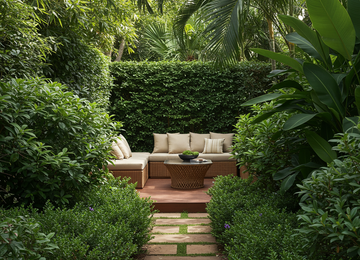
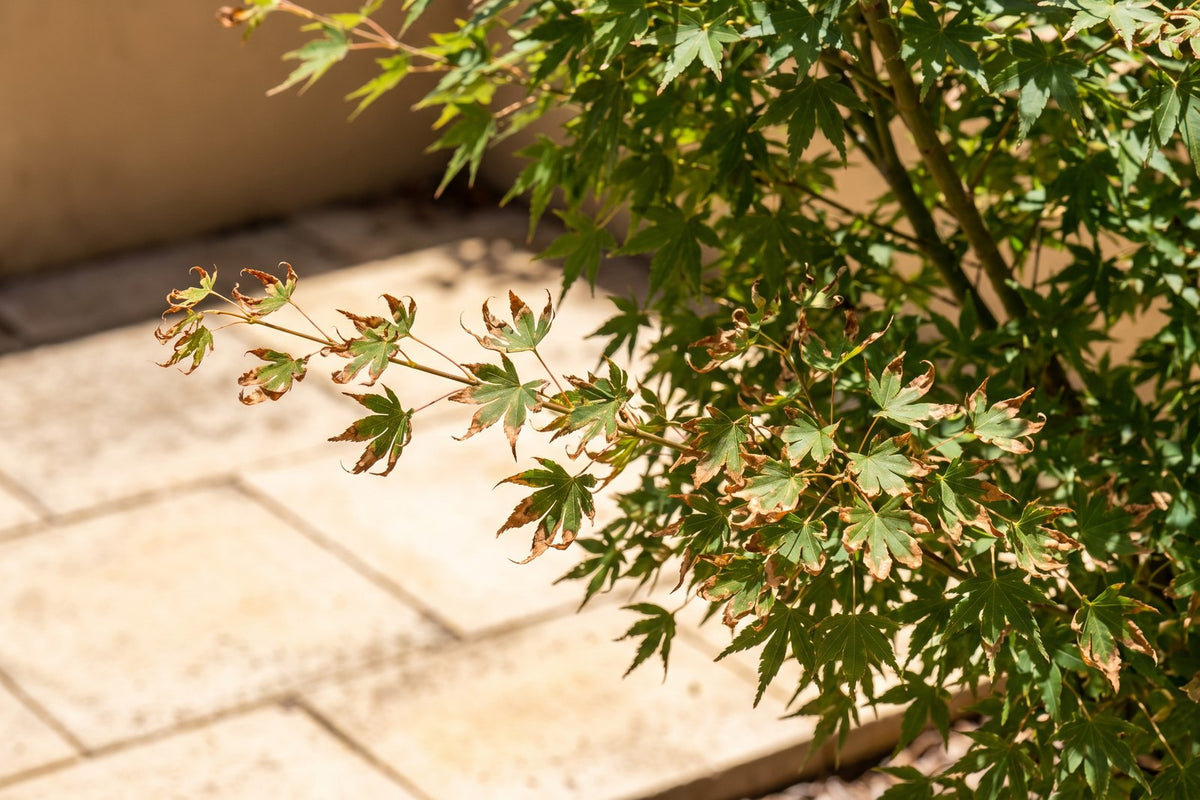
For low sun spots, the Japanese maple (Acer palmatum) stands out. Thriving in modest light, its delicate leaves unfurl in a splendid array of colours, turning shaded entrances into serene retreats. It is slow, well-behaved and never outgrows a courtyard, which is exactly what you want beside a door.
Characteristics of shade-tolerant trees
Shade-tolerant trees show remarkable adaptability, thriving where sunlight is scarce. These resilient specimens prosper despite limited exposure, and in an environment where sun exposure is a fraction of the norm, they use indirect light efficiently. That ability makes them exemplary choices for challenging spots that would kill a sun-lover outright.
Noteworthy examples include the Japanese maple, whose exquisite foliage brings vibrancy to dim corners and offers interest across the seasons. The striking autumn hues prove that shade need not diminish aesthetic appeal. Our essential Japanese maple care guide covers the varieties that cope best with Australian conditions, and it is worth reading before you commit, since some cultivars scorch far more readily than others.
Benefits of planting in low sun areas
Planting in low sun areas offers advantages beyond the aesthetic value of a shaded garden.
Low sun areas do not experience the intense solar radiation that harms delicate leaf structures and drives soil moisture evaporation. Plants in these areas tend to require less frequent watering, as the soil retains moisture far more effectively. This promotes sustainable gardening, conserving water and reducing maintenance effort considerably.
Experimenting with shade-tolerant varieties reveals a rich world of possibilities, where difficult corners become the most atmospheric parts of the garden. If your whole block sits in shade, our guide to the best canopy trees to create shade works from the opposite direction and explains how the canopy above changes what you can grow below.
Perfect trees for high sun spots
When selecting a doorway feature tree for a hot, exposed position, the eucalypt immediately comes to mind. Renowned for its resilience, striking foliage and fast growth, it thrives in bright, sun-drenched locations, though its eventual size rules it out for small courtyards.
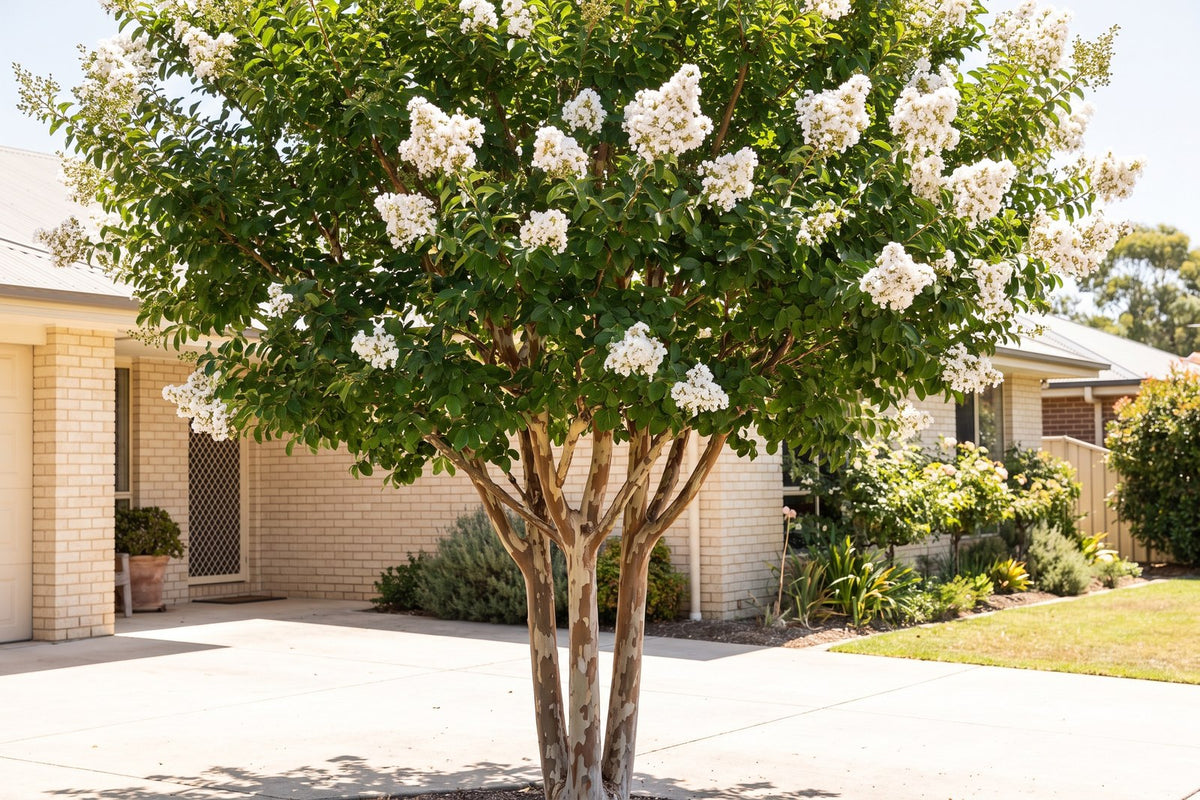
The flowering jacaranda not only withstands direct sunlight but adds a genuine spectacle of lavender bloom to the landscape for several weeks each year. Crepe myrtles and ornamental pears fill the same role at a smaller scale.
Essential traits of sun-loving trees
High sun spots expose trees to intense light and radiant heat from paving, demanding resilient and adaptive characteristics.
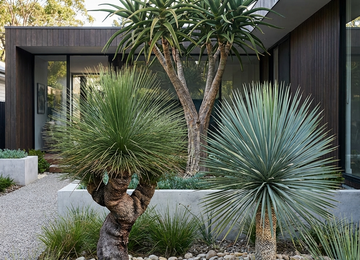
Sun-loving trees produce robust leaves capable of withstanding intense solar radiation, often with a waxy or silvery surface that reflects light. Their root systems need to be extensive, allowing efficient water uptake and firm anchoring in sun-baked soil. Drought tolerance, heat resistance and the ability to cope with prolonged direct sunlight are the critical traits to look for.
These trees maximise photosynthesis, translating into the vigour and growth that make them iconic features in sun-soaked areas. Selecting trees with these attributes guarantees a visually appealing and ecologically balanced result even in the brightest of positions.
Advantages of full sun exposure
Full sun exposure benefits trees immensely. The full spectrum of sunlight enables them to maximise photosynthetic capacity, translating into robust growth and vibrant foliage. Trees can showcase their natural form to the fullest, making them magnificent focal points.
Increased light also enhances flowering. Sunlight is the vital component in creating energy, and this surplus supports not only growth but flower and fruit production. Trees in full sun routinely display more bountiful and colourful blooms than the same species in part shade.
Such trees also offer superior ecological benefits, providing substantial shade, habitat for wildlife and improved air quality. Their robust structure makes them invaluable assets in creating an inviting outdoor space, and they are the backbone of the schemes described in feature trees that instantly elevate a front yard.
Choosing the right tree for your garden
When selecting a feature tree, versatility and adaptability are key. A single garden presents diverse challenges, from a brightly lit frontage to a secluded shady corner behind the house.
In high sun spots, Australian native trees such as eucalypts and acacias are ideal. These species are hardy and drought-tolerant, and bring rich texture and colour to sun-soaked areas. For low sun spots, consider the elegant Japanese maple or a weeping cherry. Both thrive in shaded environments, adding depth and charm without compromising on structure.
Factors to consider for low sun spots
- Shade tolerance: select trees that genuinely thrive in limited sunlight rather than merely surviving it.
- Growth rate: opt for slower-growing species to avoid the spindly, stretched growth that shade encourages.
- Soil conditions: ensure compatibility with the soil type and moisture levels, since shaded soil stays wetter for longer.
- Maintenance needs: consider trees that demand minimal pruning in shaded conditions.
Proper evaluation of these factors helps you select the most suitable tree. Remember that the tree should not only survive but enhance the space. If the position is a small paved courtyard, our guide to creating a Japanese-inspired garden in Australia shows how a single well-placed maple can carry an entire design.
Factors to consider for high sun spots
In high sun spots, selecting resilient trees is imperative so they flourish despite continuous exposure.
Start by evaluating trees with high heat tolerance that can withstand prolonged direct sunlight while still providing shade and visual value. Ideal species retain healthy foliage even in the sunniest conditions rather than dropping leaves each summer.
Consider the soil's water retention capacity as well. High sun spots dry out fast, so selecting trees with deep root systems that reach subsoil moisture ensures sustained health. Durability is the other key attribute: hardy species significantly reduce ongoing care, making them excellent choices for areas you would rather not fuss over.
Maintenance tips for feature trees
For optimal feature tree health, a schedule of regular watering is essential, especially through the establishment phase. Pruning dead or diseased branches improves vigour, while checking soil conditions ensures nutrients are actually available. Consistent mulching aids moisture retention, and feeding during the growing season promotes robust growth. Monitoring for pests and disease allows timely intervention before real damage occurs.
Caring for shade-tolerant trees
Selecting a shade-tolerant species is the crucial first step, focusing on those that naturally thrive in subdued light. These trees often carry broader, thinner leaves to maximise photosynthesis. Plant them where they receive dappled sunlight or sit beneath the canopy of taller trees.
Watering remains critical. Though needed less frequently than for sun-loving trees, ensure they receive a deeply penetrating soak to encourage extensive root development rather than a shallow sprinkle. Mulching helps retain moisture and protects roots from temperature swings.
Regular pruning encourages healthy growth patterns and prevents overcrowding, and feeding with a balanced slow-release formula provides the nutrients needed. Japanese maples in particular resent being planted too deep and dislike hot afternoon wind, which browns the leaf margins long before drought does.
Caring for sun-loving trees
Sun-loving trees are the epitome of resilience, thriving where sunlight is abundant. Top choices include eucalypts, known for their striking bark and aromatic foliage, along with acacias, crepe myrtles and ornamental pears.
Ensure they receive a minimum of six hours of direct sunlight daily. This exposure is crucial for their photosynthetic processes and overall health. Adequate watering is imperative during their initial growth phase: soak the soil to a good depth to support deep-rooted systems, and consider drip irrigation for consistent moisture. Mulching helps retain soil moisture and suppresses weeds.
Feed with a complete slow-release fertiliser in spring, and timely pruning will maintain structure. One important caveat applies to Australian natives: eucalypts, acacias and grevilleas are sensitive to phosphorus, so use a native-specific low-phosphorus formulation for these rather than a general garden fertiliser. Applying the wrong product is one of the most common ways a healthy native tree is accidentally killed.
Reading sun in an Australian garden
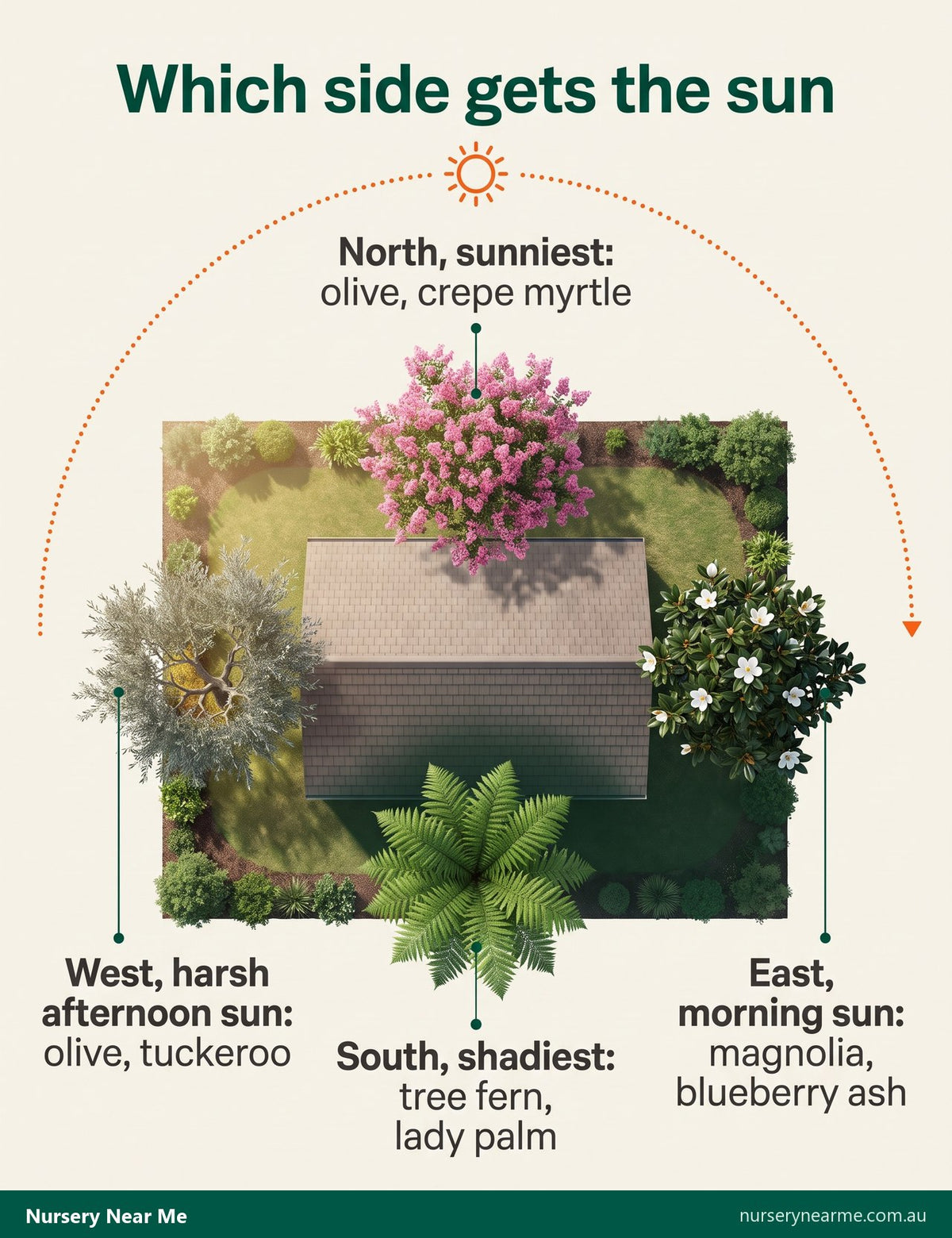
Before choosing a feature tree, work out what light the position actually gets - and note that the rules here are the reverse of northern hemisphere gardening advice, because the sun tracks through the northern sky.
| Aspect | Light in Australia | Feature trees that suit |
|---|---|---|
| North-facing | Sunniest, hot most of the day | Olive, jacaranda, crepe myrtle, golden penda, foxtail palm |
| West-facing | Brutal afternoon sun and reflected heat | Olive, agave, Bismarck palm, tuckeroo |
| East-facing | Morning sun, afternoon shade | Magnolia, blueberry ash, tibouchina, Japanese maple in cool areas |
| South-facing | Shadiest, bright indirect | Tree fern, lady palm, native gardenia, palm lily |
High-sun feature trees
- Olive - silver evergreen foliage, genuinely drought tolerant, and it thrives on reflected heat that damages other trees. Ideal for Adelaide, Perth and inland gardens.
- Jacaranda - the classic Australian summer flowering tree, needing full sun and real room at eight to fifteen metres.
- Crepe myrtle - four seasons of interest at a suburban scale, and one of the few trees that performs in every capital.
- Golden penda - evergreen Queensland native with gold flowers, six to ten metres, and well-behaved roots.
- Illawarra flame tree - spectacular scarlet flowering on bare branches, Australian native, for large gardens.
- Foxtail palm - self-cleaning, salt and drought tolerant, and it handles full sun and coastal exposure.
Low-sun and shaded feature plants
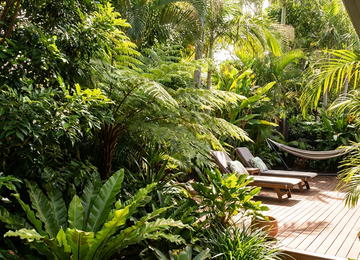
- Tree ferns - Cyathea australis in cooler districts, C. cooperi in the subtropics. Nothing else gives a shaded garden instant maturity like they do.
- Lady palm (Rhapis excelsa) - clumping, slow, tidy, and excellent in a shaded courtyard.
- Native gardenia (Randia fitzalanii) - tolerates part shade and gives intense evening fragrance in warm gardens.
- Palm lily (Cordyline petiolaris) - Australian native that handles genuinely deep shade.
- Blueberry ash - a rainforest margin tree, so it flowers in part shade where most flowering trees will not.
The west-facing problem
A large share of Australian gardens have a west-facing area that takes full afternoon sun plus heat radiating off paving, a driveway or a wall. This is the hardest position on most properties, and it is where soft-leaved trees fail repeatedly.
Plant for it honestly. Olive, tuckeroo, Bismarck palm and agave will look good permanently there with no irrigation. A Japanese maple, magnolia or tree fern will not, no matter how carefully it is watered.
Deciduous where it counts
On the north and west sides of a house, a deciduous feature tree does something an evergreen cannot - it shades the walls and windows through summer, then drops its leaves and lets winter sun through. Jacaranda, crepe myrtle, ornamental pear and Illawarra flame tree all do this, and the comfort difference inside the house is real.
Before you plant
- Check mature width, not just height. Most trees finish about as wide as they are tall.
- Allow half the mature canopy width from the building, minimum.
- Keep vigorous roots away from sewer, stormwater, slabs and pools - figs and poincianas especially.
- Plant in autumn across most of Australia, or spring for palms and tropicals.
- Consider litter - fine leaf drop and fruit staining matter enormously beside pools and light paving.
Ready to plant?
Match the tree to the light and the rest becomes straightforward. A shade-tolerant specimen in a dim corner and a heat-hardy one in the hot spot will both outperform a compromise planted in the wrong place.
Browse our feature trees to find a centrepiece, or narrow the search with our shade-tolerant trees and plants and sun-tolerant trees and plants.


