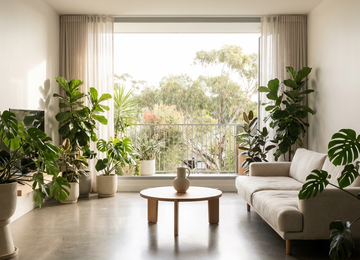
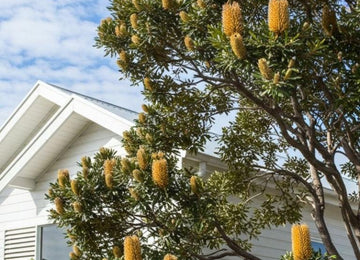


There’s a moment when you pull into a street and one home just stands out. Not because it’s bigger. Not because it’s newer. But because it feels balanced, intentional, and finished.
Almost always, that impact comes down to one thing - a well-chosen feature tree in the front yard.
The right tree anchors the house, softens hard lines, adds structure, and quietly increases perceived property value. The wrong tree can look awkward, block windows, lift paving, or outgrow the space within a few years.
If you’re planning to elevate your front yard, this guide will walk you through the exact types of feature trees that work in Australian conditions, how to position them correctly, and what most homeowners get wrong.
Quick Expert Summary
The best feature trees for instantly elevating a front yard in Australia are compact, architectural, and proportionate to the home.
For small modern blocks, Magnolia ‘Teddy Bear’ or Crepe Myrtle varieties create clean structure without overwhelming the facade.
For larger homes, Magnolia ‘Little Gem’, advanced Olive trees, or Japanese Maples provide height, symmetry, and long-term presence.
The key is scale, placement, and root management - not just appearance.
What Makes a Front Yard Feature Tree Actually Work
A feature tree isn’t just a plant placed in the middle of a lawn. It performs three critical functions:
- Anchors the architecture
- Frames the entry or driveway
- Adds vertical structure without clutter
In our experience working with Australian front yards, the biggest mistake homeowners make is choosing a tree based purely on flower colour. Structure always comes first. Flowers are a bonus.
Before selecting a tree, consider:
- Final mature height and width
- Root behaviour near driveways or foundations
- Sun exposure across the front of the home
- Whether you want evergreen structure or seasonal drama
A well-chosen tree should look good year-round, not just during flowering season.
Best Feature Trees for Small Front Yards

On modern Australian blocks, space is limited. The goal is presence without bulk.
Magnolia ‘Teddy Bear’
A standout for compact homes. Dense, glossy foliage with a naturally tight, upright form.
- Mature height: 3 to 4 metres
- Evergreen
- Minimal pruning required
- Excellent for symmetrical placement either side of an entry
Its structured shape makes it ideal for contemporary builds with clean lines, and our Teddy Bear Magnolia growing guide covers everything from soil pH to pruning once it is in the ground.
Crepe Myrtle (Lagerstroemia)
Perfect for adding seasonal interest without overwhelming the facade.
- Mature height: 3 to 5 metres depending on variety
- Deciduous with vibrant summer flowers
- Beautiful smooth bark in winter
Works well as a single statement tree slightly offset from centre.
Japanese Maple (for cooler climates)
Best suited to VIC, TAS, and cooler NSW regions.
- 2 to 4 metres depending on variety
- Elegant branching structure
- Reliable autumn colour
In subtropical Queensland, these can struggle in full sun, so placement is critical. Our Japanese maple care guide for Australian gardens goes into which varieties cope best with heat and where to site them.
Best Feature Trees for Larger Homes
If your frontage allows for more scale, you can introduce stronger vertical presence.
Magnolia ‘Little Gem’
One of the most reliable front yard feature trees in Australia.
- Mature height: 4 to 6 metres
- Evergreen
- Large fragrant white flowers
- Ideal for screening and entry framing
Planted in pairs, it creates instant symmetry and presence.
Advanced Olive Trees
Architectural, timeless, and low maintenance.
- Excellent drought tolerance
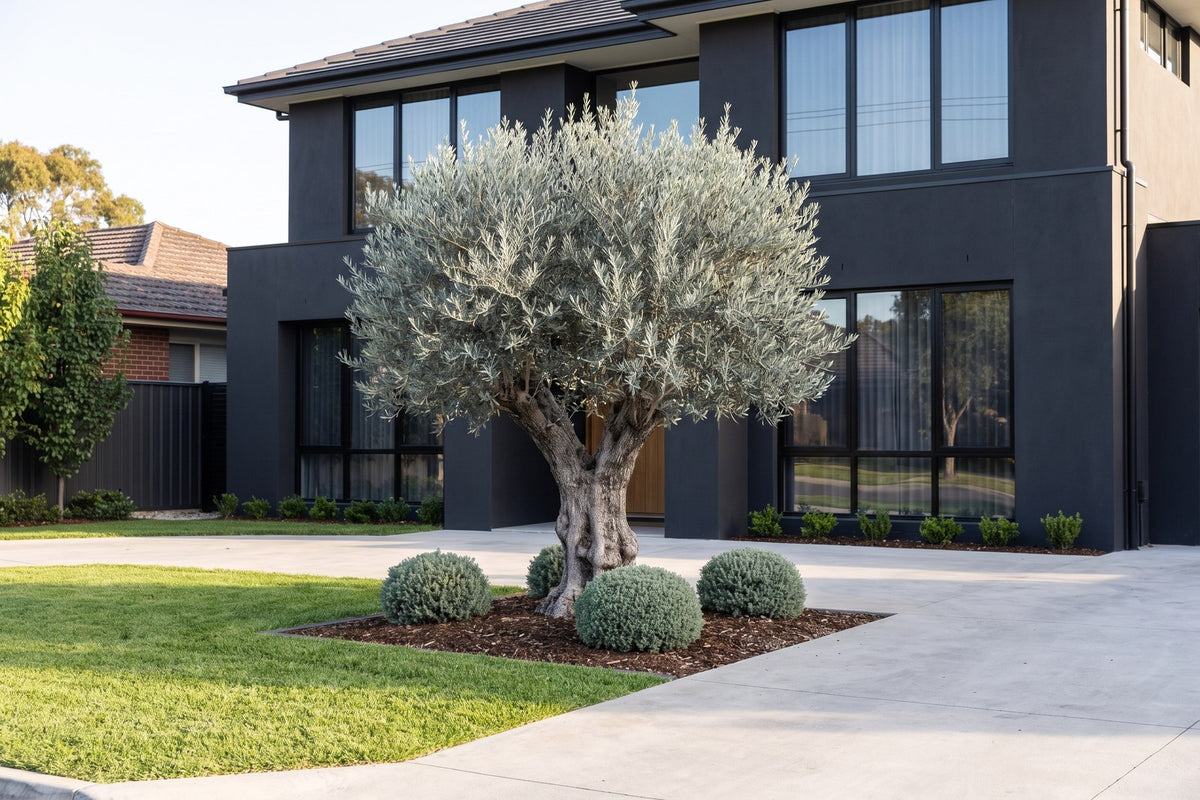
- Silvery foliage contrasts beautifully with dark modern facades
- Works exceptionally well in Mediterranean-style homes
For maximum impact, use advanced sizes rather than small tubes. Front yards benefit from instant maturity.
Ornamental Pear (Pyrus calleryana)
Strong upright form and dramatic autumn colour.
- 6 to 8 metres mature height
- Deciduous
- Creates height quickly
Best for wider blocks where overhead powerlines are not an issue. If you like the form, our roundup of the top ten ornamental pear varieties compares the upright, weeping and compact selections.
Where to Position a Feature Tree for Maximum Impact
Placement matters more than the species.
Here are the three strongest positioning strategies:
1. Offset Framing
Place the tree slightly off-centre to balance garage-heavy facades. This softens dominance and draws attention to the entry.
2. Symmetrical Entry Framing
Two identical trees either side of a pathway or front door creates a formal, high-end look. Works exceptionally well with Magnolia varieties.
3. Lawn Anchor
A single statement tree in open lawn can work - but only if it has strong structure. Avoid small, weak-canopy species that look lost.
Never plant too close to the house. Allow enough space for full mature width so the tree enhances rather than competes with the structure.
Soil Preparation and Establishment
Most front yards in Australia suffer from compacted builder’s clay or poor sandy fill.
Before planting:
- Dig a hole at least twice the width of the root ball
- Break up surrounding soil to encourage outward root growth
- Incorporate compost to improve structure
- Ensure proper drainage
Front yard trees fail most commonly from waterlogging, not drought.
For the first 8 to 12 weeks:
- Deep water 2 to 3 times per week
- Apply 5 to 7cm organic mulch
- Keep mulch away from the trunk
This establishment phase determines long-term performance.
Expert Design Insights Most People Miss

Scale Relative to Roofline
Your tree should reach roughly one-third to one-half the height of the house for ideal visual balance. Anything smaller looks underwhelming. Anything larger overwhelms.
Evergreen vs Deciduous Strategy
- Evergreen trees provide year-round structure and privacy.
- Deciduous trees allow winter sun into the home and create seasonal variation.
- If you are torn between the two, our guide to evergreen versus deciduous trees in Australia works through the trade-off in detail.
Choose based on climate and facade orientation.
Instant Impact vs Long-Term Growth
Small pot sizes can take years to deliver presence. In front yards, investing in larger advanced stock often produces a dramatically better result from day one.
Frequently Asked Questions
What is the best low-maintenance feature tree for a front yard?
Magnolia ‘Teddy Bear’ and advanced Olive trees are among the lowest maintenance options. They require minimal pruning and adapt well to Australian conditions.
How close can I plant a feature tree to my house?
Generally, allow at least 2 to 3 metres from foundations for small ornamental trees. Larger species may require more space depending on root spread.
Should I choose evergreen or deciduous?
In Queensland and warmer regions, evergreen often works best for consistent structure. In cooler climates, deciduous trees can add strong seasonal character.
How big should a feature tree be when planted?
For front yards, larger advanced trees create immediate visual impact and often outperform small tube stock in perceived value.
Can feature trees increase property value?
Strong landscaping, particularly with mature feature trees, can significantly improve curb appeal and buyer perception.
Final Thoughts
A front yard should feel intentional, structured, and welcoming. The right feature tree transforms a flat facade into something refined and memorable.
Choose for structure first. Size second. Flowers third.
Start with quality stock, plant it properly, and give it the right space to mature. Done correctly, a feature tree becomes the defining element of your home’s street presence.
If you’re selecting a tree for your front yard, Nursery Near Me offers premium-quality feature trees suited to Australian conditions, from compact magnolias to advanced statement specimens.
Feature plants that are not trees
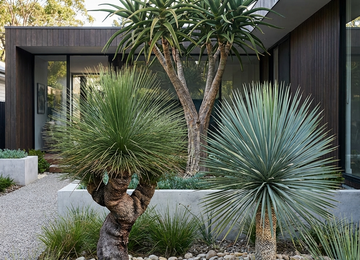
A front yard does not always have room for a tree, and sometimes a tree is not the right answer anyway. On narrow blocks, in courtyards, beside a driveway or where roots near a slab are a genuine risk, an architectural plant can carry the same visual weight at a fraction of the size.
Agave and other sculptural succulents
Nothing else delivers this much form for this little water. A single mature agave in gravel or against a rendered wall reads as sculpture, holds its shape year round and needs essentially no maintenance. Site it well away from paths and doorways, because the leaf tips are genuinely sharp, and give it sharp drainage rather than rich soil.
Cordylines and strappy accents
Cordylines bring colour that does not depend on a flowering season: burgundy, near-black, coppery orange and striped combinations, all on display every day of the year. Planted in odd-numbered groups of three or five, or in matched pots either side of an entry, they give a front garden depth and warmth. Lomandra, dianella and liriope do a similar job at knee height, softening the base of a wall or the edge of a driveway without ever needing to be clipped.
Palms, cycads and pandanus
For a front yard that needs presence in a narrow footprint, a slim palm or a cycad is hard to beat. Their vertical form draws the eye up rather than out, and their root systems are far less likely to trouble paving or foundations than a spreading shade tree. A pandanus makes a genuinely striking single specimen where the style of the house can carry it.
Bold flowering shrubs as focal points
Where a permanent structural plant is not needed, a large flowering shrub can hold the same position. Protea, with blooms like pincushions in reds, pinks and creams, is spectacular in a well-drained sunny bed. Gardenia and camellia both give a long flowering season with year-round evergreen structure behind it.
Whatever you choose, the rule from earlier in this guide still applies: work out the mature size first, then decide whether the plant belongs in that position. A focal plant that has to be cut back every year to fit stops being a focal plant. Our guide to layering plants like a professional landscaper covers how to build the supporting planting around it.
Ready to plant?
Our feature trees are delivered Australia wide in advanced sizes, which is exactly what a front yard needs. Browse our feature trees collection to compare mature heights, forms and current availability.
The same thinking applies out the front. See front yard planting for kerb appeal for the combinations that photograph well and survive neglect.


