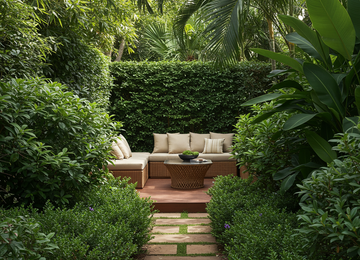
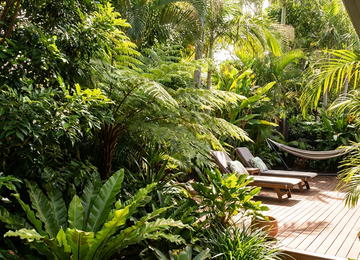
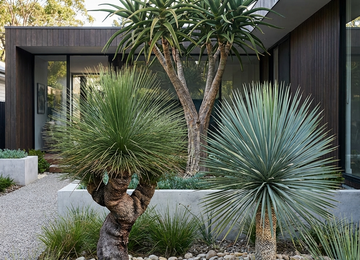
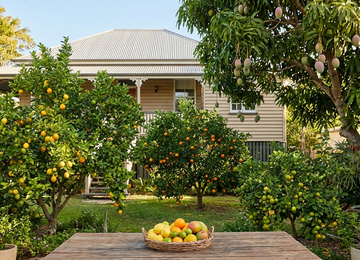
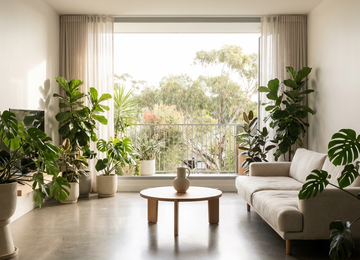
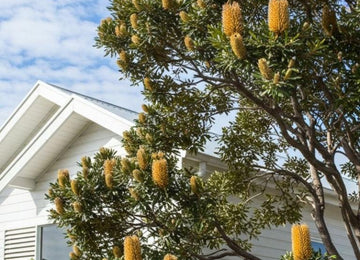


You're standing in the nursery looking at two beautiful trees. One is dense and glossy year-round. The other promises spectacular autumn colour but will stand bare through winter.
Choosing between evergreen and deciduous trees is one of the most important structural decisions you'll make in your garden. It affects privacy, maintenance, sunlight control, seasonal interest and even how your home feels throughout the year.
In Australian conditions, the answer isn't simply which looks better. It depends on climate zone, block orientation, purpose, and long-term maintenance expectations.
This guide breaks down the real differences between evergreen and deciduous trees in Australia, and helps you decide which type suits your property.
Quick expert summary
Evergreen trees retain foliage year-round, making them ideal for privacy, screening, wind protection and consistent structure. They are best suited to warmer Australian climates such as QLD and coastal NSW.
Deciduous trees lose their leaves in winter, allowing sunlight through during colder months. They provide strong seasonal interest and are particularly effective in cooler regions like VIC, ACT and southern NSW.
If your goal is:
- Year-round privacy and structure, choose evergreen.
- Seasonal colour and winter sun control, choose deciduous.
- A balanced landscape, combine both strategically.
Understanding evergreen trees in Australia
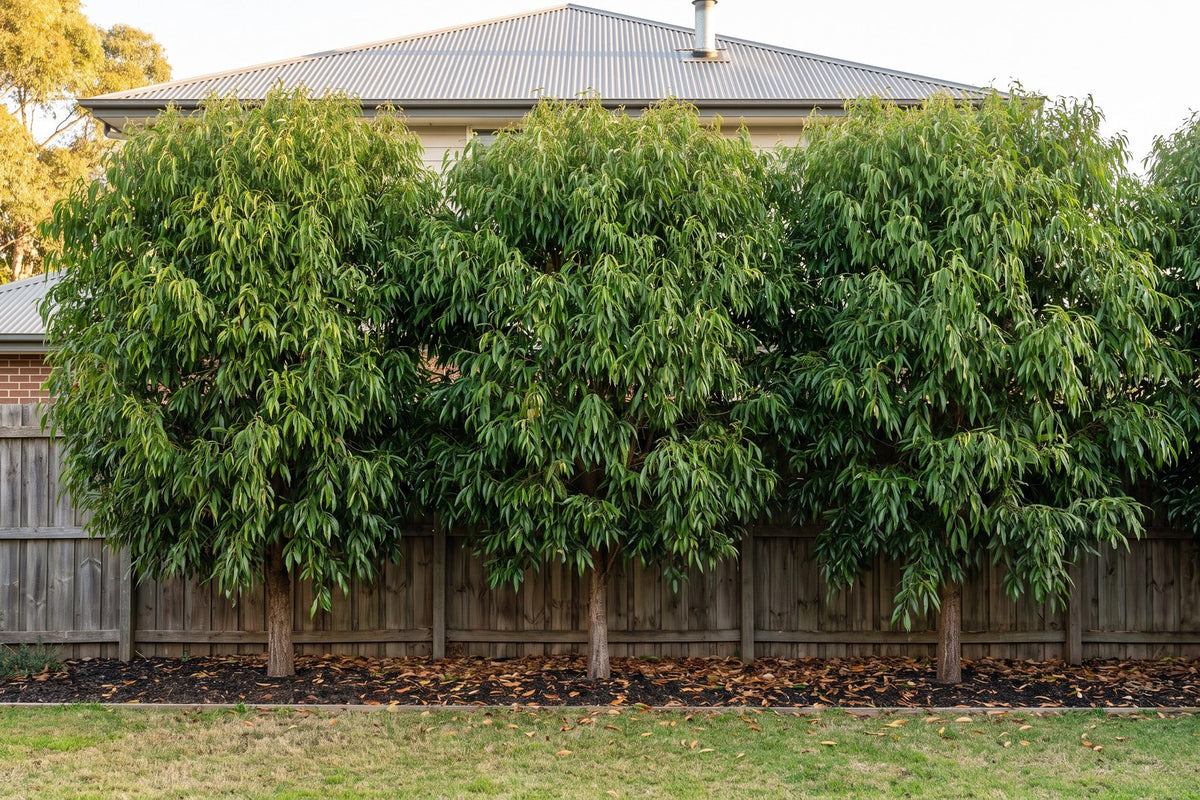
Evergreen trees hold their leaves throughout the year. While they may shed gradually, they never stand bare.
In Australian gardens, evergreens are often used to create permanent structure. They form the backbone of many landscapes because they provide stability through all seasons. Our guide to trees for year-round foliage goes deeper into the species that never look thin.
Why evergreen trees work so well in Australia
Many parts of Australia, especially Queensland, WA and coastal NSW, experience mild winters. In these climates, winter leaf drop doesn't offer much benefit because cold temperatures are rarely extreme.
Evergreen trees provide:
Consistent privacy
Ideal for front yards, boundary lines and screening neighbours.
Wind protection
Coastal and elevated properties benefit from year-round wind buffering.
Reduced temperature fluctuation
Dense foliage can help moderate heat and glare.
Architectural structure
They create clean vertical lines and a premium established look.
Popular evergreen trees in Australian gardens
- Magnolia 'Teddy Bear'
- Magnolia 'Little Gem'
- Lilly pilly varieties
- Waterhousia
- Olive trees
- Camellias (tree form)
These trees perform particularly well in subtropical and temperate climates. 'Teddy Bear' is the most popular of the lot for good reason, and our Teddy Bear magnolia growing guide covers its compact habit in detail. For boundary work, lilly pilly for screening and privacy is the standard reference, and if you are after a productive evergreen instead, olive trees 101 covers a tree that holds silver foliage all year.
Understanding deciduous trees in Australia
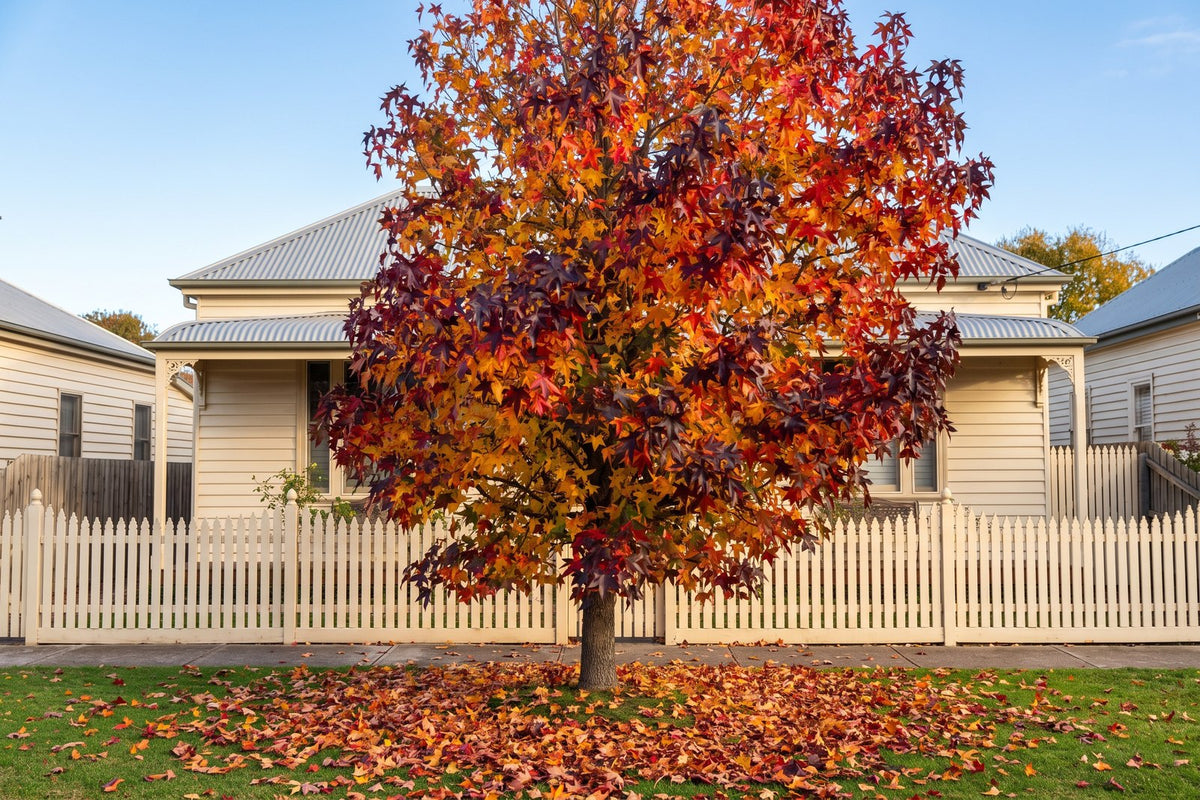
Deciduous trees drop their leaves during autumn and remain bare through winter before producing new growth in spring.
In colder parts of Australia, this cycle provides functional and aesthetic advantages.
The real benefit of deciduous trees
In cooler regions such as Victoria, Tasmania, ACT and inland NSW, deciduous trees provide passive climate control.
During summer, their canopy blocks harsh sun.
During winter, when leaves fall, sunlight passes through and warms the home.
This makes them especially useful when planted on the northern side of a house.
They also offer dramatic seasonal change. Autumn colour alone can completely transform a property, and our roundup of plants that change colour throughout the year shows how to extend that effect down to shrub and border level.
Popular deciduous trees for Australian gardens
- Japanese maple (cool climates)
- Crepe myrtle
- Ornamental pear
- Liquidambar
- Magnolia 'Genie' and other deciduous magnolias
In warm subtropical climates, some deciduous trees may not colour as intensely due to reduced chill hours. Our Japanese maple care guide is worth reading before you commit to one in a warm zone, and ornamental pear trees: top 10 varieties covers a deciduous tree that copes with a much wider range of Australian climates. If bare winter branches concern you, do crepe myrtles lose their leaves? answers the question directly.
Climate matters: QLD vs VIC
This is where many homeowners make mistakes.
In Queensland and northern NSW, winters are mild. The practical benefit of leaf drop is limited. Evergreen trees usually provide more consistent value.
In Victoria, Tasmania and cooler inland areas, deciduous trees thrive. They produce stronger autumn colour and make more sense for passive solar gain.
If you live in Brisbane, for example, a Japanese maple may struggle in full sun and humidity. A magnolia or lilly pilly will typically perform better. Our overview of the types of magnolia trees covers both the evergreen and deciduous members of that genus, which is useful when you want the flower but not the bare winter.
In Melbourne, the opposite can be true. Deciduous trees often excel due to colder winters.
Always match tree type to climate zone first.
Evergreen vs deciduous: design considerations
The decision also depends on what you want your garden to feel like.
Evergreen gardens feel structured and formal. They suit modern homes, coastal properties and contemporary landscaping.
Deciduous gardens feel dynamic and expressive. They suit heritage homes, traditional facades and properties where seasonal interest is desired.
Consider the emotional tone of your home.
Modern rendered home with clean lines? Evergreen magnolia or olive.
Federation or cottage-style home? Deciduous maple or ornamental pear.
Whichever way you lean, our guide to feature trees that instantly elevate a front yard covers how to place the one tree that carries the whole facade.
Maintenance differences
Evergreen trees:
- Shed leaves gradually year-round
- Require structural pruning
- Provide stable screening
Deciduous trees:
- Drop leaves heavily in autumn
- Require seasonal cleanup
- Allow winter sunlight
- Often require precise pruning timing
Neither is necessarily lower maintenance. The type of maintenance simply differs.
When to combine both
The strongest landscapes often use both.
For example:
Use evergreen hedging or boundary trees for structure and privacy.
Add a deciduous feature tree in the front yard for seasonal interest.
This combination gives you stability and change, which creates depth in the landscape.
Layering evergreen background with deciduous focal points is a common professional landscaping strategy.
Advanced placement strategy

To maximise performance:
Plant deciduous trees on the northern side of your home in cooler climates to allow winter sunlight through.
Use evergreen trees to block western heat and afternoon glare.
Avoid planting large deciduous trees directly over pools in high-leaf-fall areas unless maintenance is manageable.
Check mature canopy width before planting near driveways or foundations.
Correct placement matters more than tree type. Timing matters too, and our guide to the best time to plant a tree in Australia explains why a deciduous tree wants a different planting window to an evergreen one.
Frequently asked questions
Are evergreen trees better for privacy?
Yes. Because they retain foliage year-round, they provide constant screening.
Do deciduous trees grow faster?
Not necessarily. Growth rate depends on species, soil and climate, not leaf type.
Do deciduous trees make more mess?
They drop leaves seasonally, which can create a concentrated cleanup period in autumn.
Which type is better for front yards?
It depends on climate and style. Evergreens provide consistent structure, while deciduous trees offer seasonal drama.
Can deciduous trees grow in Queensland?
Yes, but some may not produce strong autumn colour due to limited cold exposure.
Final thoughts
There is no universal winner between evergreen and deciduous trees in Australia.
Evergreens provide stability, privacy and year-round structure.
Deciduous trees provide seasonal transformation and functional winter sunlight.
The right choice depends on climate, placement, design goals and long-term maintenance expectations.
If you are unsure, start by defining the purpose of the tree: screening, shade, feature impact or passive climate control. From there, choose the type that supports that goal in your specific Australian conditions.
Quality, climate-appropriate stock makes the biggest difference in performance and longevity.
Ready to plant?
We grow both sides of this decision, from evergreen magnolias and lilly pillies to maples and ornamental pears. Browse our trees for Australian gardens and we will deliver a climate-appropriate tree to your door.


