

Salt spray, sandy soil and constant wind rule out most garden plants, and the ones that cope depend on how exposed the spot is. This guide sorts coastal plants by exposure zone, explains why the windbreak goes in first, and covers the soil preparation that decides whether a seaside garden lasts.
Know your exposure zones
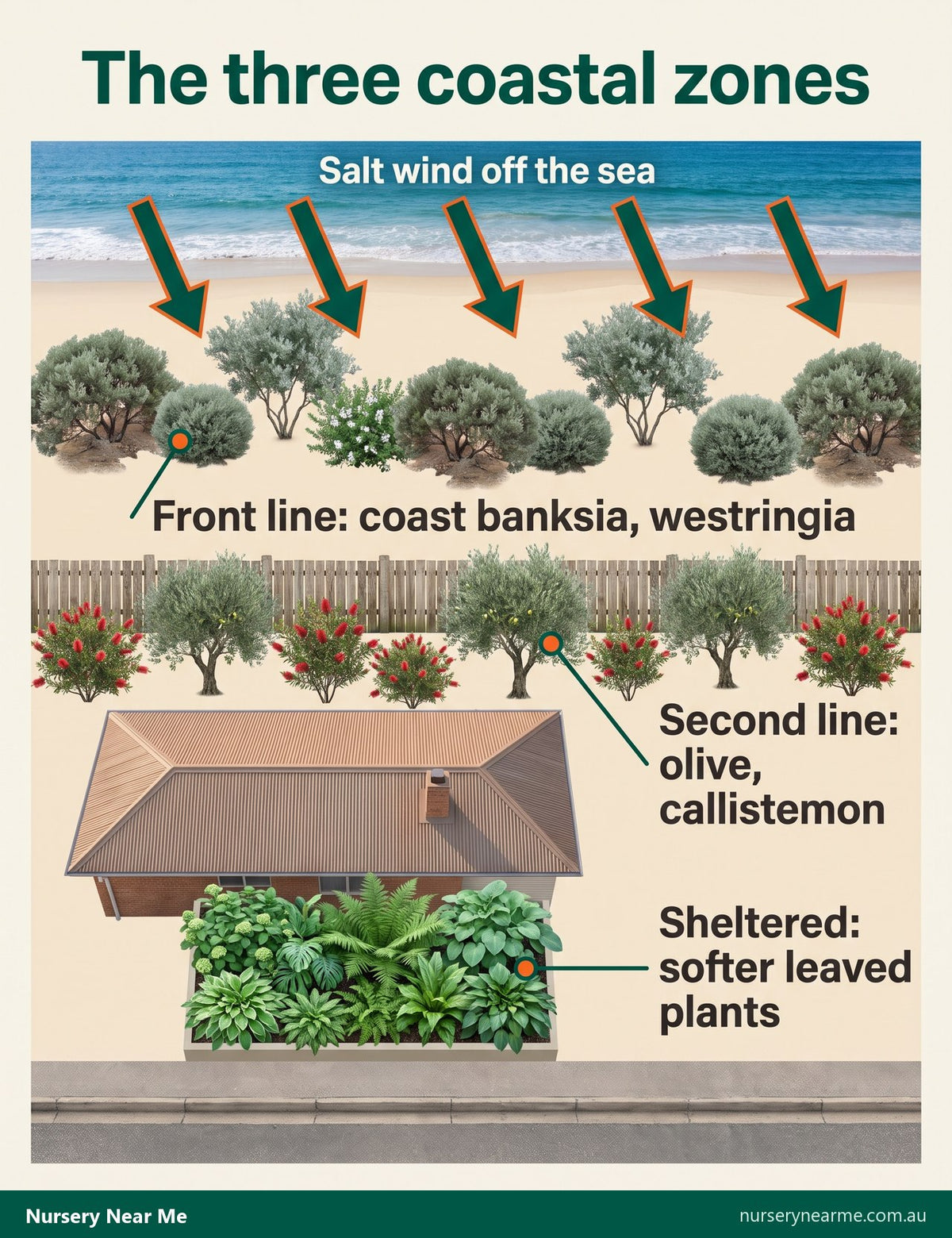
Almost every coastal plant failure is a zoning error, not a plant fault: a second line plant asked to do a front line job. Every coastal block has three zones, and the plant list changes completely with each one.
| Zone | Conditions and what suits them |
|---|---|
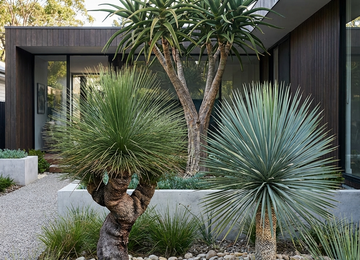
| Front line | Direct salt wind, often within sight of the water. Only proven salt busters belong here: coast banksia, westringia, tuckeroo, agave and lomandra. |
| Second line | Filtered wind behind a fence or behind the front line planting. Olives, callistemon and most tough natives and Mediterranean plants succeed here. |
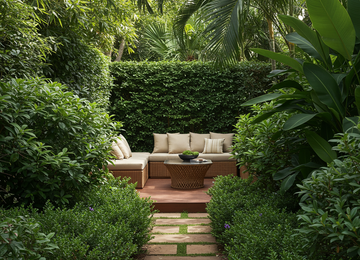
| Sheltered | Courtyards and leeward beds. Almost anything suited to your climate, including softer leaved exotics. |
Spend a windy afternoon working out exactly where your worst weather arrives from, because exposure is about direction as much as distance. A block 500m back from the water but facing the prevailing southerly can be harsher than a beachfront garden tucked behind a headland, and the leeward side of your own house may already be a sheltered zone ready for softer planting.
Build the windbreak first
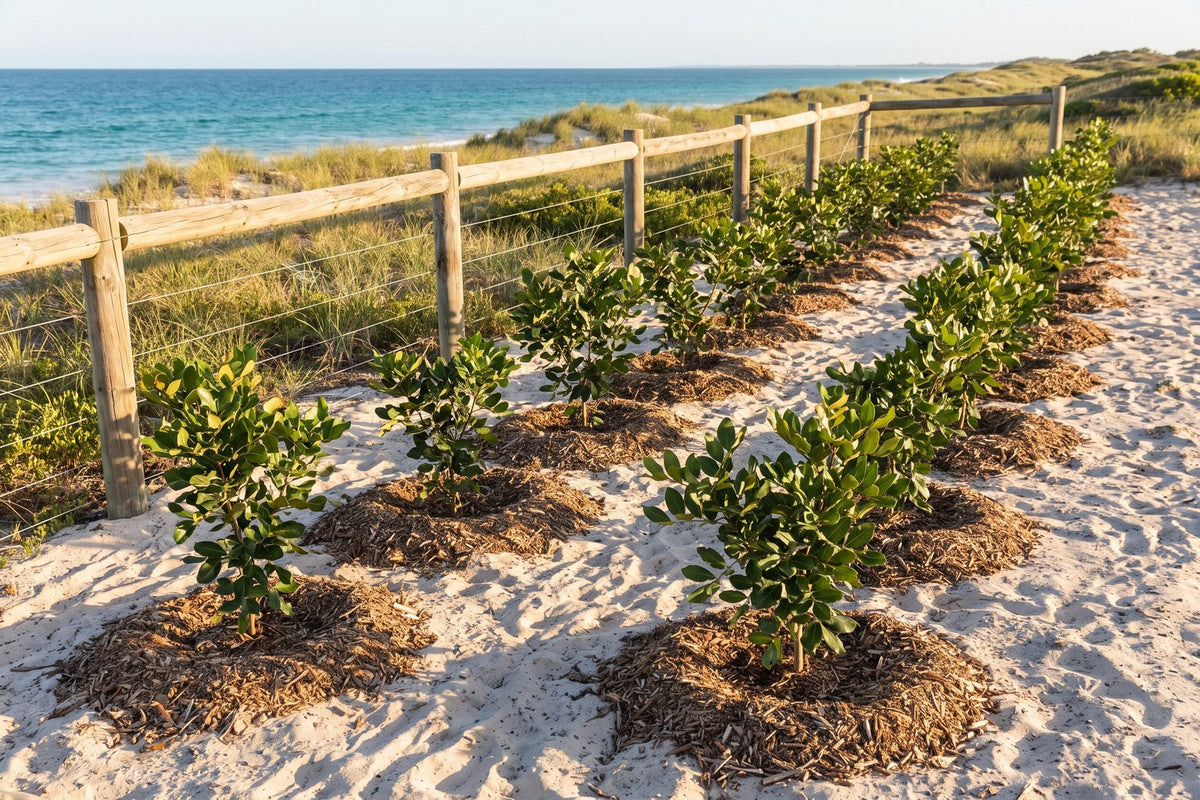
The strategy that has always worked on Australian coastlines is to establish a tough windbreak on the exposed side, let it create shelter, then garden more adventurously in its lee. A windbreak does not need to be a solid wall; a permeable screen that filters wind protects a distance of roughly ten times its own height, and it does so without the damaging turbulence a solid fence creates.
The Tuckeroo is the east coast favourite for this role, with leathery salt proof leaves, non invasive roots and a dense crown at six to eight metres; our tuckeroo tree guide covers its uses in detail. Alongside it, Coast Banksia grows on the literal frontal dune in nature and feeds honeyeaters all autumn. In the second line, olives are famously happy in salt wind and poor soil.
Plant windbreak trees at 2 to 3m spacings, ideally in a staggered double row, and plant them small. Tubestock and 200mm pots anchor themselves against wind far better than tall advanced stock, and within three years they overtake plants that started twice their size. Where you need a tropical look on an exposed northern coastline, pandanus does the same job with far more character.
The plants that earn a place by the sea
Front line: full salt wind
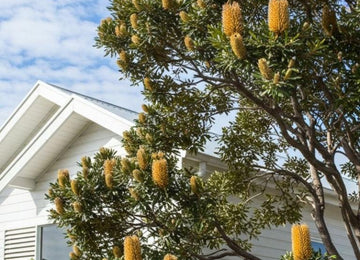
- Coast banksia (Banksia integrifolia). A dune tree in the wild, with yellow flower spikes that feed honeyeaters. The rest of the family is in our banksias range.
- Coastal rosemary (Westringia fruticosa). Silvery foliage, white to pale blue flowers and a compact habit that clips into a hedge. Zena is a dense selection for low hedging.
- Pigface. A native succulent groundcover that binds sand, with bright pink flowers.
- Lomandra longifolia. A strappy clump that holds its shape in constant wind and needs almost nothing.
Second line: filtered wind
- Olive and callistemon. Both shrug off salt in the air once the worst of the wind is broken.
- Kangaroo paw. Sun, sand and sharp drainage are what it wants anyway.
- Lavender and rosemary. Mediterranean shrubs that handle dry sandy soil and sea air behind a little shelter.
- Seaside daisy. A low, long flowering filler for paths and walls, covered in full in our guide to seaside daisy gardening.
Sheltered: courtyards and the leeward side
Behind the house or an established windbreak, choose by climate, not by salt. This is where softer leaved shrubs, magnolias and most flowering exotics belong.
Preparing sandy coastal soil
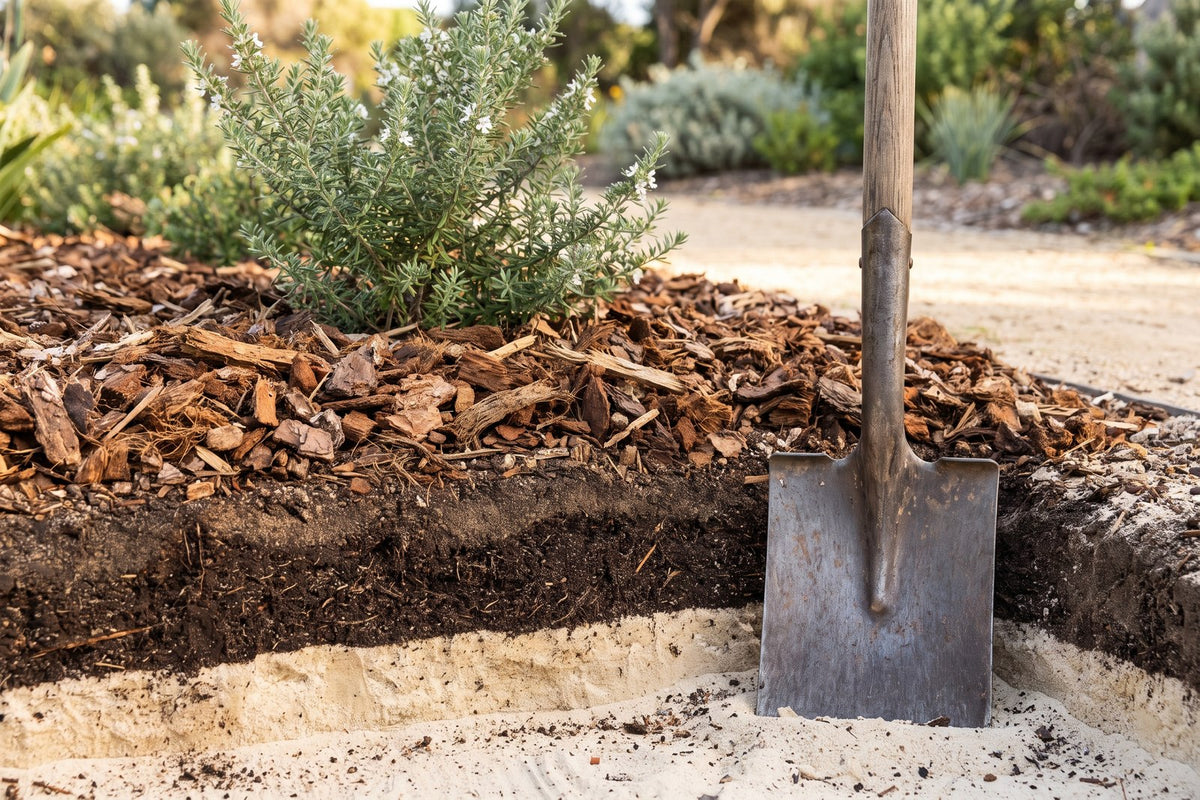
This is where most beachside gardens quietly fail. Sand drains too fast, holds almost no nutrient, and often turns water repellent as it ages. Planting into raw sand rarely succeeds, but four habits turn it into workable soil.
- Add organic matter, repeatedly. Dig generous compost or well rotted manure through the top 20cm before planting, then top it up as mulch every year. One application is a start, not a fix.
- Use a soil wetter. Old sandy soils become hydrophobic and shed water sideways. A granular wetting agent each spring makes the irrigation soak in.
- Mulch coarse and deep. Seventy five to a hundred millimetres of coarse mulch shields sand from drying wind and cuts evaporation. Avoid fine mulches that blow away in the first serious blow, and keep mulch clear of trunks.
- Feed little and often. Nutrients leach fast through sand, so slow release fertiliser twice a year beats one heavy annual application. Use a native safe, low phosphorus blend anywhere near banksias.
In heavy coastal clay pockets the opposite problem applies: improve drainage with gypsum and organic matter instead.
Climate differences across Australian coastlines
Not all coastal gardens are the same, and the plant list should change with the latitude.
- Gold Coast and Sunshine Coast. High humidity, warm winters and subtropical conditions. Lilly pilly, pandanus and tropical species thrive, and screening plants grow fast enough to need pruning twice a year.
- Sydney and the Central Coast. A temperate coastal climate where banksia, westringia and olive all perform reliably, and where the front line and second line distinction matters most.
- Melbourne and the Victorian coast. Cooler and windier. Olive, lomandra and coast banksia suit best, and wind is the limiting factor more than heat.
- Perth and the WA coast. A dry Mediterranean climate. Agave, olive and drought tolerant natives excel, and soil wetting agents are close to essential in the sand.
If you are planning the whole space and not just filling a bed, our guide to planning a coastal feature garden covers layout, hardscape and sight lines.
Frequently asked questions
How close to the beach can I garden?
Right onto the dune, if you use front line species such as coast banksia, westringia, pigface and lomandra. The trick is accepting that the first ten metres of planting exists mainly to protect everything behind it.
Why plant small in coastal gardens?
Wind rocks tall plants and tears new roots before they grip. Small plants establish an anchored root system first, then grow faster and sturdier than advanced stock planted in the same bed on the same day.
Do I need to wash salt off my plants?
Not for true coastal species. After violent onshore gales, a quick hose down of second line plants with softer foliage helps prevent leaf burn.
Are native plants always better for coastal gardens?
In true beachfront conditions, usually yes. Australian natives evolved in exactly these conditions and generally outperform exotics, although olives, agaves and rosemary hold their own in the second line.
Can I grow magnolias near the beach?
Only in sheltered positions well away from direct salt spray. Treat them as a courtyard plant, not a front line one.
Ready to plant?
The full salt hardy line up is in our plants for coastal areas collection, with more tough locals in Australian natives and windbreak candidates in plants for windbreaks.
If you garden in a bushfire prone area, our guide to bushfire-wise garden plants gathers what the CFA, CSIRO and the native plant societies say about placement, plant traits and the species on their published lists.


