

Full sun in Australia is not the same thing as full sun anywhere else. A west-facing bed in Perth or Adelaide can hit temperatures that kill plants sold as sun tolerant in cooler countries, and the plants that genuinely cope here are usually those adapted to heat, drought and poor soil in the first place. The fifteen below survive on rainfall once established, need no spraying, and ask for little more than an annual tidy.
What "low maintenance" actually means
None of these need weekly attention, but all of them need help through their first summer while roots establish. That first year is not optional, and it is the difference between a plant that later survives on rainfall and one that dies in its second January.
Structural plants
1. Westringia
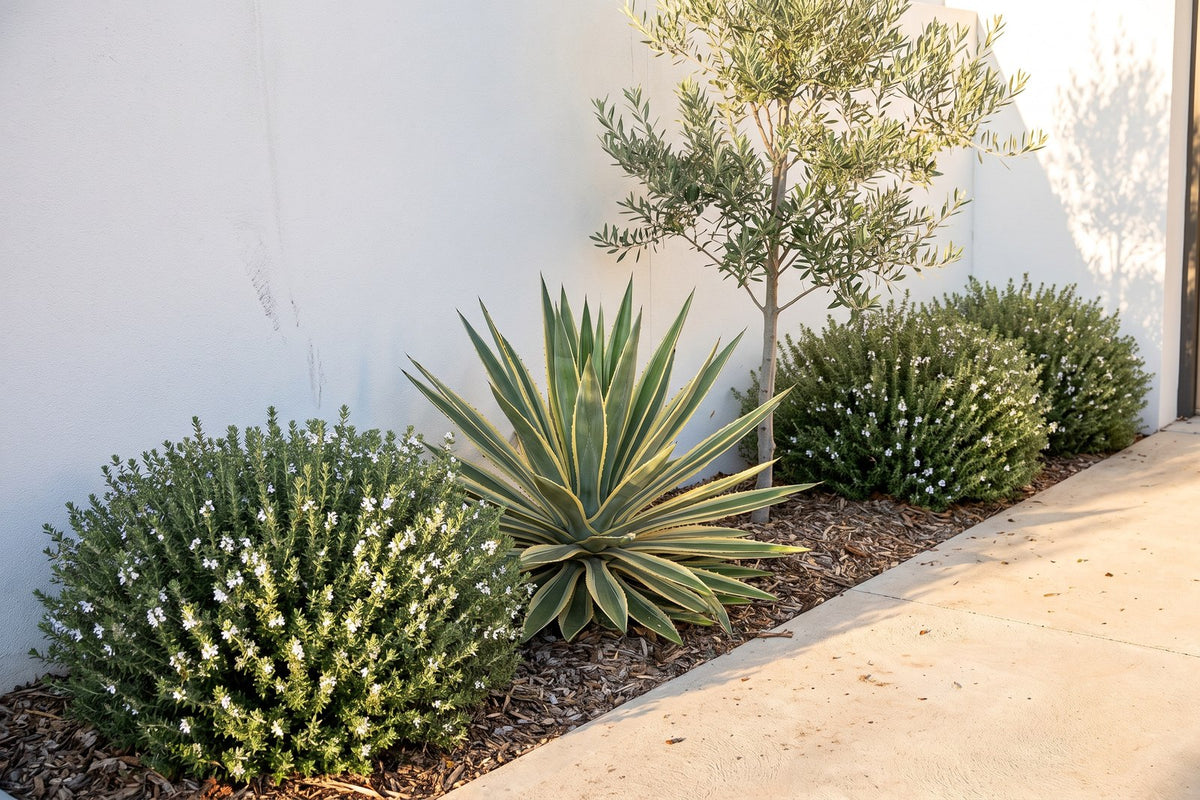
Australian coastal rosemary is close to indestructible - salt, wind, drought, poor soil and hard clipping all leave it unbothered. Jervis Gem stays compact at around a metre, and it clips into a low hedge as easily as it grows loose.
2. Lomandra
Cut it back every two or three years and that is the entire job. Tanika is the standard, forming neat 600 mm domes that hold shape for years in sun or shade.
3. Dianella
The native flax lily gives strappy foliage with blue flowers and berries. Silver Streak brings silver-blue foliage that reads well against green planting, and it handles both full sun and dry shade.
4. Agave
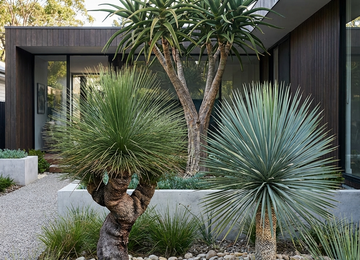
Nothing is lower maintenance than an agave. Variegated agave makes a bold architectural rosette needing no water once established. Keep the spined species away from paths and play areas.
5. Olive
Evergreen, silver-leaved and genuinely drought tolerant, olives suit hot dry gardens across Adelaide, Perth and inland Australia. Manzanillo gives fruit as well as form.
Flowering plants that keep going
6. Bottlebrush
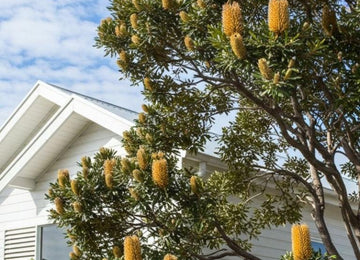
An Australian native that flowers heavily, feeds honeyeaters and tolerates both drought and wet feet. Little John is the compact form at around a metre, with grey-blue foliage and deep red flowers.
7. Kangaroo paw
Anigozanthos gives striking flower spikes through spring and summer on a plant built for hot dry conditions. Needs sharp drainage and full sun, and dislikes humid shade.
8. Grevillea
Long flowering, bird attracting and drought hardy. Mt Tamboritha spreads low across a bank. Feed only with low-phosphorus native fertiliser - ordinary fertiliser damages them.
9. Society garlic
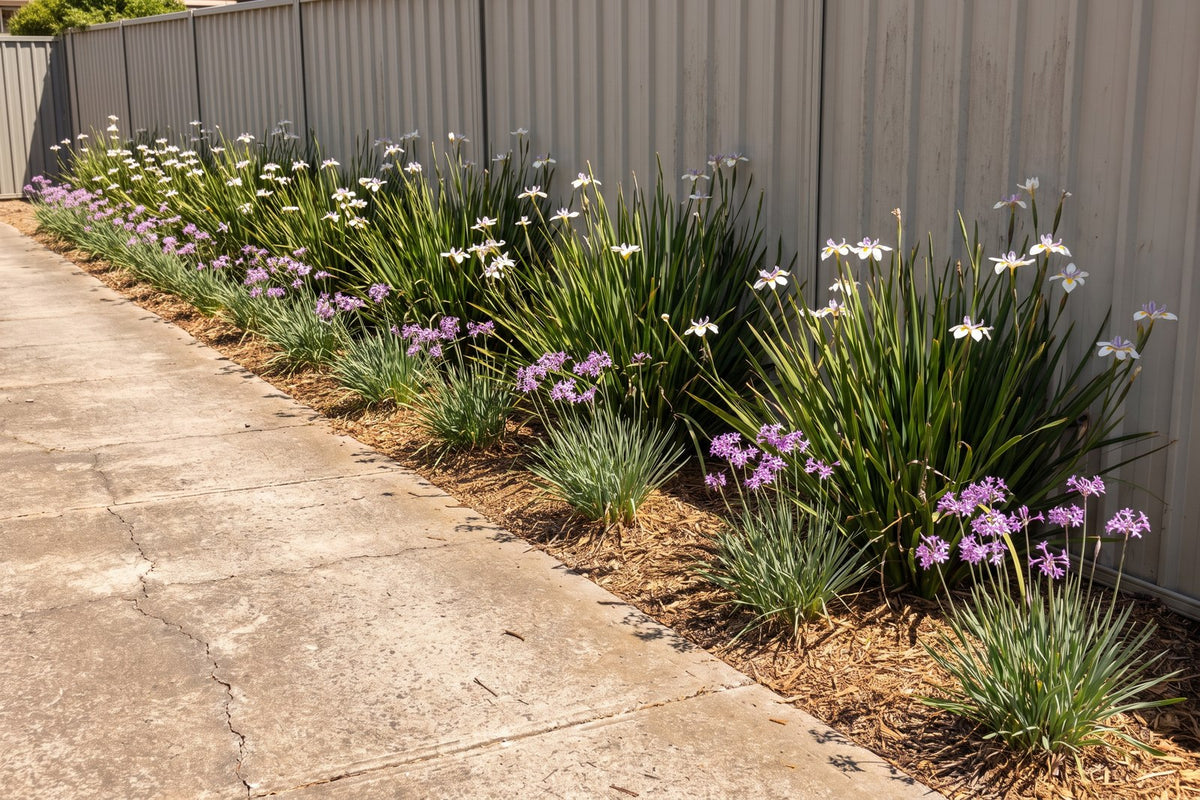
Tulbaghia violacea flowers mauve for months on end in full sun, tolerates drought and poor soil, and is often left alone by possums and rabbits thanks to its onion scent.
10. Fairy iris
Dietes grandiflora is the plant behind countless carparks and roadsides for good reason. Strappy evergreen foliage, white flowers through the warm months, and effectively no maintenance.
11. Butterfly bush
Gaura produces airy white and pink flowers on wiry stems from spring to autumn, moving constantly in the breeze. Cut it back hard once a year and it returns.
Groundcovers and spreading plants
12. Creeping boobialla
Myoporum parvifolium spreads a metre or more into a dense weed-suppressing mat, thrives in full sun and needs almost no water once established. One of the best plants for a dry bank.
13. Pigface
Carpobrotus is the succulent groundcover of Australian coastal dunes - salt tolerant, drought hardy and covered in vivid flowers. Ideal for hot exposed positions with no irrigation.
14. Jade plant
Crassula ovata stores water in its leaves and survives on neglect. Excellent in pots on a hot patio where thirstier plants fail.
15. Cousin It
Casuarina glauca 'Cousin It' is an Australian native that spreads into a soft weeping mound of fine foliage, tolerating salt, drought and coastal wind while needing no pruning at all.
Where these work in Australia
- Perth and Adelaide - olive, agave, westringia, pigface, myoporum and kangaroo paw are all outstanding in dry heat and sandy soil.
- Brisbane and subtropical Queensland - lomandra, dianella, callistemon, dietes and society garlic handle the humidity best. Watch drainage for agaves and kangaroo paws in a wet summer.
- Sydney and coastal NSW - all fifteen perform well, with westringia, pigface and Cousin It excellent on exposed coastal sites.
- Melbourne and Canberra - westringia, lomandra, dianella, callistemon, gaura and olive handle frost. Jade plant and pigface need shelter.
- Inland and rural blocks - the natives and Mediterranean plants here are the reliable choices where irrigation is limited.
Getting them established
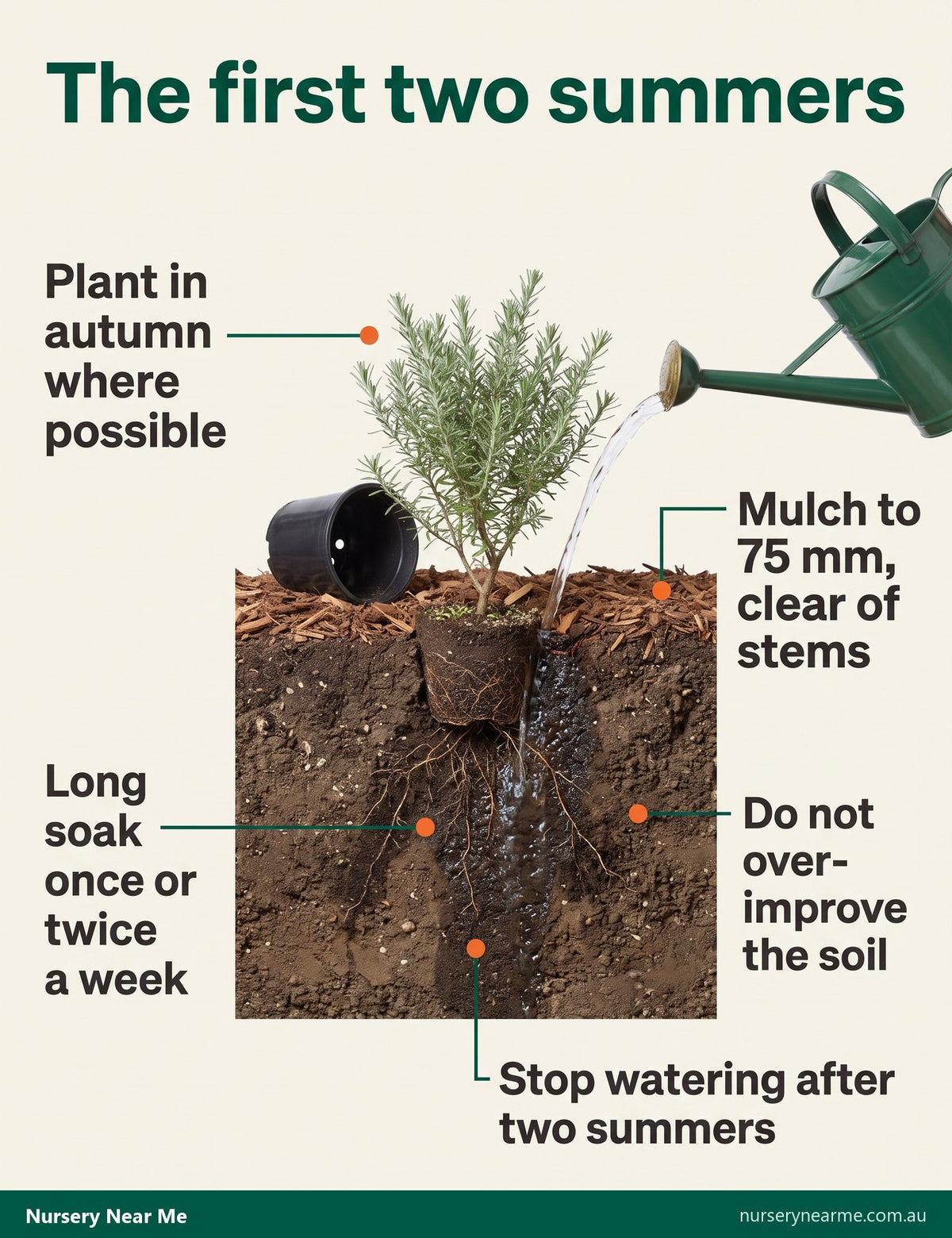
- Plant in autumn where possible, so roots develop through cool months before their first summer.
- Water deeply and infrequently - a long soak once or twice a week beats daily sprinkling, which keeps roots shallow.
- Mulch to 75 mm, kept clear of stems. This does more for drought tolerance than anything else.
- Do not over-improve the soil for natives and Mediterranean plants. Rich soil produces soft growth that struggles in heat.
- Use low-phosphorus fertiliser on natives, particularly grevilleas and banksias.
- Stop supplementary watering after the first two summers so the plants root deeply.
Frequently asked questions
What is the toughest plant for full sun in Australia?
Westringia and agave are both close to indestructible in hot exposed positions. For groundcover, creeping boobialla and pigface survive conditions that kill almost everything else, and all four need no irrigation once established.
Do low-maintenance plants still need watering?
Through their first summer, yes, and that year matters. Deep watering once or twice a week while roots establish is what allows them to survive on rainfall afterwards. After two summers most of these need water only in extended drought.
Which of these suit a hot west-facing wall?
Agave, olive, pigface, jade plant and westringia all handle reflected heat from paving and walls. Ferns, hydrangeas and most broad-leaved plants will scorch in that position no matter how carefully they are watered.
Can I fertilise native plants normally?
No. Australian natives, particularly grevilleas and banksias, are adapted to phosphorus-poor soils and are damaged by standard garden fertiliser. Use a low-phosphorus native blend and keep lawn fertiliser away from native beds.
What suits a hot dry slope?
Creeping boobialla, pigface and prostrate grevilleas. All three spread widely, suppress weeds, hold soil on a bank and survive without irrigation once established.
Which are safe around children and pets?
Lomandra, dianella, westringia, callistemon, dietes and Cousin It are all unproblematic. Avoid spined agaves near paths and play areas, and note that many succulents cause stomach upset if chewed.
Ready to plant?
Browse our sun tolerant plants, hardy plants for tough spots, or the Australian natives range.
Related reading: drought tolerant plants and no mow grass and lawn alternatives.


