

For a few weeks each spring the jacaranda turns whole Australian streets purple. Grafton has built a festival around it since 1935, Brisbane students know the flowering as a warning that exams have arrived, and a mature specimen in full bloom is one of the most striking things you can plant. It is also a large, spreading, deciduous tree that needs the right position. This guide covers the varieties available here, where a jacaranda belongs, and what to expect through the year.
Quick facts
| Detail | What to expect in Australia |
|---|---|
| Botanical name | Jacaranda mimosifolia |
| Mature size | 8-15 m tall with a canopy just as wide |
| Position | Full sun, sheltered from strong wind |
| Soil | Free draining. Dislikes heavy wet clay |
| Flowering | October to November in most of Australia |
| Habit | Deciduous. Bare from late winter into early spring |
| Frost | Tender when young, hardier once established |
| Best climates | Brisbane, northern NSW, Sydney, Perth, coastal SA, warmer Victoria |
| Time to flower | 5-7 years from a young tree, sooner from an advanced one |
Where jacarandas grow well in Australia
- Brisbane and south-east Queensland are close to perfect. Reliable flowering, fast growth and no frost concerns.
- Northern NSW, including Grafton, produces the displays the tree is famous for.
- Sydney and coastal NSW grow excellent jacarandas, with flowering usually peaking in November.
- Perth suits them well - warm dry summers and mild winters, though young trees need consistent water while establishing in sandy soil.
- Adelaide and coastal South Australia grow them successfully in sheltered positions.
- Melbourne is marginal but workable in a warm north-facing spot. Expect slower growth and later flowering.
- Frost-prone inland districts, Canberra and Tasmania are difficult. Young trees are damaged by frost and may never flower reliably.
One point worth knowing: jacarandas have naturalised in parts of south-east Queensland and northern New South Wales, so seedlings can appear in bushland near mature trees. Plant them in gardens and streetscapes rather than adjoining remnant bush, and pull any seedlings that appear.
Choosing the right jacaranda
| Variety | Flower | Notes |
|---|---|---|
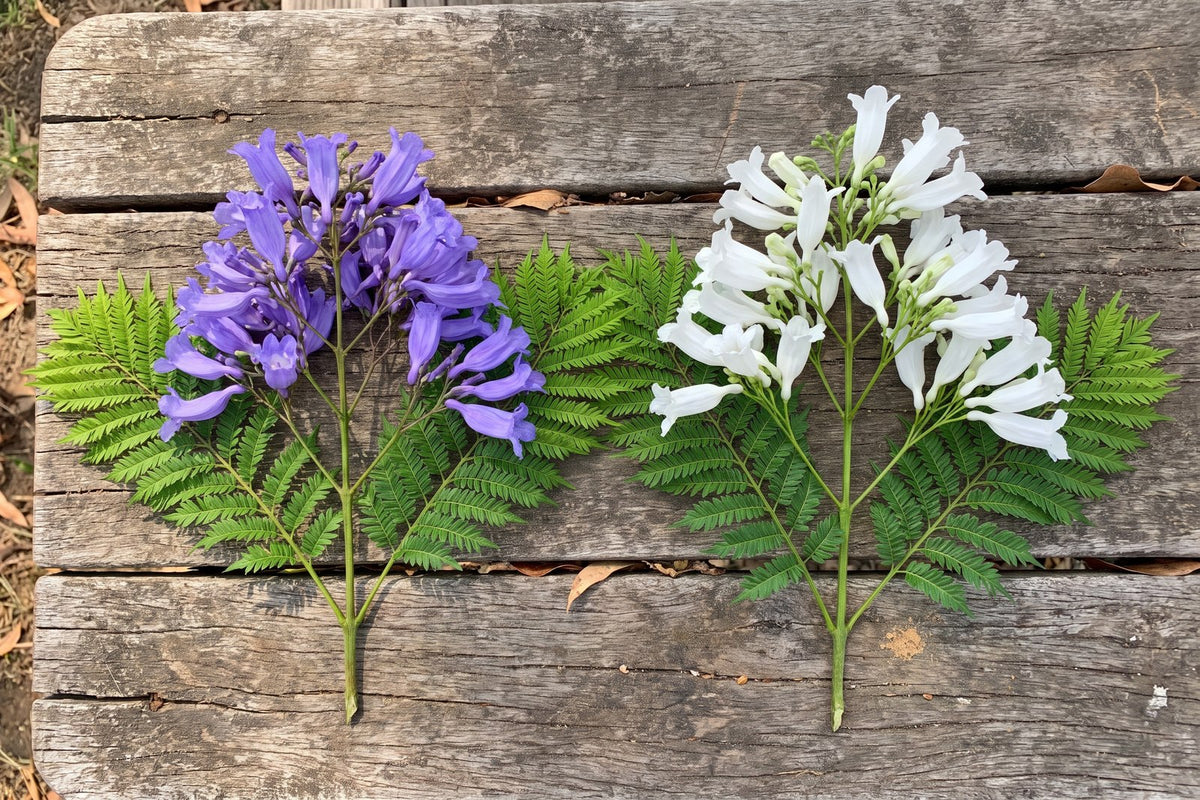
| Blue jacaranda (J. mimosifolia) | Violet-blue | The classic. What everyone pictures |
| White jacaranda ('Alba') | Pure white | Same habit and size, softer effect. Less common and worth seeking out |
| Advanced ex-ground trees | Either colour | Field-grown and lifted. Years ahead of a potted tree for instant presence |
Blue or white?
The blue jacaranda is the iconic choice and the one that reads instantly as a jacaranda. The white form has identical habit and size but flowers cream-white, which sits more quietly against a light-coloured house and pairs beautifully with a blue specimen elsewhere in the garden.
Advanced trees
Jacarandas take five to seven years from a small tree to their first real flowering, which is a long wait for the thing you bought it for. An advanced ex-ground jacaranda is field-grown and lifted with an established root system, giving you a substantial tree immediately and flowering years sooner.
How to plant
- Plant in autumn or early spring. Autumn suits warm districts; wait for spring where frost is a risk, so the tree has a full warm season to establish.
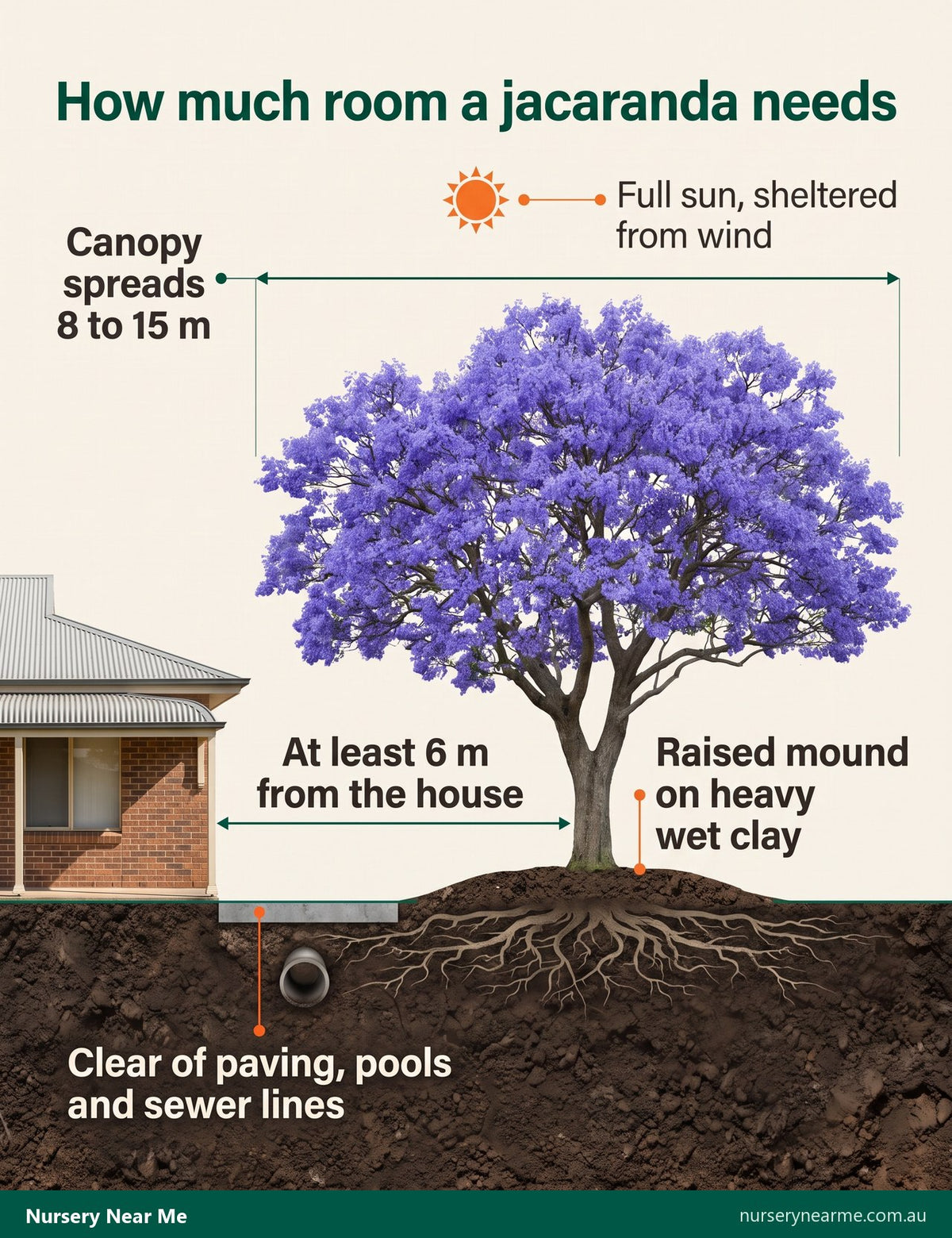
- Allow serious room. The canopy spreads eight to fifteen metres. Plant at least six metres from a house and well clear of paving, pools, driveways and sewer lines - jacaranda roots are vigorous and surface-rooting.
- Choose full sun. Shade produces a thin, drawn tree and few flowers.
- Check drainage. Jacarandas resent heavy wet clay. On such soils plant on a raised mound.
- Shelter it from wind. The timber is brittle and exposed young trees lose limbs.
- Water deeply once or twice a week through the first two summers, then only in extended dry spells.
Ongoing care
Watering
Young trees need consistent water for their first two summers, particularly in Perth's sandy soils. Once established, jacarandas are notably drought tolerant and need little supplementary water outside prolonged dry periods. Deep occasional soaking beats frequent light watering.
Feeding
Apply a balanced fertiliser in early spring as growth resumes. Avoid high-nitrogen lawn fertilisers, which drive leafy growth at the expense of flowers - a common reason a healthy-looking jacaranda in a fertilised lawn refuses to bloom.
Pruning
Prune as little as possible. Jacarandas have a naturally elegant branching habit that heavy pruning ruins, and cuts into older wood often produce clusters of weak vertical shoots. Remove dead, damaged or crossing branches in late winter while the tree is bare and its structure is visible. Formative pruning in the first few years to establish a single leader is worthwhile; after that, leave it alone.
Living with a jacaranda
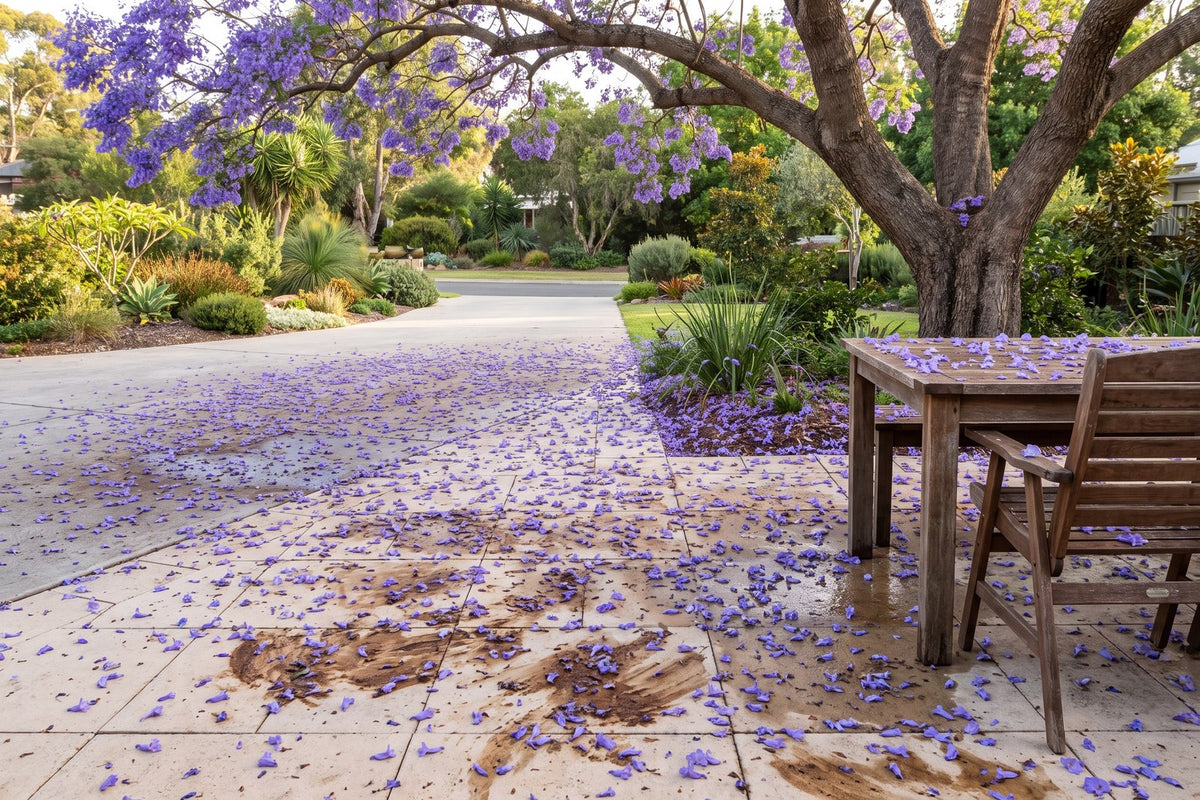
Two seasonal realities are worth planning for. The tree is deciduous, so it stands bare from late winter into early spring - often looking dead just before it flowers. And the flower drop is prolific: a mature jacaranda carpets whatever sits beneath it in purple for weeks. That carpet is beautiful on lawn and a nuisance on a pool, driveway or entertaining area, where fallen flowers are slippery and stain paving. Site it accordingly.
Common problems and fixes
- No flowers on a healthy tree is usually age or nitrogen. Trees need five to seven years to bloom, and lawn fertiliser suppresses flowering. Too much shade also prevents it.
- Frost damage on young trees shows as blackened shoot tips. Protect with frost cloth for the first two winters in cold districts, then prune damage in spring.
- Yellowing leaves in summer often means waterlogged soil rather than drought. Check drainage before watering more.
- Lifted paving or blocked pipes comes from planting too close. There is no good remedy once mature, which is why spacing matters at planting.
- Limb drop after storms reflects brittle timber. Choose a sheltered position and keep the canopy well structured when young.
- Seedlings in nearby garden beds are normal in warm districts. Remove them while small.
Frequently asked questions
When do jacarandas flower in Australia?
Late October into November across most of the country, with Brisbane and northern New South Wales usually peaking first and Sydney and Melbourne following. Flowering lasts several weeks and often continues after the new leaves appear.
How long before a jacaranda flowers?
Five to seven years from a young nursery tree. An advanced ex-ground specimen flowers considerably sooner because it is already several years old with an established root system.
How far from a house should I plant a jacaranda?
At least six metres, and further if you can. The canopy spreads eight to fifteen metres and the roots are vigorous and surface-running, so keep them clear of paving, pools, driveways and sewer lines.
Are jacaranda roots invasive?
They are strong and shallow rather than deeply invasive, but they will lift paving and paths planted too close and can find their way into older clay pipes. Correct spacing at planting solves the problem; there is no easy fix once the tree is mature.
Will a jacaranda grow in Melbourne?
Yes, in a warm sheltered north-facing position, though growth is slower and flowering later and less reliable than in Sydney or Brisbane. Young trees need frost protection through their first couple of winters.
Is there a white jacaranda?
Yes. The cultivar 'Alba' has the same growth habit and mature size as the blue form but produces cream-white flowers. It is less commonly planted, which makes it a striking choice, and it works particularly well against darker foliage or a pale house.
Ready to plant?
We grow both blue and white jacarandas, including advanced ex-ground specimens for immediate impact. Browse our trees collection to compare sizes, or the ornamental trees range for other flowering feature trees.
Looking for a smaller flowering tree, or one for a tighter space? Our guide to feature trees for a front yard covers the alternatives, and the best trees for lining driveways compares jacarandas against other avenue plantings.
If you are ordering these online, read what to do when your plants arrive first. The first two days after delivery matter more than the first two months.
If there is a sewer or stormwater line anywhere near the planting spot, our planting near pipes guide gathers the water utilities' distances and their lists of trees to avoid.
For shade that lowers the cooling load, the shade trees guide covers placement in the southern hemisphere and the trees that do the job without damaging the house.


