

Loropetalum chinense, the Chinese fringe flower, has become one of the most useful shrubs in Australian gardens because it does two jobs at once. It holds burgundy or plum foliage year round, then covers itself in spidery pink flowers from late winter into spring. It performs in Brisbane courtyards, Sydney front gardens and Melbourne borders alike, provided the soil drains and it is not in deep shade.
Quick facts
| Feature | Detail |
|---|---|
| Mature size | 0.4 to 0.6 m tall for dwarf forms, up to 2 m tall and 2 m wide for vigorous cultivars |
| Position | Full sun to light shade; at least four to six hours of direct sun for strong foliage colour |
| Soil | Free draining and slightly acidic, pH 5.5 to 6.5; mound or raise in heavy clay |
| Water | Deep soaking twice weekly through the first summer, then moderate and drought tolerant |
| Climate zones | Subtropical Brisbane, warm and cool temperate Sydney and Melbourne, Mediterranean Perth and Adelaide; hardy to about minus 5 degrees once established |
| Flowering | Main flush late winter to mid spring, with scattered flowers through summer and autumn |
Choosing the right loropetalum

Cultivar choice matters more here than with almost any other shrub, because the forms sold in Australia range from an ankle-high groundcover to a two-metre screening shrub.
Purple Pixie is the dwarf, settling at 0.4 to 0.6 m tall and spreading 1.2 to 1.5 m, with a weeping habit that suits low borders, wall edges and large pots. Plum Gorgeous sits in the middle at about 1.5 m each way and carries the deepest plum tone of the group.
Razzleberri is the vigorous option at 1.5 to 2 m tall and as wide, with new growth flushing burgundy and ageing to bronze green. It clips into an informal low hedge. The straight China Pink form is similar in scale and the most economical choice for mass planting.
One rule applies across all of them: foliage colour is a direct function of light. In full sun the purple forms stay saturated, while in afternoon-only shade the same plant drifts to bronze green by midsummer. If you simply need a shrub that survives a shaded corner, other low maintenance shrubs are a better fit.
How to plant
Autumn, from March to May, is the best planting window in subtropical and warm temperate areas because the soil is still warm and roots grow before summer. In Melbourne, Adelaide and frost-prone inland districts, early spring from September is safer.
Dig a hole twice the width of the pot but no deeper than the root ball. Loropetalum will not tolerate a buried crown, and planting too deep is the most common cause of first-year failure. On heavy clay, do not dig a deep hole and backfill with compost, which simply creates a sump; raise the bed 200 to 300 mm above the surrounding grade instead.
Space plants at 600 to 750 mm centres for a clipped low hedge, or 700 to 900 mm for a mass planting of the dwarf form. Water in with a seaweed tonic, then mulch 50 to 75 mm deep, keeping mulch 50 mm clear of the stems. Composted pine bark suits it because it keeps the soil on the acidic side. In pots, use a 400 mm container as a minimum and a premium potting mix.
Ongoing care
Watering
Through the first summer, give each shrub 10 to 15 litres twice a week, delivered slowly at the base rather than sprayed over the leaves. Once established, loropetalum copes with a fortnight of dry weather and only needs water during genuine dry spells. Pots need checking every two to three days in January. What it will not survive is standing water, so keep it out of low spots that stay wet after storms.
Feeding
Apply a complete slow release fertiliser, or an azalea and camellia food if your soil trends alkaline, in early spring once the main flush finishes, and again in early summer. Follow the label rate, because heavy nitrogen produces long soft shoots at the expense of both flowering and colour. Yellow leaves with green veins indicate iron or manganese deficiency from alkaline soil; correct it with chelated iron and an acidic mulch.
Pruning
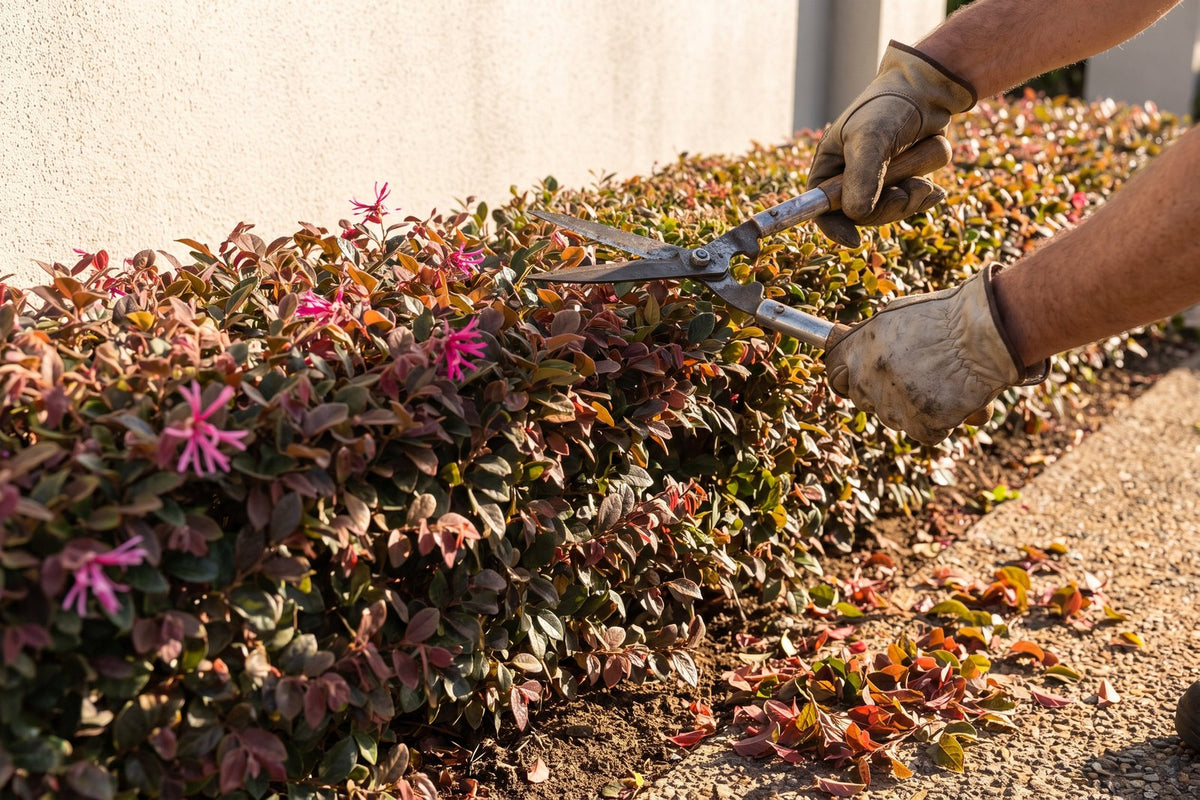
Prune straight after the main spring flush, taking up to a third off if you are shaping a hedge. Flower buds form on growth produced through summer and autumn, so anything cut after about February costs next season's display. For a formal low hedge, two light trims a year works: one after flowering, one in midsummer. Old, bare-legged plants do regenerate from hard renovation pruning, but slowly, so stage it over two seasons. The principles in our guide to maintaining a great hedge apply here too.
Common problems and fixes
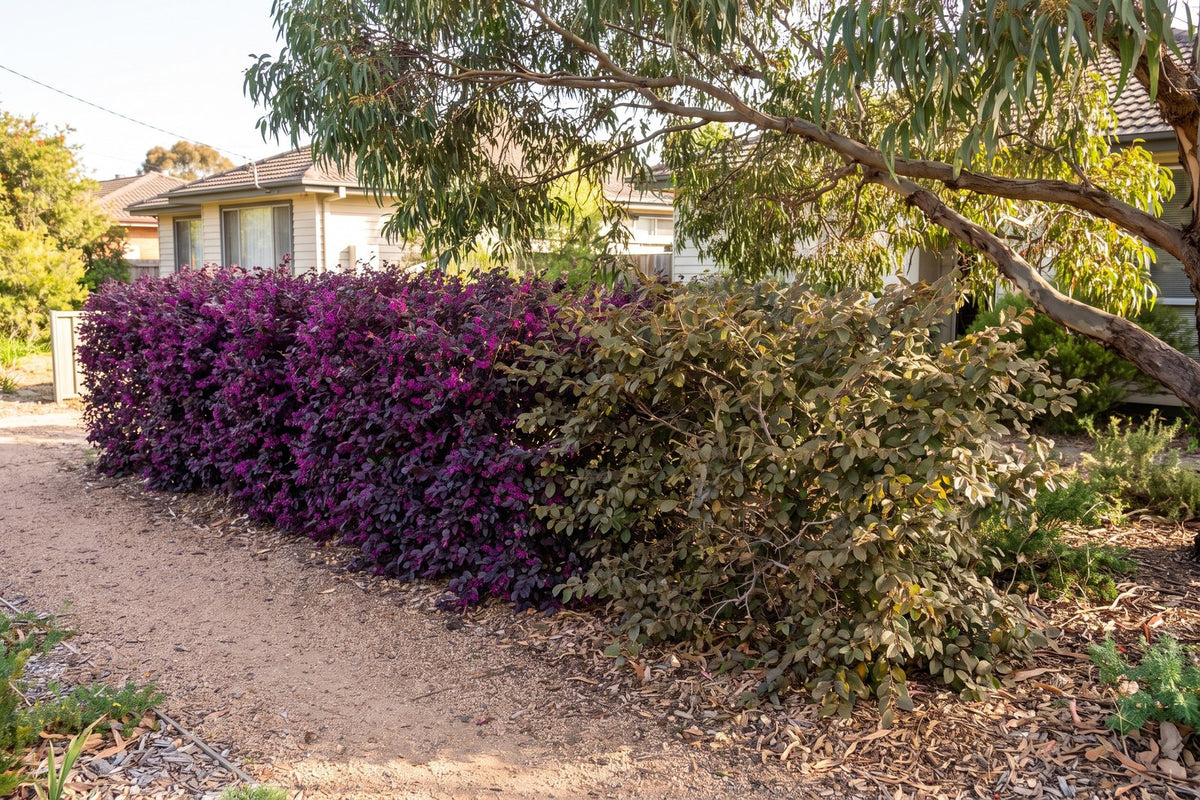
Foliage fading from purple to bronze green is almost always light, not nutrition. Remove overhanging branches or accept the colour change. Yellowing between the veins points to alkaline soil, common in beds built against rendered walls or new concrete paths where lime leaches into the root zone.
Sudden collapse, with dark, soft roots and a sour smell, is Phytophthora root rot brought on by waterlogging. There is no reliable cure, so the fix is preventative: raise the bed before you plant. Sooty mould with ants running the stems indicates scale insects; treat with horticultural oil in cooler months and never above 30 degrees, which burns the foliage.
Angular purple-brown leaf spots after a humid summer are typically Cercospora leaf spot. Thin crowded plantings, rake up fallen leaves and avoid overhead watering at night. In frost-prone gardens, delay pruning until the last frost has passed and shelter young plants for their first two winters.
Frequently asked questions
Does loropetalum grow in full shade?
It survives in full shade but does not perform there. Expect sparse growth, few flowers and foliage that reverts from purple to a dull bronze green. Light shade with morning sun is the minimum for a decent plant, and four to six hours of direct sun gives the strongest colour and the heaviest flowering.
How fast does loropetalum grow?
In a subtropical or warm temperate garden with reasonable soil, expect 200 to 400 mm of growth a year once established. Razzleberri and the straight China Pink form are the quickest and will fill a low hedge line in two to three seasons. Purple Pixie is considerably slower, which is part of why it holds its low, neat shape without constant trimming.
Can loropetalum be used as a hedge?
Yes, for informal and low hedges up to about 1.2 m. Razzleberri and China Pink are the practical choices, planted at 600 to 750 mm centres. It does not produce the dense, sharp-edged wall that a lilly pilly or viburnum gives, so it is better suited to a soft border than to a screening job. See our list of alternative hedging plants if you need real height.
Is loropetalum frost hardy in Australia?
Established plants tolerate frosts down to roughly minus 5 degrees, which covers most of Melbourne, Adelaide and the Sydney basin. Young plants and soft new growth are more vulnerable, so avoid autumn pruning in cold districts and protect the first two winters. In severe inland frost pockets it will need a sheltered position against a north-facing wall.
Why has my loropetalum stopped flowering?
The two usual causes are pruning at the wrong time and too much nitrogen. Flower buds form on wood grown through summer and autumn, so a late trim removes them. Excess nitrogen from lawn fertiliser drifting into the bed pushes leafy growth instead of buds. Insufficient sunlight is the third possibility, particularly where a nearby tree has grown over the plant.
Does loropetalum grow well in pots?
The dwarf forms are excellent in pots. Use a container at least 400 mm across, a premium potting mix and a position with morning sun. Feed with a controlled release fertiliser twice a year and check moisture every two to three days in summer. Repot or root prune every three years, because a pot-bound plant will drop leaves and stop flowering.
Ready to plant?
Loropetalum delivers year-round colour without the fuss of a perennial border, and it pairs well with green hedging, silver foliage and pale rendered walls. Browse the range in our flowering shrubs collection or the compact options in low maintenance shrubs, and read our guide to companion planting with shrubs next.


