

Shrubs are the most useful companions in a garden, though not for the reasons usually given. They shelter the birds and insects that eat pests, shade the soil, break the wind and leave no room for weeds. This guide sets out what the evidence supports, the rule that comes before any pairing, and the shrubs that do the most for the plants around them.
Companion planting in Australia: what the evidence supports
A lot of companion planting advice is folklore repeated without testing. It helps to separate what works from what does not.
| Claim | Verdict |
|---|---|
| Some plants bring in the insects that eat pests | Well supported. The most useful effect |
| Dense planting suppresses weeds | Well supported, and the easiest gain |
| Layered planting shades soil and saves water | Well supported, and it matters here |
| Nitrogen fixing plants feed their neighbours | Partly, and mostly after the plant dies or is cut back |
| Marigolds repel pests in general | Weak. Some effect on nematodes in the soil only |
| Set "plant X beside Y" pairings | Largely folklore, with little testing behind it |
Our guide to pest repelling plants for Australian gardens covers what scented foliage can and cannot do.
The rule that comes first
Pair by growing conditions before anything else. Two plants that want different water, light or fertiliser cannot share a bed, however well they are said to suit each other.
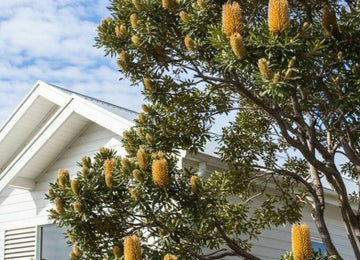
The critical case is native plants. Grevilleas, banksias and hakeas are damaged by the phosphorus in ordinary fertiliser, so a bed holding both a grevillea and a rose cannot be fed correctly for either. Keep native beds separate, and keep lawn fertiliser out of them. The same applies to acid lovers: soil pH cannot be managed two ways in one bed, so gardenias and camellias do not belong beside plants that want lime. All of it works best on ground that was prepared properly at the start, as our guide to preparing the soil for planting explains.
Shrubs that help the plants around them
- Callistemon and grevillea. Nectar brings honeyeaters and native bees, and honeyeaters eat insects as well.
- Westringia. Dense branches shelter small birds, and it is tough enough to shield softer plants from wind.
- Rosemary and lavender. Flowers for bees over a long season, in the same dry, sunny conditions as olives and other Mediterranean plants.
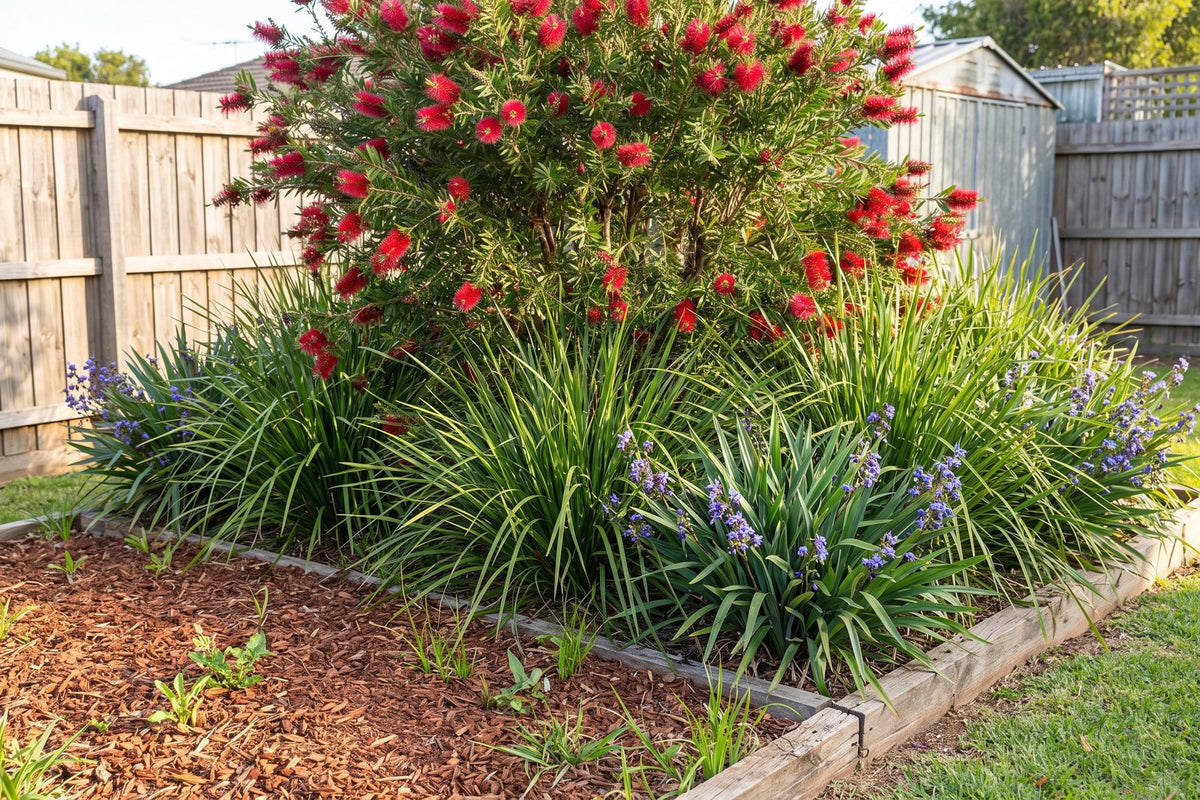
- Lomandra and dianella. They suppress weeds, hold soil and give shelter at ground level.
- Correa. Flowers through autumn and winter when little else does, feeding birds in the lean months.
- Wattles. Fast shelter for slower plants, with nitrogen returned to the soil as their leaves fall and when they are cut back.
Dense shelter matters more than pest repellence
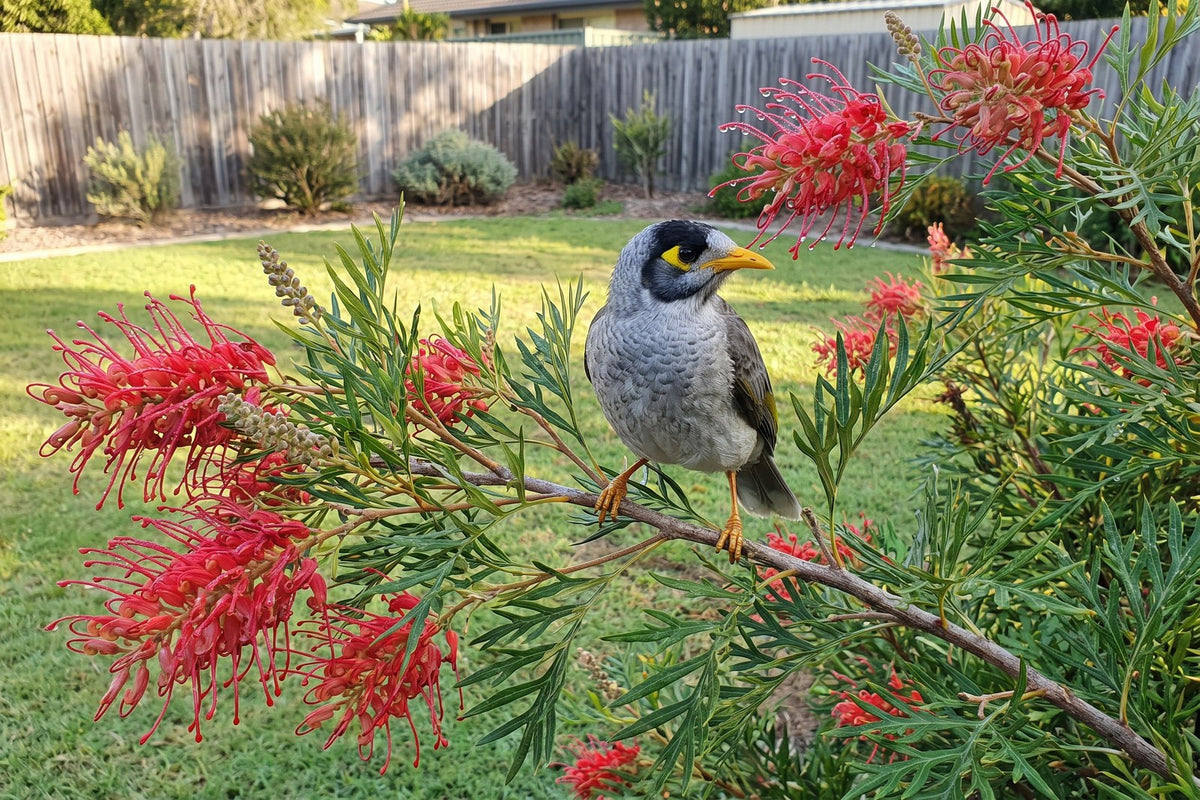
This is the most valuable companion effect in Australian gardens, and it is rarely mentioned. Most suburbs have plenty of nectar and very little dense low cover, which is why noisy miners dominate and small birds such as fairy-wrens and thornbills disappear. Dense, prickly, mid height shrubs such as hakea, bursaria and the denser grevilleas give small insect eating birds somewhere to shelter that miners cannot get into. Those birds then hunt insects across the whole garden.
Combinations that work here
- Layer for shade and water saving: canopy, shrub, groundcover. The soil stays cooler and loses less water through summer.
- Flowering shrubs beside the vegetable garden to bring bees and the insects that eat pests.
- Tough windbreak shrubs on the exposed side, with softer planting behind. A screen that lets some air through works better than a solid one.
- Groundcover under shrubs to suppress weeds and keep the roots cool.
- Group by water need. Do not scatter thirsty plants through a dry bed.
There are more combinations in our guides to companion planting and to pairing plants to complement each other.
Layout and spacing

- Space shrubs at about two thirds of their mature width, so they meet without crowding.
- Put the tallest plants on the south side of a bed, so they do not shade the rest.
- Leave access for pruning, and mulch the whole bed 75 mm deep until the plants close over.
Common questions
Does companion planting work with shrubs?
Yes, through shelter, shade, flowers for beneficial insects and weed suppression. Claims that one shrub repels pests from another are mostly untested.
Can I plant natives and exotics together?
Only where they want the same soil, water and feeding. Keep phosphorus sensitive natives such as grevilleas and banksias away from plants that need regular fertiliser.
Which shrubs bring small birds?
Dense, prickly ones: hakea, bursaria and compact grevilleas, planted in groups.
Ready to plant?
Build the framework from our evergreen shrubs and flowering shrubs, add scent with fragrant plants, or keep the whole bed easy with low maintenance shrubs. Every plant is backed by our 30 day satisfaction guarantee.
If you are ordering these online, read what to do when your plants arrive first. The first two days after delivery matter more than the first two months.


