



Plenty of plants are sold as pest repellents, and some of them earn the name. Most only work in particular ways: as a crushed leaf, as a cover crop, or by feeding the insects that eat pests. This guide sets out what each popular plant does and does not do in an Australian garden, so you can plant them where they are useful.
What a plant can and cannot do about pests
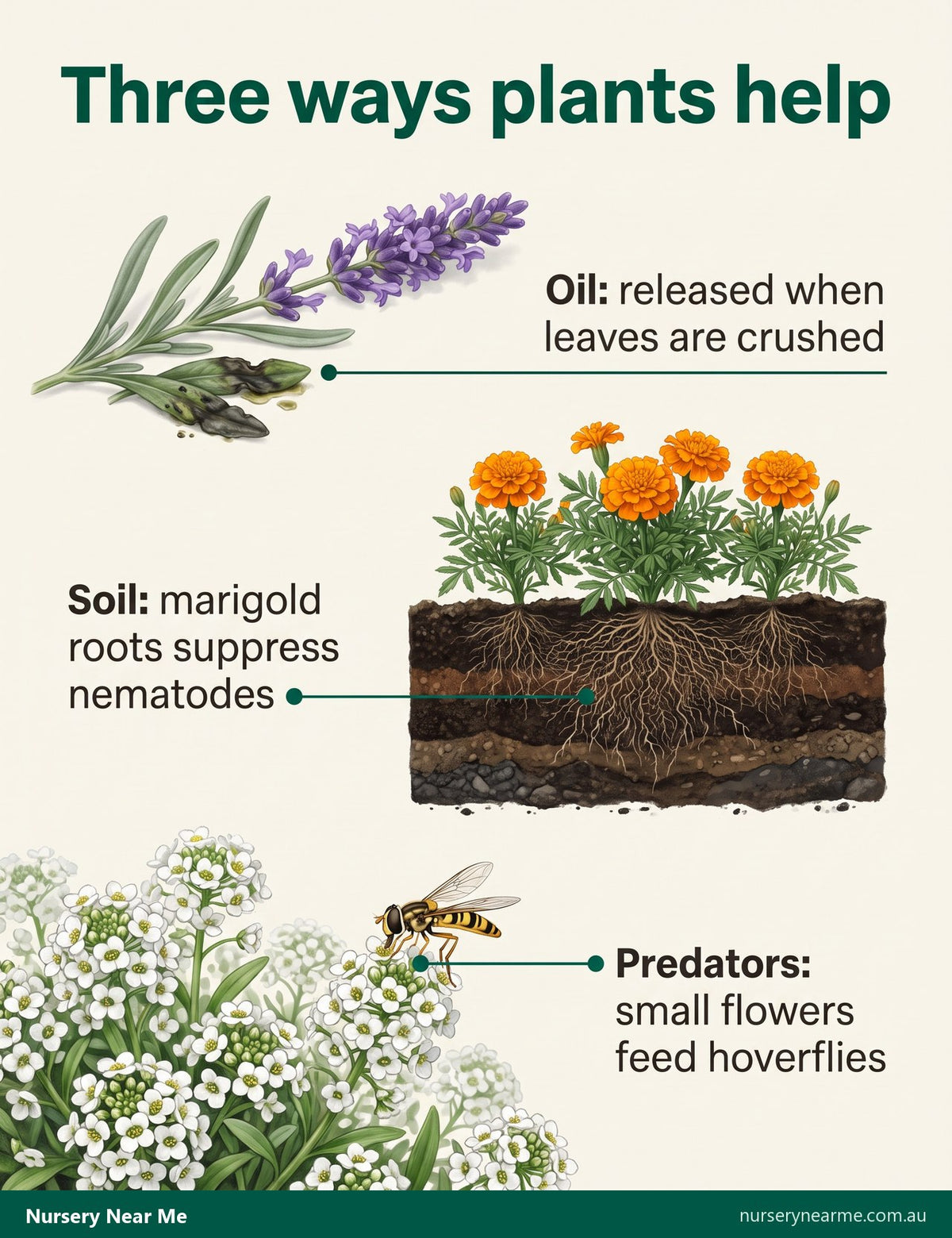
A lavender bush by the back door will not keep mosquitoes off the deck. The scented oils that insects avoid sit inside the leaves, and an undisturbed plant releases very little of them into the air. Trials of the scented geranium sold as a mosquito plant found it gave no protection to the people sitting beside it.
Plants help in three practical ways:
- As a source of oil. Brushing or crushing the leaves releases the scent for a short time, and some extracted oils are the active ingredients in repellents.
- In the soil. Marigold roots suppress root knot nematodes when the plants are grown as a dense crop.
- As food for predators. Small open flowers feed hoverflies, lacewings, ladybirds and tiny parasitic wasps, whose young eat aphids and caterpillars.
Worth noting if you share the garden with animals: a few classic repellent plants are toxic to dogs, so read our guide to creating an animal friendly garden before you plant near a dog run.
Mosquitoes and flies
For bites, a registered repellent on the skin does the work. Australian health departments recommend products containing DEET, picaridin or oil of lemon eucalyptus, along with emptying the standing water where mosquitoes breed. The oil of lemon eucalyptus in those products is refined from the leaves of the lemon scented gum (Corymbia citriodora). The tree itself smells strongly of lemon after rain, but it does not protect anyone by standing in the garden.
Scented plants still earn a place around seating. Lavender, rosemary, basil, mint and lemon scented tea tree all release their oils when they are brushed or cut, so plant them where you walk past. Any effect on insects is mild and short lived, so treat it as a bonus on top of a plant you would grow anyway. Tea tree is a useful garden plant in its own right, as our leptospermum care guide explains, and our rosemary care guide covers the pruning that keeps a plant dense and aromatic.
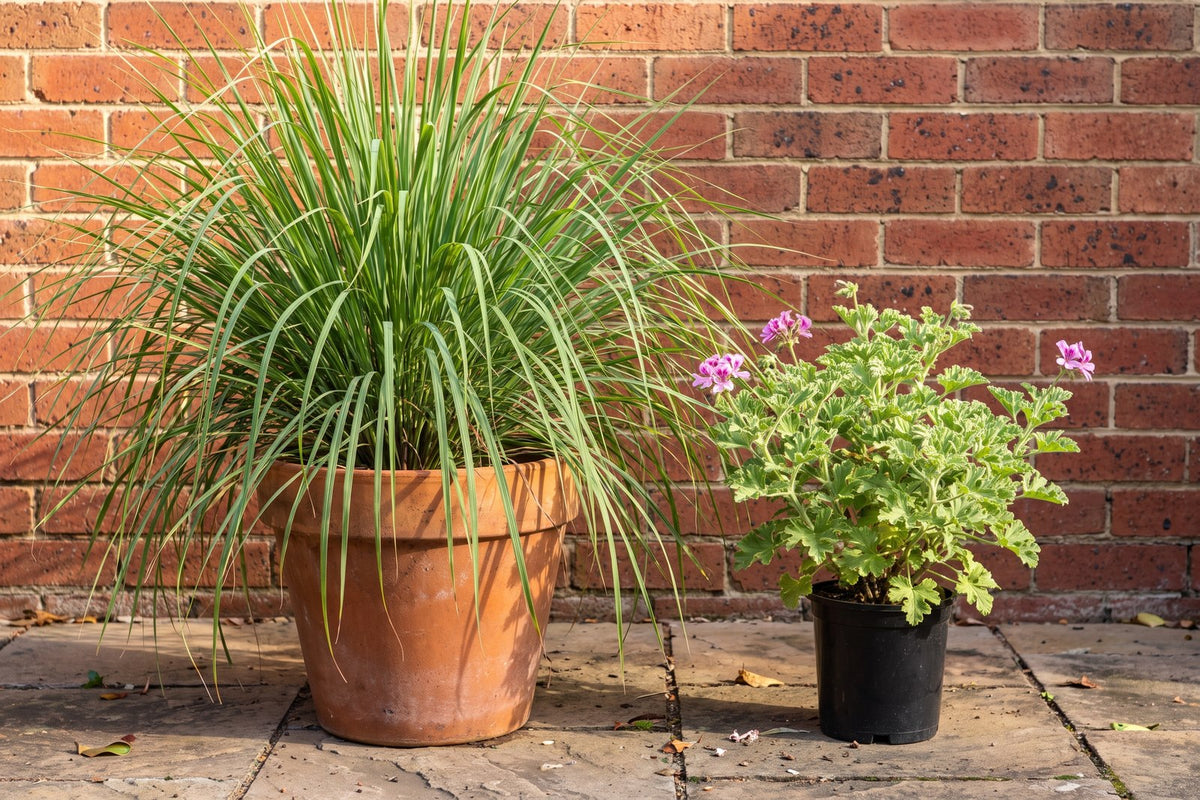
Citronella deserves a note of its own. Citronella oil comes from citronella grass (Cymbopogon nardus and its relatives), a tall clumping tropical grass related to lemongrass. The citronella plant often sold in small pots is a scented geranium that only smells similar. Citronella candles and oils give brief protection in still air and little in a breeze.
Marigolds and nematodes
This is the claim with the most evidence behind it, and it comes with a catch. The roots of French marigolds (Tagetes patula) release a compound that suppresses root knot nematodes, the microscopic worms that leave lumpy, stunted roots on tomatoes, carrots and beans. It works when marigolds are sown thickly across the whole bed and grown for two months or more before the vegetables go in. A few marigolds dotted between tomato plants make little difference to nematodes.
Marigolds are still worth having in a vegetable patch. Glasshouse trials have found French marigolds grown beside tomatoes reduce whitefly, and the flowers bring in hoverflies.
Flowers that bring in the insects that eat pests
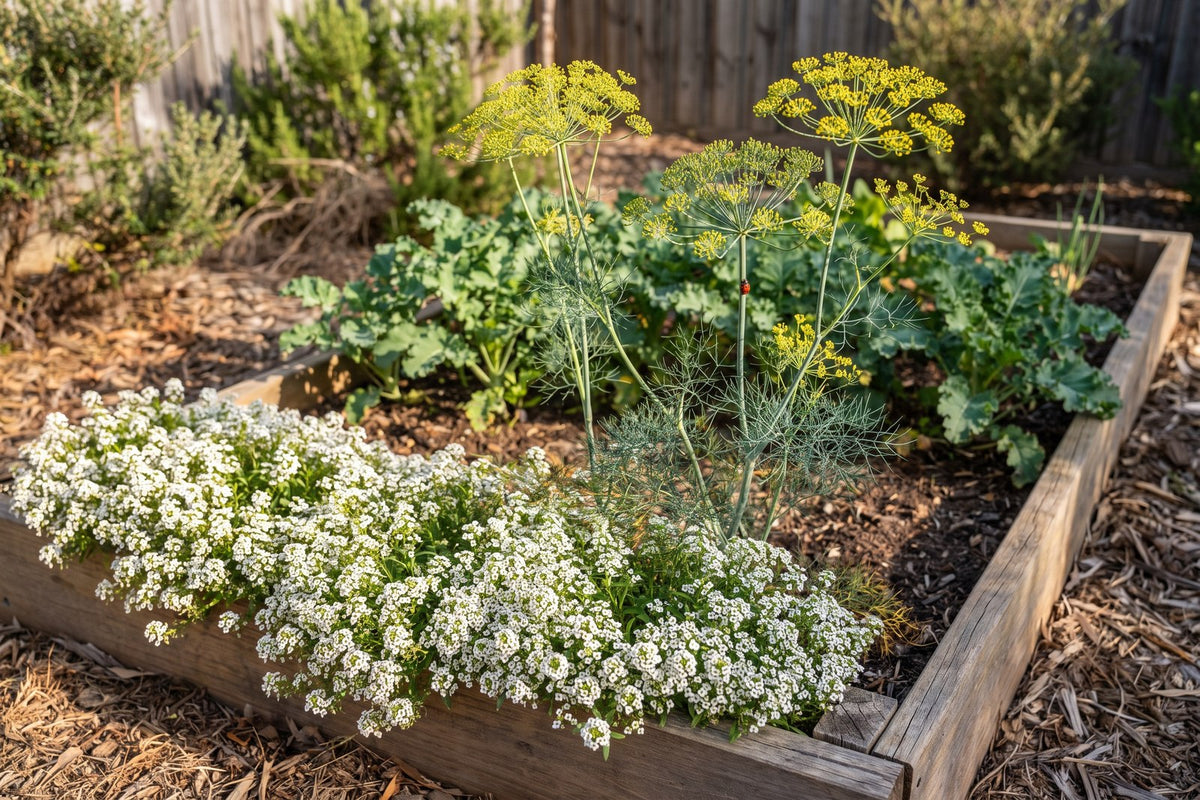
The most reliable pest control a garden plant offers is indirect. Hoverflies, lacewings, ladybirds and small parasitic wasps need nectar and pollen as adults, and their larvae eat aphids, scale, mites and caterpillars. Small, shallow flowers suit them best: sweet alyssum, daisies, the flowers of coriander, dill, parsley and fennel left to bolt, and natives such as tea trees and the other plants that feed native insects.
Keep something in flower in every season, and avoid broad spectrum sprays, which kill the predators along with the pests. Our guide to plants that thrive together sets out the pairings worth copying.
Plant by plant: what each one is good for
| Plant | What it does | Where to plant it |
|---|---|---|
| Lavender | Feeds bees and hoverflies for months. Scent is released when the plant is brushed. | Full sun and sharp drainage, beside paths and seating |
| Rosemary | Flowers for bees from autumn to spring. Aromatic when cut. | Full sun and dry soil, as a low hedge or in pots |
| Basil | A kitchen herb worth growing near tomatoes for the kitchen. The evidence that it protects them is mixed. | Warm season, in pots near the door |
| Mint | Strong scent when crushed. No good evidence that it clears ants or fleas. | Pots only, because it spreads by runners |
| French marigold | Suppresses root knot nematodes as a dense cover crop. Flowers feed hoverflies. | Sown thickly in a resting vegetable bed |
| Lemon scented tea tree | Lemon scented foliage for cutting. Flowers feed native insects. | Full sun, as a screen or small tree |
| Lemon scented gum | The source of the oil used in registered repellents. | Large gardens only, well away from buildings |
| Pyrethrum daisy | The dried flower heads are the source of pyrethrin sprays. The growing plant protects nothing around it. | Cool climates, full sun |
The pyrethrum daisy (Tanacetum cinerariifolium) is a different plant from the florist's chrysanthemum, which has no useful effect on insects.
Mistakes that undo the good
- Relying on a plant to do a repellent's job. Where mosquito borne disease is about, use a registered repellent.
- Spraying a broad spectrum insecticide, which removes the predators and leaves the next wave of aphids unchecked.
- Planting mint in open ground. It will take the bed.
- Leaving weeds and debris that shelter snails, slugs and overwintering pests. Weed control is part of the same job, as our guide on how to avoid weeds in your garden explains.
The rest is ordinary good gardening. Healthy plants shrug off more damage, and our guide to eco friendly gardening covers the soil, mulch and watering habits behind that. When a pest does turn up, our guide to identifying and treating common plant pests and diseases covers what to do next.
Common questions
Which plant keeps mosquitoes away?
None does it reliably just by growing nearby. The scent that deters mosquitoes is released only when leaves are brushed or crushed, and it fades within minutes. Use a registered repellent and remove standing water.
Do marigolds protect tomatoes?
Against root knot nematodes, yes, when French marigolds are grown thickly in the bed for two months or more before the tomatoes are planted. A border of marigolds planted at the same time as the tomatoes does much less.
Is citronella grass the same as the citronella plant?
No. Citronella oil comes from a tall tropical grass. The citronella plant sold in pots is usually a lemon scented geranium.
What can I plant to reduce aphids?
Plant small open flowers such as sweet alyssum and let some herbs run to flower. They feed the hoverflies, lacewings and ladybirds whose larvae eat aphids.
Ready to plant?
The most useful scented plants are the ones you will walk past, brush against and use, so plant them along paths and beside seating. Browse our fragrant plants for the aromatic species, or our Australian natives for the hardy local options.


