



Rosemary is proof that the best garden plants are often the least demanding. Give this Mediterranean shrub full sun and soil that drains sharply, then leave it alone, and it delivers aromatic foliage for the kitchen twelve months a year, blue flowers through winter and spring when bees need them most, and a dense evergreen form that clips into a surprisingly respectable low hedge. It thrives on the exact treatment that kills fussier plants, which puts it firmly among our low-maintenance plants that thrive in full sun.
In Australia it grows magnificently everywhere summers are dry, from Perth to Adelaide to inland NSW, and copes in humid coastal gardens with a little care around drainage and airflow. Alongside true rosemary, our native coastal rosemary, westringia, offers the same silvery look with even more coastal toughness, and this guide covers both.
Quick facts
| Botanical name | Rosmarinus officinalis (syn. Salvia rosmarinus) |
| Type | Evergreen herb shrub |
| Height | 1-1.5 m tall for upright forms |
| Position | Full sun, minimum six hours |
| Soil | Sharply drained; sandy, gravelly or raised beds |
| Flowers | Blue, mainly winter to spring |
| Climate | Loves dry summers; frost hardy to about minus 6 |
Choosing a rosemary
For cooking and hedging
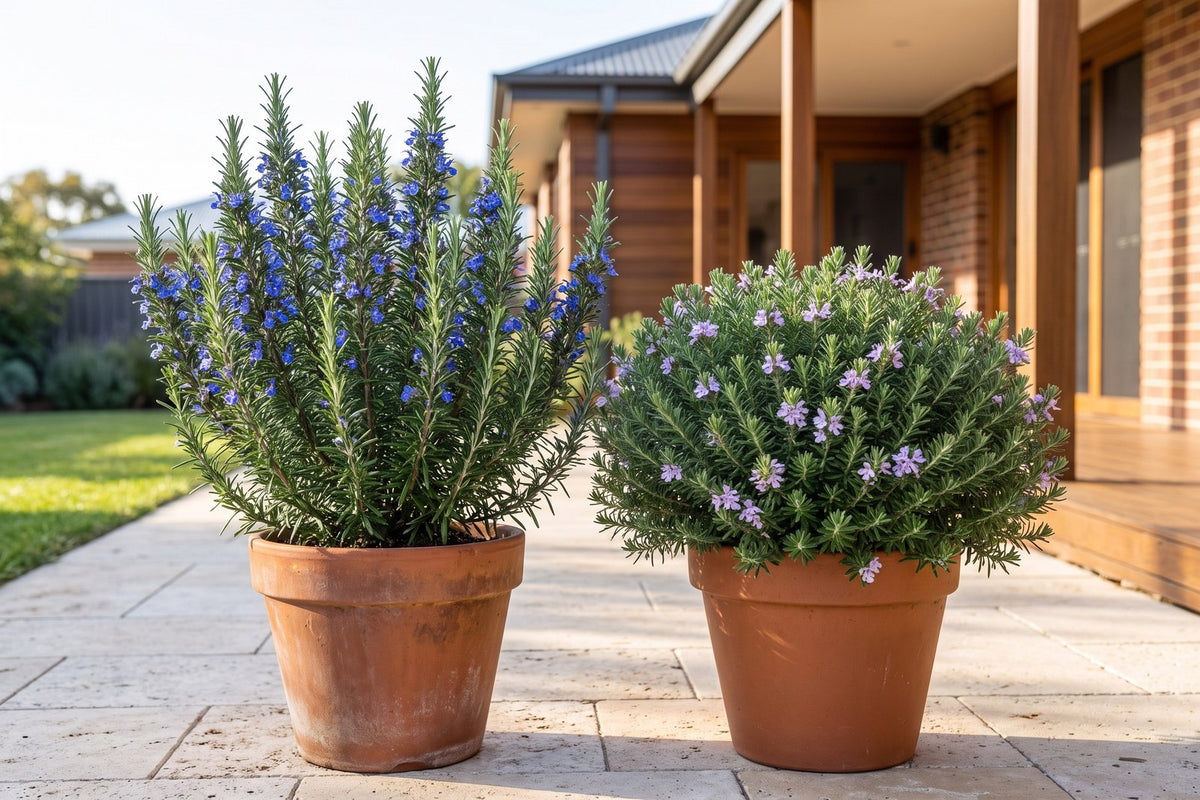
Tuscan Blue Rosemary from $15.95 is the chef's pick and the hedger's pick in one plant: strongly upright to 1.5 m, richly aromatic broad needles and deep blue flowers. Planted at 50-60 cm spacings it forms a fragrant low hedge along paths and vegie beds. The traditional Rosemary (Rosmarinus officinalis) from $31.95 is the classic species form, a rounded aromatic shrub that has anchored kitchen gardens for a few thousand years without a marketing department.
Native coastal rosemary alternatives
Westringia is not a true rosemary, but this Australian native looks remarkably similar and outperforms it in salt wind and humidity. Jervis Gem Coastal Rosemary from $14.95 is a compact form to about a metre with mauve flowers nearly year round, while Zena Coastal Rosemary from $33.95 offers a tidy, dense habit bred for hedging. Neither is for the kitchen, but for a rosemary look in a brutal coastal position they are the smarter plant. Our westringia care guide covers them in full, and our guide to the best plants for coastal gardeners sets out what else survives salt wind.
A companion for the same conditions
Scarlet Sprite Grevillea from $22.95 even borrows the botanical name rosmarinifolia for its rosemary like needles, adding red spider flowers and nectar feeding birds to the same sunny, well drained border.
Planting
Full sun is non negotiable: six hours minimum, all day ideally. Drainage is the other half of the contract, so in clay soils plant on a mound 20-30 cm high, in a raised bed or in a terracotta pot, which breathes and suits rosemary perfectly. A slightly alkaline soil is a bonus; a handful of garden lime in acidic soils is welcome.
Space hedge plantings of Tuscan Blue at 50-60 cm, specimens at 1 m. Dig no compost pit of rich organic matter; average soil is genuinely better and keeps growth firm and aromatic. Water in well at planting, then weekly for the first couple of months while roots take hold. Spring and autumn are ideal planting seasons.
Ongoing care

Watering: Sparingly once established, perhaps a deep drink every two to three weeks in extended dry heat, and none at all through winter. Overwatering is the leading cause of dead rosemary in Australia.
Feeding: Barely. A light application of a low nitrogen fertiliser in spring is plenty; overfed rosemary grows soft, floppy and less fragrant.
Pruning and harvesting: Harvest often, snipping 10-15 cm sprigs; regular picking is effectively regular pruning. Give a firmer all over trim straight after the main flowering, never cutting back into bare leafless wood, which rosemary will not reshoot from. Planted beside the vegie patch it earns its place twice over, and our guide to growing a successful fruit and vegetable garden covers the companions worth planting alongside it.
Common problems

Sudden collapse of a healthy bush: Root rot from wet feet, especially in humid summers or heavy soil. Prevention is the only cure: mounds, pots and restraint with the hose.
Woody, sparse centre: Years without trimming leave bare wood that will not regrow. Trim lightly and often from youth, and replace truly leggy veterans; rosemary strikes readily from cuttings, so the old bush can supply its own successor.
Powdery mildew in humid weather: A white film on foliage in still, muggy conditions. Improve airflow with an open prune and water at the roots in the morning only.
Yellowing foliage: Usually overwatering or soil too acidic, not hunger. Ease off water first, then apply a little lime before ever reaching for fertiliser.
Frequently asked questions
How often should I water rosemary?
Weekly while establishing, then only every two to three weeks in dry heat once mature. If in doubt, do not water; rosemary handles drought far better than damp.
Can I grow rosemary in a pot?
Yes, superbly. Choose terracotta at least 30 cm wide, use a free draining mix, stand it in full sun and let the mix dry between waterings.
Is rosemary frost hardy?
Established plants handle frosts to around minus 6 degrees, so most Australian gardens are fine. In severe frost districts, grow it against a warm north facing wall.
What is the difference between rosemary and coastal rosemary?
Coastal rosemary is westringia, an Australian native that looks similar but is not edible. It tolerates salt spray and humidity better than true rosemary, making it the better pure hedging choice on the coast.
Is rosemary a good plant for fragrance?
Very much so, though its scent lives in the foliage rather than the flowers, so it needs to be planted where people brush past it. Path edges, doorways and the tops of retaining walls all work well, and our guide to the most fragrant plants for aromatic gardening covers the companions that carry scent at other times of year.
Ready to plant?
Few plants return more per dollar than a rosemary bush by the kitchen door, and it sits comfortably among the low-maintenance shrubs for Aussie gardens that need almost nothing from you. Browse our shrub range for Mediterranean companions, explore tough Australian natives like westringia, and pick a terracotta home from our pots and planters. Delivery details are on our delivery page.
Backyard hens change the plant list: the chicken-safe garden plants guide sets out what to grow around a run and what to keep out of reach.


