

Westringia fruticosa grows naturally on clifftops along the New South Wales coast, in salt laden wind and pockets of sand that would finish off most garden shrubs. That heritage is exactly why it has become one of the most planted natives in the country. Coastal rosemary handles drought, moderate frost, sea spray and poor soil, and repays zero pampering with soft grey green foliage and small white flowers that appear on and off all year.
Modern compact cultivars have turned a sprawling coastal survivor into a genuinely neat landscape plant. Clipped balls, low hedges, informal drifts in a native garden: westringia does the lot, and it is one of the few natives that takes formal hedging as comfortably as an English box. The main skill in growing it is restraint with the hose and regularity with the shears.
Quick facts
| Botanical name | Westringia fruticosa and cultivars |
| Type | Evergreen native shrub |
| Height | 80cm to 2m depending on variety |
| Position | Full sun preferred, tolerates light shade |
| Soil | Any free draining soil, including sand and coastal soils |
| Flowers | White to pale mauve, sporadically all year |
| Climate | Coastal to inland; frost hardy to about -5C once established |
Choosing the right westringia

For low hedges and clipped shapes
Jervis Gem Coastal Rosemary, from $14.95, is the compact classic: a naturally dense metre round shrub with fine deep green foliage and mauve tinted flowers, perfect for hedges of 60cm to 1m. Zena Coastal Rosemary is tighter again, holding a neat ball shape to around 80cm with barely any trimming, which makes it a smart native substitute for box balls either side of a front door.
For informal screens and native gardens
Longleaf Westringia, from $31.95, is the loose, graceful member of the family, an open shrub to around 2m with fine, willowy foliage that suits informal screening and habitat plantings where a clipped look would feel out of place.
Companions that cope with the same conditions
Westringia looks best mass planted with other tough natives. Alyogyne Southern Gem, a native hibiscus from $14.95, throws large mauve purple flowers above the same grey green tones. For height and bird life behind a westringia hedge, Callistemon Prolific or the sweetly scented Callistemon Sweet Burst carry red bottlebrush flowers on the same low fuss root system. All of these handle the same lean, sunny conditions, so one watering regime covers the whole planting.
Planting
Full sun gives the densest growth and the most flowers. The one non negotiable is drainage: westringia will grow in sand, gravel or ordinary garden loam, but sitting in a boggy corner of heavy clay is the only reliable way to kill it. On clay, plant into mounds raised 20cm to 30cm above grade. Space Jervis Gem and Zena at 50cm to 70cm for hedging, and Longleaf Westringia at 1m to 1.5m for screening. Water in well, mulch with a coarse gravel or bark mulch, and then largely leave it alone. Coastal gardeners can put westringia in the teeth of onshore wind where little else survives; it was gripping Sydney sea cliffs long before it was winning design awards. Inland, the same toughness covers hot westerly aspects, unirrigated verges and the strip along the driveway that the hose never reaches.
Ongoing care
Watering: Weekly for the first summer, then only in extended dry spells. An established westringia genuinely does not want regular irrigation, and overwatered plants yellow and flop. In pots, water when the top few centimetres of mix are dry rather than to a schedule.
Feeding: One application of a low phosphorus native fertiliser in spring is plenty. These plants evolved on some of the poorest soils in the world and it shows.
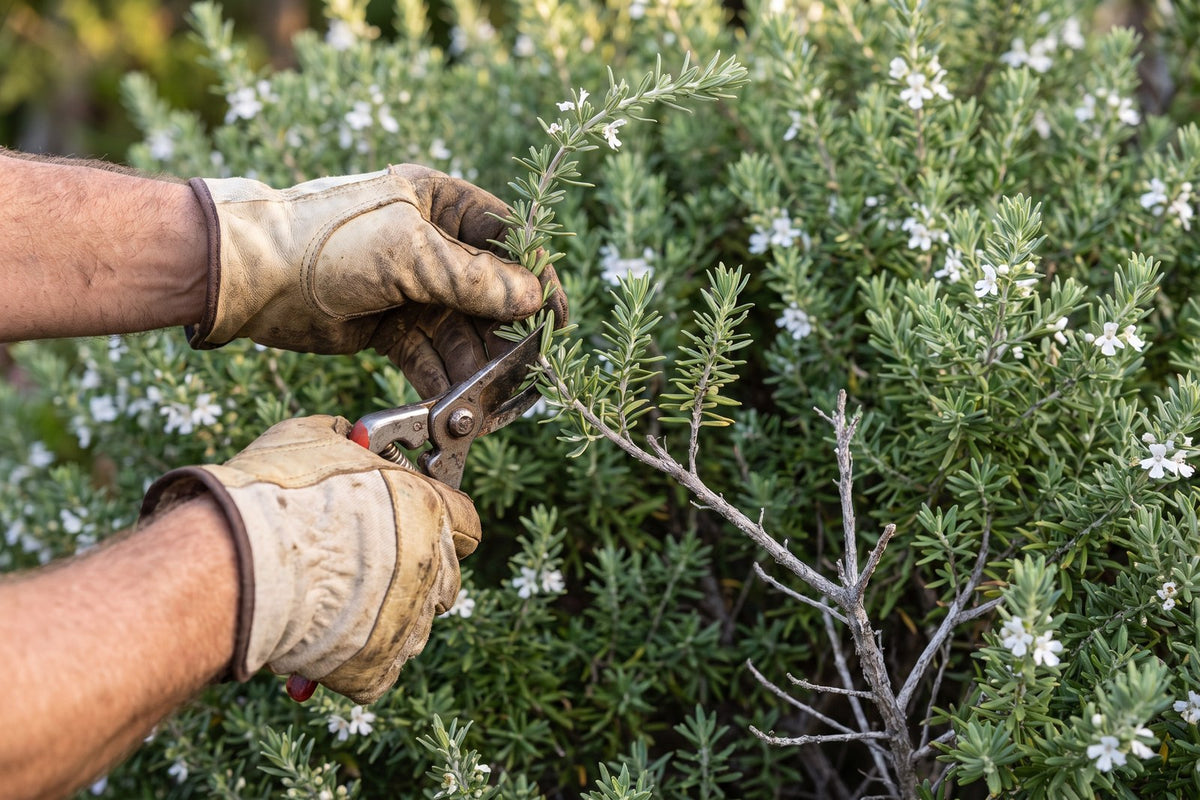
Pruning: The secret to a westringia that lasts decades. Trim lightly every few months, or at least twice a year, always leaving green growth. Avoid cutting back into bare grey wood, which reshoots poorly. A trim straight after a flowering flush costs you nothing, since new buds form on the regrowth within weeks.
Common problems
Plants collapsing in wet soil: Root rot from poor drainage is the number one killer. There is no cure once a plant wilts and browns; replant on a mound or in a better drained spot.
Bare, woody centres: The result of years without trimming followed by one brutal haircut. Prune little and often instead, and replace plants that have gone too far.
Yellowing foliage: Usually too much water or phosphorus rich fertiliser. Pull back on both and apply a native specific slow release feed.
Sparse flowering: Too much shade. Westringia flowers on and off all year in full sun, and hardly at all under trees.
Where westringia grows in Australia
Westringia is one of the few plants that performs in every Australian capital, which is a large part of why landscape architects specify it so heavily. It handles humidity, frost, drought and salt within the same species.
| Location | How it performs |
|---|---|
| Sydney and coastal NSW | Its natural home - clifftops and headlands. Outstanding, needs nothing |
| Brisbane and southeast Queensland | Very good, though humid wet summers make sharp drainage important |
| Melbourne and Adelaide | Excellent. Handles frost and dry summers equally |
| Perth | Ideal - sandy free-draining soil and coastal exposure suit it perfectly |
| Canberra and cold inland | Good. Tolerates moderate frost once established |
| Tasmania | Grows well in coastal and sheltered positions |
| Tropical north | The weakest performer - constant humidity encourages rot |
Front-line coastal planting
This is where westringia has no real competition. It grows naturally on exposed New South Wales headlands in salt-laden wind, so a beachfront garden in Byron, Wollongong, the Gold Coast or coastal Perth is simply its native condition. Where a lilly pilly or murraya would burn and thin out, westringia stays dense.
Hot, dry inland gardens
Once established it survives on rainfall across most of southern Australia, and it tolerates the reflected heat of driveways, west-facing walls and light paving that damages softer shrubs. In Adelaide, Perth and inland districts it is a genuinely irrigation-free hedge, which very few formal hedging plants can claim.
What it will not tolerate
Wet feet. Westringia comes from free-draining coastal sand and is the one thing it cannot cope with is soil that stays saturated. On heavy Brisbane or Melbourne clay, plant on a raised mound and improve the soil with compost and gypsum, or the plant will fail regardless of everything else you do right.
Frequently asked questions
How fast does westringia grow?
Moderately fast. Compact forms like Jervis Gem reach hedge size in two to three years, and Longleaf Westringia hits 2m in about the same time in good conditions.
Is westringia frost tolerant?
Yes, established plants handle frosts to around -5C. Young plants appreciate protection through their first winter in cold inland districts.
Does westringia grow in pots?
Well, provided the mix drains freely. Zena is the best choice for containers, holding its tight ball shape with a light trim once or twice a year.
Can I hedge westringia like English box?
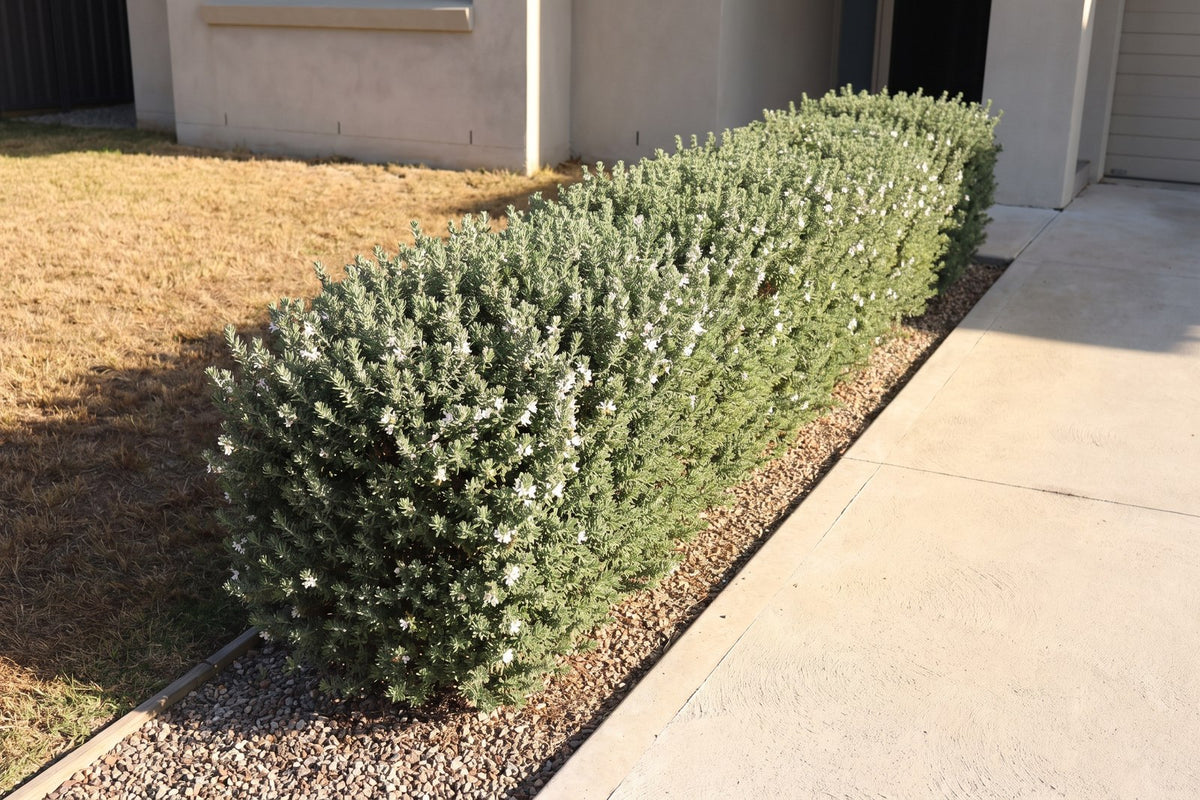
Yes, and it is one of the best native box substitutes available. Trim lightly every eight to twelve weeks in the growing season and it holds a crisp formal line.
Ready to plant?
See the full range in our native plants collection, or pair westringia with other fast growing plants and shrubs. Unsure about sizes? Our pot and bag size guide shows exactly what ships.
For forage that Australian native bees are recorded on, rather than honeybees in general, see the native bee plants collection.
If there are chooks in the yard, our guide to chicken-safe garden plants covers what survives scratching, what gives shade and forage, and the common garden plants that poison poultry.
For a garden that has to sit in a bushfire zone, the bushfire-wise planting guide explains the design rules the fire agencies publish and which plants appear on their lists.


