

An azalea in full flower barely shows a leaf. For a few weeks each spring the whole shrub disappears under flower, which is why azaleas remain one of the most planted shrubs in Australia despite decades of newer arrivals. The evergreen indica types that dominate Australian gardens are tougher than their delicate reputation, handling everything from Melbourne winters to Brisbane humidity as long as their few firm preferences are met.
Those preferences are simple: acidic soil, dappled light or morning sun, shallow planting and steady moisture. Give an azalea those four things and it will flower reliably for thirty years or more. This guide covers variety selection, including the repeat-flowering Encore types that bloom in autumn as well as spring, plus the handful of pests worth knowing about.
Quick facts
| Botanical name | Azalea indica (Rhododendron indicum hybrids) |
| Type | Evergreen flowering shrub |
| Height | 0.6 to 2m depending on variety |
| Position | Morning sun or dappled shade |
| Soil | Acidic, pH 4.5 to 6, moist and well drained |
| Flowers | Spring; Encore types repeat in autumn |
| Climate | Cool temperate to subtropical |
Choosing an azalea

Classic indicas for mass planting
For rich wine-red tones, Shiraz Indica Azalea is hard to beat and grows into a dense, rounded shrub ideal for low informal hedges. Exquisite Indica Azalea, from $13.95, is a vigorous older variety with large soft pink blooms, and its price makes it the smart choice when you are planting a whole border rather than a single specimen. For something fuller, Anna Kehr Indica Azalea carries double pink flowers with the ruffled look of a miniature rose.
For collectors and feature spots
Only One Earth Indica Azalea and Mistral Indica Azalea both offer standout blooms for a prominent position by a path or entry, where the spring display gets the audience it deserves.
For flowers beyond spring
The Encore series flowers in spring and then again through autumn. Autumn Lily Encore Azalea, from $36.95, gives crisp white blooms twice a year, while Autumn Princess Encore Azalea does the same in soft pink. Encores also tolerate a little more sun than traditional indicas.
Azaleas pair naturally with other acid lovers. A Japanese maple such as Atropurpureum Japanese Maple overhead provides exactly the dappled light azaleas want, and the burgundy canopy above spring flower colour is a classic combination for good reason. Our Japanese maple care guide covers siting that overhead canopy correctly.
Planting
Choose a spot with morning sun and afternoon protection, or the dappled light beneath open trees. Azaleas need acidic soil between pH 4.5 and 6; if your soil is neutral or alkaline, dig through compost and a handful of sulphur a few weeks before planting, or grow them in pots of azalea and camellia mix where you control the chemistry entirely. If your soil test comes back neutral or alkaline, our guide on how to lower soil pH sets out the safe way to shift it.
Azaleas are shallow rooted, so plant them slightly proud, with the top of the root ball sitting 1cm to 2cm above the surrounding soil, and never bury the stem. Space smaller varieties 60cm to 80cm apart and larger indicas about 1m apart for a continuous drift. Water in thoroughly and mulch with 5cm of pine bark or leaf litter, keeping it clear of the trunk.
Ongoing care
Watering: Keep the root zone evenly moist for the first two summers, which usually means a deep drink twice a week. Established plants are surprisingly resilient but flower far better with regular summer water.
Feeding: Feed once immediately after spring flowering and again in late summer with an azalea and camellia fertiliser. Never lime the bed, and avoid mushroom compost, which is alkaline. Yellow leaves with green veins are the classic sign the pH has drifted too high. The same fertiliser and the same timing suit camellias, which is why the two are so often planted together; see our guide to camellia bushes.
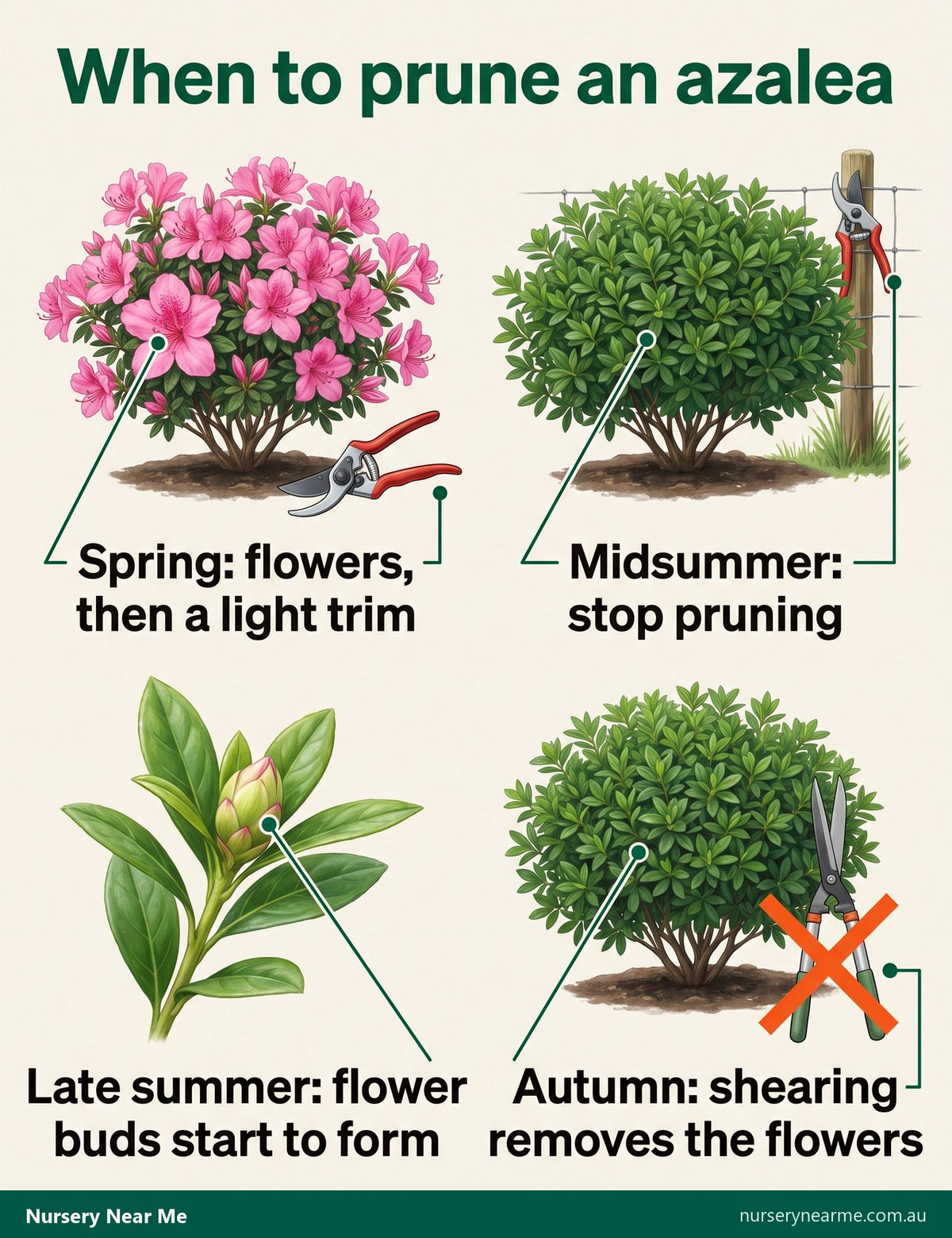
Pruning: Azaleas need very little. Trim lightly straight after flowering to shape, and stop pruning by midsummer because next spring's flower buds form from late summer onward. A plant sheared in autumn will be a plant with no flowers, and it will not let you forget it.
Common problems

Lace bug: The number one azalea pest in Australia. Leaves turn silvery and mottled on top with black specks underneath. Treat with horticultural oil or a systemic insecticide in spring when the first damage appears, and note that plants in too much sun get hit hardest.
Petal blight: Flowers turn slimy and brown almost overnight in warm wet spring weather. Remove and bin affected blooms and avoid overhead watering while in flower.
Yellowing leaves: Green-veined yellow leaves mean iron deficiency from soil that is not acidic enough. Apply iron chelates for fast correction and sulphur for the long term.
Root rot: Wilting despite moist soil points to poor drainage. Raise the bed or move the plant in autumn; azaleas transplant easily thanks to those shallow roots.
Frequently asked questions
Are azaleas frost hardy?
Evergreen indica azaleas handle moderate frost to about minus 5 degrees once established. In cold districts, flowers that open during a frosty snap can be browned, so a spot with morning shade helps late varieties.
Can azaleas grow in full sun?
In cool climates, yes, with mulch and summer water. From Sydney north, full afternoon sun invites lace bug and scorched foliage, so aim for morning sun only. Our wider guide to shade gardening covers what else will grow happily in the same dappled positions.
Do azaleas grow well in pots?
Extremely well. Use a 30cm or wider pot with azalea and camellia mix, water regularly and they will flower on a shaded patio for decades.
How fast do azaleas grow?
Slow to moderate, typically 10 to 20cm a year. Buy the largest plant you can afford for instant effect, or be patient with tubestock in mass plantings.
Ready to plant?
Explore our full collections of shrubs and flowering plants for companions, or start small and cheap with tubestock. Check delivery details for your postcode before you order. One safety note: azalea foliage is toxic to dogs, so if pets share the garden read our guide to creating an animal friendly garden before choosing a position.


