

A row of trees along a driveway is one of the few plantings that improves a property every year it stands. The trees have to suit the job, though: roots that leave the paving alone, a canopy that clears cars, and litter you can live with. This guide covers the trees that line Australian driveways well, how far apart to plant them, and what to avoid.
What a driveway tree has to do
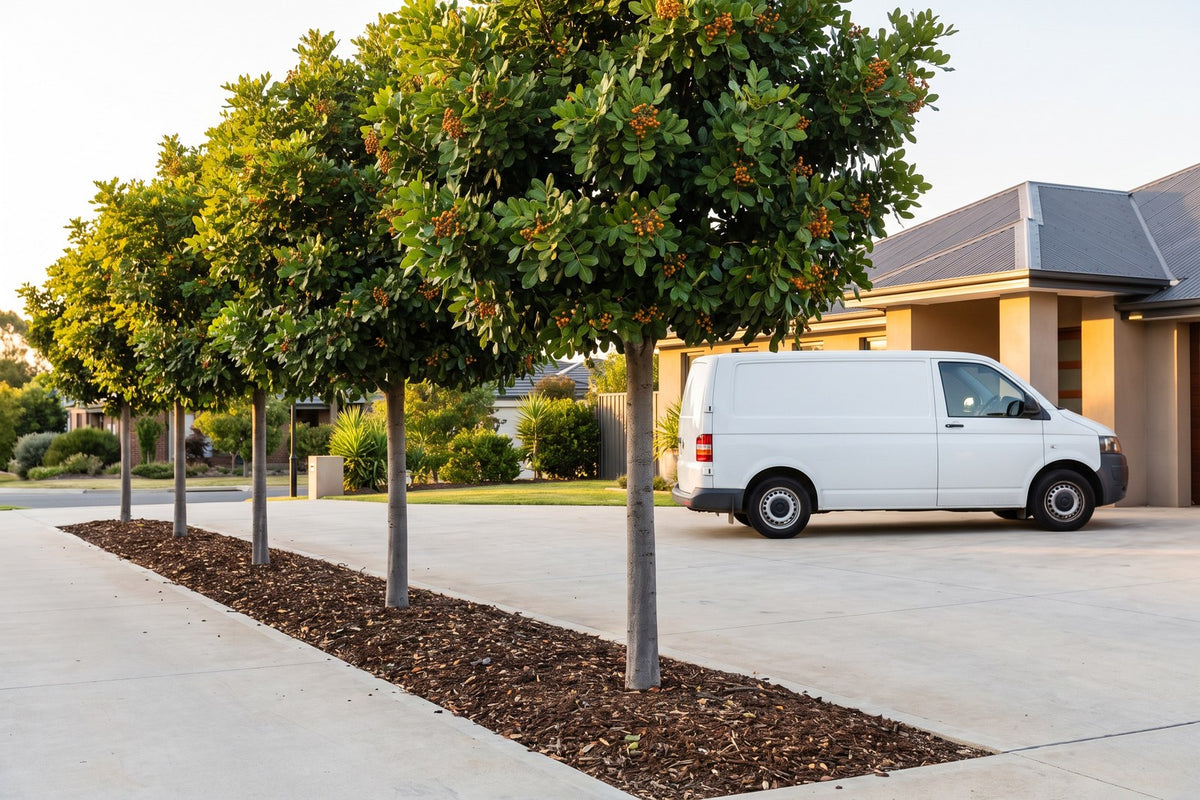
- Keep its roots to itself. Figs, poplars, willows and large gums lift paving and find pipes. Choose trees known for well behaved roots, and still plant them back from the edge.
- Clear the cars. An upright or vase shaped tree that can be pruned to a clean trunk of two to three metres lets vehicles and delivery vans pass.
- Drop little. Fruit, large pods and heavy flower fall make a sealed surface slippery and stain paint. Some sweeping comes with any deciduous tree.
- Match. An avenue works by repetition. One species, one size, evenly spaced.
Evergreen choices
- Magnolia. Evergreen magnolias give glossy foliage and large white flowers. Upright forms such as Alta stay narrow enough for a driveway, where the old full sized tree would not. Magnolias are also among the strongest performers in our guide to feature trees for a front yard.
- Tuckeroo and water gum. Tidy native street trees for warm and coastal districts, with roots that behave beside paving.
- Olive. Silver foliage, drought hardy and happy in poor soil. Olive trees suit Mediterranean and inland climates, and our complete guide to olive trees covers pruning, fruit drop and the varieties that stay tidy beside a paved surface.
- Norfolk Island pine. The classic coastal avenue for a long, wide drive. A Norfolk Island pine is a very large tree, so it belongs on acreage and seaside blocks, not a suburban driveway.
Deciduous choices

- Ornamental pear. The most planted avenue tree in southern Australia: upright, white blossom in spring and strong autumn colour. The ornamental pear range includes narrow forms, and our comparison of the top 10 ornamental pear varieties covers which stay slim enough for a driveway.
- Crepe myrtle. Summer flowers, autumn colour, handsome bark and well behaved roots, in every Australian capital. See the crepe myrtle range. Bear in mind that they are deciduous, and our answer to do crepe myrtles lose their leaves explains when the drop happens and how much sweeping to expect.
- Japanese maple. For a short, sheltered drive in a cool climate. A Japanese maple needs protection from hot westerly wind, and our Japanese maple care guide covers positioning and summer watering in Australian conditions.
For long rural driveways
Where there is room, eucalypts make the grandest avenues and suit the landscape. Plant them well back from the drive, at least their mature canopy width from any building, and choose species local to the district. Large gums shed limbs, so they are not for a drive that people park under.
Spacing and setback
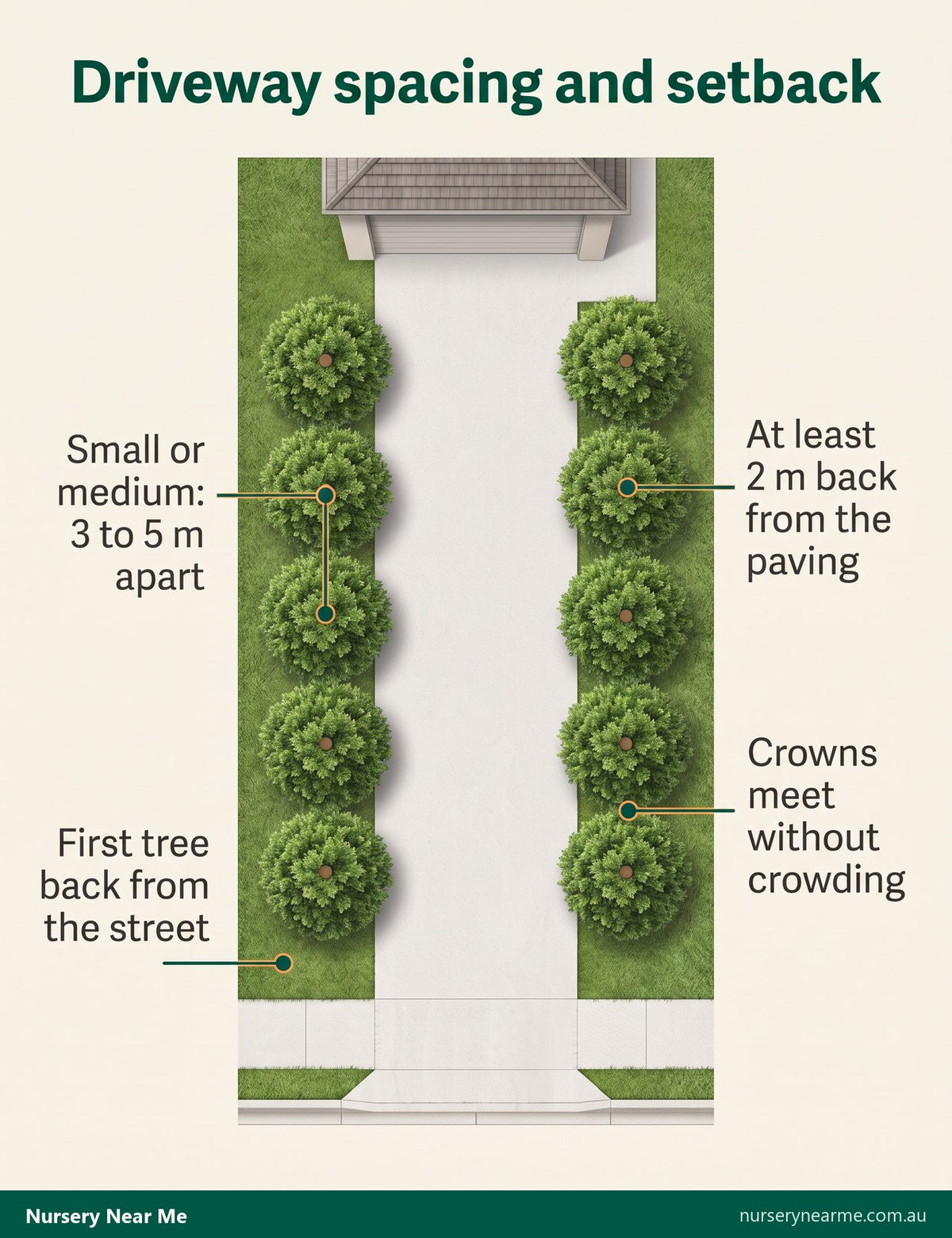
- Plant small and medium trees three to five metres apart, and large trees eight metres or more, so the crowns meet without crowding.
- Set the row at least two metres back from the edge of the paving, and further for big trees.
- Keep the first tree back from the street so drivers can see the footpath and the road.
- Find the services before you dig. Water, sewer, power and data lines often follow the driveway.
- Plant both sides at once from the same batch, so the two rows grow at the same rate.
Soil and climate
Driveway edges are often compacted fill. Loosen a wide strip, not single holes, improve drainage where water sits, and mulch the whole row. Then choose by climate: frost hardy pears, maples and olives in the south and inland; tuckeroo, water gum, magnolia and crepe myrtle in the warm east; salt tolerant trees such as Norfolk Island pine and tuckeroo near the coast.
Common questions
What is the best tree for lining a driveway?
In most of southern Australia, a narrow ornamental pear. In warm and coastal districts, tuckeroo, water gum or crepe myrtle. All have roots that behave beside paving.
How far apart should driveway trees be planted?
Three to five metres for small and medium trees, measured so the mature crowns just meet.
Which trees should I keep away from a driveway?
Figs, poplars, willows and big gums for their roots, and anything that drops heavy fruit or pods onto the paving.
Ready to plant?
A driveway avenue is one of the few plantings that improves a property the day it goes in and every year afterwards, provided the spacing and root behaviour are right. Browse our driveway trees collection for species with non-invasive roots.
An avenue reads best when every tree matches, which is why large driveway plantings are often specified from field-grown stock: Signature Trees grows matched ex-ground specimens in rows on two Queensland farms and sells them as numbered, individually chosen trees.
Worth knowing before you choose: when we counted a year of orders in What Australia Planted in 2025-26, low maintenance was the single most requested quality in every state, ahead of flowers, shade and speed.
The same thinking applies out the front. See front yard planting for kerb appeal for the combinations that photograph well and survive neglect.


