

Elephant ears give you the biggest leaf you can grow in an Australian garden, and one of the best known is native here. Alocasia brisbanensis, the cunjevoi, grows wild through east-coast rainforest from northern New South Wales up into Queensland. Alongside it sit a dozen imported Alocasia varieties, some suited to a shaded courtyard, others strictly indoor plants. This guide covers which is which, how to grow them in Australian conditions, and the safety point every buyer should know.
Quick facts
| Detail | What to expect |
|---|---|
| Botanical name | Alocasia species and hybrids |
| Mature size | 600 mm for compact hybrids, up to 3 m for giant taro |
| Position | Bright filtered light or dappled shade. Never harsh afternoon sun |
| Soil | Rich, moisture-retentive but free draining |
| Water | Keep evenly moist through the warm months; reduce in winter |
| Frost | Frost tender. Most go dormant below about 10°C |
| Best climates | Brisbane, northern NSW, tropical Queensland, coastal Sydney |
| Toxicity | All parts are toxic. Sap irritates skin, eyes and mouth |
A safety note first
Every Alocasia contains calcium oxalate crystals, and the sap of the native cunjevoi is a well-known irritant. Contact causes burning and swelling of the lips and mouth, and skin irritation on handling. Wear gloves when dividing or pruning, wash your hands afterwards, and think carefully before planting one where small children or pets play. It is a genuinely spectacular plant, but it is not a good choice for a toddler's play area.
Choosing the right elephant ear
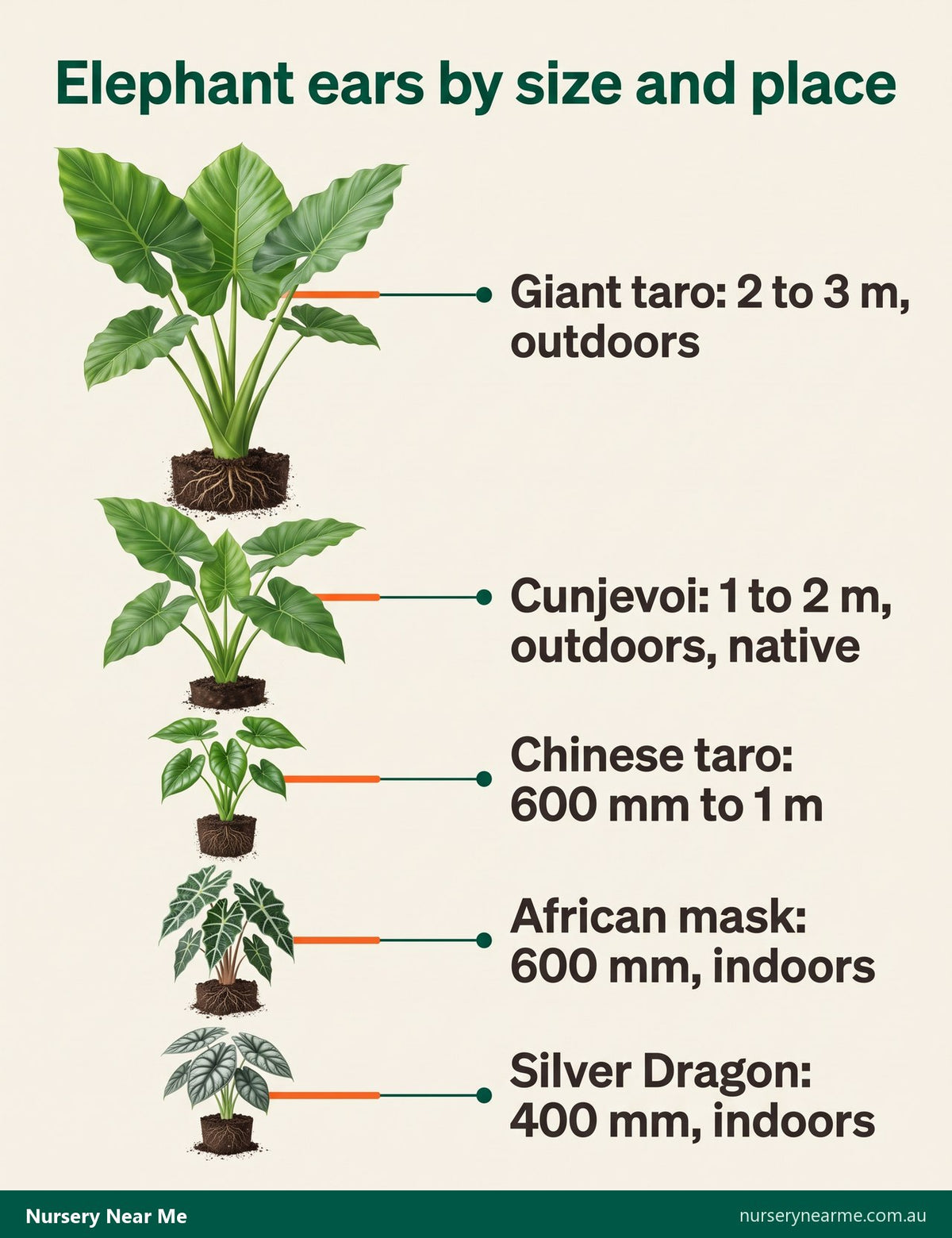
The name covers plants with very different needs. Some are large landscape plants for a shaded garden bed, others are collector's houseplants that will not survive outdoors in most of Australia.
| Variety | Size | Best grown |
|---|---|---|
| Cunjevoi (A. brisbanensis) | 1-2 m | Outdoors, shaded garden. Native to east-coast rainforest and the hardiest here |
| Giant taro (A. macrorrhizos) | 2-3 m | Outdoors, subtropical and tropical gardens. The biggest leaf of all |
| Chinese taro (A. cucullata) | 600 mm-1 m | Pots or shaded beds. Compact and forgiving |
| African mask (A. amazonica) | 600 mm | Indoors or a sheltered patio. Dark leaves, white veins |
| Dwarf African mask | 300-400 mm | Indoors. Good for a desk or shelf |
| Zebra plant (A. zebrina) | 800 mm | Indoors. Striped stems are the feature |
| Silver Dragon (A. baginda) | 400 mm | Indoors. Silver leaves with dark veining |
| Camouflage Splash | 500 mm | Indoors. Variegated collector's plant |
For an Australian garden bed
Stick to the cunjevoi or giant taro. Both handle real outdoor conditions in a subtropical climate, cope with heavy summer rain, and regrow from the rhizome if knocked back. The native cunjevoi is the most reliable choice for a shaded Brisbane or northern NSW garden.
For indoors or a courtyard pot
The patterned hybrids such as African mask, Silver Dragon and zebra plant are bred for interiors. They want warmth, humidity and bright indirect light, and they resent draughts and cold. Treat them as indoor plants anywhere south of about Coffs Harbour.
Where elephant ears grow well in Australia
- Brisbane, the Sunshine Coast and northern NSW suit them best. Warm humid summers and mild winters are close to their natural rainforest conditions, and cunjevoi grows wild in this country.
- Tropical Queensland and the Top End grow the largest specimens, often lush year-round.
- Sydney and coastal NSW grow them well in a sheltered shaded spot, though growth slows noticeably over winter.
- Melbourne, Adelaide and Perth can grow them in pots that move under cover in winter. In the ground they will be knocked back by cold and may not return.
- Frost-prone inland districts are unsuitable outdoors. Grow them in containers and shelter them entirely over winter.
How to plant
- Choose a shaded or dappled position. Morning sun is fine; hot afternoon sun scorches the leaves within days.
- Enrich the soil with compost or aged manure. Elephant ears are hungry plants that grow fast in rich ground.
- Make sure it drains. They want constant moisture but not waterlogging, which rots the rhizome.
- Plant the rhizome just below the surface, with the growing point facing up.
- Mulch well to hold moisture, keeping the mulch clear of the stem.
- Allow room. Giant taro needs two metres of space; crowding produces smaller leaves.
Ongoing care
Watering
Through the warm months keep the soil consistently moist. These are rainforest plants and they wilt quickly when dry, though they usually recover after a deep soak. As temperatures drop in autumn, cut watering back sharply. Wet soil plus cold is what kills them, not cold alone.
Feeding
Feed monthly through spring and summer with a balanced liquid fertiliser, or apply a controlled-release fertiliser in early spring. Big leaves need feeding. Stop over winter while the plant is resting.
Humidity and indoor care
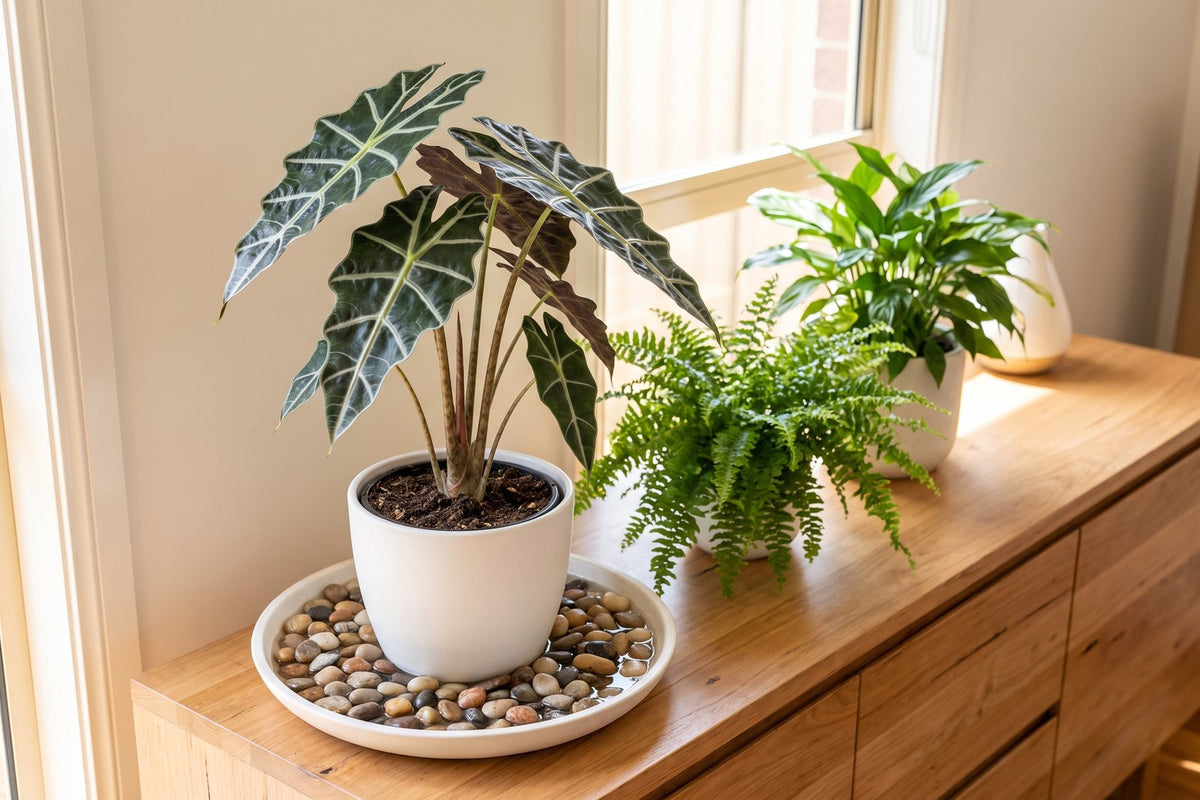
Indoor varieties want humidity that most Australian homes do not naturally provide, particularly with air conditioning running. Group plants together, stand the pot on a tray of pebbles and water, or keep them in a bathroom with good light. Crisp brown leaf edges almost always mean the air is too dry.
Winter dormancy
Do not panic if an outdoor elephant ear collapses over winter in a cooler district. Most go dormant below about 10°C, die back to the rhizome and reshoot in spring. Keep the soil barely moist and leave it alone until the weather warms.
Common problems and fixes
- Yellowing lower leaves is usually normal turnover as the plant pushes new growth. If several yellow at once, check for waterlogging.
- Brown crispy edges means low humidity or dry soil, most common indoors under air conditioning.
- Scorched pale patches means too much direct sun. Move it to dappled light.
- Spider mite is the main indoor pest, showing as fine webbing and stippled leaves in dry air. Rinse the foliage and raise humidity.
- Sudden collapse in winter is usually dormancy rather than death. Reduce watering and wait for spring.
- Rotting rhizome means the soil stayed wet and cold. Lift, cut away soft tissue and replant in free-draining mix.
Propagating elephant ears
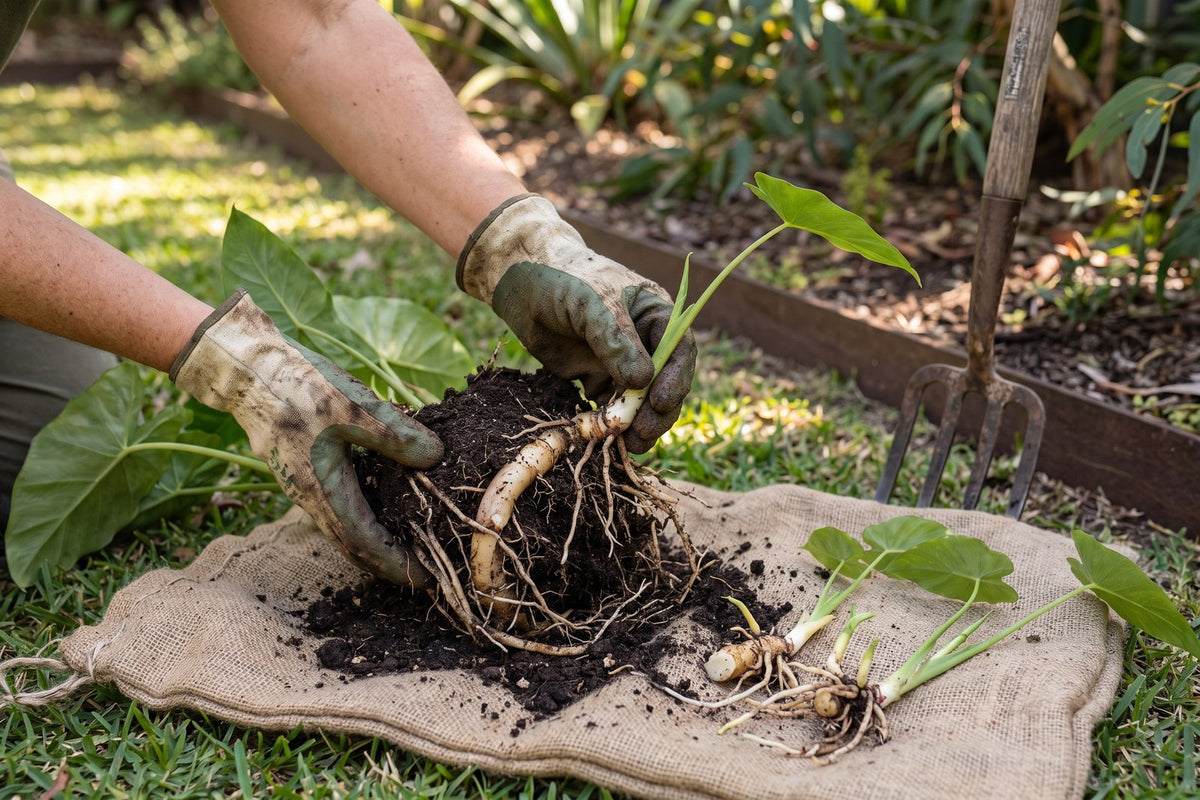
Divide the rhizome in spring as growth resumes. Lift the clump, separate offsets with at least one growing point each, and replant immediately at the same depth. Wear gloves, since this is when you are most likely to contact the sap. Divisions establish quickly in warm weather and will often double in size within a season.
Frequently asked questions
Are elephant ear plants native to Australia?
One is. Alocasia brisbanensis, known as cunjevoi, grows naturally in rainforest along the east coast from northern New South Wales into Queensland. Most other elephant ears sold here, including the patterned indoor hybrids, come from South-East Asia.
Are elephant ear plants poisonous?
Yes. All parts contain calcium oxalate crystals and the sap irritates skin, eyes and mouth. Cunjevoi sap in particular is a known irritant. Wear gloves when dividing or pruning, and avoid planting them where young children or pets play.
Will an elephant ear survive winter outdoors in Melbourne?
Usually not in the ground. They are frost tender and most go dormant below about 10°C. In Melbourne, Adelaide or Perth grow them in pots that can move under cover for winter, keeping the soil barely moist until spring.
Why are the leaves turning yellow?
Occasional yellowing of the oldest leaves is normal as the plant replaces foliage. Several leaves yellowing at once usually points to soil staying too wet, especially in cool weather. Check drainage before adding fertiliser.
Can elephant ears grow in full sun in Australia?
No. The Australian sun is strong enough to scorch the leaves, particularly in summer afternoons. Morning sun with afternoon shade, or bright dappled light all day, produces the best foliage.
How big do elephant ears get?
It depends entirely on the variety. Indoor hybrids such as Silver Dragon stay around 400 mm, cunjevoi reaches one to two metres, and giant taro can pass three metres in a warm humid garden with rich soil.
Ready to plant?
We grow both the hardy outdoor types and the patterned indoor varieties. Browse the tropical plants collection for garden-scale elephant ears, or our indoor plants range for the compact hybrids.
Planting a shaded garden bed? Our guide to designing a tropical garden that looks lush year-round covers what to plant alongside them, and growing Strelitzia nicolai pairs well for height behind a stand of elephant ears.


