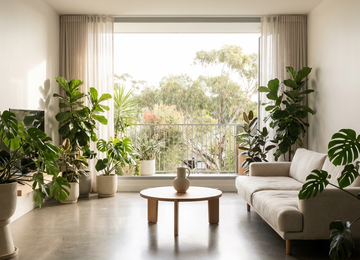
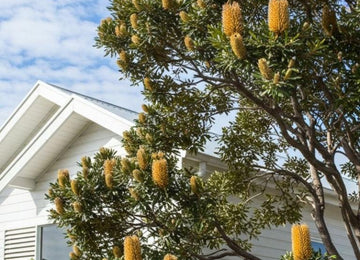


A small backyard does not have to be a treeless one. The trouble comes from choosing on the size of the plant in the pot rather than the size it will be in fifteen years, and a tree planted two metres from the slab always wins that argument eventually. Every tree below tops out under about eight metres and suits a courtyard, a townhouse yard or a standard suburban block where a jacaranda would be a mistake.
Quick facts
| Question | Short answer |
|---|---|
| Sensible maximum height | 4m to 6m for a typical suburban backyard, up to 8m if the canopy is narrow |
| Distance from the house | Half the mature canopy width, never closer than 2m |
| Distance from a boundary fence | 2m to 3m for a tree with a 4m canopy |
| Position | Most want full sun; maples and michelias prefer morning sun in warm climates |
| Soil | Free draining loam with compost; mound 20cm to 30cm on heavy clay |
| Best planting window | Autumn across most of Australia, early spring in frost-prone inland districts |
| Services | Keep every tree at least 3m from sewer, stormwater and water connections |
Choosing the right small tree
Before you shortlist anything, measure. Pace out the distance from the planting spot to the eaves, the fence and the neighbour's window, then halve the mature canopy width you can live with. That single number rules out most of the catalogue. After that it is evergreen structure versus deciduous seasonality: evergreens screen year round, while deciduous trees let winter sun into the house, which matters far more in Melbourne than in Cairns.
Teddy Bear Magnolia
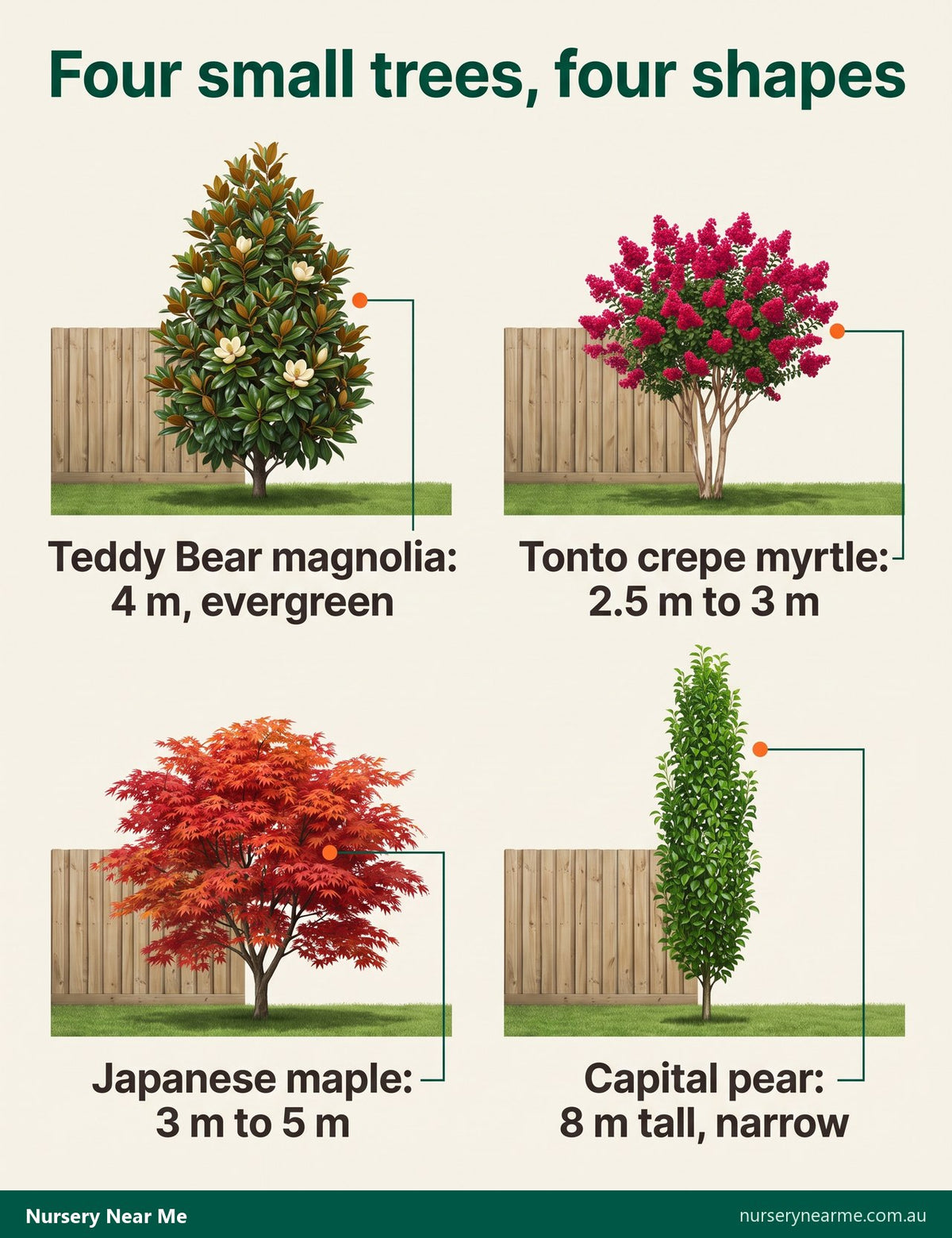
The most popular small tree in the country, for good reason. Teddy Bear Magnolia holds a dense upright cone about 4m tall and 2.5m wide, with thick glossy leaves backed in rust brown felt and cream flowers the size of a dinner plate through summer. Our guide to small magnolia varieties for Australian gardens compares it with Little Gem.
Fairy Blush Michelia
Fairy Blush Michelia is smaller again at 2.5m to 3m, an evergreen with narrow leaves and pink-flushed cream flowers carrying a strong perfume through late winter and early spring. It is the pick for a courtyard beside a window or door, and it clips into a neat lollipop.
Crepe myrtle
Deciduous, drought hardy once established, and the longest flowering small tree in Australia. Acoma is a semi-dwarf at 2.5m to 3m with white blooms and a soft weeping habit; Tonto is similar in magenta red. Both were bred for mildew resistance, which matters in humid summers. See the crepe myrtle care guide for pruning: this is the tree people most often ruin.
Japanese maple
Acer palmatum settles at 3m to 5m in most Australian gardens and gives the best autumn colour of anything this size. It needs morning sun with afternoon shade, shelter from hot dry wind and consistent moisture. It excels in Melbourne, the Adelaide Hills, Canberra, Tasmania and the Blue Mountains, and works in Brisbane only in a sheltered courtyard. The Japanese maple care guide covers leaf scorch.
Small leaf tuckeroo
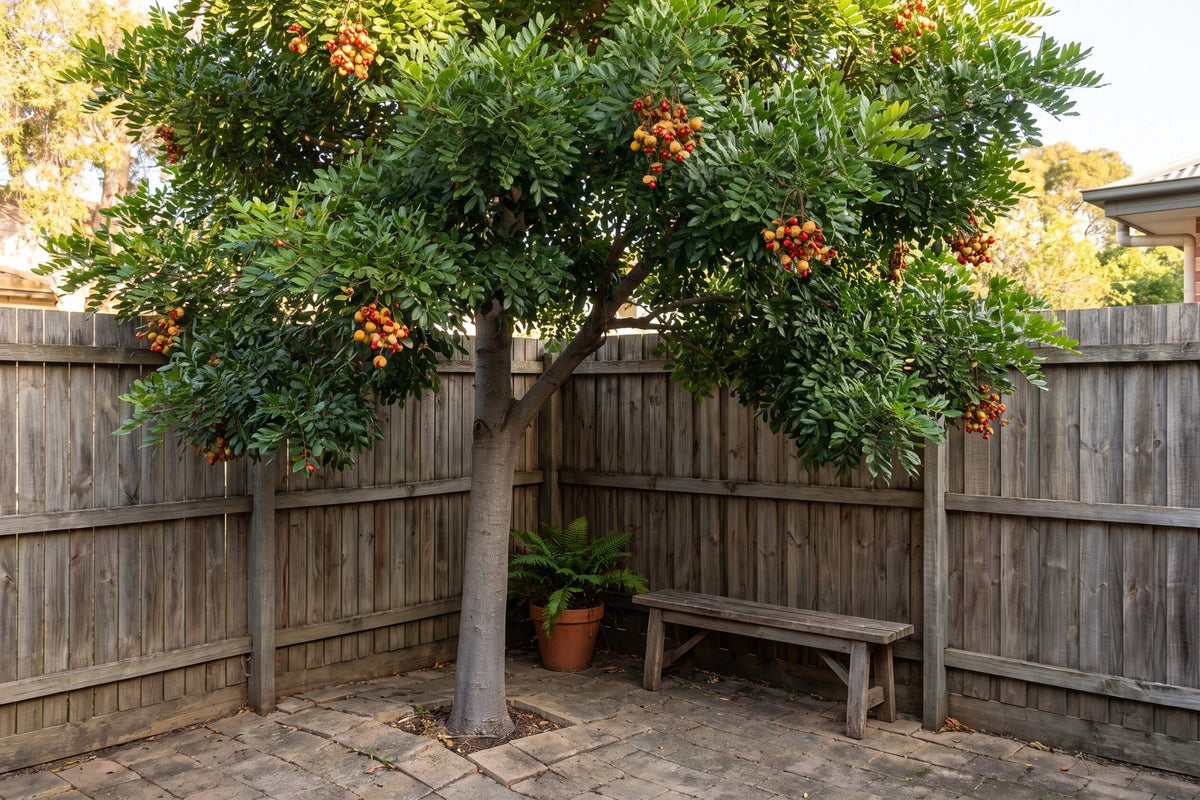
Small Leaf Tuckeroo is the native option: an evergreen to 4m or 6m with fine glossy foliage, yellow seed capsules that split to reveal red seeds, and real tolerance of salt wind and poor soil. Better proportioned for a small yard than the full-sized tuckeroo.
Alstonville tibouchina
For subtropical and warm temperate gardens, Alstonville Tibouchina reaches 4m to 5m and covers itself in deep purple flowers through autumn, when little else performs. It is frost tender, so it suits coastal and subtropical gardens rather than cold inland ones.
Capital ornamental pear
When the space is narrow rather than short, Capital Ornamental Pear is the answer: a tightly columnar deciduous tree around 8m tall but only 2m to 3m wide, with white spring blossom and burgundy autumn colour. In a line it screens a side boundary without stealing floor space.
Gordonia
The fried egg plant reaches 4m to 6m as a glossy evergreen with large white flowers and yellow centres through autumn and winter. A camellia relative, it wants slightly acidic soil, morning sun and reliable moisture.
How to plant
Dig a hole twice the width of the rootball and no deeper, so the top of the rootball finishes level with the surrounding soil. Planting too deep is the most common cause of a tree that sulks for three years. Tease the outer roots, backfill with the soil you removed rather than pure potting mix, and water in with 20 to 40 litres. Mulch 50mm to 75mm deep across the planting circle, kept 100mm clear of the trunk. Stake only on windy sites, and remove the stakes after twelve months. Autumn planting gives roots six months before the first hot spell, which is why the best time to plant a tree in Australia is March to May almost everywhere.
Ongoing care
Watering
Deep and infrequent beats little and often. Give a newly planted tree 20 litres twice a week through its first summer, then a fortnightly soak in the second year. Established crepe myrtles, tuckeroos and pears cope with rainfall alone; maples and gordonias will not.
Feeding
One application of a complete slow-release fertiliser in early spring, spread across the mulch circle rather than against the trunk, suits all of these. Natives such as tuckeroo prefer a low phosphorus formulation. Do not feed in the first six weeks after planting.
Pruning
Remove crossing and inward growing branches in late winter, lift the lower canopy gradually to create usable space beneath, and never top a tree to control height. Crepe myrtles flower on new wood and can be shortened in winter; magnolias and michelias need only light shaping after flowering.
Common problems and fixes
The tree outgrows the space. A selection error rather than a growing one. Treat a nursery tag height as a fifteen-year figure, not a ceiling.
Scorched leaf margins. Wind and heat on maples, michelias and gordonias. Relocate while the plant is young, or plant a shrub layer to windward.
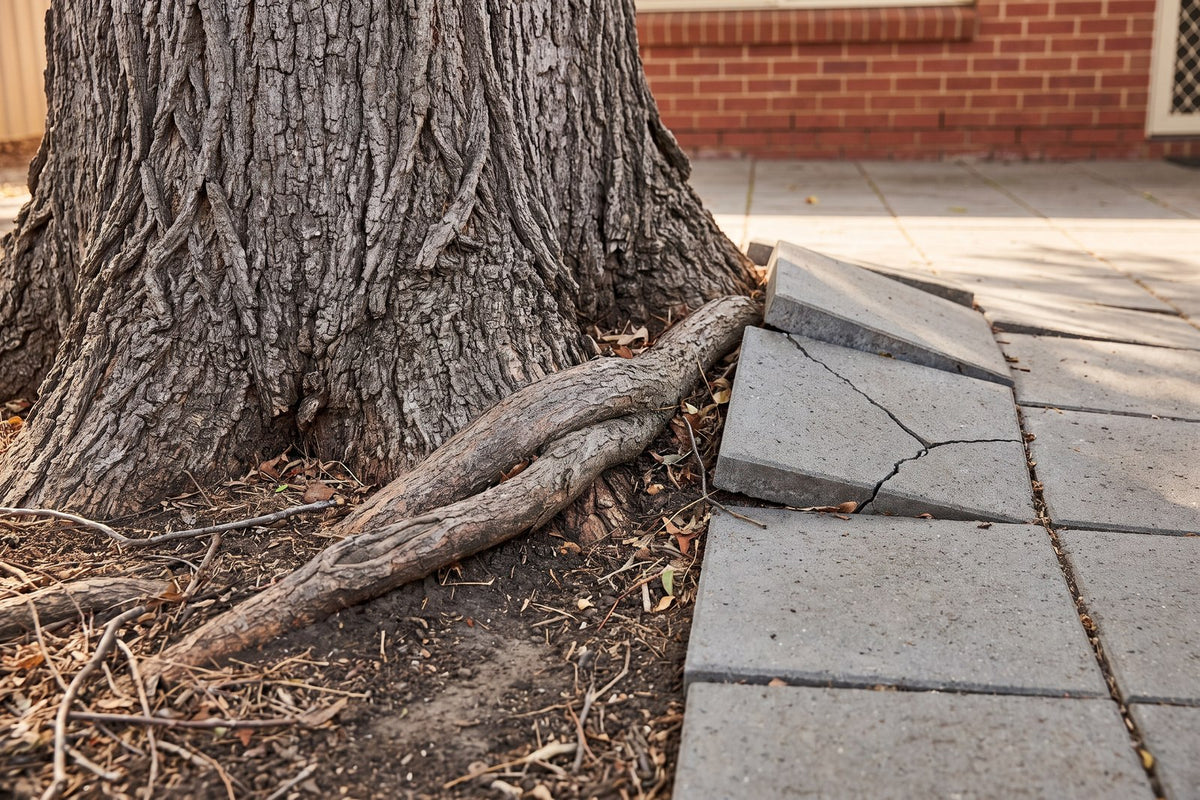
Lifting paving. Fibrous rooted species such as tuckeroo, crepe myrtle and magnolia rarely cause trouble, but no tree should sit within 1.5m of a slab edge. Root barriers cost far less than repairs.
Yellowing between leaf veins. Iron deficiency in alkaline or waterlogged soil. Improve drainage first, then apply chelated iron.
Frequently asked questions
How close to the house can I plant a small tree?
Use half the mature canopy width as the minimum, with a hard floor of two metres. A tree that matures at 4m wide should therefore sit at least 2m from the wall, and further if the canopy will interfere with gutters or windows. Narrow columnar forms like Capital pear can sit closer because their branch spread is only 2m to 3m.
Which small trees have the least invasive roots?
Crepe myrtle, magnolia, tuckeroo, michelia and gordonia all have fibrous, relatively shallow root systems rather than aggressive water-seeking ones. Even so, keep any tree at least 3m from sewer and stormwater connections. Roots follow moisture, so a leaking pipe attracts them regardless of species.
Can a small tree live permanently in a pot?
Most will manage five to eight productive years in a container of 600mm diameter or larger, particularly crepe myrtle, Fairy Blush michelia and Japanese maple. After that they need root pruning and fresh mix, or planting out. Pots dry quickly in Australian summers, so drip irrigation is close to essential.
What is the best small evergreen tree for privacy?
Teddy Bear Magnolia planted at 1.5m to 2m spacing makes an excellent evergreen screen to about 4m, and small leaf tuckeroo does the same job in coastal and subtropical gardens. Both hold foliage to the ground if given full sun and are not pruned too hard.
When should I plant in Brisbane compared with Melbourne?
In subtropical Brisbane, plant in autumn or through the mild winter so roots establish before the wet summer arrives. In Melbourne and other temperate zones autumn is still the first choice, but early spring is safer for frost-sensitive species such as tibouchina, which would otherwise meet a cold first winter with no root system.
Ready to plant?
Browse our small trees for urban gardens collection, or the wider plants for small gardens range if you are planting the beds at the same time. For a driveway or front boundary, the best trees for lining driveways covers the taller avenue options.


