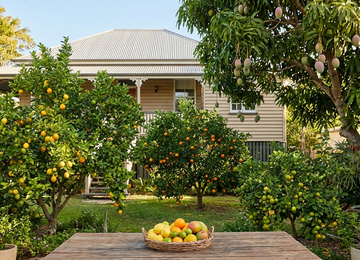


An orange tree is the most generous permanent resident a backyard can have. A single established tree yields anywhere from 50 to 200 kilograms of fruit a year, ripening through winter when the rest of the garden is dormant, and a well cared for specimen keeps doing it for fifty years or more. Home grown oranges are also simply better: left to ripen fully on the tree, they develop a sugar level supermarket fruit, picked early for transport, never reaches.
For Australian gardens the benchmark is the Washington Navel, the famous seedless winter orange with thick easy peeling skin and rich sweet flesh. It performs from the subtropics to the temperate south and needs nothing exotic: sunshine, drainage, food and a little patience in the early years while it builds its frame.
Quick facts
| Botanical name | Citrus sinensis |
| Type | Evergreen fruiting tree |
| Height | 3 to 5 m; smaller in pots |
| Position | Full sun, wind sheltered |
| Soil | Deep, rich, free draining, pH 6 to 7 |
| Fruit | Winter ripening, June to September for navels |
| Climate | Warm temperate to subtropical; tolerates light frost when established |
Choosing an orange tree

The benchmark navel
The Washington Navel Orange Tree from $140.95 is the one to build a backyard orchard around: seedless, sweet, heavy cropping and ripening from early winter. Grafted trees stay a practical 3 to 5 metres and start cropping within a few years. Our guide to growing citrus trees in your Aussie backyard covers how navels fit alongside the rest of the family.
Round out the citrus corner
Citrus like company in the ground you have already improved, and a Meyer Lemon Tree from $22.95 is the natural partner, the most cold tolerant and pot friendly lemon, covering the tart side of the kitchen while the navel handles the sweet. Our lemon tree care guide covers that partner in detail, and the lime tree care guide completes the trio.
The famous imposter
A word on Mock Orange from $12.95: despite the name and the genuinely orange blossom like perfume, murraya is a hedging shrub, not a citrus, and will never fruit for you. It does, however, make a superb perfumed screen along the fence behind a citrus bed, which is exactly how we would use it. For a splash of hot foliage colour nearby, Croton from $13.95 carries orange tones all year in warm gardens. Our mock orange care guide explains what murraya is genuinely good for, which is a fast, fragrant hedge.
Planting
Full sun is non negotiable: eight hours is ideal, six the minimum. Shelter from strong wind improves fruit set and stops branch damage under heavy crops. Soil must drain freely; in clay, mound the planting site 30 cm high and at least a metre across, and work in compost and aged manure a fortnight before planting. Timing matters as much as position, and our guide to the best time to plant a tree in Australia covers the windows for each region.
Plant with the graft union well above soil level, backfill, water in with 15 litres and mulch 75 mm deep, clear of the trunk. Allow 4 to 5 metres between trees, or 3 metres if you intend to keep them pruned compact. In frosty districts plant in spring after the last frost so the tree gets a full warm season to establish. Potted oranges want a 50 cm plus container, premium mix and a full sun position.
Ongoing care

Watering: Deep soak weekly through the growing season, increasing during flowering and fruit development, when moisture stress costs you crop. Established trees are moderately drought hardy but fruit quality tracks water consistency.
Feeding: Feed with a complete citrus fertiliser three times a year, late winter, early summer and early autumn, at the rates on the pack for the size of your tree. Add trace elements yearly and keep the root zone mulched with compost; a well fed orange is a healthy orange, and most citrus ailments start with hunger.
Pruning: Less than you think. Remove dead and crossing wood, water shoots and anything sprouting below the graft, and open the centre slightly for airflow. Prune after harvest in late winter. Skirting to knee height keeps fruit clean and discourages pests climbing aboard.
Common problems
Fruit splitting: Common in autumn after dry spells break suddenly. The fix is prevention: even watering and thick mulch through summer and autumn.
Citrus leaf miner: Wavy silver trails in new leaves. Spray each new flush with horticultural oil fortnightly in the warm months; mature trees can be left alone.
Sooty mould and scale: Black film on leaves follows scale or aphid infestations. Control the insects with horticultural oil and the mould washes away over following weeks.
No fruit or poor crops: Young trees, shade, or feeding with high nitrogen lawn fertiliser are the usual causes. Give a mature unproductive tree full sun, citrus specific food and steady water, and it will usually answer within a season.
Where oranges grow in Australia
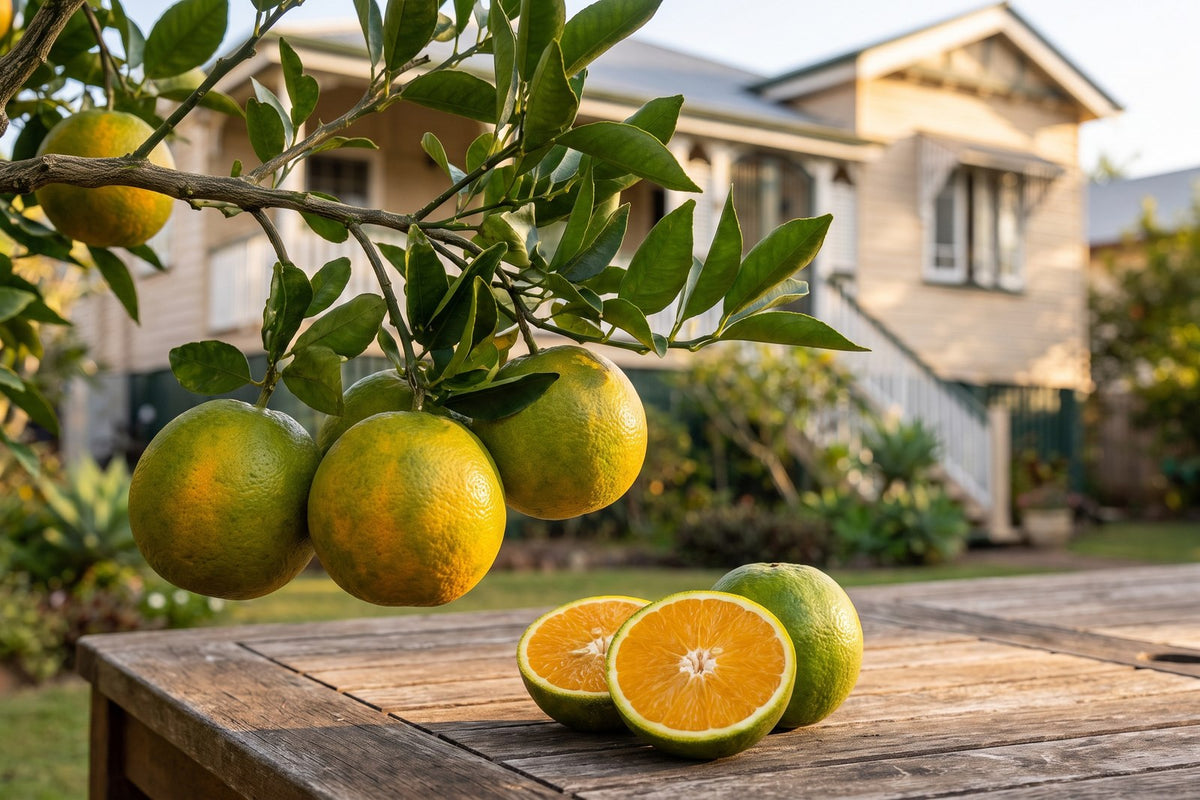
Australia grows oranges commercially from the Riverland in South Australia and the Riverina and Sunraysia along the Murray, through central Queensland and into Western Australia. Home gardeners have a similarly wide range, and oranges tolerate more cold than limes or lemons.
| Location | How it performs |
|---|---|
| Riverina, Sunraysia, Riverland | The commercial heartland - hot dry summers, cool winters |
| Perth and southwest WA | Excellent, and a significant growing region |
| Adelaide | Very good. A classic backyard tree there |
| Sydney and coastal NSW | Good, though humidity increases fungal problems |
| Brisbane and southeast Queensland | Grows well; watch for gall wasp and bronze orange bug |
| Melbourne | Workable in a warm north-facing position |
| Canberra and cold inland | Marginal. Protect young trees from hard frost |
Why cold nights matter for colour
Orange skin colour develops in response to cool weather, not ripeness. In Brisbane and further north, fruit frequently stays green or patchy even when fully sweet and ready to pick, which surprises people used to supermarket fruit. It is a climate effect, not a fault, and the fruit is perfectly good.
The same effect works in reverse in the Riverina and Sunraysia, where cold winter nights produce the deep colour those regions are known for.
Choosing a variety for your climate
Navels ripen through winter and are the standard eating orange across southern Australia. Valencias ripen in spring and summer, hold on the tree well, and suit warmer subtropical gardens. Blood oranges develop their red pigment in response to cold nights, so they colour well in Adelaide, Melbourne and inland districts and poorly in Brisbane.
Feeding and watering
Oranges are heavy feeders. Apply a dedicated citrus fertiliser in late winter, late spring and late summer, spread to the drip line rather than at the trunk. Water deeply and consistently through fruit development - irregular watering causes fruit drop and splitting, which is a common complaint in Perth and Adelaide where summer dry spells are sharp.
Keep grass and weeds well clear of the root zone. Citrus have shallow feeding roots and compete poorly with lawn, and a mulched circle out to the drip line makes a noticeable difference to a struggling tree.
Pests across Australia
Citrus gall wasp is a serious problem in Sydney, southeast Queensland and increasingly in Victoria. Cut out and destroy the woody galls before spring emergence rather than composting them. Bronze orange bug appears in spring in warm districts and should be removed with eye protection, since its spray burns. Citrus leafminer distorts new growth through the warm months and is largely cosmetic on an established tree.
Frequently asked questions
How long does an orange tree take to fruit?
Grafted trees typically produce a first small crop two to three years after planting and reach serious production by year five to seven. Seed grown trees can take a decade, which is why nursery trees are grafted.
When are navel oranges ripe in Australia?
Washington Navels colour from late autumn and reach full sweetness from June through September in most regions. Colour alone is not proof of ripeness; taste one before picking the lot.
Can I grow an orange tree in a pot?
Yes. Choose a pot at least 50 cm wide, use premium potting mix, water frequently in summer and feed a little more often than in ground trees. Expect a smaller but genuinely useful crop.
Will frost kill my orange tree?
Established navels shrug off light frosts to around minus 2 degrees. Young trees need frost cloth for their first two or three winters, and hard frost districts should grow oranges in pots against a warm wall.
Ready to plant?
Plant an orange once, prune it rarely, feed it three times a year, and it will outlast the mortgage. Browse the full fruit trees collection, add structure with our trees, or dress the citrus corner from flowering plants. Check our pot and bag size guide before ordering, and see the delivery page for shipping to your area. For the wider picture of what to plant and when it crops, see our guide to fruit trees for every season.


