

If you have driven past a freeway embankment, a shopping centre carpark or a new housing estate in the last twenty years, you have seen lomandra thriving on pure neglect. Landscape professionals plant it by the tens of thousands because it is close to unkillable: drought hardy, frost hardy, tolerant of sun and part shade, untroubled by pests and content in almost any soil. In a home garden, those same qualities make it the perfect border, erosion holder and filler for the spots where nothing else is happy.
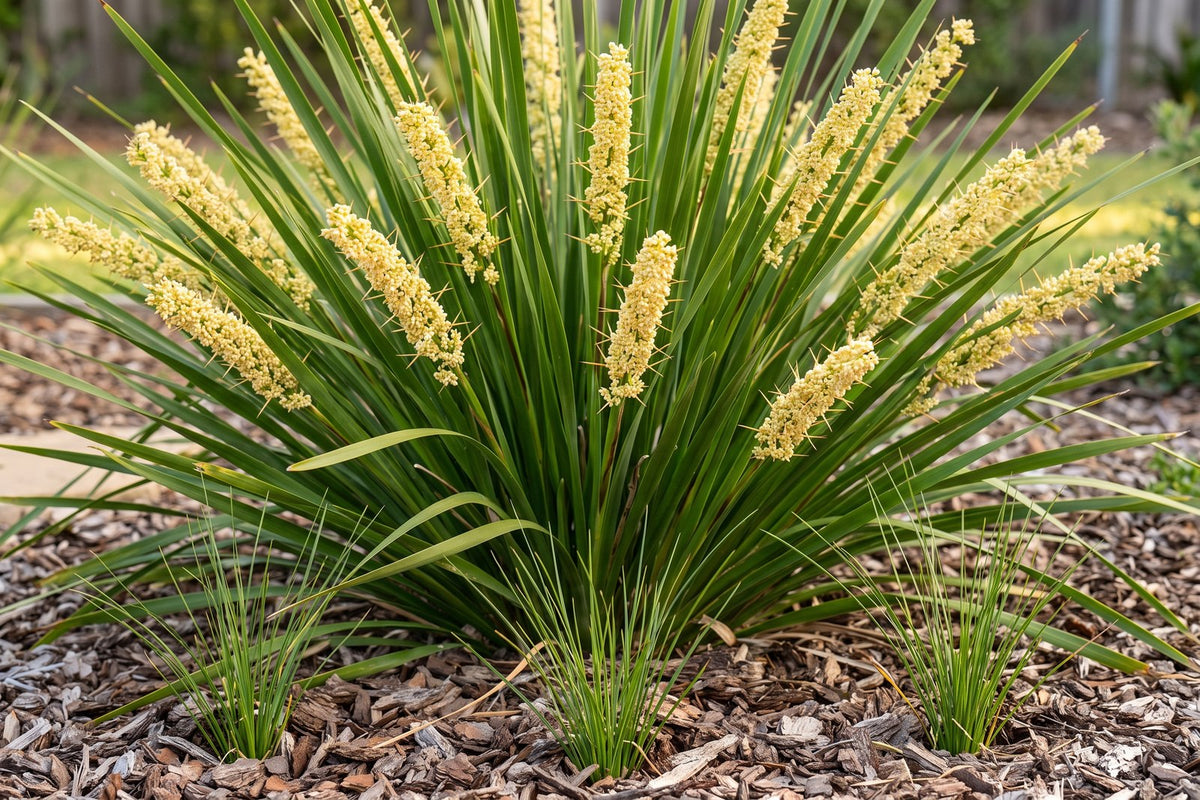
Unkillable does not mean unattractive. Modern compact forms have fine, weeping, lime and emerald foliage that brings softness and movement to a garden, plus small scented cream flower spikes in spring. The trick is simply choosing the right variety for the space, because the difference between a 40cm cutie and a 1.2m clump matters a great deal beside a path.
Quick facts
| Botanical name | Lomandra longifolia, hystrix and hybrids |
| Type | Evergreen strappy native |
| Height | 0.4 to 1.2m depending on variety |
| Position | Full sun to part shade |
| Soil | Almost any; very adaptable |
| Growth rate | Fast to established size |
| Climate | All Australian climates |
Choosing a lomandra
For large areas and tough sites
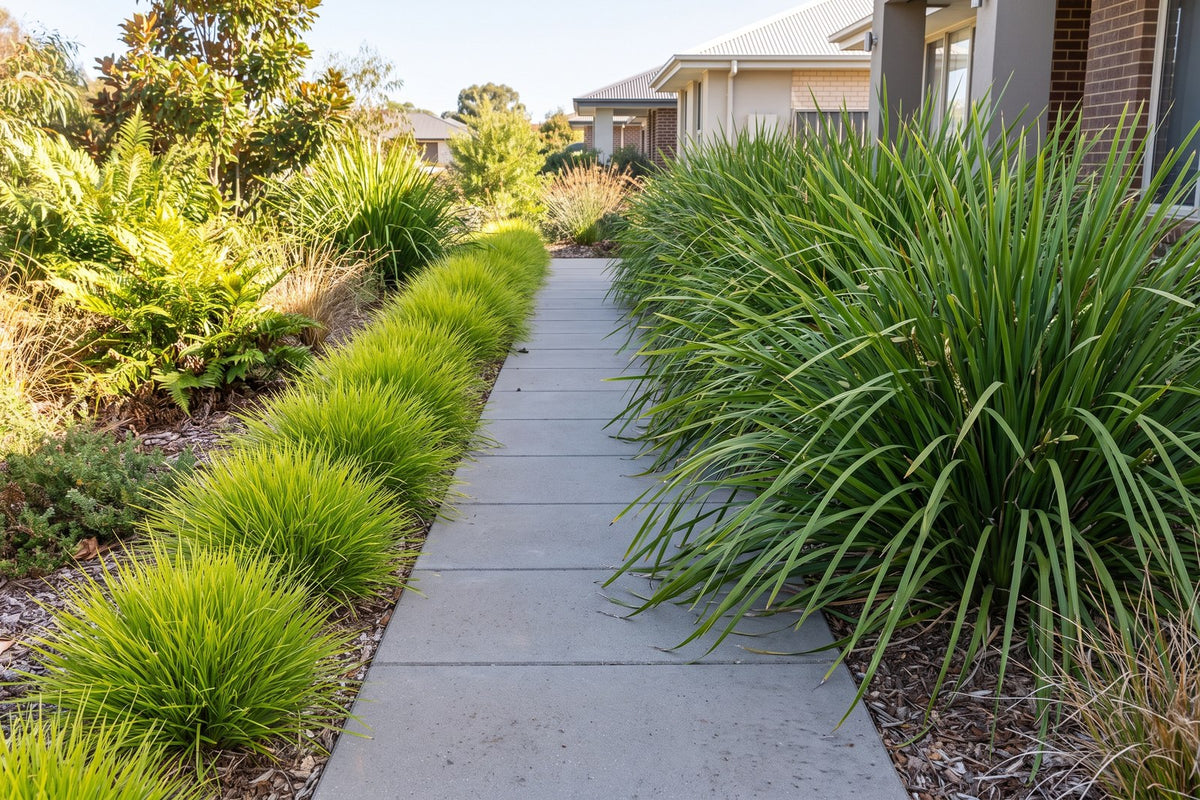
The straight species Long Leaf Lomandra (Lomandra longifolia), from $9.95, is the original workhorse: a bold 1m clump that binds banks, shrugs off drought and fills space fast. At that price it is the obvious choice for mass planting. Where the ground is damp, along drains, swales and pond edges, switch to Slender Mat Rush (Lomandra hystrix), from $10.95, the east coast species that happily handles periodic flooding as well as dry spells.
For borders, paths and smaller gardens
Lime Tuff Lomandra is the star of the compact forms, a neat 50cm to 60cm mound of bright lime-green that stays tidy without trimming and lifts dark corners. Lomandra Verday offers a finer, fresher green form of longifolia at a more contained size, and Crackerjack Mat Rush brings very fine, almost hair-like weeping foliage that reads beautifully in pots and courtyard plantings.
Companions
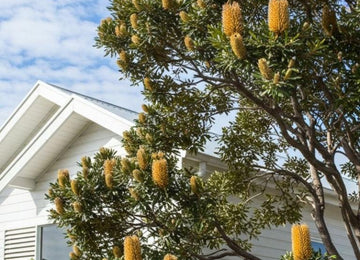
Lomandra is the classic understorey for native shrubs. A bottlebrush such as Callistemon Prolific planted behind a lomandra border gives you the full nature-strip-that-actually-looks-good effect, with birds included at no extra charge.
Planting
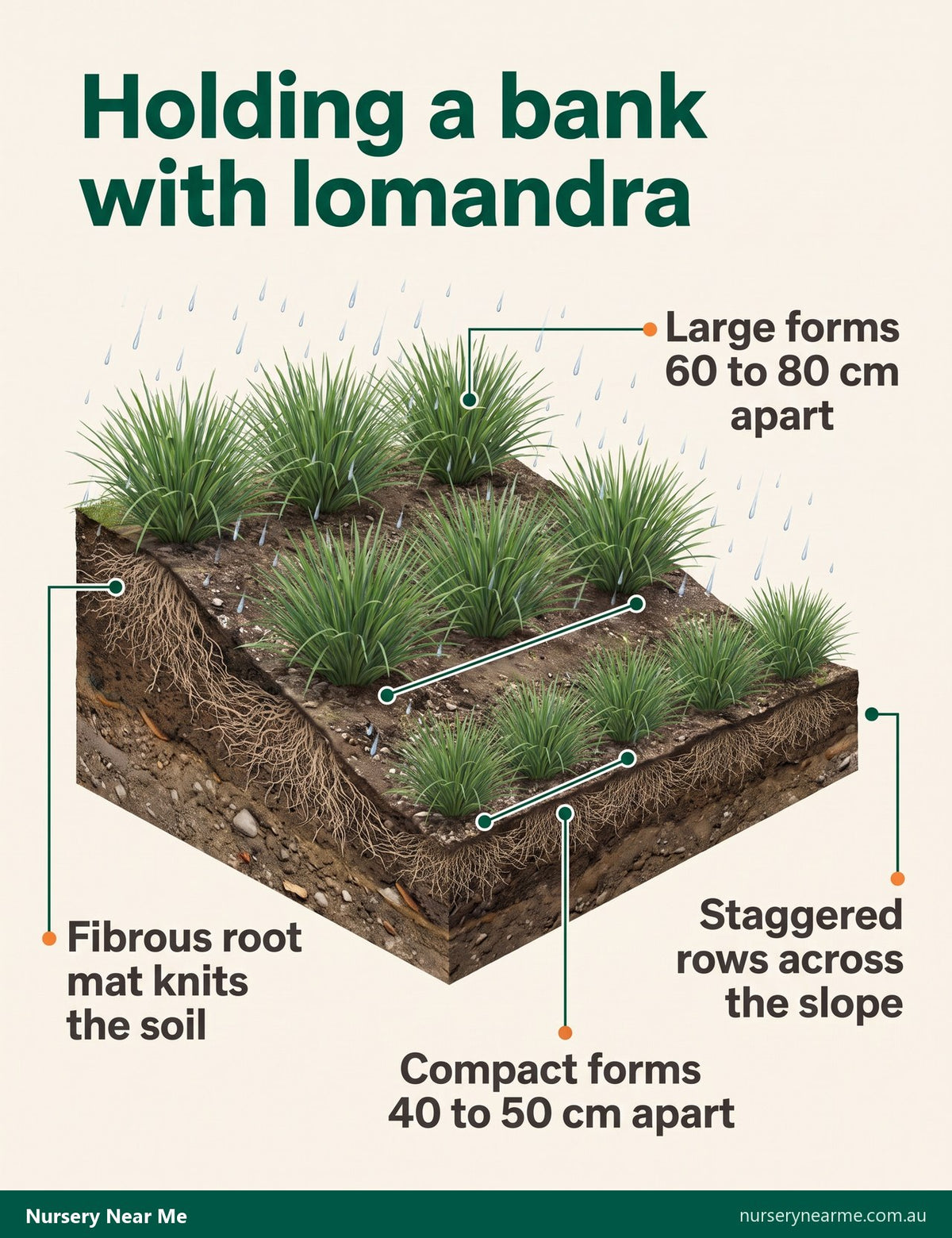
Lomandra genuinely does not care much about soil: sand, loam and moderate clay are all acceptable, and it copes with full sun through to half shade. That flexibility makes spacing the only real decision. For a continuous border or mass planting, space compact varieties 40cm to 50cm apart and large forms like longifolia and hystrix 60cm to 80cm apart. Planted at those centres, most varieties knit together within 18 months.
Dig a hole twice the pot width, plant at the same depth as the pot, backfill and water in well. Tubestock is the budget route for big areas and catches up to larger pots within a couple of seasons. Water weekly for the first two or three months; after that, rain is usually enough.
On slopes and banks, lomandra is one of the best erosion controls available, its dense fibrous root mat knitting loose soil together within a season or two. Plant across the slope in staggered rows at the spacings above and the bank will hold through downpours that would strip bare mulch away.
Ongoing care
Watering: Established plants need none in most of Australia, though a monthly deep soak in brutal summers keeps foliage at its best. Hystrix appreciates more moisture than the others.
Feeding: Optional. A little native slow-release fertiliser in spring speeds up young plantings; mature clumps need nothing at all.
Trimming: Here is the entire maintenance program: every two to four years, when clumps look tired or collect too much dead thatch, cut the whole plant back to 15cm in late winter. It regrows fresh and full within months. Wear gloves and long sleeves, because the leaf edges and seed heads bite back, and use shears rather than pulling at leaves.
Common problems
Yellowing or collapse in wet spots: The one condition that beats most lomandra is permanent waterlogging. Replant affected areas with hystrix, which is built for it, or improve the drainage.
Dead thatch in the centre: Natural ageing, not disease. The renovation cut back to 15cm resets the clump completely.
Scale insects: Occasionally found at the leaf bases on stressed plants. A cut back removes most of the population; follow with horticultural oil if they persist.
Self seeding: Female plants of the straight species can pop up seedlings nearby. Trim spent flower spikes if this bothers you, or choose sterile-tending compact hybrids like Lime Tuff.
Frequently asked questions
How far apart should I plant lomandra?
For a solid mass, 40 to 50cm apart for compact forms and 60 to 80cm for large varieties like longifolia. Wider spacing works fine if you are happy to wait an extra season.
Should I cut back lomandra every year?
No, unlike ornamental grasses lomandra only needs a hard cut every two to four years when it looks untidy. Annual trimming is unnecessary work.
Does lomandra grow in shade?
Yes, part shade is no problem, and hystrix and the compact green forms handle the most shade. Expect slightly looser growth than in full sun.
Is lomandra frost and drought hardy?
Extremely, on both counts. Longifolia handles hard frost and long dry spells once established, which is why it is planted on roadsides from Tasmania to Queensland.
Ready to plant?
Cover ground for less with our tubestock range, browse the wider native plants collection for companions, or explore climbers and groundcovers to finish the edges. Our pot and bag size guide explains exactly what each size delivers.
Lomandra is a mass planting staple, and mass planting is exactly what southern gardeners buy for. See the state by state purpose rankings in What Australia Planted in 2025-26.
For a school or early learning garden, the safe plants for childcare and school gardens guide covers the hazards to check and the plants that pass.
On a septic block the planting rules change: our guide to what to plant over a septic drain field gathers the state guidelines on cover plants, tree distances and the signs of a failing trench.


