

At current punnet prices, a mature blueberry bush producing 2 to 4 kilograms a season is quietly one of the most valuable plants in any backyard. Blueberries are compact, pretty enough for the ornamental garden, with white bell flowers in spring and red autumn foliage on some varieties, and they crop for 20 years or more. Australians now grow them from Tasmania to southeast Queensland, thanks to modern low chill varieties bred for mild winters.
There is exactly one rule that decides success or failure: soil pH. Blueberries demand acidic soil, ideally pH 4.5 to 5.5, far more acidic than most garden beds. Get that right, in the ground or more easily in a pot of azalea and camellia mix, and everything else about blueberries is straightforward.
Quick facts
| Botanical name | Vaccinium species and hybrids |
| Type | Deciduous to semi evergreen fruiting shrub |
| Height | 0.9 to 2 m, variety dependent |
| Position | Full sun; light afternoon shade in hot districts |
| Soil | Acidic, pH 4.5 to 5.5, moist and free draining |
| Fruit | Late spring through summer |
| Climate | Cool temperate to subtropical with the right variety |
Choosing blueberry varieties

Low chill picks for mild and warm climates
Southern highbush types fruit well with little winter chill. Blueberry Sunshine Blue from $22.95 is the star for pots: semi dwarf at around 90 cm, semi evergreen, pink budded and reliably productive even in Sydney and Brisbane gardens. Blueberry Misty from $20.95 is an early, heavy cropper with sweet fruit, and Gulf Coast Blueberry from $36.95 performs strongly across warm temperate zones.
For bigger harvests, mix in a rabbiteye
Blueberry Premier from $21.95 is a vigorous rabbiteye type, later ripening and heat tough, and like all rabbiteyes it crops far better with a partner, so plant it alongside another variety. Vitality Blueberry from $28.95 rounds out a mixed row, and planting two or three different varieties extends your picking season from November into late summer while boosting yields on every bush.
Two natives share the name but not the family: blueberry ash is a rainforest tree, covered in our blueberry ash tree guide, and blueberry lily a strappy groundcover with ornamental berries. Beautiful plants, wrong breakfast.
Planting
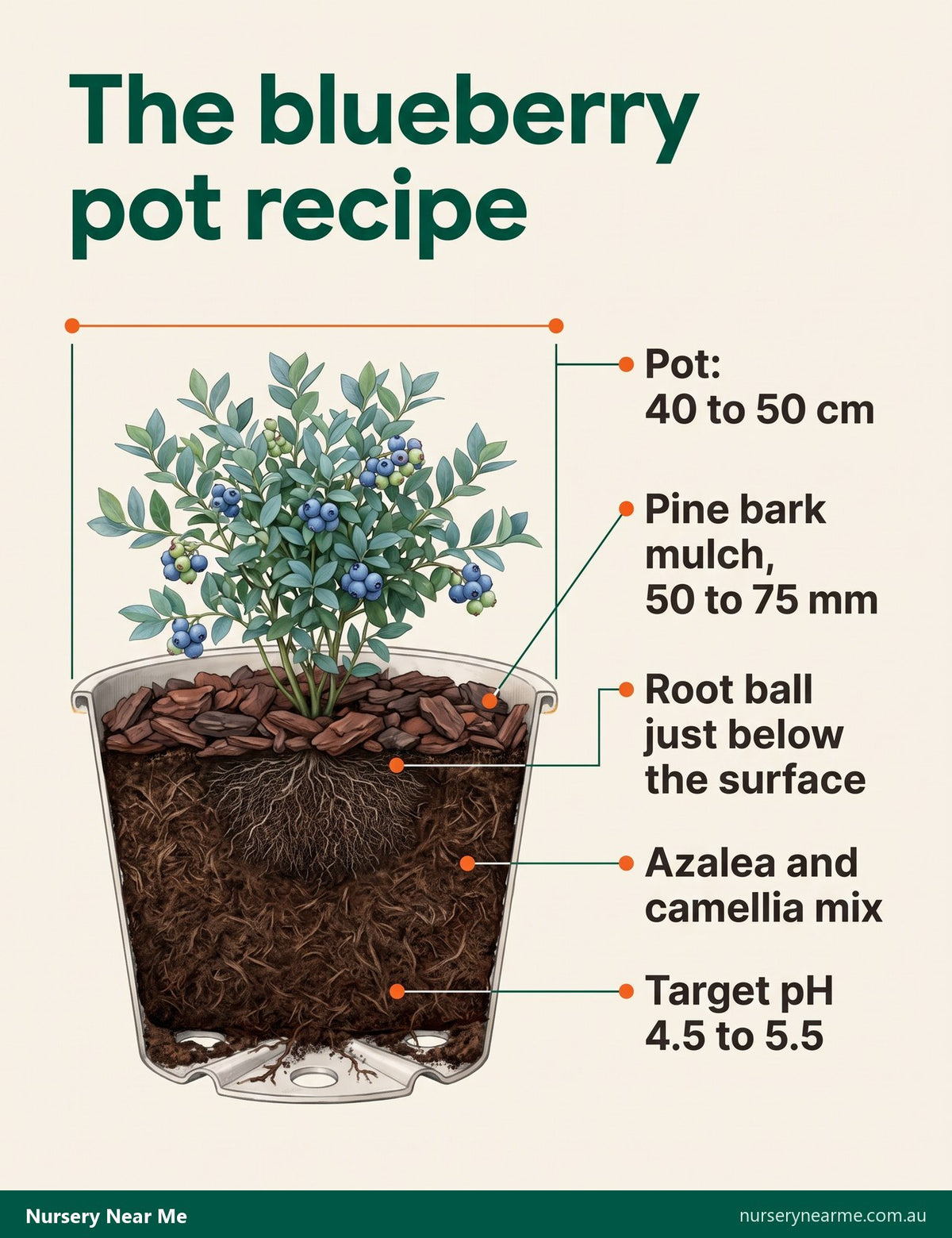
Full sun grows the sweetest fruit; in hot inland areas give bushes light afternoon shade. Before planting in the ground, test your pH. Most Australian soils sit between 6 and 7, so dig in elemental sulphur several weeks ahead and build the bed with composted pine bark and peat to bring it down toward 5; our guide to lowering soil pH explains how much sulphur to use and how long it takes to work. Honestly, the simpler route for most gardeners is a pot: a 40 to 50 cm container filled with azalea and camellia mix is instant perfect blueberry soil. If you are unsure how big to go, our guide to choosing the right size pot explains why oversizing backfires.
Plant with the root ball just below the surface, water in well, and mulch 50 to 75 mm with pine bark or pine needles, which acidify gently as they break down. Space bushes 1 metre apart in rows 2 metres apart, or 80 cm for a productive edible hedge.
Ongoing care
Watering: Blueberries are shallow rooted and hate drying out, especially while carrying fruit. Water deeply two to three times a week in the warm months, daily for pots in high summer, ideally with rainwater where your tap water is alkaline.
Feeding: Use an azalea and camellia fertiliser, the same food described in our azalea care guide, never lime based general fertilisers, in early spring and again after harvest. Blueberries feed lightly; half strength more often beats a single heavy hit that can burn the fine roots.
Pruning: Minimal for the first two years beyond removing weak twiggy growth. From year three, prune in winter, removing the oldest one or two canes at the base annually to keep the bush renewing, and tip long whips to encourage branching. Fruit forms on wood made the previous season.
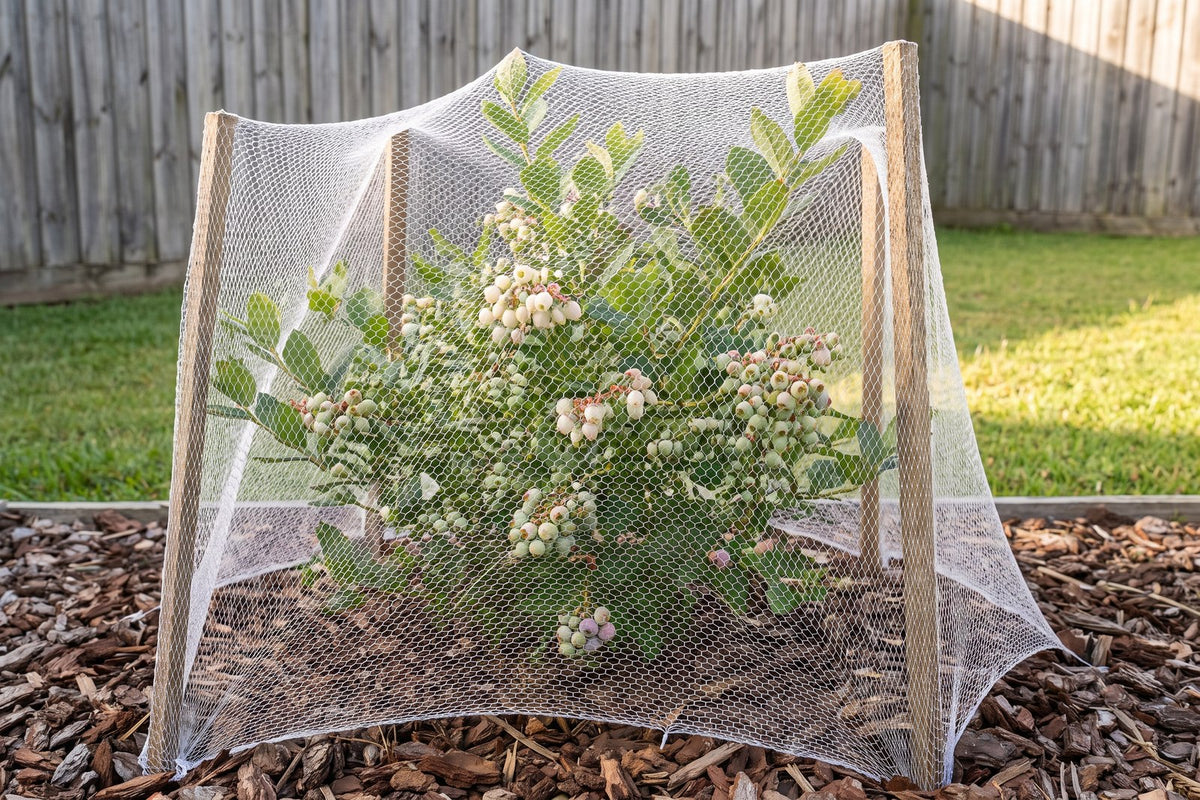
Netting: Not optional. Birds monitor ripening progress with more diligence than you do; net the bush with fine wildlife safe mesh the week the first berries blush.
Common problems
Yellow leaves with green veins: Iron chlorosis, the classic sign of pH creeping too high. Reapply sulphur or repot in azalea mix, and water with iron chelates for a fast fix.
Few flowers or fruit: Usually too much shade, too young a plant, or a lonely rabbiteye needing a cross pollination partner. Full sun plus a second variety solves most cases.
Shrivelled berries: Water stress during ripening. Increase watering frequency and top up mulch.
Fruit disappearing overnight: Birds, always birds. See netting, above, and accept that the first season's losses were tuition.
Frequently asked questions
Do I need two blueberry bushes to get fruit?
Southern highbush varieties like Sunshine Blue and Misty are self fertile, so one bush will fruit. But every variety yields more and bigger berries with a different variety nearby, and rabbiteyes like Premier genuinely need a partner.
How long until blueberries fruit?
You will usually get a taste in year one or two and proper harvests from year three, building to peak production around year five or six. Pinching off first year flowers strengthens young plants.
Do blueberries grow well in pots?
They are arguably better in pots in Australia, because a bag of azalea and camellia mix gives you perfect acidity instantly. Choose a 40 cm plus pot, full sun, and water daily in summer.
How much chill do blueberries need?
Traditional northern highbush need cold winters, but low chill southern highbush varieties fruit well with as little as 150 to 300 chill hours, which covers Sydney, Perth and coastal southeast Queensland comfortably.
Ready to plant?
Two pots, two varieties and a bag of azalea mix is a complete blueberry program, and by year three you will wonder why you ever bought punnets. They also slot neatly into a mixed edible bed, as our guide to growing a successful fruit and vegetable garden sets out. Explore more fruit trees and edibles, find containers in pots and planters, and browse companion shrubs for the rest of the bed. Every order is covered by our 30 day satisfaction guarantee.


