

Blueberry ash is a narrow, evergreen native tree with fringed bell flowers in spring and small blue berries that hang on for months. It gives height and screening without becoming a very large tree, which is why it is planted so widely as a street tree along the east coast. This guide covers where it grows, how big it gets, and how to plant and look after it.
What blueberry ash is
The blueberry ash (Elaeocarpus reticulatus) grows naturally in rainforest and wet forest along the east coast, from Queensland through New South Wales into Victoria. In a garden it reaches about 8 metres tall and 4 metres wide, with an upright habit and glossy leaves that turn red before they fall, a few at a time, through the year. White flowers appear in spring; Prima Donna is the pink flowered selection. The blueberry ash range has both, with their relatives.
Where blueberry ash grows in Australia
| Location | How it performs |
|---|---|
| Brisbane and south east Queensland | Very well. Within its natural range |
| Sydney and coastal NSW | Ideal. One of the most useful native street and garden trees |
| Melbourne and coastal Victoria | Very good in sheltered positions |
| Adelaide | Workable with reasonable summer water |
| Perth | Needs irrigation in sandy soil |
| Canberra and cold inland | Marginal. Protect young trees from hard frost |
Why it suits suburban blocks
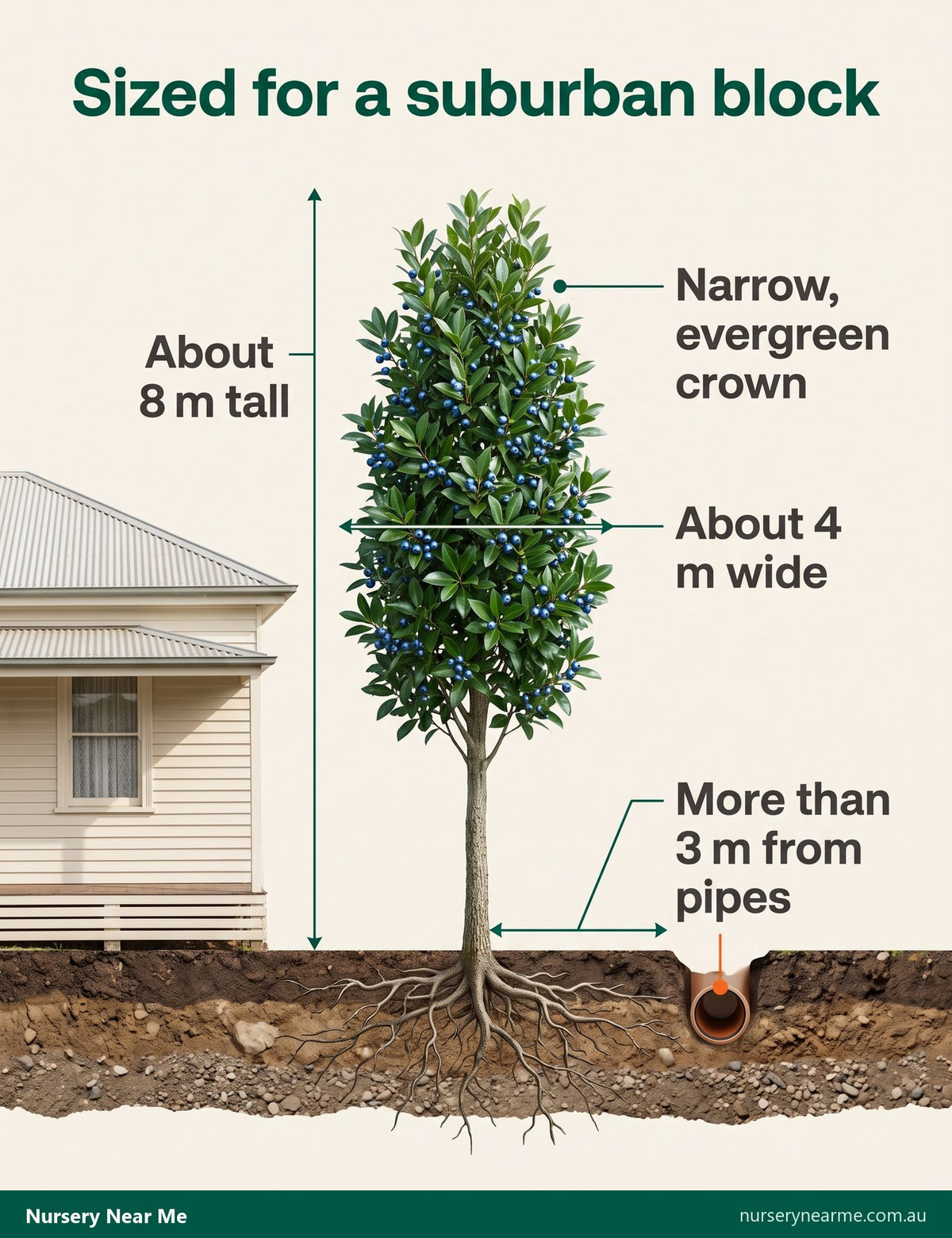
Blueberry ash answers a common problem: wanting a tree for height and screening that will not become a fifteen metre liability. It stays narrow, holds its leaves all year, and is not known for aggressive roots. Unitywater, the water utility for the Sunshine Coast and Moreton Bay, lists it among the trees to plant more than 3 metres from water and sewer pipes. Before a tree goes in near the house, read our guide to planting near pipes, which sets out what the water utilities say.
Flowers, berries and birds
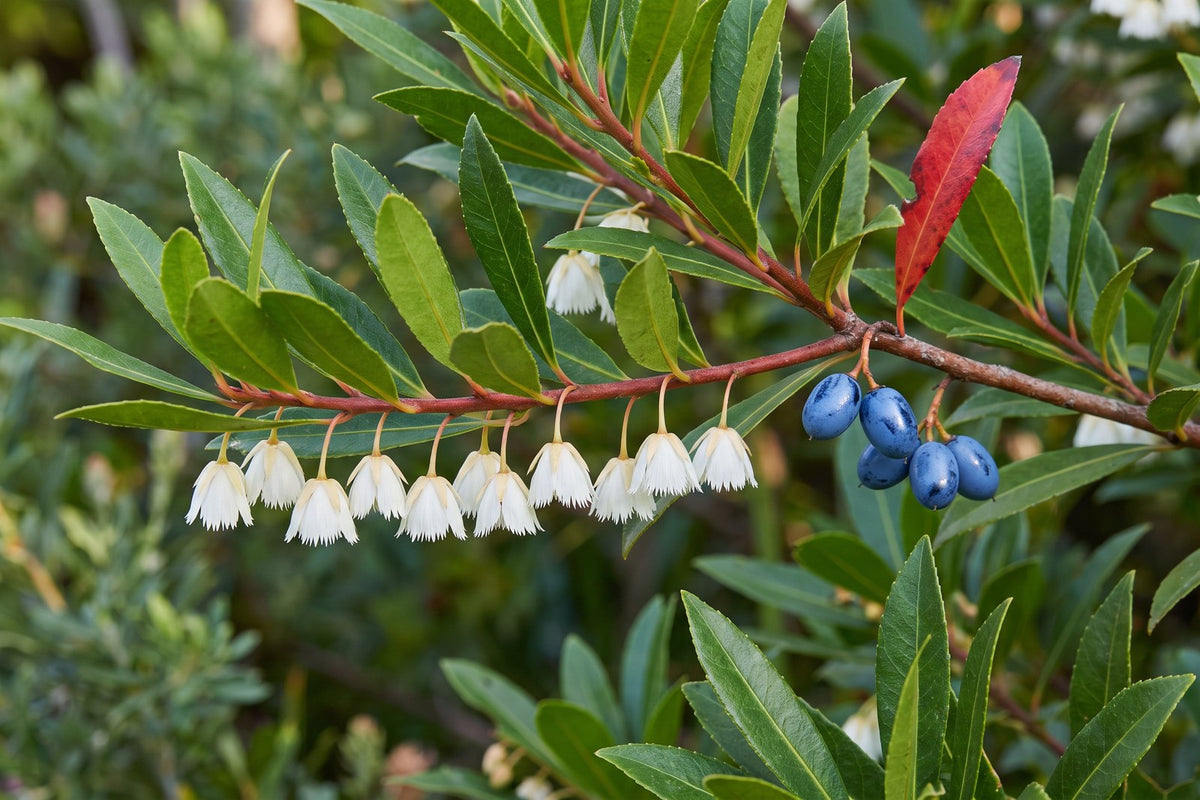
The fringed flowers open in spring and are lightly scented. The blue berries that follow give the tree its name and are eaten by native birds, so a mature tree in fruit brings them in. The berries are for the birds, not for the table.
Position and planting
- Light. Full sun to part shade. It grows naturally under and beside taller trees, so it takes more shade than most flowering trees.
- Soil. Moist and well drained, with compost dug through the planting area. It takes clay if the water does not sit.
- When. Plant in autumn, or in spring in districts with frost.
- Spacing. Set trees 2 to 3 metres apart for a screen.
- Planting. Plant at the same depth as in the pot, water in, and mulch 75 mm deep, kept clear of the trunk.
Watering and feeding
Water deeply once or twice a week through the first two summers. After that it largely looks after itself on the east coast, though it does not enjoy long drought, which is the main limit in Perth and Adelaide. Feed in early spring with a slow release fertiliser for native plants, and keep lawn fertiliser away from its roots.
Pruning and maintenance
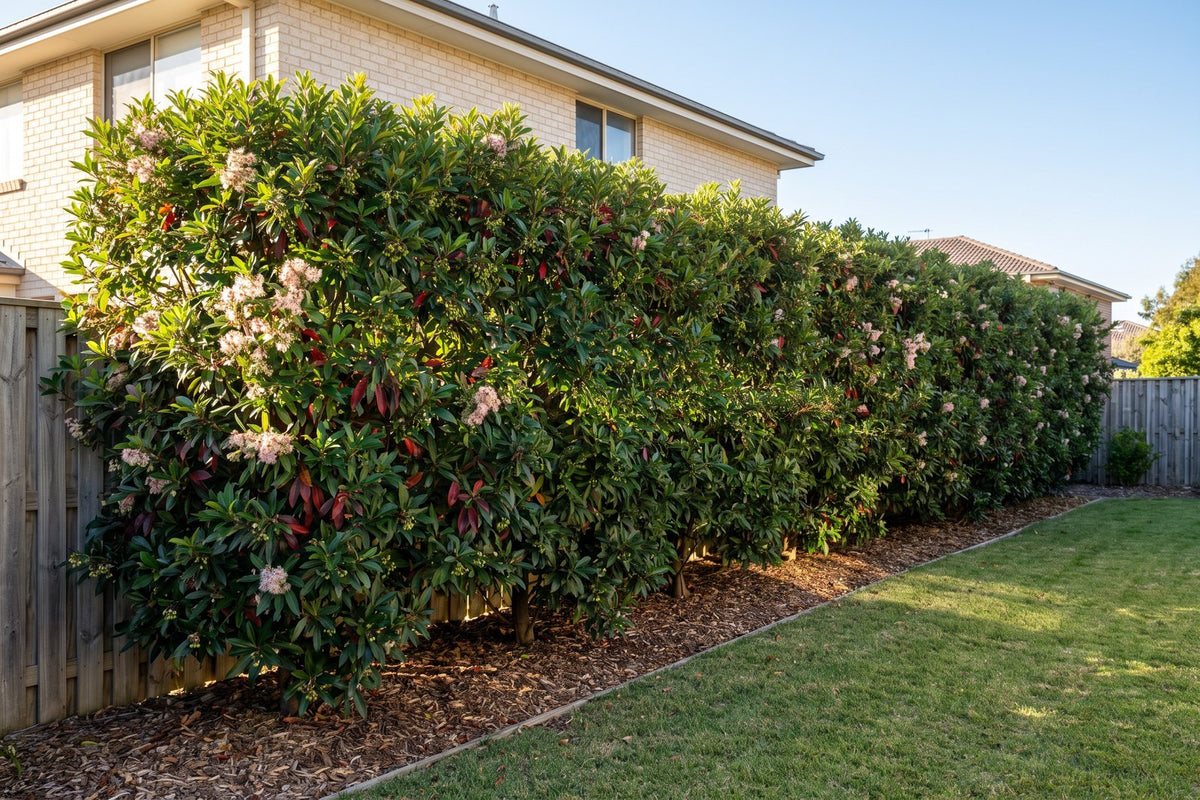
It needs little pruning. Tip prune young trees to thicken them, trim after flowering to shape a screen, and remove any low branches you do not want. It can be kept as a hedge at 3 to 4 metres. Pests are few: scale and sooty mould now and then, treated with horticultural oil.
Our blueberry ash care guide goes into varieties, feeding and problem solving in more detail.
Frequently asked questions
How tall does a blueberry ash grow?
About 8 metres tall and 4 metres wide in a garden, and it can be kept lower by pruning.
How fast does blueberry ash grow?
Moderately, and faster with summer water. Expect a useful screen in a few years from advanced plants.
Is blueberry ash drought tolerant?
Established trees cope with short dry spells on the east coast. In dry summer climates it needs watering.
Are the berries edible?
They are bird food. We do not recommend eating them.
Does blueberry ash have invasive roots?
It is not known for it, and one water utility lists it as suitable more than 3 metres from pipes. As with any tree, keep it clear of sewer lines.


