

No exotic tree has been adopted by Australia quite like the jacaranda. From Grafton's famous streets to the avenues of Sydney, Brisbane and Perth, that haze of purple blue in late spring is as much a part of the national calendar as the first cricket test. Jacaranda mimosifolia earns the devotion: a fast growing, gracefully spreading tree with soft ferny foliage, a spectacular month of bloom, and a carpet of fallen flowers that people photograph more than the tree itself.
It is also a genuine commitment. A mature jacaranda reaches 10m to 15m tall with a canopy nearly as wide, so this is a tree you position once and position well. Get the site right and it will outlive everyone who planted it, flowering reliably every November for a century.
Quick facts
| Botanical name | Jacaranda mimosifolia |
| Type | Deciduous flowering tree |
| Height | 10m to 15m, with a spread of 8m to 12m |
| Position | Full sun with room to spread |
| Soil | Deep, free draining; dislikes waterlogged clay |
| Flowers | Purple blue trumpets, late spring to early summer |
| Climate | Warm temperate to subtropical; frost tender when young |
Choosing the right jacaranda
The classic
The Jacaranda Tree (Jacaranda mimosifolia), from $14.95, is the purple flowered original and still the best value feature tree in the warm climate repertoire. Planted small, it establishes quickly and can be flowering within five or so years. Starting young also produces the best natural shape, since the tree can be lightly formed from its first season rather than corrected later.
Something different
The White Jacaranda Tree (Alba), from $79.95, swaps purple for pure white blooms on the same elegant frame, a striking choice against dark fences or paired with its purple sibling. For landscape projects that cannot wait a decade, ex ground advanced Blue Jacaranda delivers a semi mature tree with instant presence.
Companions for a flowering avenue
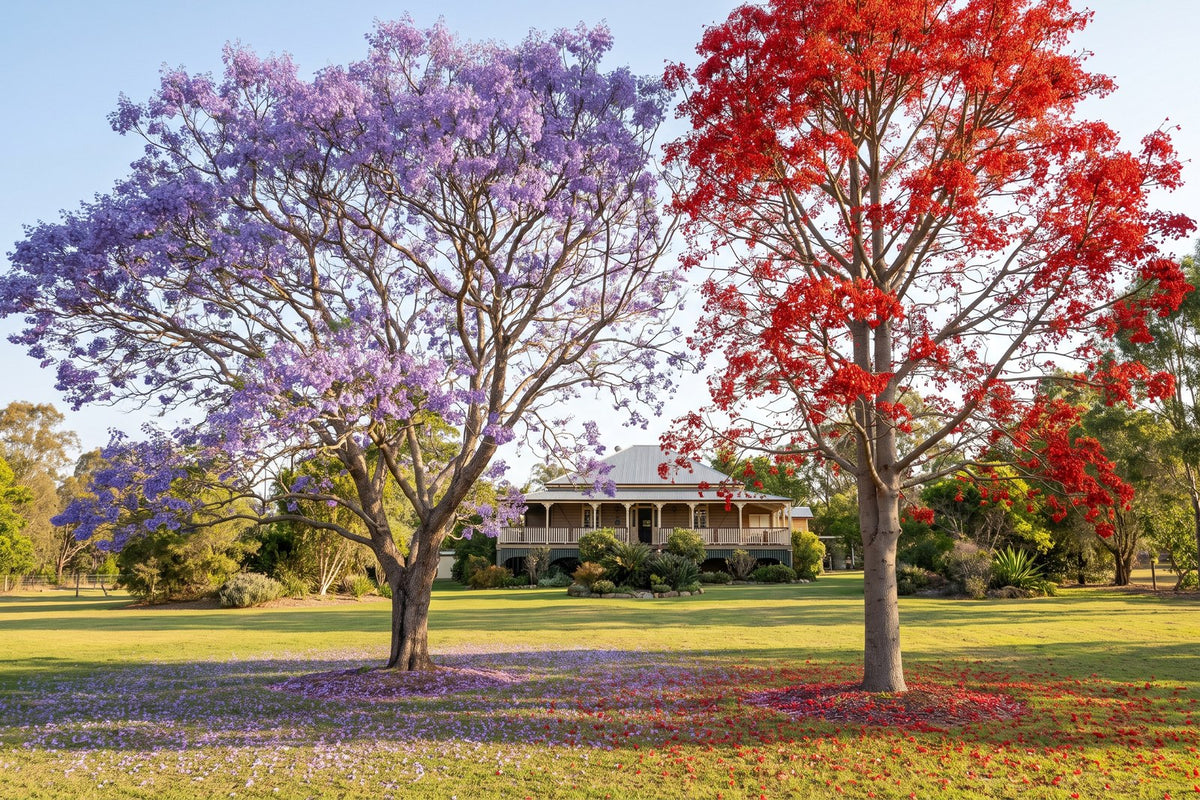
The traditional partner is the Illawarra Flame Tree, whose scarlet bells overlap with jacaranda season for one of the great colour pairings in Australian horticulture. In frost free gardens the Golden Shower Tree, from $45.95, adds a third act of dangling yellow chains in early summer. All three flower as young trees, so a new garden does not wait long for colour.
Planting
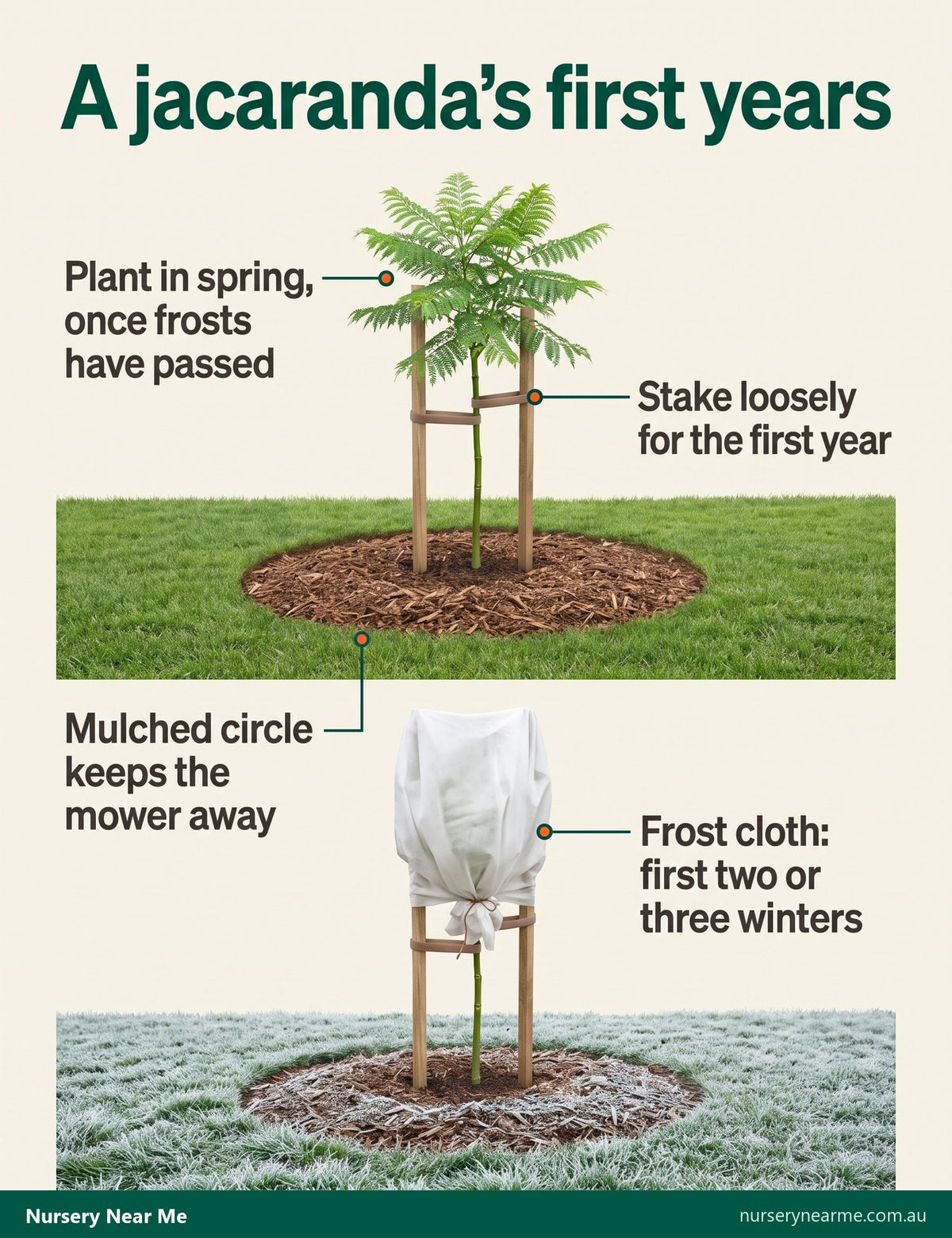
Choose an open, sunny position at least 5m, preferably 8m, from the house, pools, paving and sewer lines; the roots are not aggressive by large tree standards, but any 15m tree deserves respect. Jacarandas must have drainage, so on heavy clay plant into a broad mound and improve a wide area rather than a single hole. Plant in spring once frosts have passed, stake loosely for the first year, water in deeply and mulch to the drip line. In marginal frost areas, wrap young trees in frost cloth for their first two or three winters; once the trunk thickens they shrug off light frost. Jacarandas grow well surrounded by lawn, but keep a generous mulched circle around the trunk for the first few years so mower damage and grass competition do not slow establishment. In Brisbane and northern coastal gardens they thrive almost anywhere; in Melbourne they succeed in warm, sheltered north facing positions, flowering a little later and a little lighter.
Ongoing care
Watering: Deep weekly watering for the first two summers. Established trees are impressively drought tolerant and rarely need irrigation in most of coastal Australia. A dry late winter often produces the heaviest flowering, so resist the urge to water mature trees in the lead up to spring.
Feeding: A complete slow release fertiliser each spring for the first three years. After that, mature trees need nothing; overfeeding delays flowering in favour of leaves.
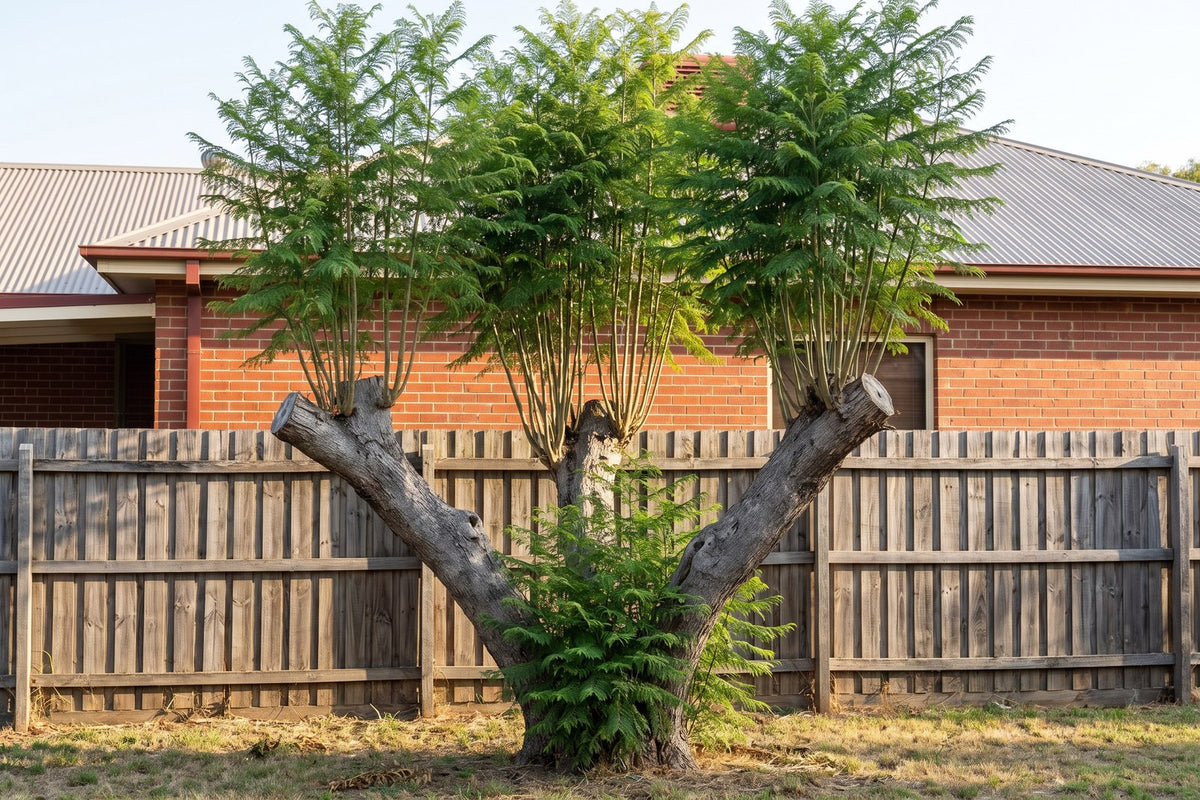
Pruning: Less is more. Remove dead, crossing or low branches in late winter and preserve the natural umbrella form. Hard lopping ruins the shape permanently and provokes vertical watershoots that never flower well. If a limb must come off, cut in dry weather and stay outside the branch collar so the wound heals cleanly.
Common problems
No flowers yet: The most common question, and usually just age. Seed grown jacarandas typically take five to eight years to bloom. Shade, heavy nitrogen feeding and severe pruning all delay it further.
Frost damage on young trees: Blackened soft growth after a cold night. Prune damage off in spring, not straight away, and protect with frost cloth next winter.
Yellow leaves in summer: Usually waterlogging or compacted soil rather than thirst. Check drainage before reaching for the hose.
Slippery flower carpet: Not a disease, but worth planning for. Site the tree where fallen blooms land on garden beds rather than a shaded, high traffic path.
Frequently asked questions
How long until a jacaranda flowers?
Expect first flowers around five to eight years from a young tree, earlier where summers are warm and the site is sunny. Advanced trees flower almost immediately.
How far should a jacaranda be from the house?
A minimum of 5m, ideally 8m, from buildings, pools and major pipes. The canopy will eventually spread 8m or more, so think about shade lines too.
Are jacarandas frost tolerant?
Mature trees handle light frosts to about -2C, but saplings are tender and need protection for their first few winters in frost prone areas.
Do jacarandas lose their leaves?
Yes, briefly. In most of Australia they drop their ferny foliage in late winter or early spring, often flowering on bare wood before the new leaves emerge.
Ready to plant?
Compare jacarandas with our other feature trees and flowering trees, or go big with advanced trees for instant impact. See our delivery page for how trees travel to your door.


