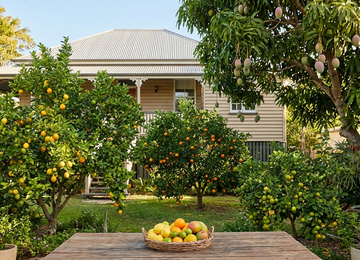


Limes are the citrus you actually run out of. Lemons get given away over the fence; limes get used, in curries, ceviche, marinades and Friday drinks, and the supermarket price of a single fruit makes a $60 tree look like the investment of the year. The good news is that limes grow beautifully across most of Australia, from tropical Queensland to the temperate south, given the three things all citrus demand: full sun, sharp drainage and regular food. Our guide to growing citrus trees in your Aussie backyard covers the family as a whole.
The two limes most home growers want are the Tahitian lime, also sold as Persian lime, which carries nearly seedless juicy fruit for most of the year, and the kaffir or makrut lime, grown less for its knobbly fruit than for its double lobed leaves, the irreplaceable aromatic of Thai cooking. Either will live happily in the ground or spend its whole life in a large pot on a sunny patio.
Quick facts
| Botanical name | Citrus latifolia, Citrus hystrix |
| Type | Evergreen fruiting tree |
| Height | 3 to 4 m; 1.5 to 2 m in pots |
| Position | Full sun, sheltered from strong wind |
| Soil | Rich, free draining, pH 6 to 7 |
| Fruit | Main crop autumn to winter, sporadic year round |
| Climate | Tropical to temperate; protect from hard frost |
Choosing a lime tree

For juice: the Tahitian lime
The Persian Lime Tree from $63.95, better known in Australia as the Tahitian lime, is the one to plant if you only plant one. It is nearly seedless, heavy cropping, more cold tolerant than other limes, and a naturally tidy tree to 3 or 4 metres that takes well to pots and even espalier. If a wall or fence is the only space you have, our guide to espaliered trees explains how to train one flat.
For the kitchen: the kaffir lime
The Kaffir Lime Tree from $344.95 in advanced grades earns its keep through its leaves, picked fresh year round for curries, soups and marinades. The bumpy fruit yields aromatic zest too. It is slightly more cold sensitive than the Tahitian, so give it the warmest corner you have.
Lime the colour, not the fruit
A small confession from the search results: gardeners hunting limes also find lime coloured foliage, and honestly it makes a handsome skirt for a citrus bed. Lime Tuff Lomandra from $17.95 is a tough strappy native that edges a citrus bed neatly without competing hard, and Magical Lemon Lime Nandina from $36.95 keeps the citrus colour scheme going in the shrub layer. Neither will garnish a drink, which is the only mark against them.
Planting
Choose the sunniest, most sheltered spot available: a minimum of six hours of direct sun, with protection from strong salty or cold winds. Drainage is critical; citrus roots rot quickly in waterlogged soil, so in clay build a mound 30 cm high and a metre wide, or use a raised bed or pot.
Dig a hole twice the pot width, enrich the backfill with compost, and plant with the graft union clearly above soil level. Water in with 10 to 15 litres and mulch 50 to 75 mm deep, keeping mulch a hand span clear of the trunk. Space trees 3 to 4 metres apart. In pots, start with a 50 cm container and premium potting mix. Spring is the ideal planting time in frost prone areas; anywhere mild, autumn works too. For a whole productive bed rather than a single tree, our edible backyard layout guide covers spacing and access.
Ongoing care
Watering: Deep soak once or twice a week in the warm months, more often in pots, keeping moisture consistent while fruit is developing. Erratic watering is the main cause of fruit drop and split fruit.
Feeding: Limes are heavy feeders. Apply a complete citrus fertiliser in late winter, late spring and late summer, watered in well, plus a handful of trace elements annually. Pale leaves with green veins signal iron or magnesium deficiency, both easily corrected with chelates or Epsom salts.
Pruning: Minimal. Remove dead wood, crossing branches and any shoots from below the graft, and skirt the tree to keep fruit and foliage off the ground. Prune after harvest, and keep potted trees to size with a light annual trim.
Common problems

Citrus leaf miner: Silvery squiggles and curled new leaves in summer. Spray new flushes with horticultural oil every couple of weeks while flushing; damage is cosmetic on established trees.
Yellowing leaves: Usually hunger or wet feet. Check drainage first, then feed; nitrogen deficiency shows as overall paleness, magnesium as yellowing older leaves with a green arrowhead.
Fruit drop: Some early drop is natural thinning. Heavy drop follows drought stress, sudden cold or overwatering; steady moisture and mulch are the cure.
Stink bugs: Bronze orange bugs cluster on new growth in spring and stink when disturbed. Knock them into soapy water on a cool morning, wearing sunglasses, as their spray can burn eyes.
Where limes grow in Australia

Limes are the most cold-sensitive of the common citrus, which makes climate the first question rather than an afterthought. They are excellent across the warm half of the country and need real protection in the south.
| Location | How it performs |
|---|---|
| Brisbane, Gold and Sunshine Coasts, northern NSW | Ideal. Crops heavily with minimal fuss |
| Darwin and tropical Queensland | Excellent - limes are genuinely tropical citrus |
| Sydney and coastal NSW | Very good in a warm sheltered position |
| Perth | Excellent with reliable summer water in sandy soil |
| Adelaide | Good in the warmest, most sheltered spot available |
| Melbourne, Canberra, Tasmania | Marginal in the ground. Grow in a pot that can shelter |
A north-facing position against a brick or rendered wall is genuinely worth several degrees of frost protection, and in Melbourne or Adelaide it can be the difference between a productive tree and a struggling one.
The Australian native limes
Worth knowing about if you want something distinctly local. The finger lime, Citrus australasica, grows naturally in the rainforests of southeast Queensland and northern New South Wales and produces the caviar-like pearls now used by restaurants worldwide. Other Australian native citrus include the desert lime of the inland and the round lime of Queensland.
Finger limes suit subtropical gardens well, tolerate more shade than ordinary citrus, and are a genuine talking point in a suburban backyard.
Feeding is what makes the difference
Citrus are heavy feeders and most disappointing backyard trees are simply underfed. Apply a dedicated citrus fertiliser in late winter, again in late spring and again in late summer, spread out to the drip line rather than against the trunk, and water it in well.
Yellowing leaves are usually a nutrient problem rather than a disease. Yellow between green veins on new growth means iron; on older leaves it means magnesium; and uniform pale yellow generally means nitrogen. In the alkaline sandy soils common around Perth and parts of Adelaide, iron and manganese lock-out is very common and responds to chelated trace elements.
Pests to expect
Citrus leafminer disfigures new growth with silvery trails through the warm months across most of Australia - it looks alarming but rarely harms an established tree. Bronze orange bug, the notorious stink bug, appears in spring in Queensland and New South Wales and should be removed wearing eye protection, since the spray it emits burns skin and eyes. Gall wasp is a significant problem in Sydney and southeast Queensland and is managed by cutting out and destroying galls before spring.
Frequently asked questions
How long until a lime tree fruits?
Grafted limes usually carry a light crop within two to three years of planting and hit full production around year five. Remove fruit from very young trees so energy goes into the frame.
Will lime trees handle frost?
Light frost, yes, once established; hard or repeated frost, no. In cold districts grow limes in pots and shift them somewhere sheltered for winter, or cover young trees on frosty nights.
Why are my limes yellow instead of green?
A fully ripe Tahitian lime naturally turns pale yellow; commercial limes are picked green. Yellow fruit is riper, juicier and completely normal at home.
Do I need two lime trees for pollination?
No. Limes are self fertile, so a single tree crops heavily on its own. Bees will improve fruit set but a second tree is strictly optional.
What else should I plant alongside a lime?
A lemon is the obvious partner, since the two crop at slightly different times and cover most kitchen needs between them; our lemon tree care guide covers the varieties worth growing. An orange rounds out the trio, and our orange tree care guide explains how its needs differ. For a full year of harvest, our guide to fruit trees for every season maps out what ripens when.
Ready to plant?
Plant a lime this spring and you will be picking your own by the second summer. Compare varieties across our fruit trees collection, find a container in pots and planters, or browse companion flowering plants for the bed around it. Our pot and bag size guide shows what each grade means, and delivery details are on the delivery page.


