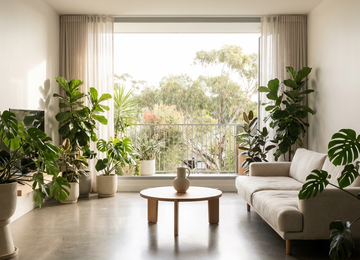


The great myth of water-wise gardening is that it looks like punishment, gravel, cactus, regret. The truth is that Australia's toughest plants are also some of its most beautiful, and a garden built on them looks designed in February when the neighbours' hydrangeas look like crime scenes.
The idea
Water-wise design is texture-first: silver and grey-green foliage (nature's sunscreen), fine tussocks that move in the wind, sculptural accents that thrive on neglect, and living groundcover instead of thirsty lawn. Once established, one summer of proper deep watering, this palette essentially lives on rainfall in most Australian cities.
The palette
The workhorses: Westringia Blue Gem and Mundi. Upright and groundcover forms of the same indestructible native rosemary, grey-green foliage, mauve flowers most of the year, zero fuss forever.
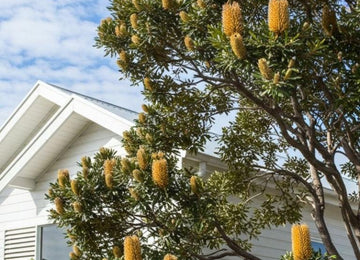
The colour: Kangaroo Paws, a dozen. Velvet flower spikes that run on sunshine, look extraordinary backlit, and bring every honeyeater in the postcode.
The texture: Poa tussocks in drifts, Creeping Myoporum as the lawn-alternative carpet. Covered soil loses a fraction of the moisture bare soil does, the myoporum is your living mulch.
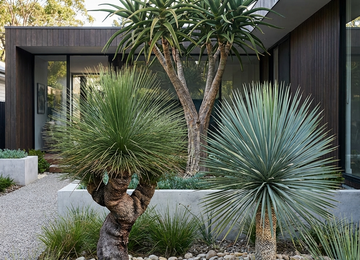
The sculpture: Spineless Yuccas and Acacia Limelight standards. Two architectural rosettes for the hottest corner, and three lime-green weeping lollipops that stay luminous through the worst of summer on almost nothing.
How to plant it
Autumn is the free kick, plant then and winter rain does your establishment watering. Group by thirst (everything here agrees), water deeply but infrequently to push roots down, and mulch 75 mm. The only maintenance events are an annual westringia tidy and cutting spent paw spikes.
Good to know
This palette is the drought half of the coastal garden and pairs naturally with the native showpiece. On tank water or restrictions? Start from tubestock, small plants establish deeper roots on less water. Browse natives or size the pack in the garden pricer.
Ready to make it real? Your instant garden pack is just below: every plant in this design, live-priced from today's stock, one click to add the lot to your cart or open in the garden pricer and make it yours.
