

The scent of frangipani on a warm evening is the Australian summer, bottled. These small sculptural trees earn their spot with months of perfumed flowers, an architectural branch pattern, and remarkably low water needs once established. Get drainage and sun right and they are among the easiest trees you will ever grow.
Quick facts
| Botanical name | Plumeria species |
| Type | Small deciduous to evergreen tropical tree |
| Height | 3 to 6m, slow growing |
| Position | Full sun |
| Soil | Free draining, sandy soils are ideal |
| Flowers | Perfumed white, pink, yellow and red through summer |
| Climate | Frost free areas; pots in cool climates |
Choosing a frangipani

The classic white and gold is Singapore White (Plumeria obtusa) from $60.95, glossy leaved and close to evergreen in warm areas. Pink Plumeria rubra brings the traditional deciduous form with sunset toned blooms. Evergreen Frangipani (Plumeria pudica) holds its spoon shaped leaves year round and flowers prolifically, ideal where you want screening as well as scent. In cooler or frost prone gardens, the Native Frangipani (Hymenosporum flavum) from $16.95 is a different species entirely, a graceful rainforest tree with honey scented cream flowers that handles conditions Plumeria cannot.
Planting
Position: Six or more hours of sun. A warm north facing wall is perfect in marginal climates.
Drainage: This is the make or break factor. Frangipanis rot in soggy soil. Plant into a mound or raised bed on clay, and never into a low wet spot.
Pots: Excellent in terracotta with a coarse free draining mix. Pots also let cool climate gardeners move plants under cover for winter.
Ongoing care

Watering: Regular in the first summer, then only during long dry spells. When in doubt, do not water. Overwatering kills far more frangipanis than drought.
Winter: Deciduous types drop leaves and rest; keep them dry through winter. Potted plants in cold regions should winter under eaves or in a bright shed.
Feeding: A flowering fertiliser in spring and midsummer boosts bloom. High potassium, modest nitrogen.
Pruning: Rarely needed. Cut in late winter to shape; every cut produces two or three new branches, each ending in flowers within a season or two.
Common problems
Frangipani rust: Orange powder under leaves in humid late summer. Rake up fallen leaves, improve airflow, spray with a fungicide if severe. Obtusa and pudica types resist it well.
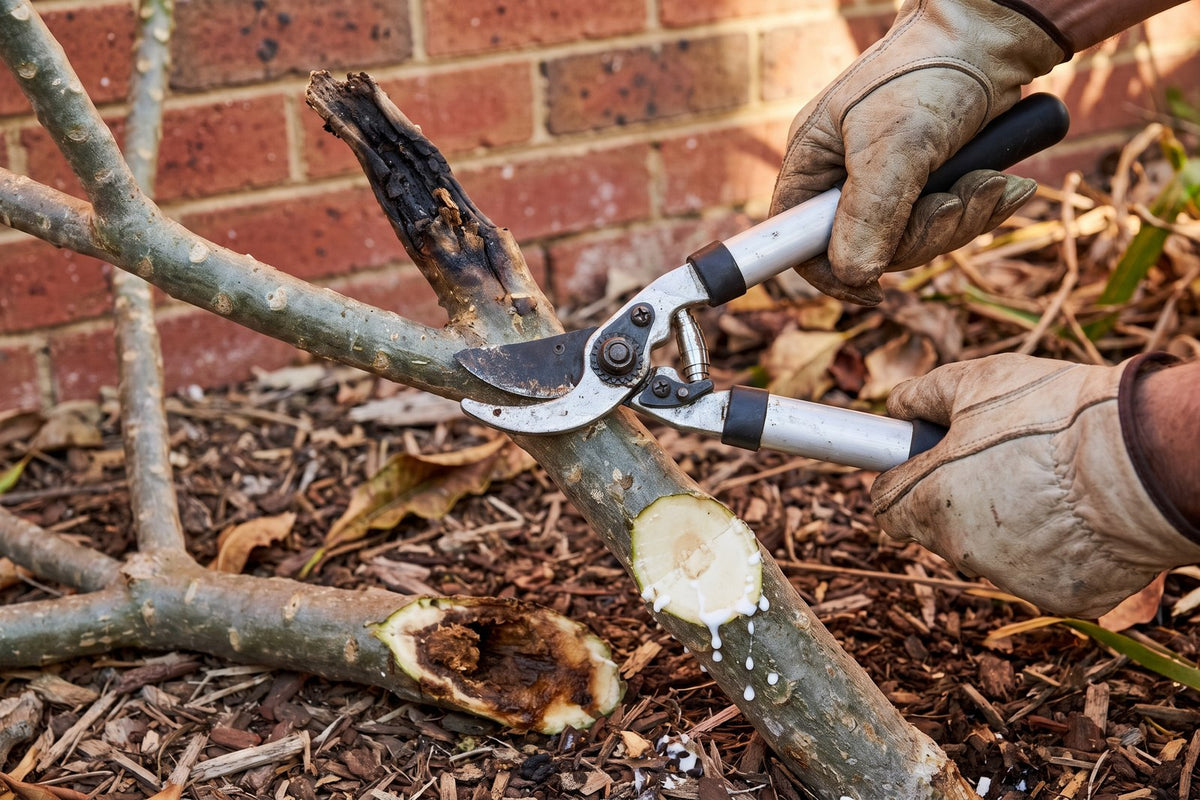
Soft blackened stems: Rot from cold wet conditions. Cut back to firm white tissue and correct drainage.
No flowers: Too much shade, too much nitrogen, or a plant still juvenile. Sun plus a potassium rich feed brings them around.
Frequently asked questions
Can I grow a frangipani from a cutting?
Yes, famously so. Take a 30 to 50cm cutting in spring, let it dry in the shade for two weeks until the end seals, then plant into barely moist coarse mix.
How cold is too cold?
Light frosts burn the tips; hard frost kills. Below roughly minus 2 degrees, grow in pots and shelter over winter, or plant the native frangipani instead.
Why is my frangipani dropping leaves in autumn?
Most varieties are naturally deciduous. Bare branches through winter are normal, not a problem.
Are frangipani roots invasive?
No. Root systems are compact and non aggressive, safe near pools, paving and plumbing.
Ready to plant?
Find frangipanis and companions in our palms and tropical collection, or browse flowering trees for more scented options. Australia wide delivery details are on our delivery page.


