

Olives are Mediterranean trees, built for dry summers and cool, wet winters, and Brisbane gives them the opposite. They still grow well here, because they are among the toughest trees you can plant, but it pays to be honest about what you will get: a handsome, drought-hardy, long-lived tree that may fruit modestly in a good year, rather than the reliable harvest of a southern grove. This guide compares the three varieties that cope best, says where fruit is realistic, and covers planting and care for a humid climate. Different olive tree varieties require specific conditions, and our comprehensive olive tree guide sets out what each of the main cultivars needs across the Australian climate zones.
What Brisbane's climate means for an olive
Three things work against fruit in the subtropics. Olives need a period of winter chill to set flower buds, and coastal Brisbane rarely delivers enough. Flowering and fruit set happen in late spring, when humidity is already climbing, and wet summers bring the fungal problems olives dislike, peacock spot and anthracnose chief among them. And Queensland fruit fly will take ripening fruit. None of this stops the tree growing; it means fruit is a bonus, best on the cooler, drier western and elevated sides of the city, and more reliable again on the Granite Belt and the Darling Downs.
The three varieties worth choosing
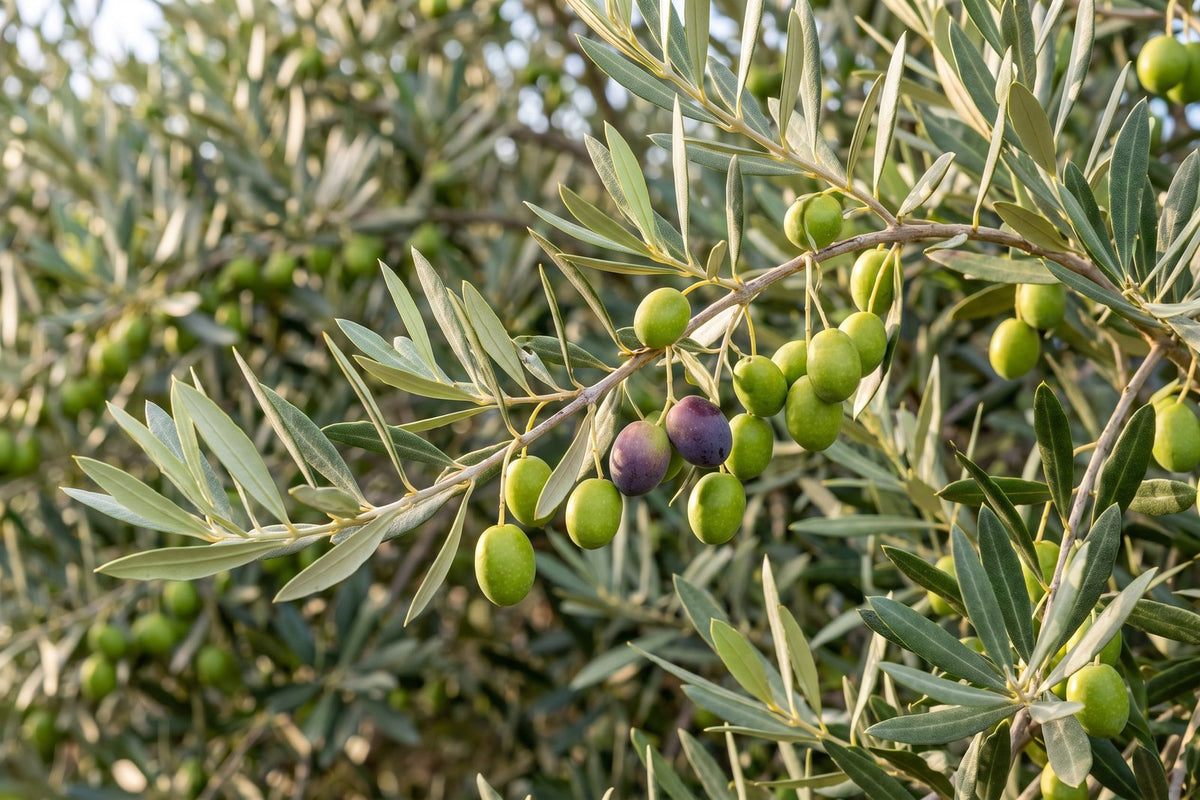
Manzanillo
The Manzanillo olive tree is the table olive most Australian gardens plant, and the most forgiving of the three in a warm climate. It grows to about 5 metres tall and 4 wide, takes pruning into a dense dome, and sets fruit with less chill than most. If you want one olive for Brisbane, this is it.
Arbequina
The Arbequina olive tree is a small-fruited Spanish variety that is self-fertile, starts bearing young and has the lowest chill requirement of the common cultivars, which makes it the second choice for a subtropical garden. It reaches about 5 metres by 4 and suits a large pot for its first years.
Frantoio
The Frantoio olive tree is the Tuscan oil olive, vigorous and handsome to about 6 metres by 4, with the strongest silver colour of the three. It wants more winter chill than coastal Brisbane offers, so plant it here for the tree rather than the oil; on the Darling Downs or the Granite Belt it fruits properly.
Planting
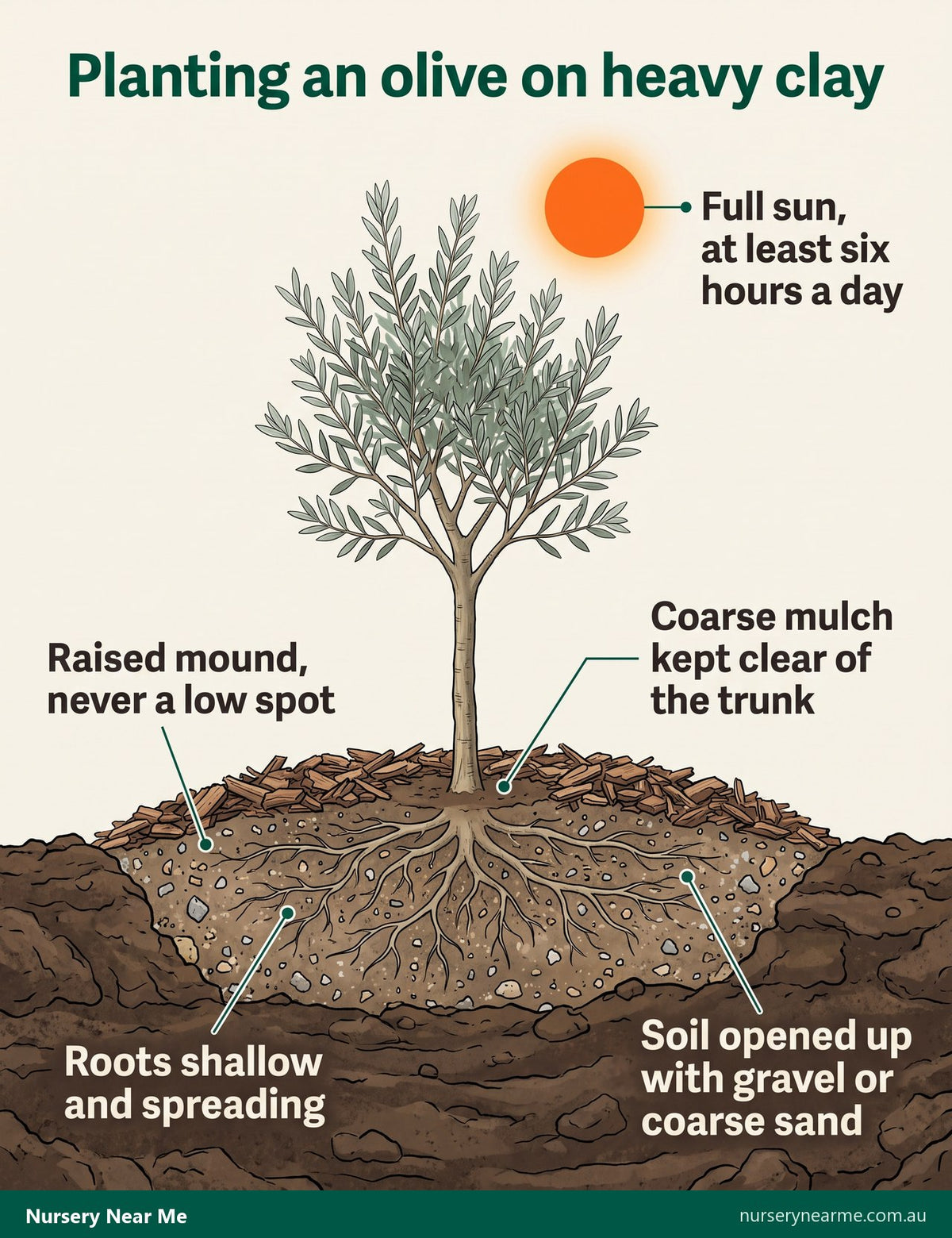
Drainage decides everything. Olives rot in waterlogged ground, and a Brisbane summer storm on heavy clay will do it, so plant on a raised mound with the soil opened up with gravel or coarse sand, and never in a low spot. Give the tree full sun, a minimum of six hours a day, which puts it squarely among the low-maintenance plants that thrive in full sun. Plant in autumn or late winter rather than the wet season, water in well and mulch with a coarse mulch kept clear of the trunk. Olive roots are shallow and spreading but not aggressive; if there is a sewer or stormwater line anywhere near the planting spot, our planting near pipes guide gathers the water utilities' distances and their lists of trees to avoid.
Care
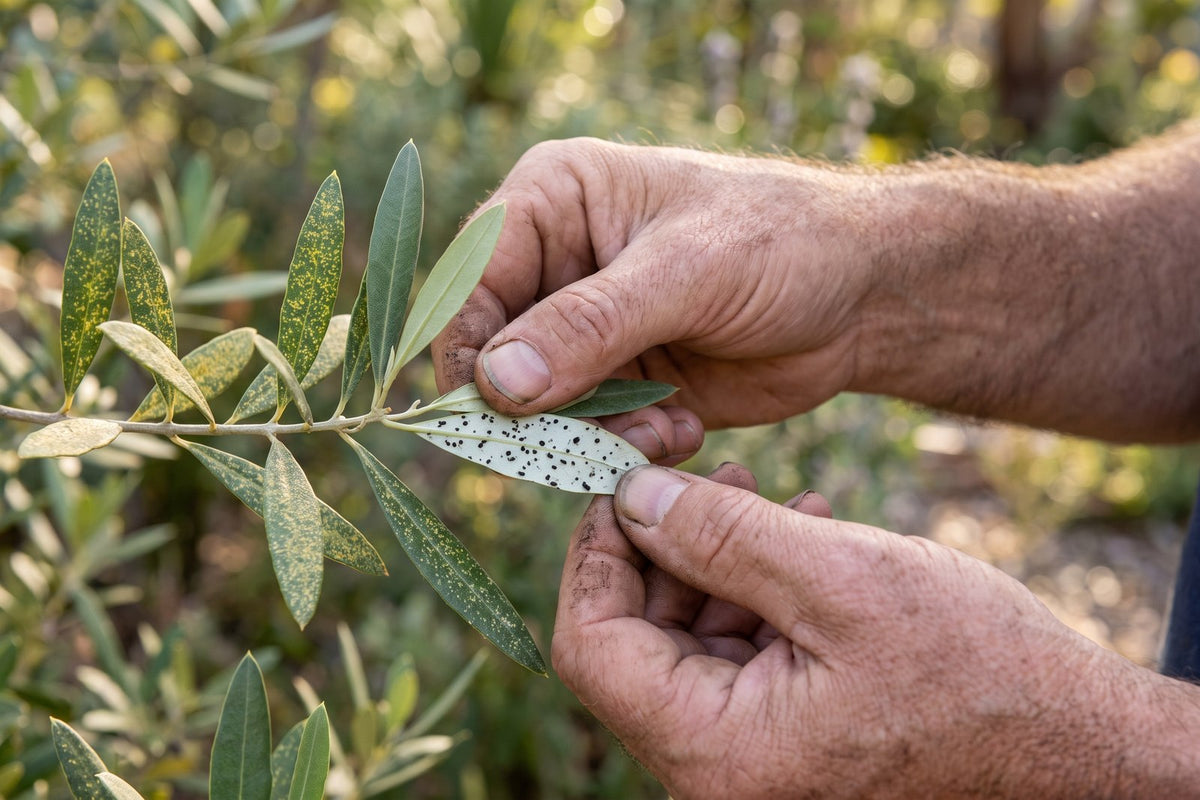
Water deeply but infrequently through the first two summers, then only in a long dry spell; established olives are naturally frugal with water, which is why they sit alongside the other drought-tolerant plants for a Brisbane garden. Feed lightly in spring with a slow-release fertiliser for fruit trees; too much nitrogen gives leaves at the expense of fruit. Prune in late winter to open the centre so air moves through the canopy, which is the single best defence against fungal leaf spots in a humid climate, and remove any suckers from the base. Olive lace bug is the pest to watch for, showing as speckled, yellowing leaves with black spots underneath; a horticultural oil spray in spring, repeated a fortnight later, controls it. If you grow fruit, net it against fruit fly as it colours.
Olives as a landscape tree
For most Brisbane gardens the olive earns its place as a tree rather than a crop: evergreen, silver, drought-proof, happy in a pot for years and tolerant of coastal wind. A pair either side of a gate, an espalier on a hot wall, or a clipped standard in a courtyard all work. That silvery canopy is also why olives appear so often among the best trees for lining driveways in Australia.
Ready to plant?
Olives are among the toughest, longest-lived trees you can put in a Brisbane garden, and an advanced specimen delivers Mediterranean character from the first day. Browse our olive tree collection to compare varieties and current sizes, and if you are growing one in a pot on a balcony or indoors, read our guide on how to care for olive trees indoors. Planting a tree to cool the house? Our guide to shade trees that cut cooling bills explains which side of the house to shade, deciduous versus evergreen by climate, and how far back to plant.


