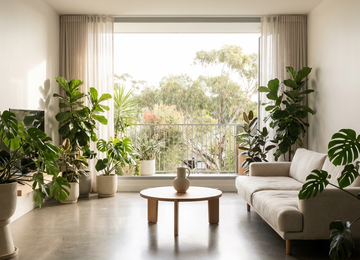


The dragon tree is a great plant that can occupy nearly any size on the scale. Dragon tree, also known as Dracaena marginata, red-edge dracaena, or Madagascar dragon tree, is a trendy houseplant. It is loved for the texture of its foliage. Young dragon tree plants resemble a wild mound of wide-bladed grass and take a tree form as they age. So, if you plan to add this unique plant to your collection, here is all you need to know about dragon tree care and maintenance.
The dragon tree plant often grows up to be attractive, braided wood topped with a shock of foliage, similar to a miniature palm tree. The leaves are solid green or variegated with a cool shade of deep red. They are extremely diverse in height and known for adding texture to the surroundings at the exact height you need. Dragon tree care and maintenance are extremely simple and do not require much effort since it's a low-maintenance plant.
Indoor plants such as dragon trees have been shown to measurably reduce common indoor air toxins, including formaldehyde and benzene.
Cleansing the air of pollutants makes the dragon tree an invaluable asset for a healthier indoor atmosphere, which is why it appears so often in our list of indoor plants that improve air quality. Some people keep them in a pot, while others prefer the taller ones that break up the levels in their living rooms. The dragon tree has pretty dense foliage, which makes it ideal for popping in front of a window.
Ideal growing conditions for a dragon tree
Dragon trees thrive effortlessly in a variety of settings, making them an excellent addition to any home or office. In an indoor setting, they prefer bright indirect sunlight, although they show considerable adaptability and cope with lower light conditions. Well-draining soil further enhances the plant's resilience and its minimal care requirements.
Light requirements
Dragon trees flourish when they receive bright, indirect sunlight, which keeps the foliage colour strong.
- Bright indirect light: ideal for optimal growth.
- Low light tolerance: adapts to shadier conditions.
- Avoid direct sunlight: prevents leaf burn.
The colours of dragon trees are brightest when the plant sits near a sunny window, though it will survive dim light and can grow well even in winter, provided there is some natural light in its environment. If your room genuinely has very little light, our roundup of the best low light plants for the home covers the species that will do better than merely survive.
Watering needs
Dragon trees are a breeze to care for when it comes to water. Allow the topsoil to dry out, then water thoroughly, ensuring any excess drains away. The plant does not like waterlogging. Water it well so that its deep root system gets a good drink, but wait until the top inch of the soil has dried out before watering again. It is better to lightly under-water your dragon tree than to make its soil soggy, as sogginess does far more harm.
During cooler months their water requirements decrease, making them even more self-sufficient.
Tips for preventing overwatering
Checking the moisture of the soil weekly, perhaps with a reliable moisture metre, takes seconds and makes a remarkable difference. Adjust for the season, with noticeably less watering needed in winter. Overwatering is the single most common way a dragon tree is killed, and our guide to understanding root rot explains what to do if the damage has already started.
You may also give the plant a shower in the bathtub a few times a year to clean the dust off its leaves. If it is too big to move easily, wipe the leaves with a damp cloth instead. This keeps it looking fresh and makes sure dust does not interfere with the plant's ability to use the little light it gets.
Soil and repotting
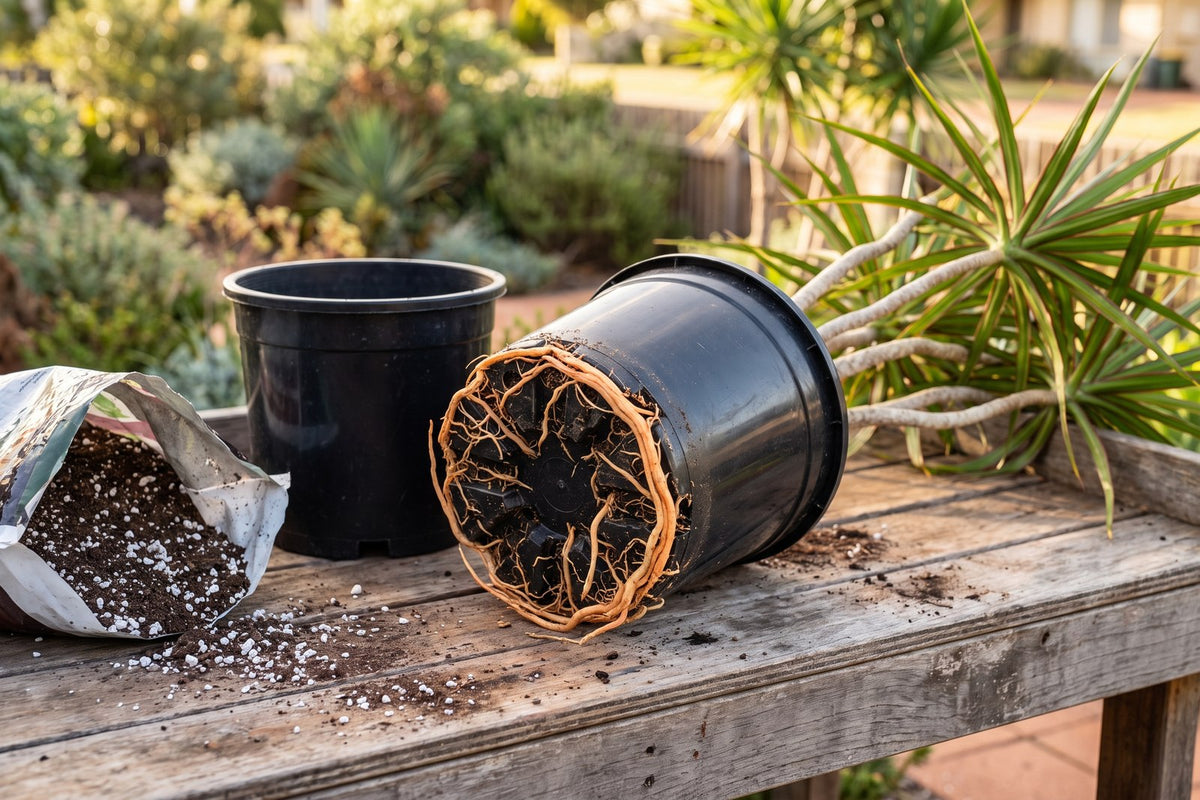
An ideal soil mix for your dragon tree provides well-aerated drainage so roots thrive steadily. Incorporate perlite or pumice into your potting mix to improve drainage and avoid the soil compaction that hinders root expansion. Repotting every two to three years revitalises growth by preventing overcrowded roots.
The dragon tree has a vigorous root system that will snake through the drainage holes of your pots throughout the year, so repotting is a genuinely necessary job rather than an optional one. When unchecked the plant can reach around two metres tall. If you don't want that height, clip off the top growth a few times per year to keep it in check, and move the plant into a larger pot at the same time so the container can handle the size of its root ball. Our step-by-step guide on how to repot your plants like a pro covers the technique, and our complete guide to choosing the right size pot explains why one size up is almost always the correct answer.
Common pests and problems
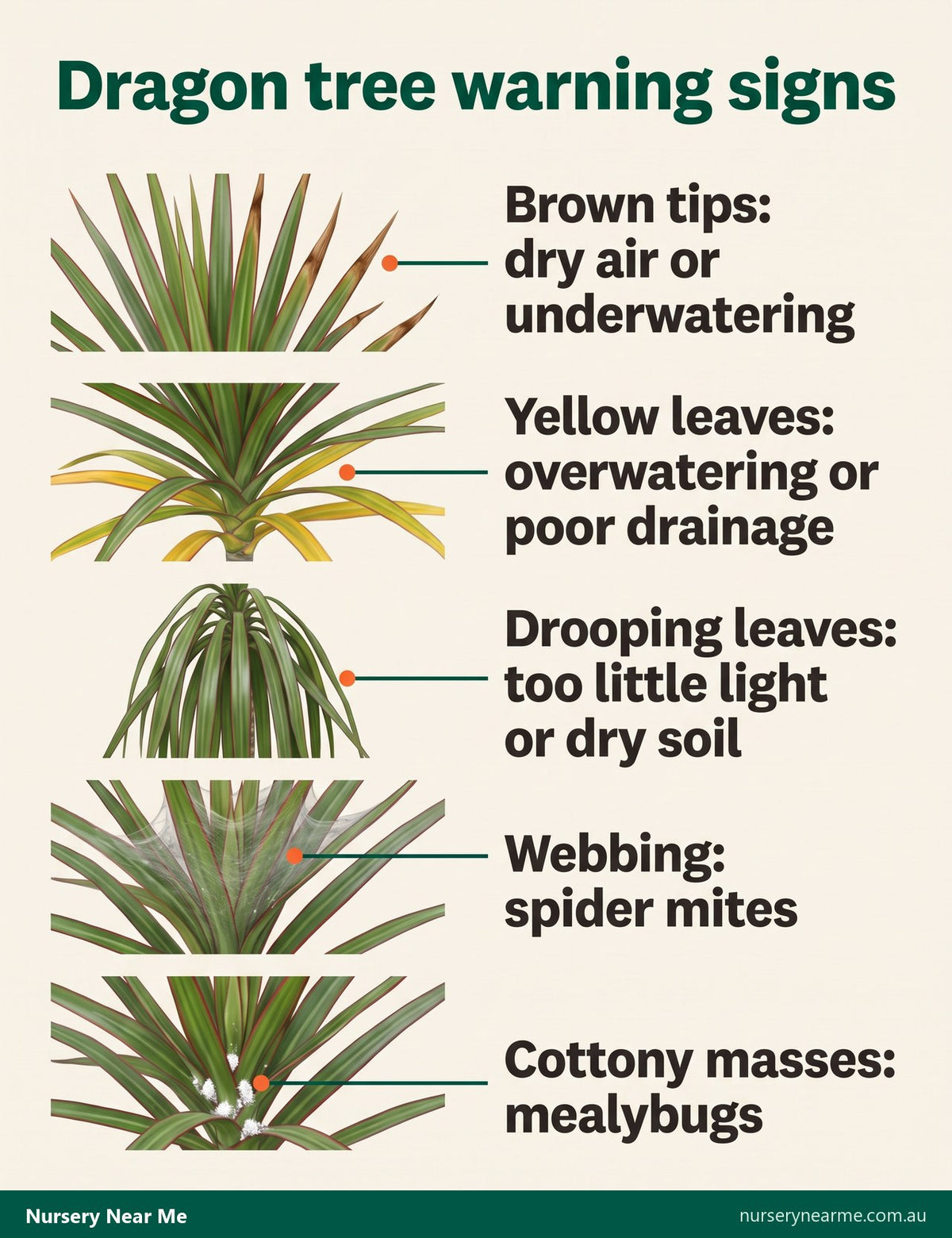
The dragon tree is largely resilient to pests, though some may appear. Monitor for spider mites, mealybugs and thrips. Prompt intervention with a suitable treatment keeps the plant healthy.
Identifying and treating issues
- Brown tips: often a result of dry air or underwatering. Fluoride and salts in tap water can also cause it, so try filtered or rainwater if the problem persists.
- Yellow leaves: typically indicate overwatering or poor drainage.
- Drooping leaves: a sign of insufficient light or dry soil.
- Pest infestation: look for webbing (spider mites) or cottony masses (mealybugs).
Regularly monitoring your dragon tree ensures swift identification and management of potential concerns. Adopting proactive care strategies will maintain the plant's low-maintenance allure and striking presence, and our general guide on how to keep your indoor plants alive covers the habits that prevent most of these problems from starting.
Styling your space with a dragon tree
The sophisticated silhouette of a dragon tree adds an artful touch to any room. Its verdant strappy leaves and architectural form present an opportunity to juxtapose textures, effortlessly complementing modern furnishings and minimalist interiors.
Start by choosing bold pots or minimalist planters that accentuate the sculptural quality of the plant. Place your dragon tree as a statement piece in entryways or living rooms, drawing the eye and adding an element of natural elegance. For more ideas on where each shape works best, see our guide to styling indoor plants room by room. If you like this upright, spiky architecture, our yucca care guide covers a plant with a similar silhouette that tolerates even more neglect.
Takeaway
This is how you maintain and care for your dragon tree. Though it is a fairly low-maintenance plant, you still need to follow the basics of bright indirect light, restrained watering and free-draining mix so that it grows effortlessly in a healthy environment.
Where dragon trees grow in Australia
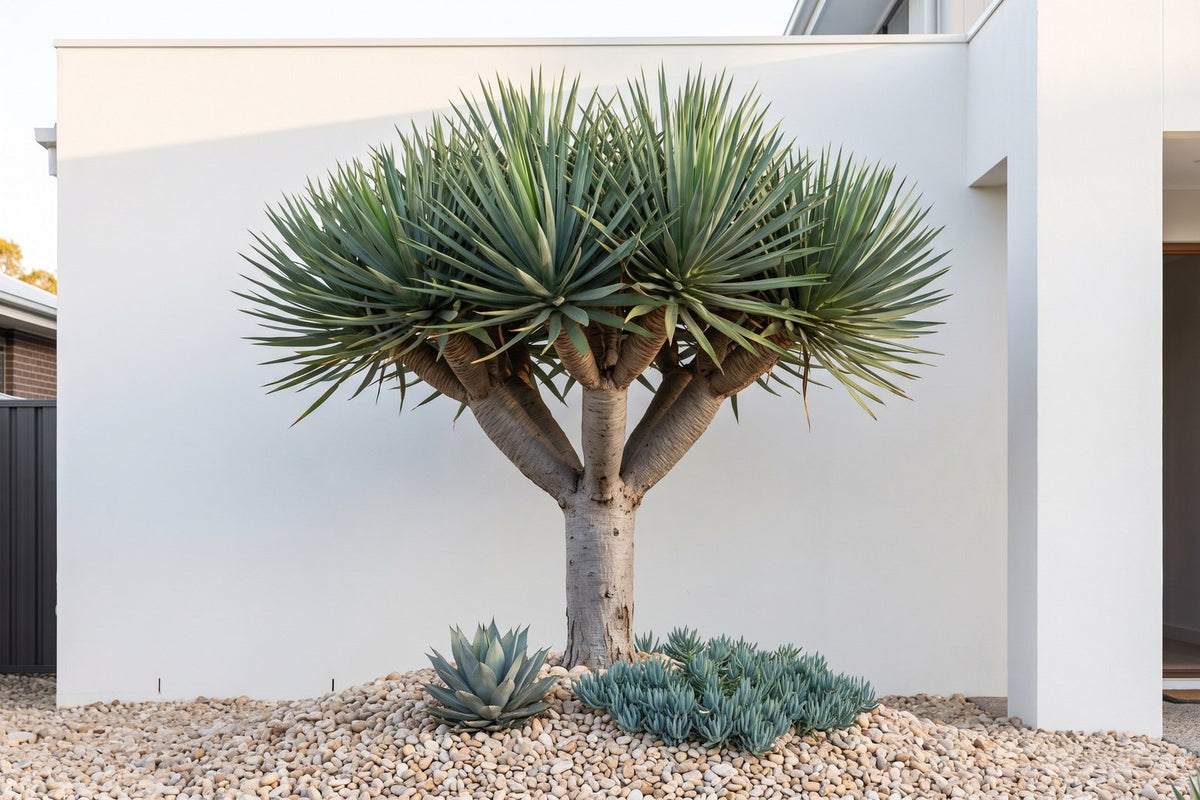
Dracaena draco comes from the Canary Islands, and the Mediterranean climate it evolved in maps closely onto southern Australia. It is one of the most striking architectural plants available here and needs almost nothing once established.
| Location | How it performs |
|---|---|
| Perth and Adelaide | Ideal. Dry summers and free-draining soil suit it exactly |
| Sydney and coastal NSW | Excellent in full sun with sharp drainage. Salt tolerant |
| Melbourne | Good in a warm sheltered position; protect from hard frost |
| Brisbane and southeast Queensland | Grows well, but wet humid summers make drainage critical |
| Dry inland | Outstanding - genuinely irrigation free once established |
| Tropical north | Rot is the main risk. Plant raised, in gravel |
It is extremely slow, and that is the point
A dragon tree may take ten years to develop a trunk and decades to produce the branched umbrella silhouette it is grown for. Wild specimens in the Canary Islands are believed to be many hundreds of years old.
The practical consequence is that an advanced specimen represents genuine time rather than just size, which is why they cost what they do. It also means siting matters enormously - this is not a plant to move later, so choose the position as a permanent decision.
Drainage decides everything
Dragon trees are killed by wet feet far more reliably than by heat, cold or neglect. In a Brisbane or Sydney wet summer, a specimen in heavy clay will rot at the base while the same plant in Perth sand thrives beside a driveway.
On clay, plant on a raised mound with gravel mixed through the soil, mulch with gravel or pebble rather than organic mulch, and never plant in a low point where water collects. In a pot, use a free-draining cactus and succulent mix and never leave a saucer standing full.
The red sap
Cut or damaged tissue exudes a deep red resin, which is where the name dragon's blood comes from and why the tree has been valued historically as a source of dye and varnish. It stains skin, clothing and paving, so prune with that in mind and avoid siting a specimen directly over light-coloured pavers.
Using it in an Australian garden
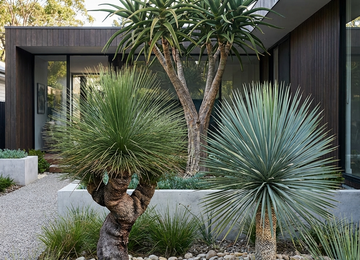
Dragon tree is a solo performer. It works best as a single specimen against a rendered or masonry wall, in a gravel bed, or in a large pot at an entry - somewhere the silhouette reads clearly. It sits naturally with the plants that share its conditions: agave, yucca, olive, blue chalksticks, pigface and gravel mulch. Avoid crowding it with softer planting, which competes with the form rather than setting it off.
Ready to plant?
We grow dragon trees and the wider dracaena family in sizes from desktop to floor-standing feature plants. Browse our house and indoor plants or our air purifying plants collection, and we will deliver healthy plants carefully packed to your door.
Before a tree goes in near the house, read our guide to planting near pipes: it sets out what Australian water utilities say about root behaviour, what can go directly over a sewer line, and which trees to keep well away.
For shade that lowers the cooling load, the shade trees guide covers placement in the southern hemisphere and the trees that do the job without damaging the house.


