

Photographing an unknown plant and having your phone name it is genuinely useful, and the apps have improved enormously. They are also wrong often enough that you should never act on a single identification - particularly when the question is whether something is safe to eat, or whether the seedling in your lawn is a weed you are legally required to remove.
The main options
| Tool | Cost | Strength | Weakness |
|---|---|---|---|
| Google Lens | Free | Fast, built into Android and Google Photos, no install | Matches images rather than identifying botanically |
| PlantNet | Free | Scientific project, shows confidence scores, no ads | Interface is plainer, better on wild plants than cultivars |
| iNaturalist / Seek | Free | Real experts confirm IDs, excellent on Australian natives | Slower - community review takes time |
| PictureThis | Subscription | Polished, good care information attached | Paid, and pushes upgrades hard |
| PlantSnap | Subscription | Large database | Accuracy varies, particularly on garden cultivars |
If you want one recommendation
Use Google Lens for speed and iNaturalist when it matters. Lens gives an instant answer for the everyday "what is that shrub" question. iNaturalist puts your photo in front of Australian botanists and naturalists who correct wrong identifications, which is the only one of these tools that reliably catches its own errors.
PlantNet sits usefully between them - free, quick, and honest enough to show you how confident it actually is.
Why they struggle in Australia
These apps are trained mostly on northern hemisphere flora, and Australia has an unusually distinct one. Around 90 per cent of our flowering plants grow nowhere else, and the big genera are exactly the ones apps handle worst.
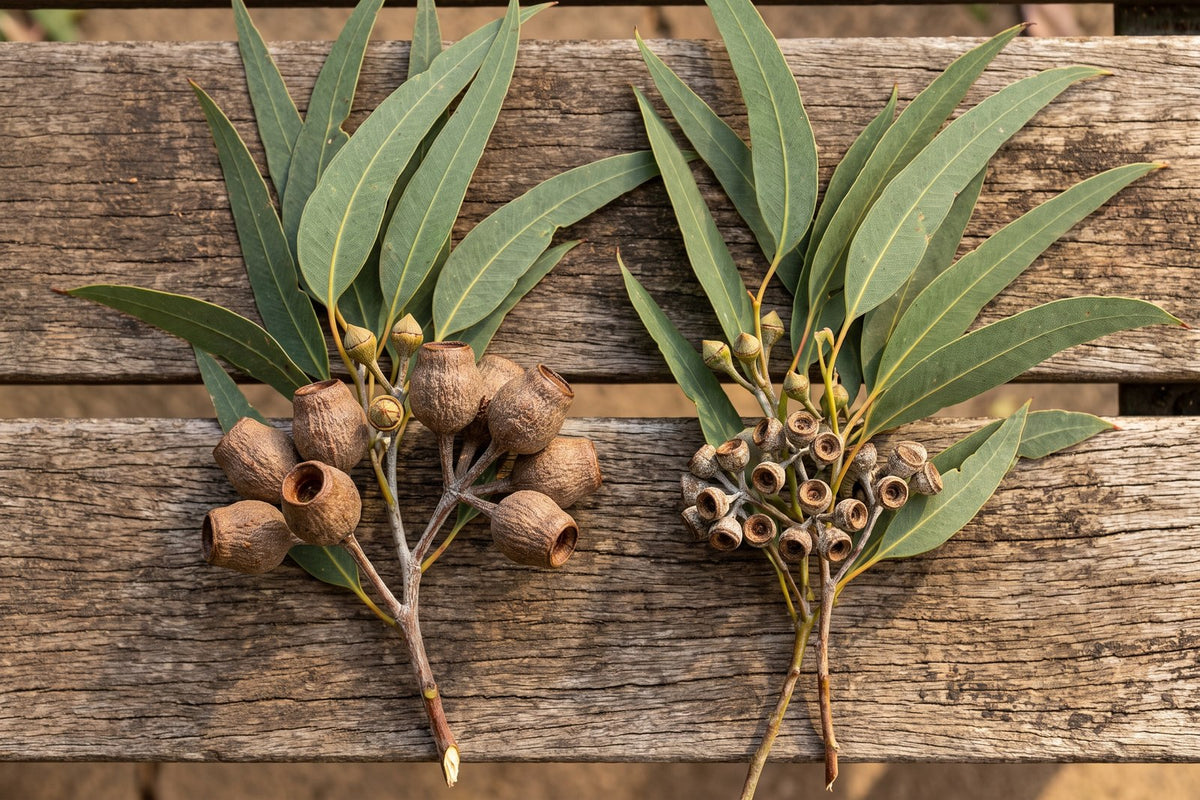
- Eucalypts - more than 800 species, many separated by bud and fruit detail an app cannot see in a leaf photo.
- Acacias - around 1,000 Australian species, frequently reduced to "wattle" and no further.
- Grevilleas and banksias - hundreds of species plus heavily bred garden cultivars.
- Garden cultivars generally - an app may correctly say Syzygium australe but cannot tell Resilience from Backyard Bliss, which is the part that actually determines how big it gets.
Expect genus-level accuracy on Australian natives and treat species-level answers as a starting point.
How to photograph a plant so the app gets it right
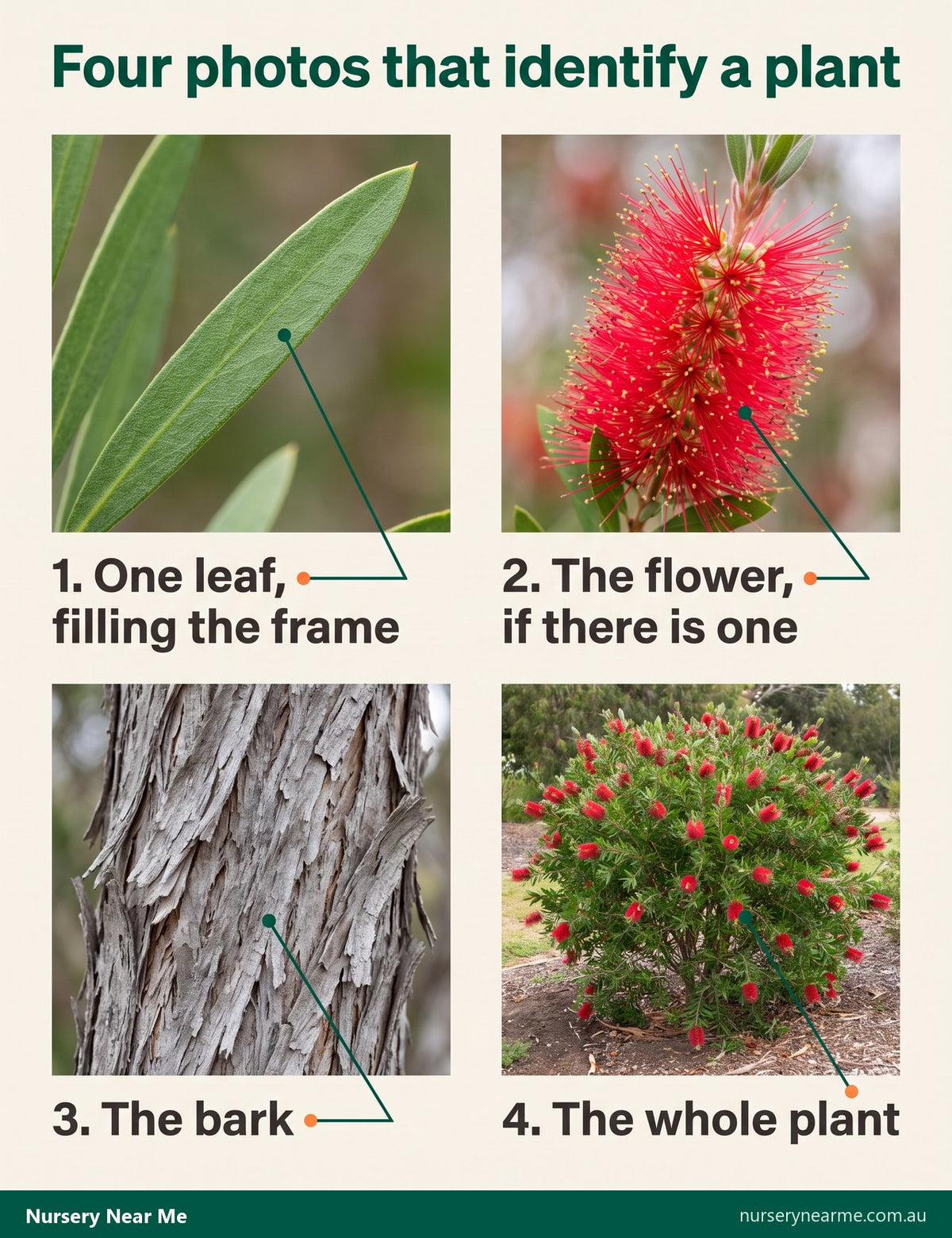
- Fill the frame with one feature. A single leaf, one flower, one fruit - not the whole shrub.
- Photograph the flower if there is one. Flowers carry far more identifying detail than leaves.
- Take several shots - leaf, flower, bark, whole plant - and run each separately. Agreement across all four is a much better signal than one confident answer.
- Use even light. Harsh Australian midday sun blows out detail and confuses colour. Overcast light or open shade works best.
- Include a leaf underside. Many species are separated by the colour and hairs underneath.
- Get the whole habit too. Whether a plant is a groundcover, shrub, climber or tree narrows things enormously.
When not to trust an app
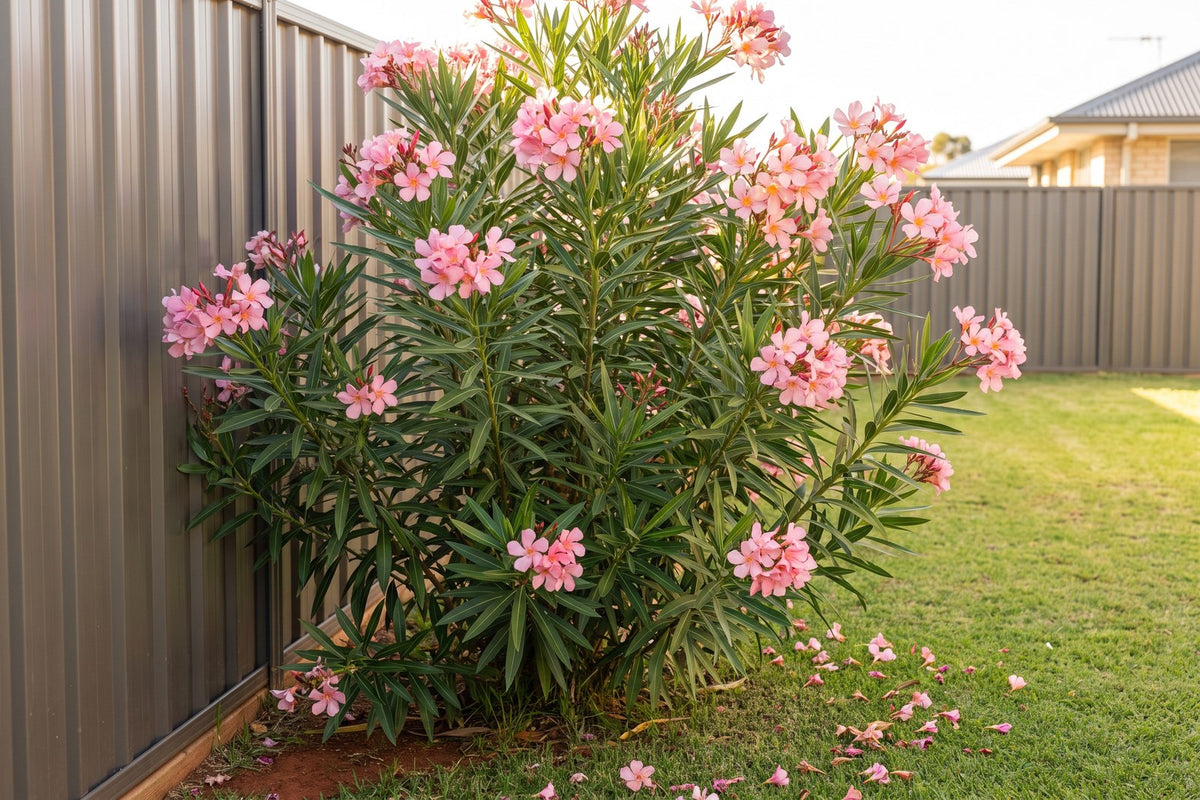
There are three situations where a phone identification is not good enough.
Anything you plan to eat
Never eat a plant on the strength of an app. Several Australian species are dangerously similar to edible ones, and app confidence scores mean nothing against that risk. Bush foods should be confirmed by someone who genuinely knows them.
Suspected weeds
Australia has declared and notifiable weeds that landholders are legally required to control, and the obligations differ by state and by council. If an app suggests something on a declared list, confirm it with your state agriculture department or local council before acting - and equally, do not assume an app has cleared a plant that is actually declared.
Plants that might be toxic to pets or children
Common garden plants including oleander, brugmansia, cycads, arum lilies and many aroids are seriously toxic. If a pet has eaten something, call a vet or the Animal Poisons Helpline rather than photographing it - and take the plant with you.
Better ways to identify Australian plants
- State herbaria - most Australian states run a free or low-cost plant identification service for the public, and they are the definitive answer.
- PlantNET (NSW) and similar state flora databases - searchable, authoritative, and specific to local species.
- Your local council - many have weed identification guides written for your exact region.
- Botanic gardens - Sydney, Melbourne, Brisbane, Adelaide, Perth and Canberra all have staff or volunteer services.
- Local garden groups - a regional native plant society will often identify something in minutes that an app cannot.
- Your nursery - if you bought the plant, the label or the supplier can usually confirm the cultivar, which no app can do.
Identifying a plant you already own
If the question is about something in your own garden, the fastest route is usually not an app at all. Check for a label in the pot or pushed into the soil nearby, look back through your order history if you bought online, and photograph the plant with something for scale. Knowing the mature size and the cultivar name matters far more for care decisions than the species alone.
Frequently asked questions
What is the most accurate plant identification app?
For Australian plants, iNaturalist is the most reliable because real botanists and naturalists review submissions and correct errors. Google Lens is the fastest, and PlantNet is a good free middle ground that shows how confident it actually is.
Is there a free plant identifier?
Yes. Google Lens, PlantNet, iNaturalist and Seek are all free and cover most needs. Paid apps such as PictureThis add polish and care information rather than fundamentally better identification.
Are plant apps accurate for Australian native plants?
Less than for northern hemisphere species. They usually reach the right genus - wattle, eucalypt, grevillea - but often miss the species, because Australia has around 800 eucalypt and 1,000 acacia species that are separated by fine detail. Use them as a starting point, not a conclusion.
Can an app tell me the exact cultivar?
No, and this matters. An app might correctly identify Syzygium australe but cannot distinguish the cultivars, which is what determines mature size, psyllid resistance and hedging behaviour. For that you need the plant label or the supplier.
Can I use an app to check if a plant is edible?
No. Never eat a plant identified only by an app. Some Australian species closely resemble edible ones with dangerous results, and app confidence scores are not a safety guarantee. Have bush foods confirmed by someone qualified.
How do I identify a weed in my garden?
Photograph it for a rough idea, then confirm with your local council or state agriculture department. Australia has declared weeds that landholders must legally control, and the requirements vary by state and region, so an app answer is not sufficient.
Choosing what to plant instead
If you are identifying something because you want to replace it, or you liked it and want your own, we can help with that part. Browse our Australian natives collection, or top picks for Brisbane and Sydney for plants that reliably perform in Australian gardens.
Working out what suits your conditions? See native vs exotic plants and the low-maintenance native garden.


