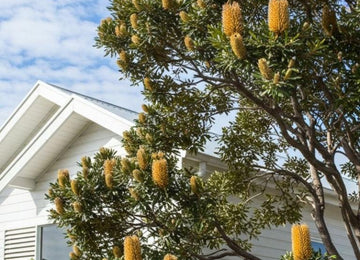


Aloes solve the two hardest problems in Australian gardening at once: they thrive on neglect through hot dry summers, and they flower in winter, when the rest of the garden has clocked off. From late autumn into spring their candelabra spikes of tubular orange, red, yellow and pink flowers rise above sculptural rosettes, and every honeyeater and wattlebird in the district knows about it within a week. Modern hybrid aloes have pushed this further, with compact plants that flower repeatedly for months rather than in one annual event.
Their needs are short: sun, drainage, and restraint with the hose. The genus runs from pot sized rosettes to genuine trees, so the same easy formula scales from a balcony bowl to a driveway statement.
Quick facts
| Botanical name | Aloe species and hybrids |
| Type | Evergreen succulent |
| Height | 20 cm rosettes to 5 m plus tree aloes |
| Position | Full sun to light shade |
| Soil | Sharply drained; sandy, gravelly or raised beds |
| Flowers | Autumn to spring, mainly winter |
| Climate | Most of mainland Australia; light frost only |
Choosing an aloe
Compact repeat flowering hybrids
The modern hybrids are the easiest colour in horticulture. Aloe Mighty Sunset from $21.95 throws fiery orange red spikes above neat rosettes, Aloe Pink Blush from $17.95 adds patterned foliage with coral pink blooms, and Aloe Supreme Orange from $22.95 is a reliable repeat performer in beds and bowls. Aloe Christmas Carol from $21.95 earns its place on foliage alone, deep green rosettes studded ruby red, while Aloe Hedgehog from $22.95, a compact clumping humilis hybrid, packs spiky texture into the front of a dry border.
Sculptural and statement aloes
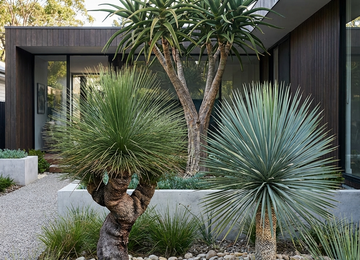
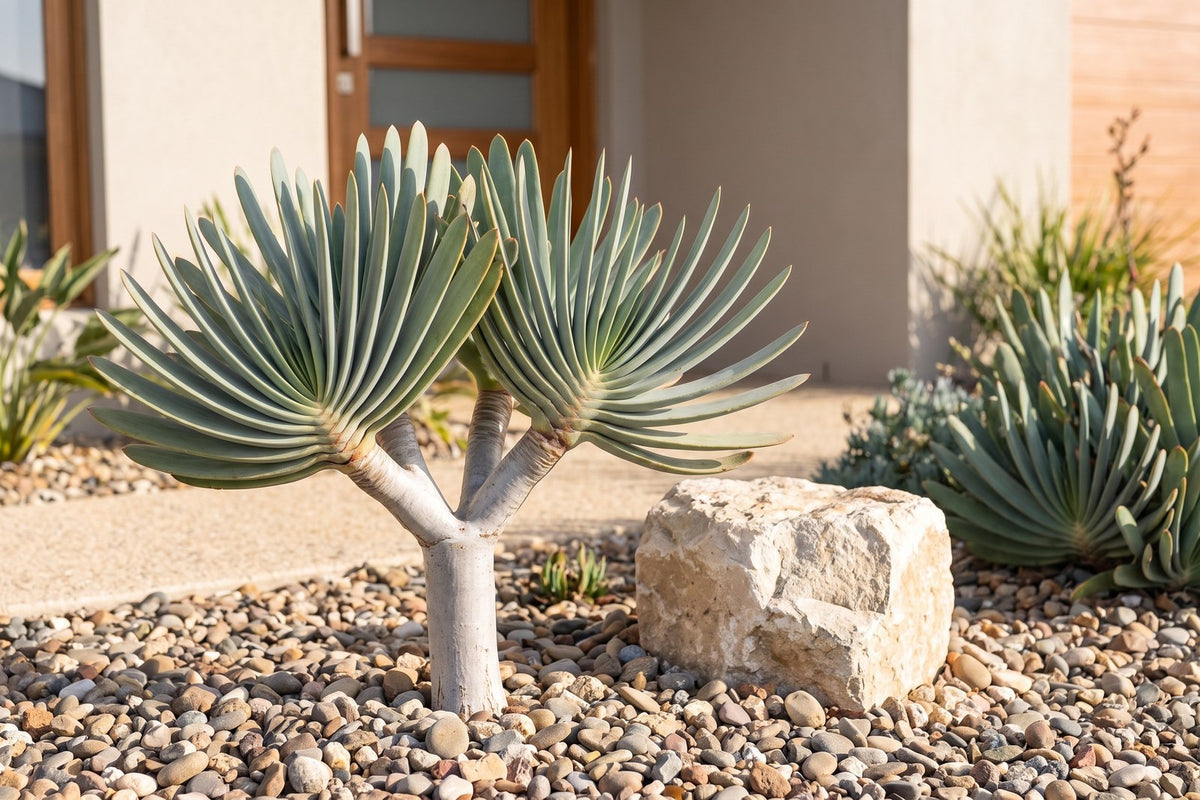
The fan aloe, Aloe plicatilis from $30.95, arranges grey blue leaves in flat fans on a branching frame, one of the most architectural succulents you can grow. At the top of the scale, the Tree Aloe from $1379.95 in advanced grades builds a smooth sculptural trunk to 5 metres and beyond, an instant landmark for a courtyard or driveway. For collectors of the broader family, Aveo Gasteria from $39.95 is a close aloe relative that handles more shade than any true aloe, ideal for a bright verandah.
Aloes sit in the same bed as the rest of the succulent family, and our guide to the world of succulents covers how they differ in watering and light needs.
Planting
Full sun produces the tightest rosettes, best leaf colour and heaviest flowering; most aloes accept light shade at some cost to all three. Drainage is everything. Sandy and gravelly soils suit them as they are; in clay, plant on mounds 20 to 30 cm high or in raised beds and pots, mixing coarse sand or fine gravel through the soil.
Plant with the base of the rosette sitting just above soil level, water in once, then leave the plant alone for a week or two to settle, which lets any damaged roots callus rather than rot. Mulch with gravel rather than organic mulch, which holds damp against the stem. Space small hybrids 30 to 40 cm apart, clumpers 50 cm, and give a tree aloe a clear 3 metres. Autumn and spring plantings establish fastest.
For structure and scale beside them, our guides to agave garden ideas and cowboy cactus cover the two plants most often used as the taller companions.
Ongoing care
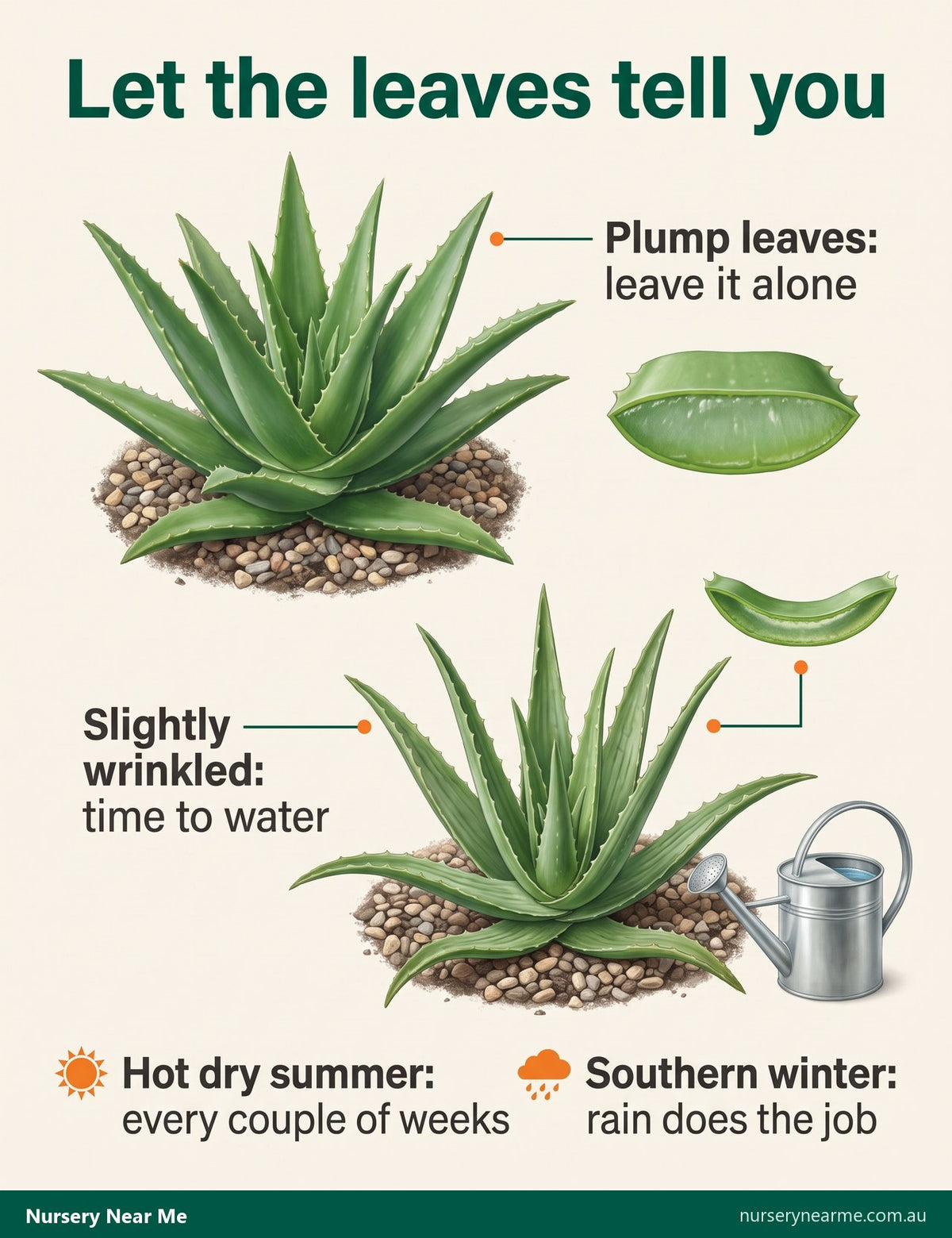
Watering: Water deeply but rarely: every couple of weeks in a hot dry summer, and essentially never in winter in southern Australia, where rain does the job. The leaves are the gauge; plump means leave it alone, slightly wrinkled means water. When in doubt, do not.
Feeding: A light application of slow release fertiliser in early autumn supports the winter flowering effort. That is the entire program; rich feeding produces soft bloated growth that rots easily and flowers less.
Grooming: Snap or cut spent flower spikes at the base, and peel away dried lower leaves for tidiness. Clumping types can be divided every few years in spring, which is how one aloe quietly becomes a verge full.
At ground level, blue chalksticks is the classic underplanting: the same silvery blue tone, the same watering needs, and it spreads to cover bare soil. Our guide to growing blue chalksticks covers spacing and pruning.
Common problems
Rot at the base: The number one aloe killer, caused by wet soil, organic mulch against the stem or winter overwatering. Prevention is planting high and watering rarely; a rotted rosette can sometimes be rescued by cutting to clean tissue and re rooting the top in dry mix.
Aloe mite: Distorted, cancerous looking growths on leaves or flower stems. There is no practical cure; cut out affected tissue well below the damage and bin it, or remove badly affected plants to protect the rest.
Scale insects: Flat white or brown discs along leaves. Wipe off small infestations, or spray with horticultural oil in the cool of the evening.
Stretched, floppy rosettes: Not enough sun. Move the plant, or accept the lean; aloes in shade survive but never look the part.
Aloes belong on any water-wise planting list, and our top drought-tolerant plants for a Brisbane garden covers what else to plant with them.
Where aloes grow in Australia
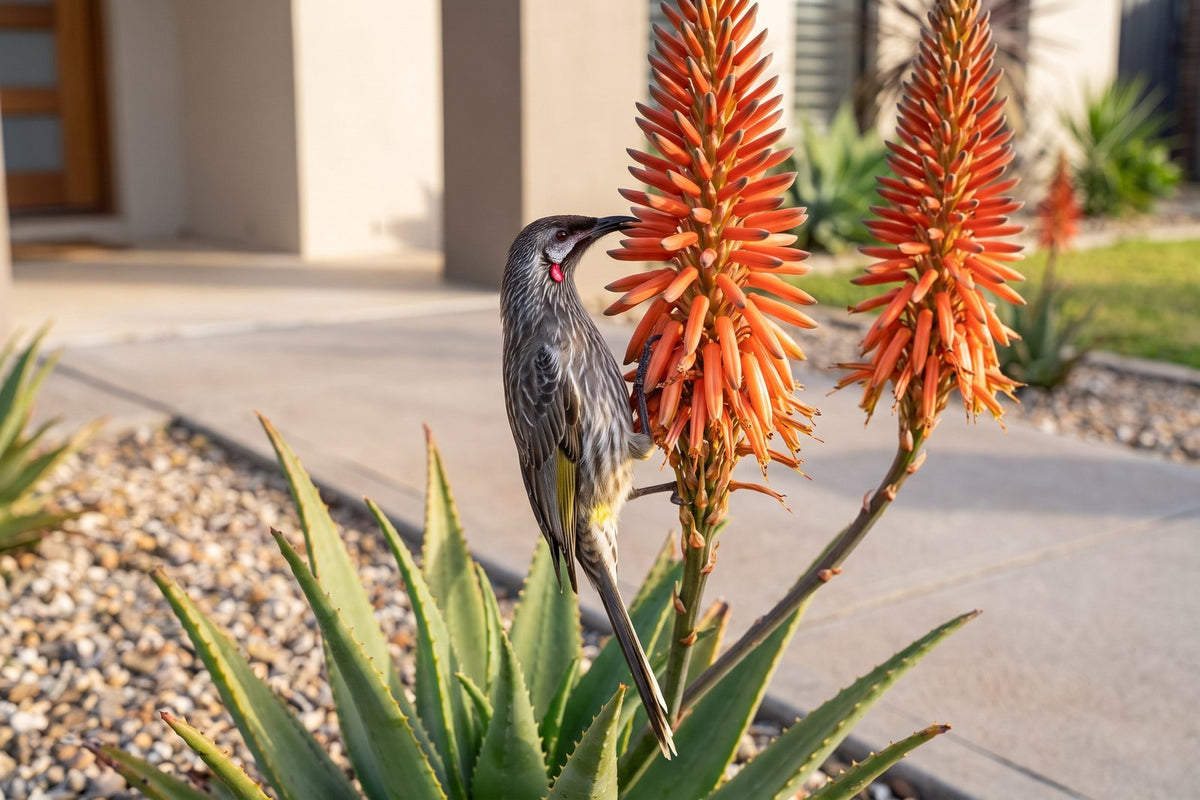
Aloes come from Africa and the Arabian Peninsula, and they suit the drier half of Australia almost perfectly. They flower through winter when little else does, need essentially no water once established, and hold their form year-round.
| Location | How they perform |
|---|---|
| Perth and Adelaide | Ideal. Dry summers and sandy soil match their origins |
| Sydney and coastal NSW | Excellent in full sun with free drainage. Salt tolerant |
| Melbourne | Good. Most tolerate light frost; protect from heavy frost |
| Brisbane and southeast Queensland | Good, but drainage is critical in humid wet summers |
| Dry inland and rural blocks | Outstanding - genuinely irrigation-free |
| Tropical north | Rot is the main risk. Plant raised, in gravel |
Winter flowering is the point
The most valuable thing about aloes in an Australian garden is timing. Most flower through late autumn and winter, sending up tall orange, red and yellow spikes at the flattest point of the gardening year. They are also a significant nectar source when little else is available, and honeyeaters work them heavily.
Plant them where that winter display will be seen - near an entry, along a driveway, or in a bed visible from inside the house.
Drainage decides everything
Aloes are killed by wet feet far more often than by heat, cold or neglect. In Brisbane or Sydney through a wet summer, an aloe in heavy clay will rot at the base while the same plant in Perth sand thrives.
On clay, plant on a raised mound with gravel through the soil, and mulch with gravel rather than organic mulch, which holds moisture against the stem. Never plant in a low point where water collects, and never leave a potted aloe standing in a full saucer.
Aloe vera and the others
Aloe vera is the medicinal species and grows readily across warm Australia, though it is more frost tender than many ornamental aloes. The larger tree aloes and the modern hybrids are grown for form and flowering rather than for use, and several hybrids have been bred specifically for heavier and longer flowering in garden conditions.
Note that aloe gel is not the same as the yellow latex just under the leaf skin, which is a strong irritant and purgative. Aloes are also toxic to dogs and cats if chewed, which is worth knowing in a pet household.
Frequently asked questions
When do aloes flower in Australia?
Mostly through winter, from roughly May to September, with modern hybrids often flowering repeatedly from autumn well into spring. It makes them the backbone of the winter garden and a vital nectar source for honeyeaters.
Is this the same aloe as aloe vera?
Aloe vera is one species in this large genus, grown mainly for its gel. The garden aloes here are ornamental species and hybrids; treat them as garden plants rather than a first aid kit.
Are aloes frost hardy?
Most handle light frost to around minus 1 or 2 degrees, especially when dry at the roots, though flower spikes can be damaged. In colder districts grow aloes in pots and winter them against a warm wall.
Do aloes grow well in pots?
Superbly. Use a terracotta or other breathable pot with a free draining succulent mix, full sun, and water only when the mix is fully dry. Potted aloes flower reliably for decades with almost no attention.
Ready to plant?
For winter colour on a summer water budget, nothing touches an aloe. Start a collection from our flowering plants, pot one up with help from pots and planters, or go bold with a statement piece from feature trees. Check the pot and bag size guide before ordering and our delivery page for shipping details.


