

Drive through any new estate, main street or school car park in Australia and you will find ornamental pears, and there is nothing cynical about that popularity. Pyrus calleryana is close to indestructible: it shrugs off frost, heat, drought once established, heavy clay and coastal wind, then covers itself in white blossom every spring and finishes the year in scarlet and burgundy. Few trees offer that much performance with that little fuss.
The main decisions are variety and spacing, because ornamental pears range from narrow columns 3 m wide to broad avenue trees with 8 m canopies. Choose the shape that fits the job and this is one of the easiest trees you will ever plant.
Quick facts
| Botanical name | Pyrus calleryana |
| Type | Deciduous ornamental tree |
| Height | 8-12 m depending on cultivar |
| Position | Full sun |
| Soil | Any well drained soil, tolerates clay |
| Flowers | Masses of white blossom in early spring |
| Climate | Frost hardy and heat tolerant; most of Australia |
Choosing an ornamental pear
Narrow spaces and driveways
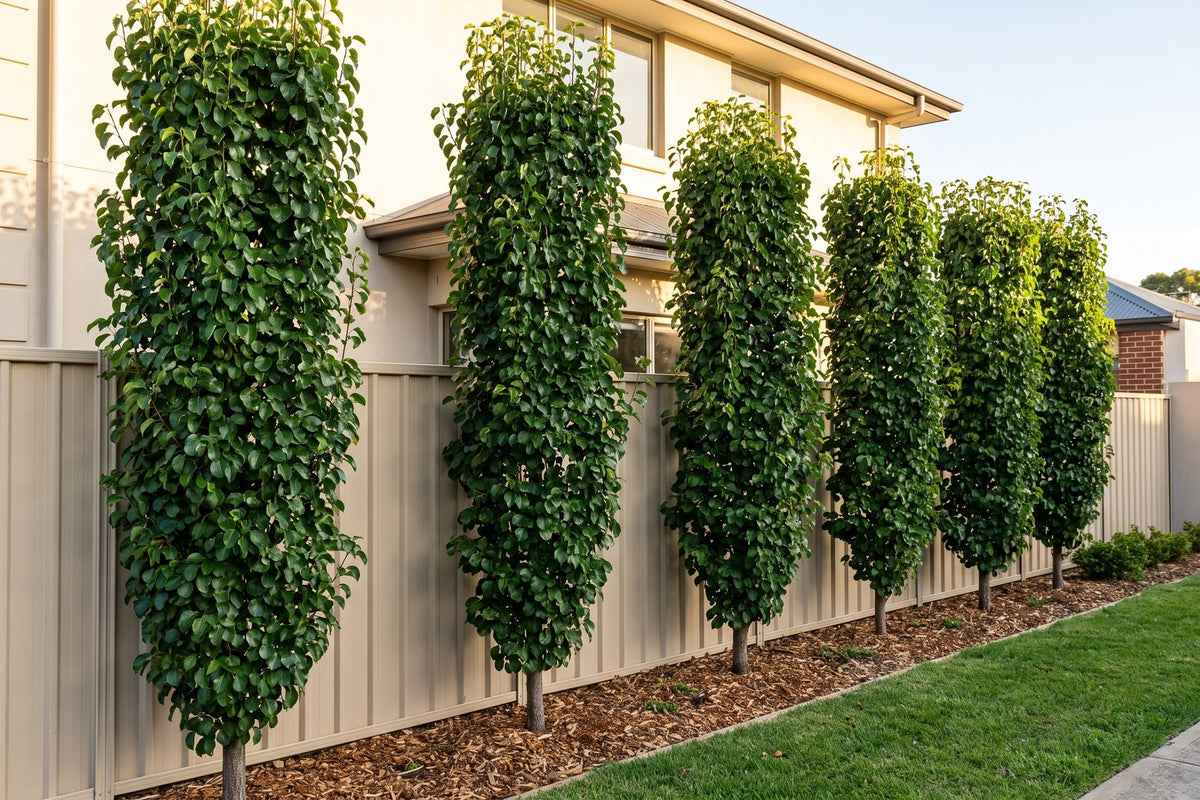
The Capital Ornamental Pear from $229.95 is the tightest column of the family, reaching around 8 m tall but only 3 m wide, which makes it the go to screen between double storey homes and along boundaries where width is precious. Plant a row at 2-2.5 m spacing for a tall deciduous screen.
Avenue and feature planting
The Chanticleer Pear from $309.95 is arguably the best all rounder: a neat, upright oval to about 11 m tall and 6 m wide, thornless, wind tough and famous for holding its glowing red autumn foliage weeks longer than most trees. For instant impact on new builds, we also supply mature ex ground Ornamental Pears from $7244.95, full sized trees craned in for landscape projects that cannot wait a decade.
Something softer
The Snow Pear (Pyrus nivalis) from $275.95 breaks from the crowd with silvery grey, felted foliage and a smaller frame around 6 m, lovely against dark fences and in Mediterranean style gardens. And if you would rather harvest than admire, the Sunshine Nashi Pear from $136.95 is a fruiting cousin that delivers crisp, juicy nashi fruit on a tree with the same easy going constitution.
Planting
Full sun, always; shade thins the canopy and the flowering. Ornamental pears genuinely tolerate almost any soil including heavy clay, but drainage matters in the first year, so mound the bed 20-30 cm if water pools after rain. Dig the hole twice the width of the rootball and the same depth, backfill with the existing soil, and stake advanced trees on two sides for their first two seasons.
Space avenue plantings of Chanticleer at 4-6 m apart, Capital screens at 2-2.5 m, and keep all varieties at least 3 m from paving and pipes. Water in with 20 litres and mulch a metre wide circle to 7 cm deep, keeping mulch clear of the trunk. If you are planting a row, run a string line and set every trunk at the same offset from the fence; a straight avenue is planted into existence, not pruned into it later.
Ongoing care
Watering: Deep weekly watering through the first two summers builds the root system. Keep watering into their first autumn right up to leaf drop, since roots continue growing well after the canopy shuts down. After that, established trees handle standard Australian dry spells and only appreciate a drink in extreme heat.
Feeding: A slow release fertiliser in early spring for the first few years speeds things along. Mature trees in reasonable soil need nothing at all.
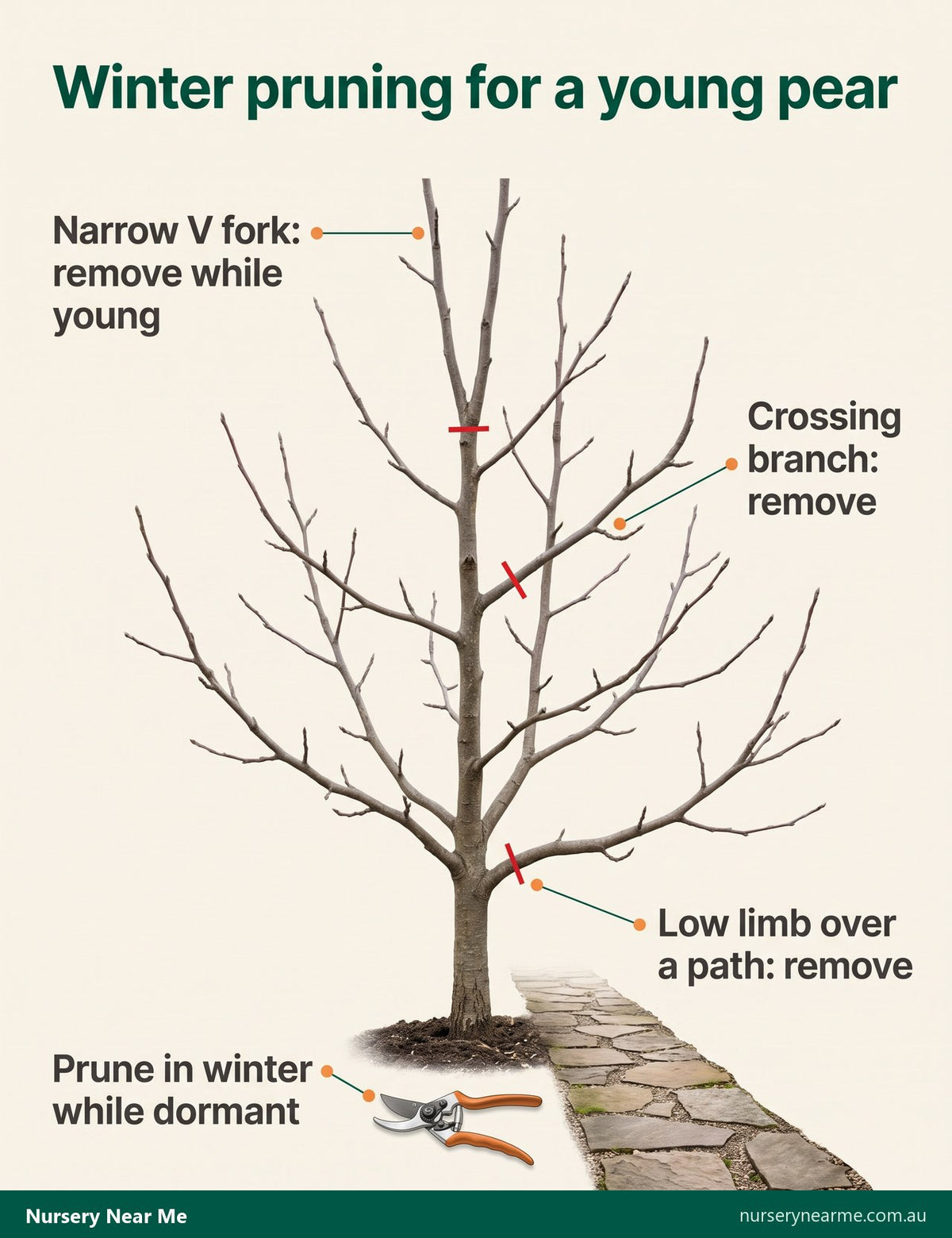
Pruning: Prune in winter while dormant. Remove crossing branches, low limbs over paths and any narrow V shaped forks while the tree is young, since those forks can split in storms decades later. A well shaped young pear needs almost nothing afterwards.
Common problems
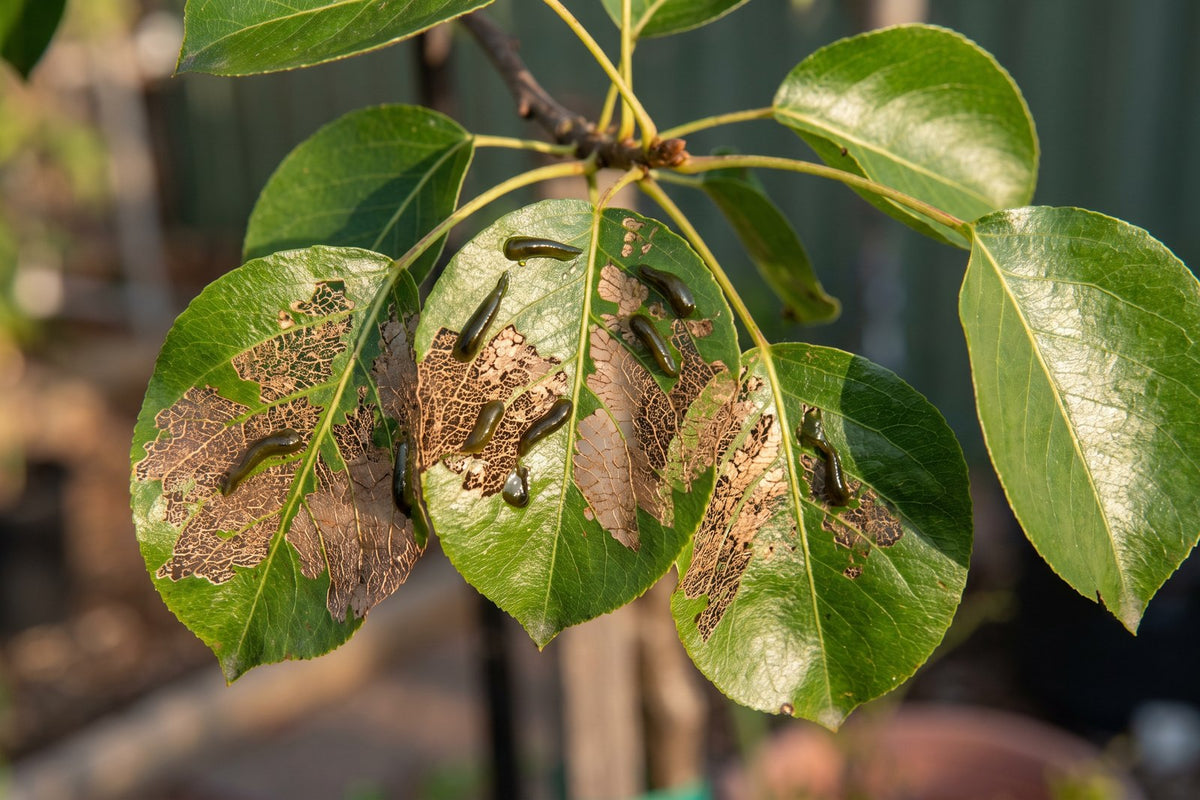
Pear and cherry slug: Shiny dark larvae that skeletonise leaves in summer. Unsightly rather than serious; hose them off, dust foliage with wood ash, or spray with spinosad for heavy infestations.
Fire blight style dieback: Blackened, scorched looking shoot tips are usually blossom blight or bacterial canker in humid springs. Prune 30 cm below affected wood, sterilising secateurs between every cut, and bin the prunings.
Suckers from the base: Vigorous shoots from below the graft will outcompete the canopy if ignored. Pull or cut them flush as soon as they appear.
Wind rock in new plantings: Advanced trees carry a lot of sail. Stake for the first 18 months with flexible ties, checking ties each season so they never cut in.
Frequently asked questions
How fast do ornamental pears grow?
Expect 50-80 cm a year once established. A 2 m tree at planting typically becomes a genuine 6-8 m feature within eight to ten years.
Are ornamental pear roots invasive?
They are considered well behaved for a tree of this size. Keep them 3 m from paving, pools and pipes as a sensible buffer, especially in reactive clay soils.
Do ornamental pears produce fruit?
Only tiny, hard pea sized fruits that birds take; there is no mess to speak of and nothing edible. For actual fruit, plant a nashi or European pear instead.
Which ornamental pear is best for a screen?
Capital, thanks to its narrow 3 m width. Planted at 2-2.5 m spacings it forms a tall, dense deciduous screen that still lets winter sun through after leaf fall.
Ready to plant?
Ornamental pears anchor thousands of Australian gardens for good reason. Compare shapes across our flowering trees and feature trees, or go straight to an instant canopy from our advanced trees. Our delivery page explains how we ship everything from tubestock to ex ground giants.


