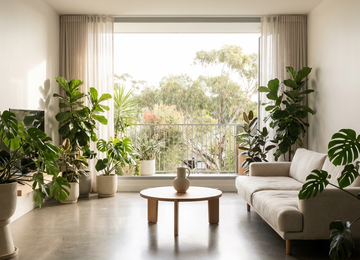


Philodendrons have quietly become the backbone of the Australian indoor plant scene, and for honest reasons: they are lush, sculptural and remarkably tolerant of the ordinary conditions inside real houses. Where fussier plants demand humidity tents and precise schedules, a philodendron in decent light will forgive a missed watering, a dark week in winter and the occasional bump from the vacuum cleaner, and keep producing glossy new leaves regardless.
The self-heading types covered here, which form dense clumps rather than long vines, are the easiest of all. They range from compact desk-sized plants to statement specimens over a metre wide, and in frost free climates several of them double as outdoor landscaping plants for shaded beds. One note upfront: like most aroids, philodendrons are toxic if chewed, so keep them out of reach of determined pets and toddlers.
Quick facts
| Botanical name | Philodendron species and hybrids |
| Type | Evergreen foliage plant, indoor or shade |
| Height | 0.5 to 1.5m indoors |
| Position | Bright, indirect light |
| Soil | Premium free draining potting mix |
| Growth rate | Moderate to fast in warmth |
| Climate | Indoors anywhere; outdoors frost free in shade |
Choosing a philodendron
The reliable favourites
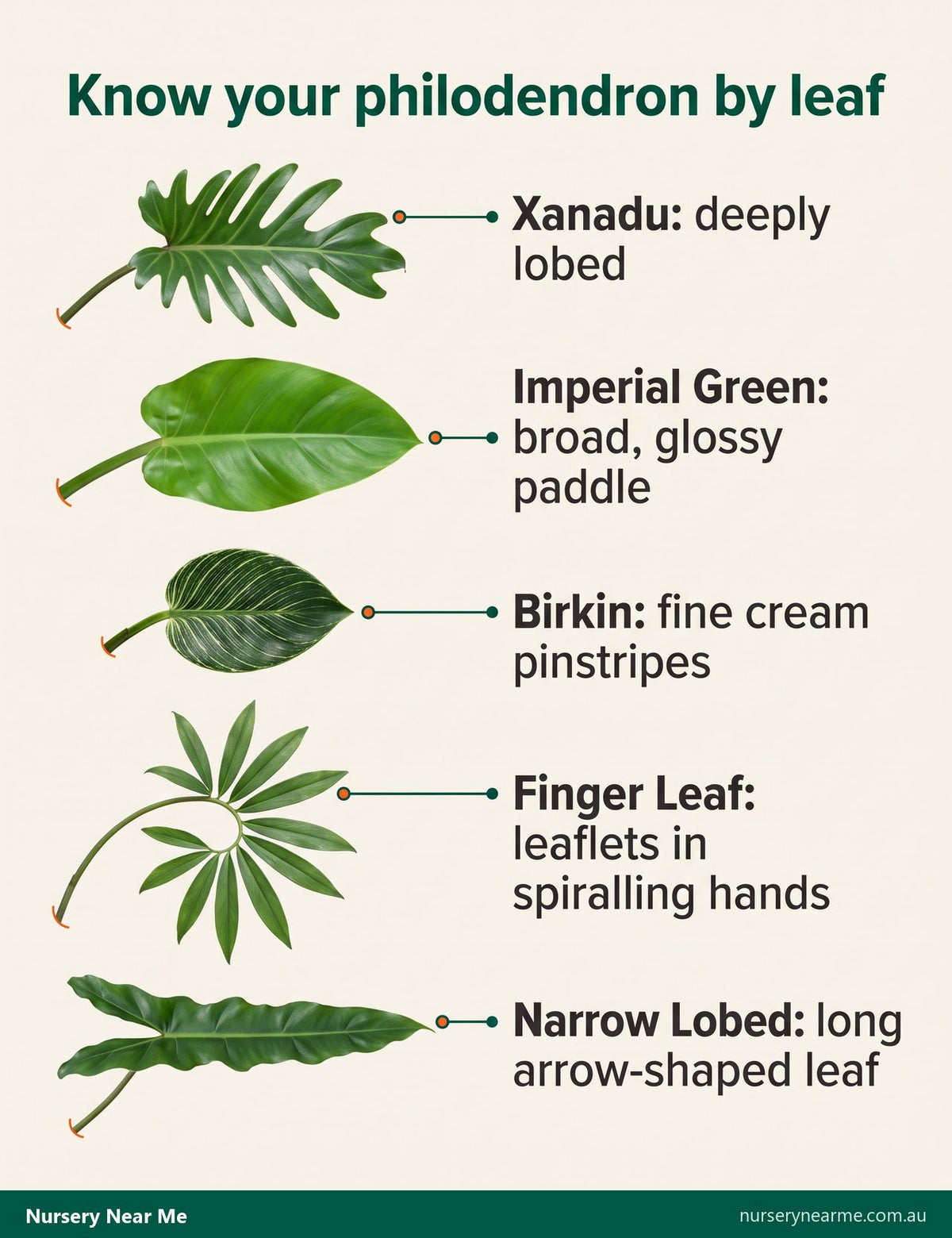
Xanadu Philodendron, from $23.95, is the crossover star, forming a neat dome of deeply lobed leaves that works equally well in a lounge room or massed as a landscaping plant in frost free shade outdoors. Imperial Green Philodendron, from $22.95, produces broad, glossy paddle leaves in a tight self-heading clump, and its sibling Imperial Red Philodendron emerges deep burgundy before maturing to dark green. Rojo Congo Philodendron takes the red theme bigger and bolder, with wine-coloured new growth on red stems.
Pattern and personality
Birkin Philodendron, from $21.95, is the compact pinstriped one, every dark leaf hand-drawn with fine cream lines, ideal for shelves and desks. For collectors chasing drama, the Finger Leaf Philodendron (Philodendron goeldii) holds its leaflets in striking spiralling hands, a genuine conversation piece as a mature specimen, and the Narrow Lobed Philodendron (Philodendron stenolobum) throws long, sculptural arrow-shaped leaves that give an instant designer look to a plain corner.
For a textural companion in the same bright-shade conditions, Grey Star Ctenanthe offers silvery leaves with purple undersides and enjoys identical care, so the pair make an easy grouping.
Planting and potting
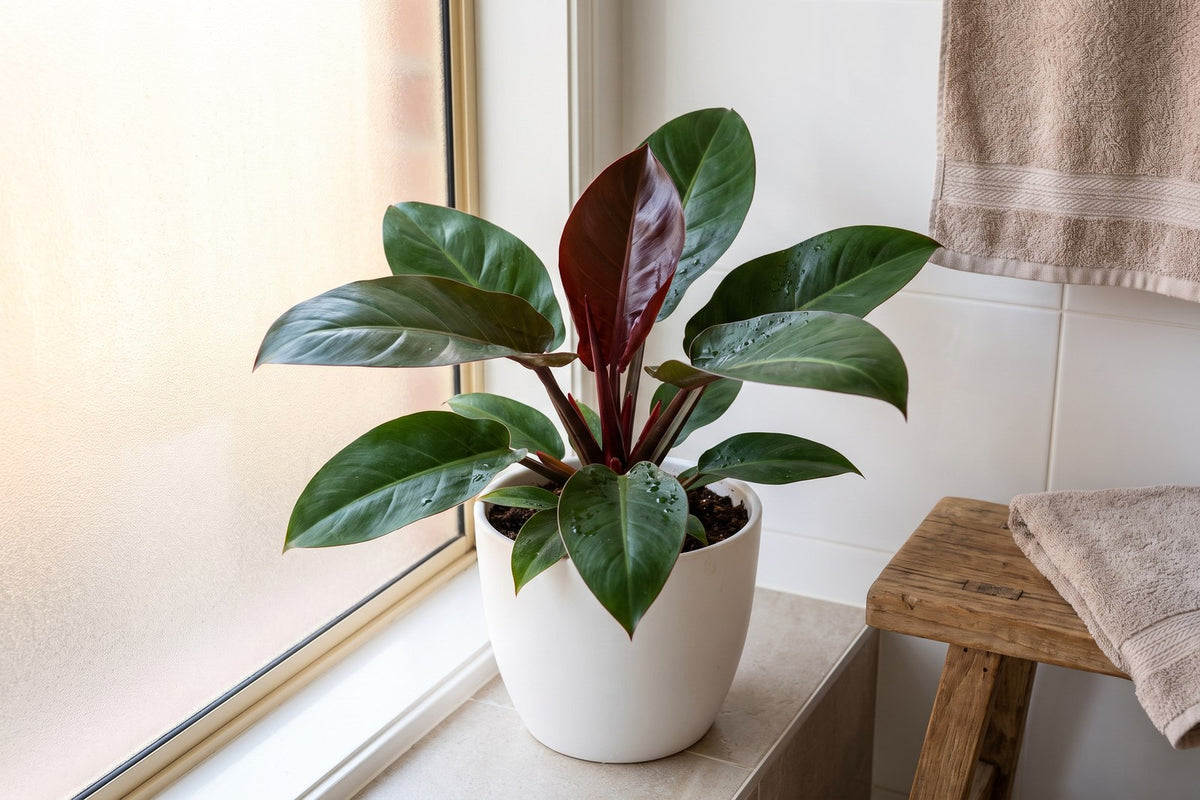
Indoors, position philodendrons in bright indirect light, near a window but out of harsh midday sun, which scorches leaves. They tolerate lower light but grow slower and leggier there. Pot into a premium, free-draining indoor mix, choosing a pot only 2cm to 4cm wider than the root ball, always with drainage holes; a huge pot of wet mix is the fastest way to hurt one.
Outdoors in frost free areas, plant Xanadu and Rojo Congo in shaded, sheltered beds with rich well-drained soil, spacing Xanadu 80cm to 1m apart for a lush massed effect. Water in well and mulch.
Philodendrons appreciate humidity but do not demand it. Grouping plants together, or parking one in a bright bathroom, is usually enough; misting looks devoted but does very little, so save your energy for the watering can.
Ongoing care
Watering: Water thoroughly when the top 3cm to 4cm of mix is dry, then let the excess drain completely; never leave the pot standing in a saucer of water. In practice this means roughly weekly in summer and every two to three weeks in winter. When in doubt, wait two more days; philodendrons forgive thirst far more readily than sodden roots.
Feeding: Feed monthly from spring to autumn with half-strength liquid fertiliser, or use a controlled release product in spring. Pause feeding over winter.
Grooming and repotting: Wipe leaves with a damp cloth every month or so, since dust is effectively a dimmer switch on growth. Trim spent lower leaves at the base. Repot every two to three years in spring, going up one pot size only.
Common problems
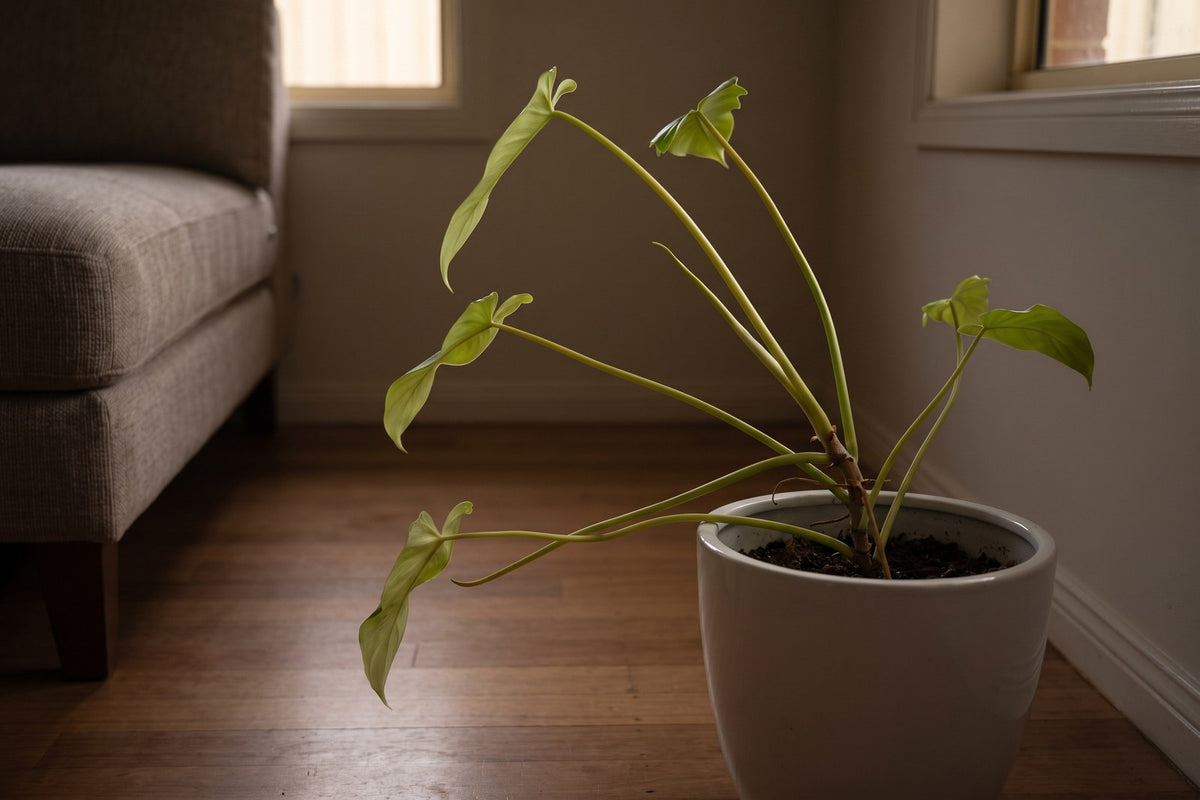
Yellowing lower leaves: One or two occasionally is normal ageing. Several at once almost always means overwatering; check the mix, let it dry out and lengthen the interval between drinks.
Brown crispy edges: Dry air, underwatering or fertiliser buildup. Water more consistently and flush the pot through with plain water every few months.
Leggy, stretched growth: Not enough light. Move the plant closer to a window and rotate it a quarter turn each week for even shape.
Fungus gnats: The little flies of chronically damp mix. Letting the surface dry between waterings breaks their cycle; a layer of coarse sand on the mix helps evict them permanently.
Frequently asked questions
Are philodendrons safe for pets?
No, all philodendrons contain calcium oxalate and cause mouth and stomach irritation if chewed. Keep them above cat height and away from puppies, or choose a pet safe species instead.
Can philodendrons grow outside in Australia?
Yes, in frost free climates Xanadu and Rojo Congo are outstanding landscape plants for shaded beds, widely used from Sydney northward. One hard frost will cut them to the ground.
How often should I repot a philodendron?
Every two to three years in spring, or when roots circle the pot and watering runs straight through. Move up a single pot size each time.
Why are the new leaves smaller than the old ones?
Smaller new leaves signal the plant is running short of light or nutrients. Brighter indirect light plus regular feeding through the warm months restores full sized growth.
Ready to plant?
Fill the rest of the room from our indoor plants collection, find the right home for each one in pots and planters, or take the jungle outside with palms and tropical plants. Every plant travels under our 30 day satisfaction guarantee.


