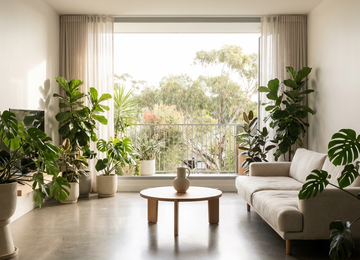


Monstera deliciosa was sitting in Australian lounge rooms decades before social media made it famous, and it has outlasted every houseplant trend since for one simple reason: it is genuinely hard to kill. Give it bright indirect light, a pot that drains freely and water only when the top of the mix has dried, and it responds with those huge, deeply split leaves that can stretch past 60 cm across on a mature plant.
In frost free parts of the country monstera will also grow outdoors as a lush climber for shaded courtyards, scrambling up trees and fences the way it does in its native Central American rainforest. For most Australians, though, this is an indoor plant, and one of the very best. Here is how to choose a good one and keep it thriving for decades.
Quick facts
| Botanical name | Monstera deliciosa |
| Type | Evergreen climbing indoor plant |
| Height | 2-3 m indoors with support, much larger outdoors |
| Position | Bright, indirect light; no harsh afternoon sun |
| Soil | Premium free draining potting mix |
| Growth rate | Fast from spring to autumn |
| Climate | Indoors Australia wide; outdoors in frost free zones |
Choosing your monstera
The classic
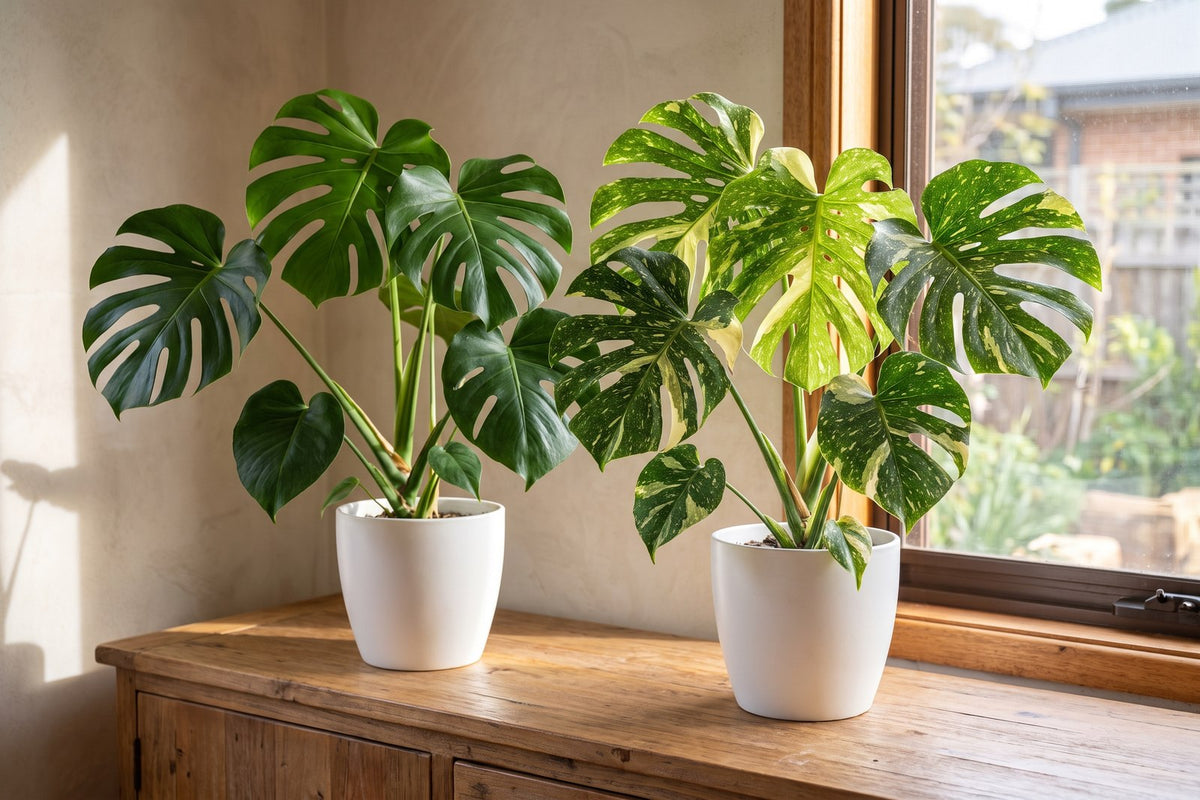
Start with the Fruit Salad Plant (Monstera deliciosa) from $17.95. This is the true species: fast growing, tolerant of average household humidity and quick to produce fenestrated adult leaves once it has some size behind it. One healthy starter plant will fill a corner within two to three years.
For collectors
The Thai Constellation (Monstera deliciosa variegata) from $183.95 is the variegated form, splashed and speckled in cream across every leaf. Because the pale sections carry no chlorophyll it grows more slowly than the green species and needs brighter light to hold its colour, so give it the best position in the house.
Companion aroids that enjoy the same care
If you are building an indoor jungle, several relatives thrive on exactly the same routine. The Lynette Philodendron from $25.95 forms a neat birds nest rosette of ribbed leaves, the Red Bristle Philodendron from $30.95 climbs on striking red, hairy stems, and the sculptural Fun Bun Philodendron from $79.95 spirals its leaflets like a green pinwheel. None of them are monsteras, but they are ideal shelf mates and follow the same watering rhythm.
Planting
Indoors, pot your monstera into a container 20-25 cm wide with generous drainage holes, using a premium potting mix opened up with perlite or orchid bark. Position it within one to two metres of a bright window, out of direct afternoon sun, which scorches the leaves through glass. Rotate the pot a quarter turn each week so it grows evenly rather than lunging at the light.
Outdoors in frost free gardens from Sydney north, plant into rich, well drained soil in dappled shade beneath a tree or against a shaded wall, allowing at least 2 m of spread. Water in well with a seaweed solution and mulch to 5 cm, keeping mulch clear of the stem. Give it something sturdy to climb; a mature outdoor monstera is heavier than it looks.
Ongoing care
Watering: Water when the top 3-4 cm of mix feels dry, roughly weekly in summer and every two to three weeks in winter. Water thoroughly until it runs from the drainage holes, then empty the saucer. Constantly wet mix is the one thing monstera will not forgive.
Feeding: Apply a balanced liquid fertiliser monthly from September to April. Skip feeding through winter when growth stalls. A yearly refresh of the top few centimetres of potting mix keeps nutrition ticking over between repots.
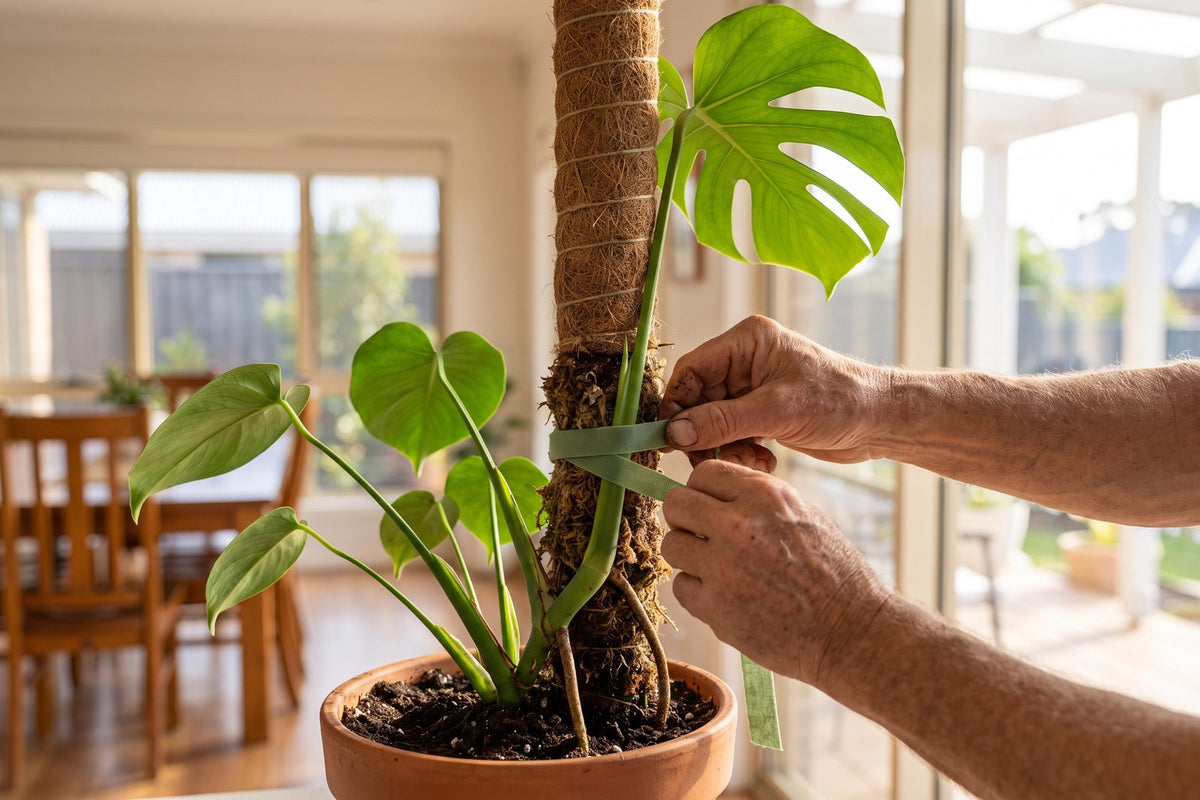
Support and grooming: Train the plant to a moss pole or stake from a young age; supported plants produce larger, more fenestrated leaves. Wipe dust from the foliage monthly so it can photosynthesise properly, and trim any yellowed lower leaves back to the stem.
Common problems
Yellowing lower leaves: Almost always overwatering. Let the mix dry further between drinks and check the pot is not sitting in a full saucer or a decorative cover pot with no drainage.
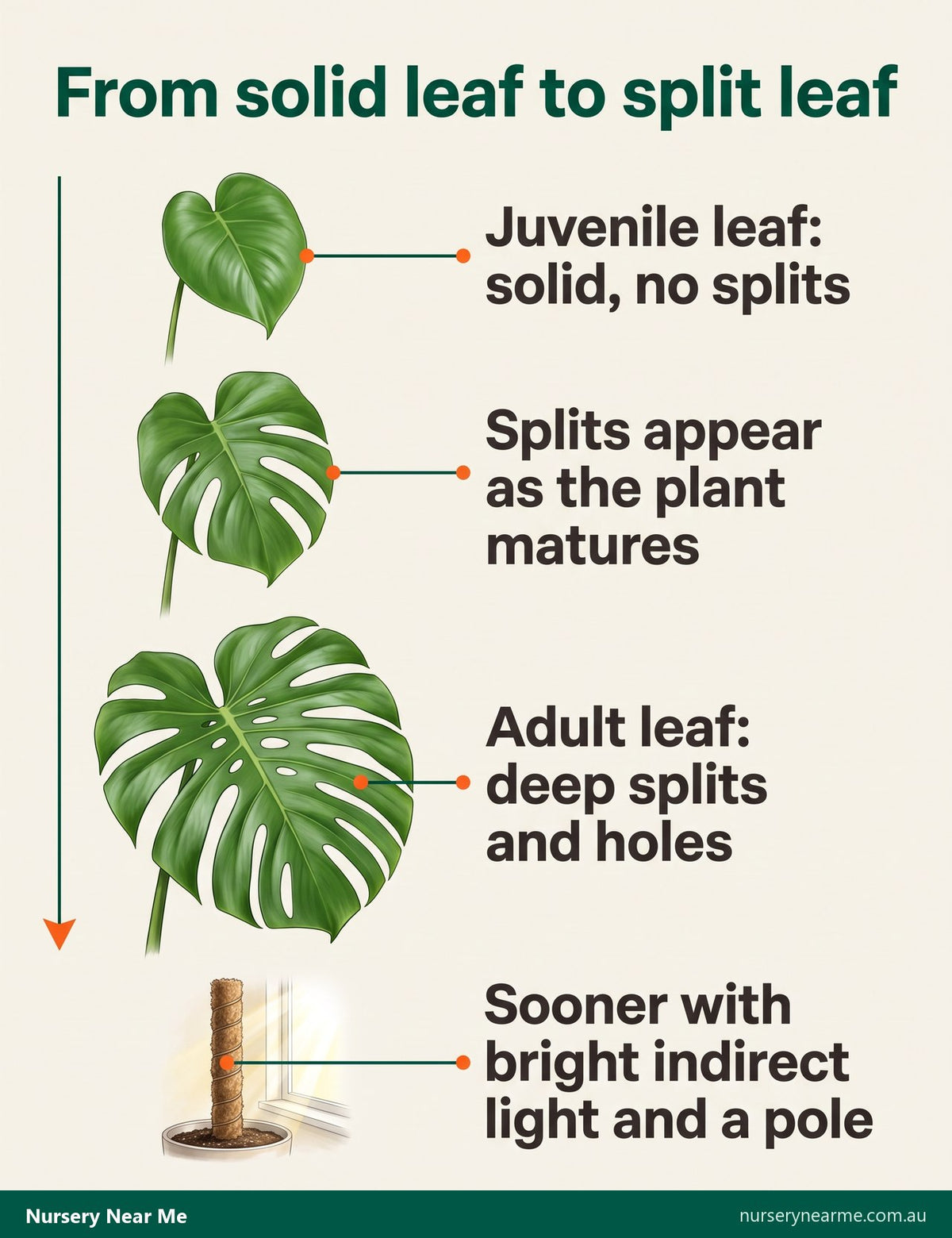
No splits in the leaves: Juvenile plants naturally produce solid leaves. If a large plant is still split free, it needs more light and something to climb; fenestrations appear as the plant matures upward.
Brown, crispy edges: Dry air or inconsistent watering. Move the plant away from heating and cooling vents and keep the watering rhythm steady. Grouping plants together lifts humidity noticeably.
Spider mites: Fine webbing and stippled, dusty looking leaves in warm dry rooms. Shower the foliage, then treat with horticultural oil, repeating weekly until clear.
Frequently asked questions
Why does my monstera have no holes in its leaves?
Young plants produce solid juvenile leaves. Splits and holes develop as the plant matures, and they appear sooner when it gets bright indirect light and a pole or trellis to climb.
Is monstera toxic to pets?
Yes. The leaves and stems contain calcium oxalate crystals that irritate the mouth of cats and dogs if chewed, so keep plants out of reach of persistent nibblers.
How often should I repot a monstera?
Every one to two years in spring, moving up just one pot size, about 5 cm wider. Roots circling the drainage holes or water rushing straight through the pot are your cues.
Can monstera grow outside in Australia?
Yes, in frost free gardens from around Sydney northward, planted in shade or dappled light. Outdoor plants can eventually flower and produce the edible fruit that gives the species its name, though each fruit takes about a year to ripen.
Ready to plant?
A good monstera is a twenty year plant, so start with a strong one. Browse our full indoor plant range, pick up a self watering pot from our pots and planters, and check our delivery options to get it to your door in perfect condition.


