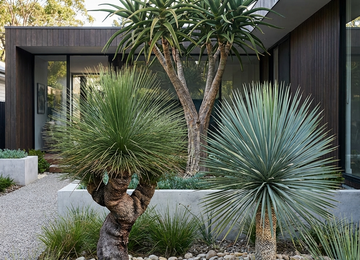


Cycads are the oldest seed plants still standing, essentially unchanged since the Jurassic, and everything about growing them makes sense once you know it. They are built for patience: slow growing, deep rooted, storing reserves in a stout trunk called a caudex, and pushing out one perfect flush of stiff architectural fronds at a time. In a garden they read as living sculpture, equally at home beside a modern rendered wall, in a gravel courtyard or holding down a tropical border. That versatility makes them a staple among plants for low-maintenance architectural gardens, and they give year-round structure when you are designing a tropical garden that looks lush year-round.
They are also among the lowest maintenance plants money can buy, which is fortunate, because good cycads are not impulse purchases. A large specimen represents decades of growth, holds its value like few other plants, and will outlive every other thing in the garden, including, statistically speaking, the gardener. Plant one well and you have made a permanent decision.
Quick facts
| Botanical name | Cycas, Zamia, Dioon, Encephalartos species |
| Type | Evergreen cycad, palm like but unrelated to palms |
| Height | 0.5 to 4 m depending on species and decades |
| Position | Full sun to part shade, species dependent |
| Soil | Sharply drained; sandy or gravelly ideal |
| Growth rate | Slow; one to two frond flushes per year |
| Climate | Warm temperate to tropical; several tolerate moderate frost |
Choosing a cycad
The classics
The Sago Palm Cycad from $804.95 in advanced sizes is the world's most planted cycad for good reason: a dense symmetrical crown of glossy dark fronds, tolerance of frost to around minus 5 degrees once established, and a silhouette that suits everything from Mediterranean planting to a Japanese-inspired garden in Australia. The Cardboard Plant from $52.95 is the easy entry point, a low clumping Mexican cycad with unusual stiff felted leaflets, superb in pots and coastal gardens. Its relative the Coontie Palm from $114.95 is finer textured and similarly tough.
Sculptural blues and giants
The Dioons bring grey blue elegance: Chestnut Dioon from $1034.95 is remarkably frost hardy for a cycad, while Giant Dioon from $788.95 eventually forms one of the tallest cycad trunks of all in warm sheltered gardens. For collectors, Tongaland Cycad from $2929.95 offers holly like serrated leaflets and spectacular orange red cones, an heirloom plant in every sense.
Planting
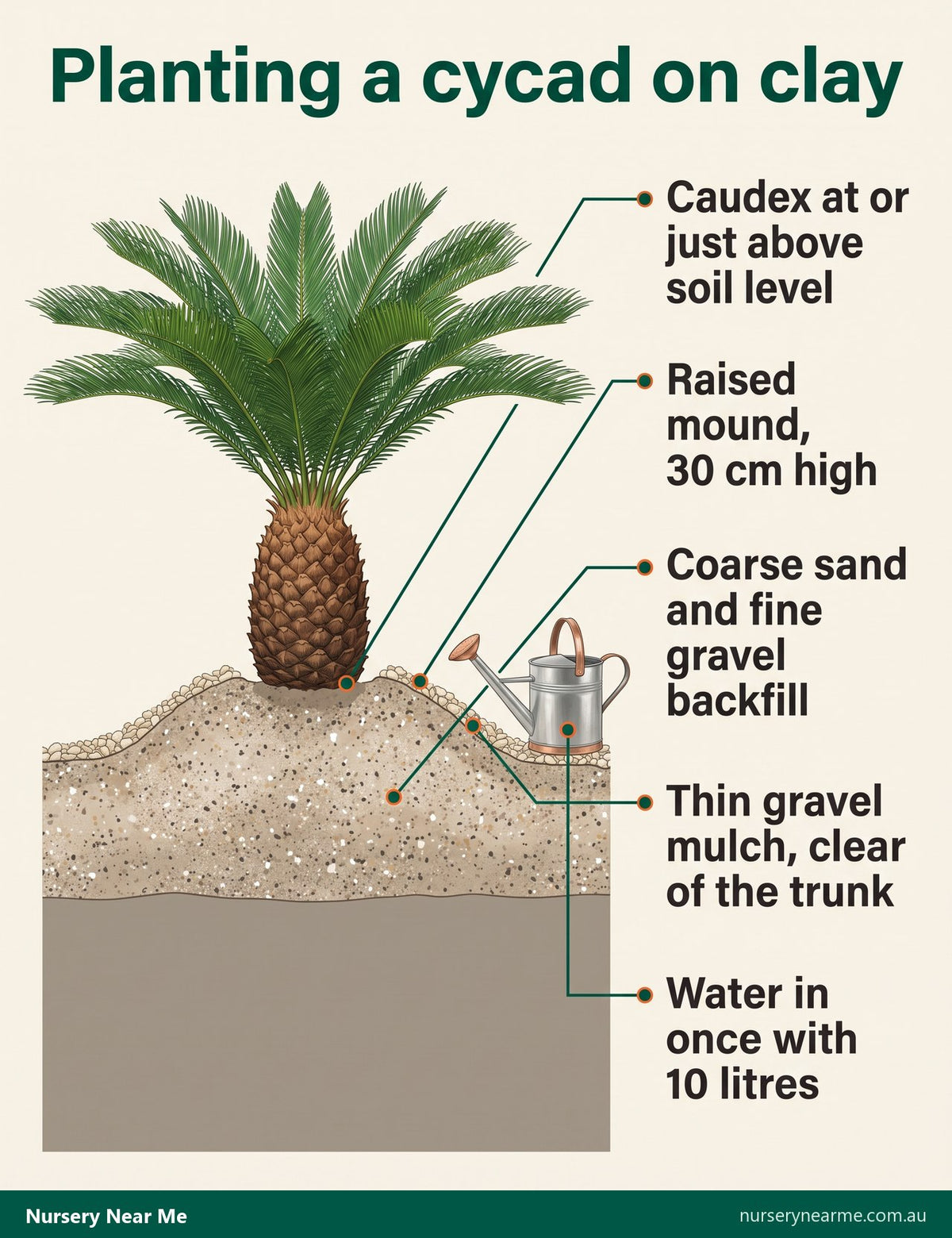
Position depends on species: sago palms and dioons want full sun to light shade, zamias take anything from sun to fairly deep shade. What every cycad demands is drainage. Plant into sandy or gravelly soil, or in clay build a raised mound 30 cm high, blending coarse sand and fine gravel through the backfill.
Plant with the caudex at or slightly above soil level, never buried deeper, water in once with 10 litres, and mulch thinly with gravel or coarse bark kept clear of the trunk. Allow each plant room for its mature frond spread, typically 1.5 to 3 metres across, because fronds broken by foot traffic are not replaced until the next flush. Handle with gloves; the leaflet tips on many species are genuinely sharp, and all cycad parts, especially seeds, are toxic to dogs, so site them away from determined chewers or choose from our best pet-friendly plants instead.
Ongoing care
Watering: Weekly deep watering through the first summer, then taper right off. Established cycads in the ground often need nothing beyond rainfall, with a monthly soak in drought keeping fronds glossy. Overwatering kills more cycads than every other cause combined.
Feeding: A single annual application of slow release fertiliser in spring is ample, with a magnesium supplement if older fronds yellow. Feeding more makes them grow slightly faster; not feeding them makes almost no difference. They have been managing their own affairs for 200 million years.
Grooming: Remove completely browned fronds at the base with secateurs. Resist trimming healthy older fronds for tidiness, as the plant is still drawing on them; a cycad reduced to a topknot flushes back slowly.
Common problems

Yellowing fronds: Old fronds yellow naturally as they retire. Whole crown yellowing points to waterlogging, deep planting or magnesium deficiency, in that order of likelihood.
Cycad blue butterfly: In warmer areas, larvae can strip a new flush in days. Check emerging fronds daily while soft and treat promptly with an appropriate caterpillar spray; hardened fronds are safe.
Scale insects: White or brown crusting under leaflets. Spray thoroughly with horticultural oil, twice, a fortnight apart, reaching the frond undersides.
Caudex rot: A soft, discoloured trunk base from chronic wet. Prevention is drainage; established rot is usually terminal, so plant high and dry from day one.
Where cycads grow in Australia

Australia is one of the great centres of cycad diversity, with around 80 native species - the burrawang of the New South Wales coast, the zamia palm of Queensland, and the Macrozamia species of Western Australia among them. They are genuinely ancient plants, largely unchanged since well before flowering plants existed.
| Location | How they perform |
|---|---|
| Brisbane and southeast Queensland | Excellent, with several species native to the region |
| Sydney and coastal NSW | Very good - the burrawang grows wild here |
| Darwin and tropical Queensland | Ideal for the tropical species |
| Perth | Excellent, and home to native Macrozamia species |
| Melbourne and Adelaide | Workable in warm sheltered positions with sharp drainage |
| Canberra and cold inland | Marginal. Protect from hard frost, especially when young |
All cycads are seriously toxic
This needs stating plainly. Every part of a cycad is poisonous, and the seeds are the most dangerous part. Cycad poisoning is a well-documented cause of death in dogs in Australia, and the bright orange or red seeds are exactly the size and colour that attract a curious animal or child.
If you have dogs, remove seed cones as they form rather than letting them drop. Symptoms of ingestion appear within hours and require immediate veterinary attention - this is not a wait-and-see situation. Aboriginal peoples did process cycad seed as a food source, but only through elaborate leaching and preparation developed over thousands of years.
They are extremely slow
A cycad may produce a single flush of new fronds once a year, or skip a year entirely. A trunked specimen represents decades of growth, which is why advanced plants are expensive and why they are worth it - you are buying time that cannot be shortcut.
The practical consequence is that mistakes are costly. Damage the growing point and there is no quick recovery, so handle them carefully and site them permanently.
Care, which is minimal
Full sun to part shade depending on species, sharp drainage above all, and very little water once established. Cycads are exceptionally drought tolerant and rot readily in wet ground, so plant raised on Brisbane or Melbourne clay. Feed lightly in spring with a palm or native-safe fertiliser. Remove only fully brown fronds, and never cut into the crown.
Frequently asked questions
Is a sago palm actually a palm?
No. Cycads are an ancient seed plant lineage unrelated to palms; the resemblance is coincidence. It matters practically because cycads want far less water and food than a true palm, as our guide to palm tree varieties explains.
How fast do cycads grow?
Slowly. Most produce one or two frond flushes a year, adding perhaps 2 to 5 cm of trunk. That slowness is exactly why advanced specimens command serious prices and hold their value.
Are cycads poisonous to dogs?
Yes, all parts, and the seeds especially, are dangerously toxic to dogs. If you share a garden with a chewer, choose planting positions the dog cannot access, or choose a different plant.
Can cycads handle frost?
Several can. Sago palms and chestnut dioons tolerate frosts to around minus 5 degrees once established, though fronds may burn in hard freezes and are replaced at the next flush. Tropical species like Encephalartos ferox need frost free positions.
Ready to plant?
A cycad is the rare purchase that gets more impressive and more valuable every year you ignore it. Browse companion structure in our palms and tropical collection, contrast them with feature trees, or pot one up from pots and planters. Larger specimens ship as advanced stock; see our delivery page for details.


