

Elaeocarpus eumundi, also known as Eumundi Quandong, makes an excellent screening tree for gardens.
However, finding the right tall screening tree for privacy and aesthetic appeal can be challenging.
By choosing elaeocarpus eumundi as screening trees, one can combine functionality and beauty, creating a serene, private oasis. Where a hedge suits better than a row of trees, lilly pilly remains the default, while Randia fitzalanii is the glossier rainforest option.
Benefits of Elaeocarpus Eumundi as Screening Trees
Their dense foliage ensures maximum privacy.
Elaeocarpus eumundi's robust growth makes them ideal for high screens. This natural characteristic allows them to form tall, attractive barriers that substantially enhance the seclusion and tranquillity of outdoor spaces. Additionally, their ability to thrive in various conditions mitigates the potential limitations of less hardy species.
Adorned with glossy green leaves.
Their evergreen nature provides year-round coverage - no bare spots during winter - ensuring consistent, effective screening all the time. This attribute makes elaeocarpus eumundi ever-reliable for maintaining a continuous visual barrier.
Furthermore, their resilience and adaptability to different soil types bolster their sustainability credentials, proving to be a wise choice for environmentally conscious landscapers. Their capacity to withstand diverse weather conditions in 2023 speaks volumes about their unmatched durability. Selecting this tree species guarantees both present comfort and future security for screening requirements.
Characteristics of Elaeocarpus Eumundi
Elaeocarpus eumundi, commonly known as Eumundi Quandong, offers an array of exceptional features that enhance its appeal, and our Eumundi Quandong care guide covers its year to year care in more detail.
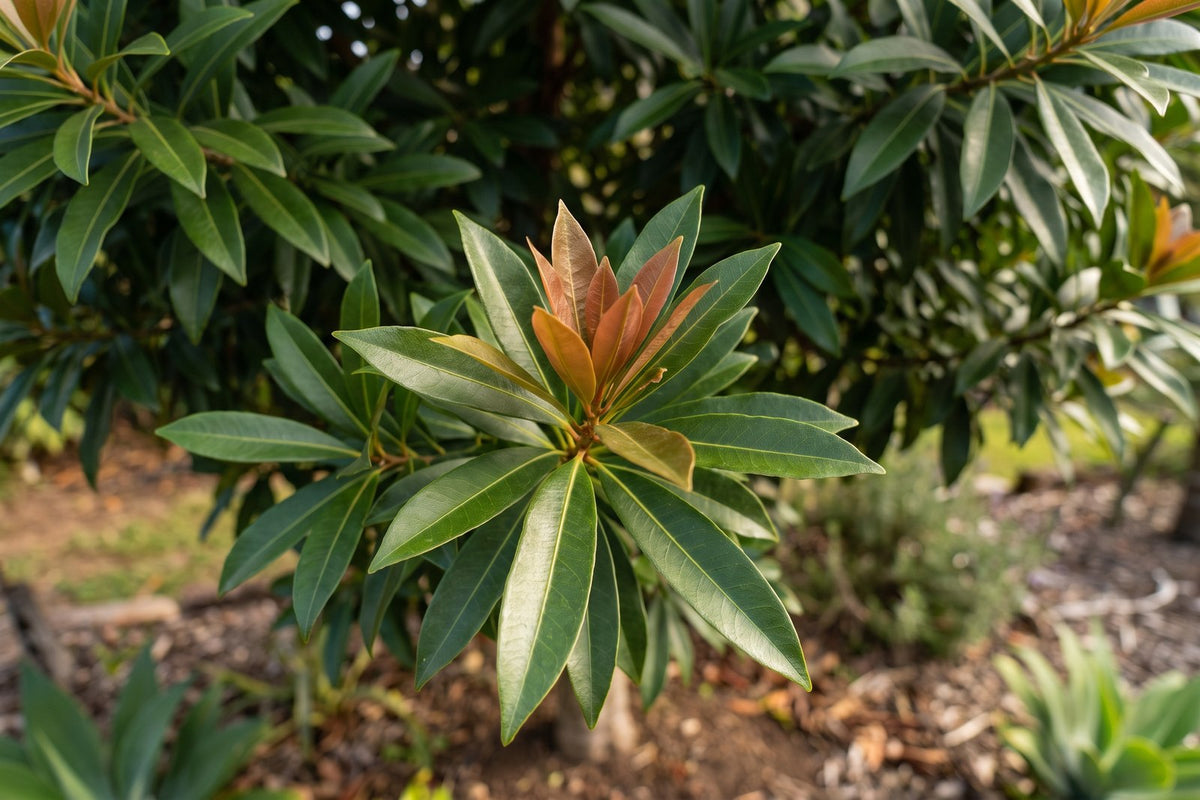
These trees exhibit broad, glossy leaves that retain their sheen throughout the year, contributing to the plant's visual allure and practical utility as a screening tree. Their foliage contains a mix of deep green hues that remain lush and dense, which effectively boosts the privacy and aesthetics of any space.
Moreover, it possesses a narrow, upright growth habit. This structural attribute makes it an excellent candidate for tall screening purposes without encroaching excessively on horizontal space, which is especially advantageous in urban settings where space can be limited.
In addition, elaeocarpus eumundi displays admirable resilience to pests and diseases, minimising maintenance efforts. Their tolerance to different climatic conditions, from humid to semi-arid, further accentuates their versatility, rendering them a top-tier selection for anyone seeking reliable and lasting screening solutions. Its close relative the blueberry ash offers the same narrow habit with flowers and fruit as a bonus.
Growing Conditions for Elaeocarpus Eumundi
Elaeocarpus eumundi thrives best in full sun, although they can tolerate partial shade during their early years.
When planting, it is essential to ensure a well-draining soil enriched with organic matter, enabling robust growth. Their preference for slightly acidic to neutral pH levels means gardeners can incorporate peat or compost to modify soil conditions favourably. Regular watering is crucial, especially in the establishment phase, to support the tree’s development.
Additionally, they benefit from a moderate climate with minimal frost exposure. In warmer regions, mulching around the base helps retain soil moisture and provides insulation, while in cooler climates, protecting young trees from harsh temperatures will ensure their survival.
Through proper care, elaeocarpus eumundi can achieve upwards to 10 metres, establishing themselves as ideal tall screening trees. Their ability to adapt to varying conditions underscores their suitability for diverse environments, imparting both beauty and functionality to landscapes.
How to Plant Elaeocarpus Eumundi
Choosing the right location is paramount.
Elaeocarpus eumundi thrives best in full sun. The chosen site should be free from harsh winds to protect the young trees as they establish. Additionally, prepare the soil by incorporating organic matter such as compost or well-rotted manure to enhance fertility.
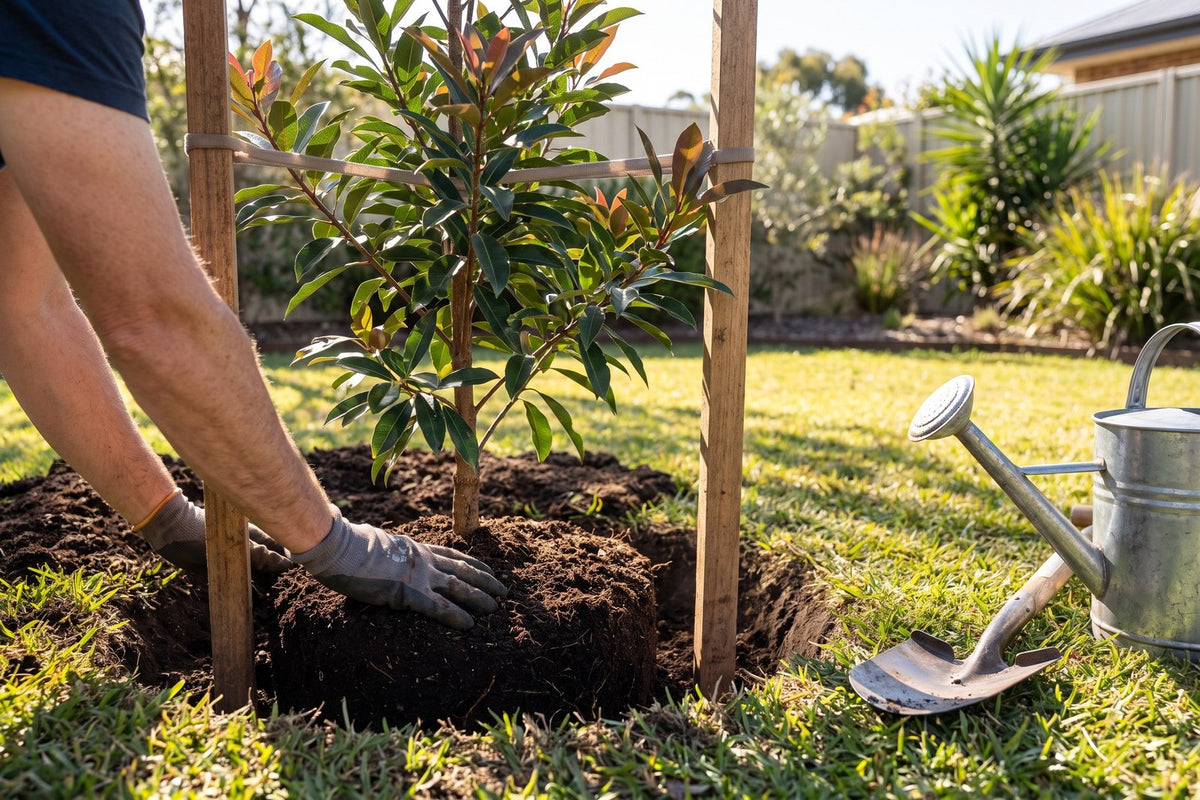
Dig a hole twice as wide.
Ensure the depth is equal to the root ball’s height. Carefully place the tree into the hole, backfill with soil, and water thoroughly to eliminate air pockets.
Stake young trees if needed to provide initial stability. This is especially important in windy areas or if the trees are top-heavy. Lastly, applying a layer of mulch around the base will conserve moisture and suppress weed growth, fostering a healthier growth environment.
Maintenance Tips for Healthy Growth
Regular pruning ensures optimal branching patterns and well-maintained shapes, boosting the trees' health and aesthetics.
It is crucial to keep the surrounding area free from competing weeds, which will allow the trees to access essential nutrients. Regularly water the trees deeply, especially during dry periods.
Utilise “slow-release” and “organic” fertilisers to promote robust growth.
Pruning and Trimming Techniques
Regular pruning stimulates new growth, energy-efficient, and enhances the overall health and appearance of elaeocarpus eumundi as screening trees.
Regular pruning can reduce disease risk, ensuring healthier, more resilient trees.
Ensure to remove dead, damaged, or diseased branches, which not only improves the visual appeal but also fosters a healthier tree environment less susceptible to infestations.
Strategically shaping the tree during its formative years encourages a denser growth habit, perfect for creating an effective privacy screen, maximising its utility as a tall screening tree.
Fertilising and Watering Guidelines
For optimal growth of Elaeocarpus Eumundi as screening trees, precise fertilising and watering practices are essential.
- Fertilising: Use slow-release and organic fertilisers, focusing on balanced nutrients.
- Frequency: Apply fertiliser twice a year, ideally in early spring and autumn.
- Watering: Provide deep watering, especially during dry periods, ensuring the soil remains moist but not waterlogged.
- Mulching: Apply mulch to retain moisture and suppress competing weeds.
Regularly checking soil moisture and nutrient levels ensures these magnificent trees maintain their health and aesthetics.
Adhering to these guidelines will promote lush, vigorous growth, creating an effective and visually appealing screen.
Their resilience and beauty make them an ideal choice for those desiring both function and form in their green spaces.
Ideal Locations for Elaeocarpus Eumundi
When considering where to plant Elaeocarpus Eumundi, one should evaluate the specific qualities of the desired location.
Since 2016, numerous horticulturalists, urban planners, and seasoned gardeners have utilised this versatile species for its exceptional screening potential. Its adaptability, beauty, and resilience make it a popular choice for various settings.
Generally, it's crucial to select areas that receive adequate sunlight and have well-draining soil to ensure the tree's optimal growth. Coastal regions or areas with sandy soils can also offer suitable conditions for this species, given proper care and mulching.
If they are aiming for an effective natural screen, they should consider planting Elaeocarpus Eumundi in rows, spaced appropriately at 3 to 4 metres apart. For a shortlist of alternatives at the same height, see our best fast-growing screening trees for privacy. This spacing aids in achieving both vital air circulation and continuous visual density.
These captivating trees can thrive beautifully in residential backyards, parklands, or commercial landscapes, lending their striking aesthetics and functional utility to multiple environments.
Environmental Impact and Sustainability
Elaeocarpus eumundi as screening trees contribute significantly to the environment by enhancing biodiversity and providing essential habitats for native fauna.
They offer a sustainable solution for urban planners seeking eco-friendly alternatives.
These trees are known for their low maintenance needs, allowing them to flourish in a variety of soil conditions while reducing the demand for resource-heavy care practices such as frequent watering and chemical fertilisers.
The long-term benefits of choosing Elaeocarpus eumundi for tall screen trees extend beyond immediate visual appeal to a broader environmental impact. By acting as natural barriers, they help reduce noise pollution, improve air quality by absorbing carbon dioxide, and offer support to local ecosystems. In doing so, they affirm the commitment of gardeners and urban planners to pursue sustainable and ecologically responsible practices.
Where Eumundi quandong grows in Australia
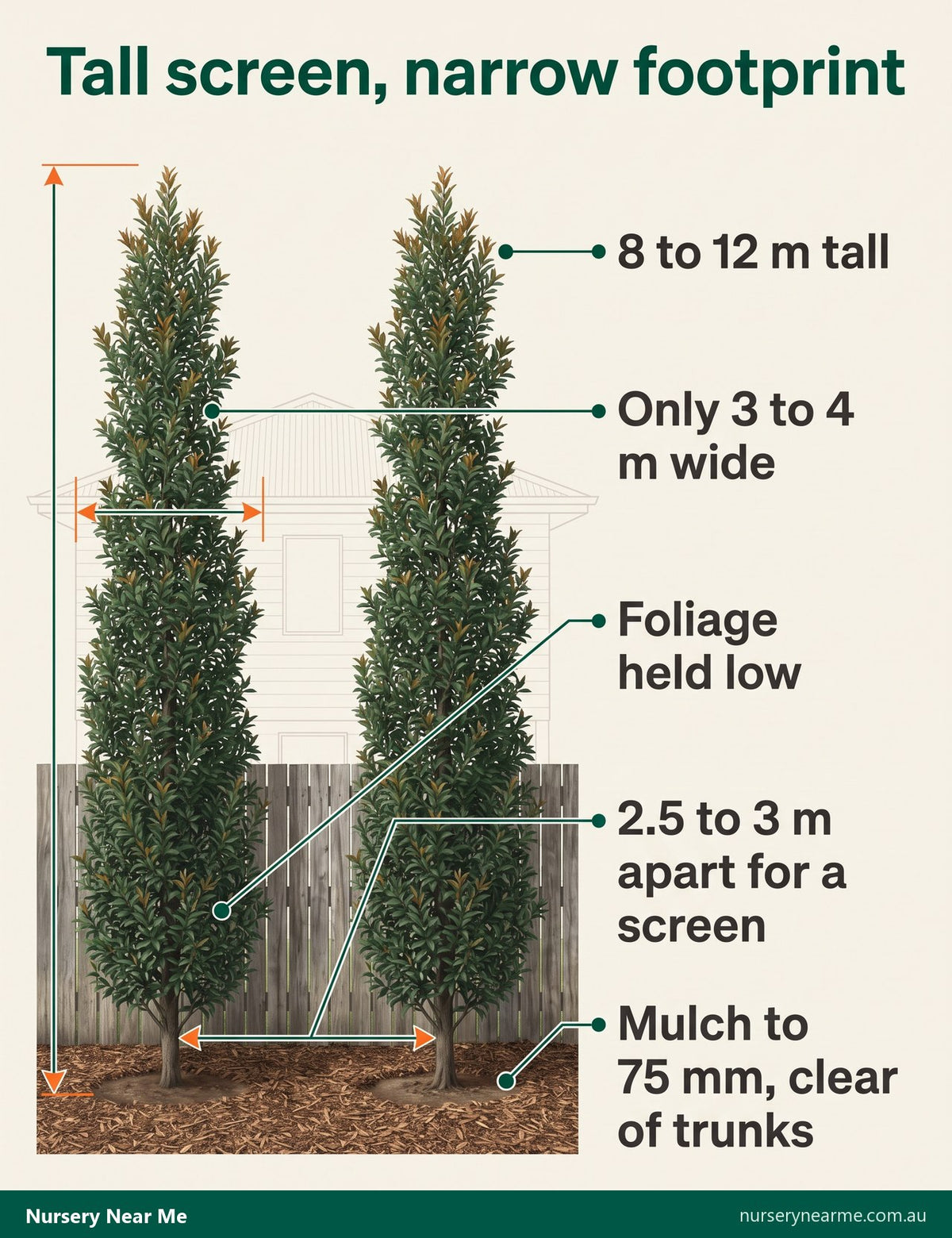
Elaeocarpus eumundi is an Australian rainforest native from southeast Queensland and northern New South Wales, named after the town of Eumundi in the Sunshine Coast hinterland. It has become one of the most specified screening trees in Australian landscaping, and the reason is its shape.
| Location | How it performs |
|---|---|
| Brisbane, Sunshine Coast, Gold Coast | Native range. Excellent and fast |
| Northern NSW | Ideal |
| Sydney and coastal NSW | Very good in sheltered positions |
| Melbourne and Adelaide | Marginal - frost tender when young, slower growth |
| Perth | Workable with reliable irrigation in sandy soil |
| Canberra and cold inland | Not recommended. Frost limits it |
Why it suits narrow boundaries
Most screening trees that reach eight to twelve metres also spread six or more. Eumundi quandong grows naturally narrow and upright - typically eight to twelve metres tall but only three to four wide - which makes it one of very few options for screening a two-storey outlook on a suburban block where a spreading canopy simply will not fit.
It also holds foliage low rather than lifting into a bare trunk, which is exactly what a screen needs and what many tall trees fail to do.
The bronze new growth
New foliage flushes bronze to coppery red before hardening to glossy dark green, several times a year in warm climates. On a row of trees this gives a genuine seasonal feature rather than a flat green wall, and it is the main reason it is chosen over plainer screening species.
Planting a screen
- Space at 2.5 to 3 metres for a continuous screen, or 4 metres for individual specimens.
- Plant in spring or autumn, avoiding frost periods in cooler districts.
- Full sun to part shade. It grows naturally as a rainforest margin tree so it tolerates more shade than most screening trees.
- Improve the soil with compost and ensure drainage - it likes moisture but not waterlogging.
- Mulch to 75 mm, clear of the trunks.
- Water deeply through the first two summers. It is a rainforest plant and does not enjoy prolonged drought.
Compared to the alternatives
Against weeping lilly pilly, Eumundi quandong is narrower and needs far less clipping, but it is less tolerant of cold and drought. Against blueberry ash, it is taller and denser. Against a bamboo screen it is slower but permanent and needs no containment. For a tall narrow evergreen screen in a subtropical Australian garden, it is close to the best option available.
Feeding
Use a low-phosphorus native fertiliser in early spring. Eumundi quandong is not as phosphorus-sensitive as the Proteaceae, but it performs better on a native blend, and keeping lawn fertiliser out of the root zone is sensible practice.
Ready to plant?
Compare the Eumundi Quandong against the rest of our screening plants for privacy, or go straight to advanced trees if you want height on day one.
If there is a sewer or stormwater line anywhere near the planting spot, our planting near pipes guide gathers the water utilities' distances and their lists of trees to avoid.
Planting a tree to cool the house? Our guide to shade trees that cut cooling bills explains which side of the house to shade, deciduous versus evergreen by climate, and how far back to plant.


