

Eumundi quandong is a narrow, evergreen native tree with glossy leaves and coppery new growth, and it is one of the most planted tall screens in eastern Australia. This guide covers where it grows, how to plant and space it, and how to water, feed and prune it.
Understanding the Eumundi quandong

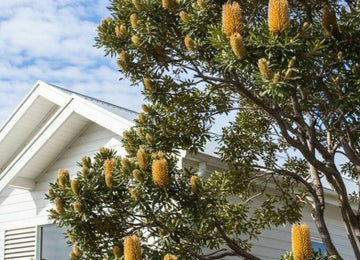
Elaeocarpus eumundi is a rainforest tree from Queensland, named for the town of Eumundi on the Sunshine Coast. In a garden it grows to about 8 metres tall and 3 metres wide, with a dense, upright shape, dark glossy leaves and bronze red new growth. Small, scented cream flowers appear in late spring and summer, followed by blue fruit that birds take.
That narrow habit is why it is so widely used on boundaries, as our guide to using Elaeocarpus eumundi for tall screen trees explains. Where you want a much bigger tree, its relative the silver quandong grows to 12 metres and more, and the smaller trees of the same genus are in our blueberry ash range.
Where it grows
| Location | How it performs |
|---|---|
| Brisbane, Gold and Sunshine Coasts | At its best. Home ground |
| Northern NSW and Sydney | Very good in a position sheltered from cold wind |
| Tropical Queensland | Very good with water through the dry season |
| Melbourne, Adelaide and Perth | Slower. Needs a warm, sheltered position, summer water and protection from frost when young |
| Frosty inland districts | Not suited |
Choosing the right location
Full sun gives the densest growth. It takes part shade, with a more open habit. Shelter from strong, drying wind keeps the foliage clean, and young trees need protection from frost. Allow for the mature width when planting beside a fence: set the trunks at least a metre inside the boundary.
Soil requirements
As a rainforest tree it wants soil that holds moisture and still drains, with plenty of organic matter and a slightly acid to neutral pH of about 6 to 7. Dig compost through a wide area before planting, and in heavy clay plant on a low mound. Our guide on how to prepare soil for planting covers the digging and conditioning that makes the biggest difference in the first year.
Planting and spacing
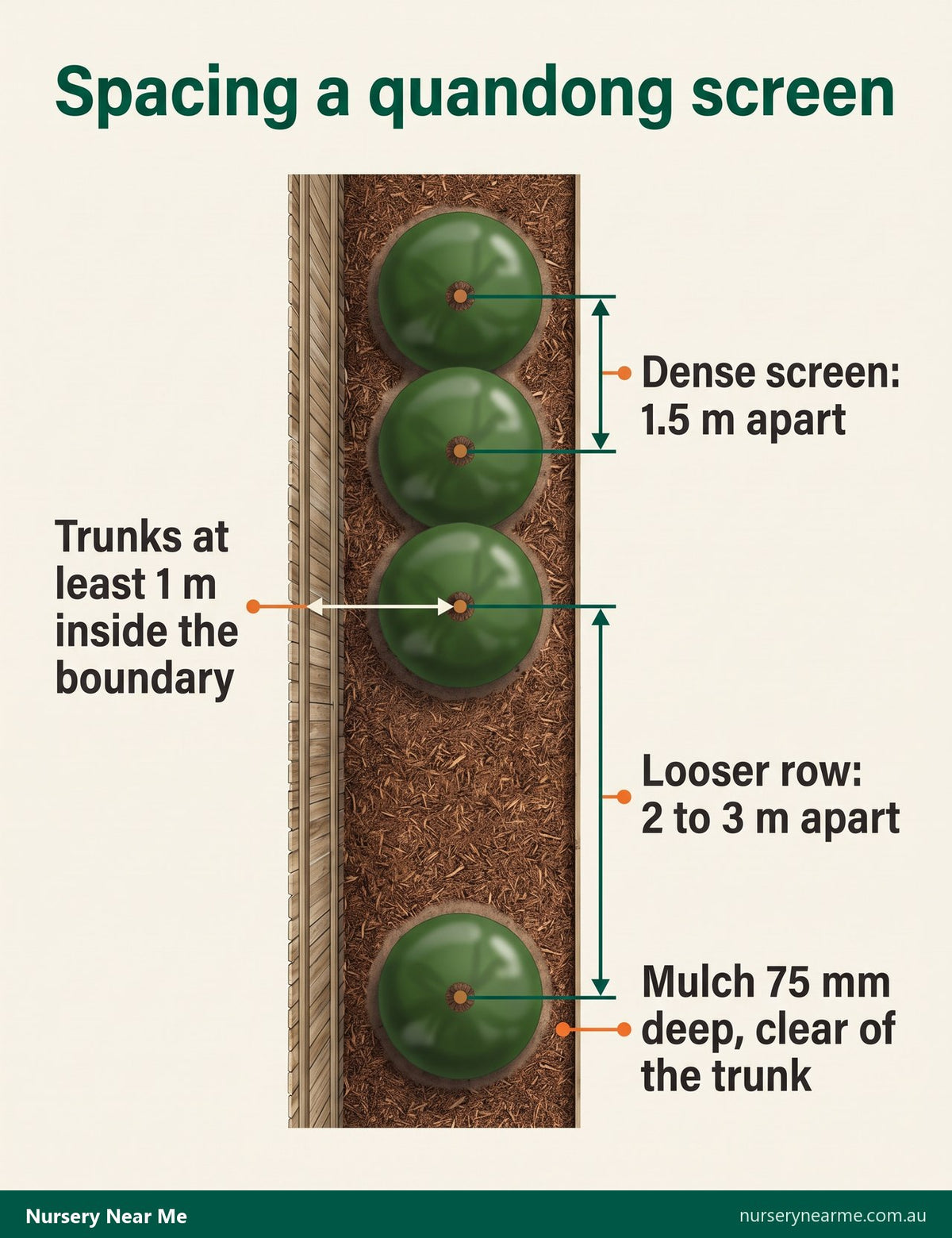
- For a tall, dense screen, plant 1.5 metres apart. For a looser row of trees, 2 to 3 metres.
- Plant at the same depth as in the pot and water in well.
- Mulch 75 mm deep over the root zone, kept clear of the trunk.
- Stake only in a windy position, and remove the stake after the first year.
Watering needs
Water deeply two or three times a week for the first couple of months, then weekly through the first two summers. Once established it copes with short dry spells, but it is not a drought plant: leaves brown at the edges and the tree thins when it is left dry for long. A deep soak every week or two in dry weather keeps a screen dense. In cooler months, water only when the soil a few centimetres down is dry.
Fertilising
Feed in spring and again in late summer with a slow release fertiliser for native plants, and top up the mulch each spring. Compost under the mulch does as much good as fertiliser. A seaweed solution after planting helps the roots establish.
Pruning and maintenance
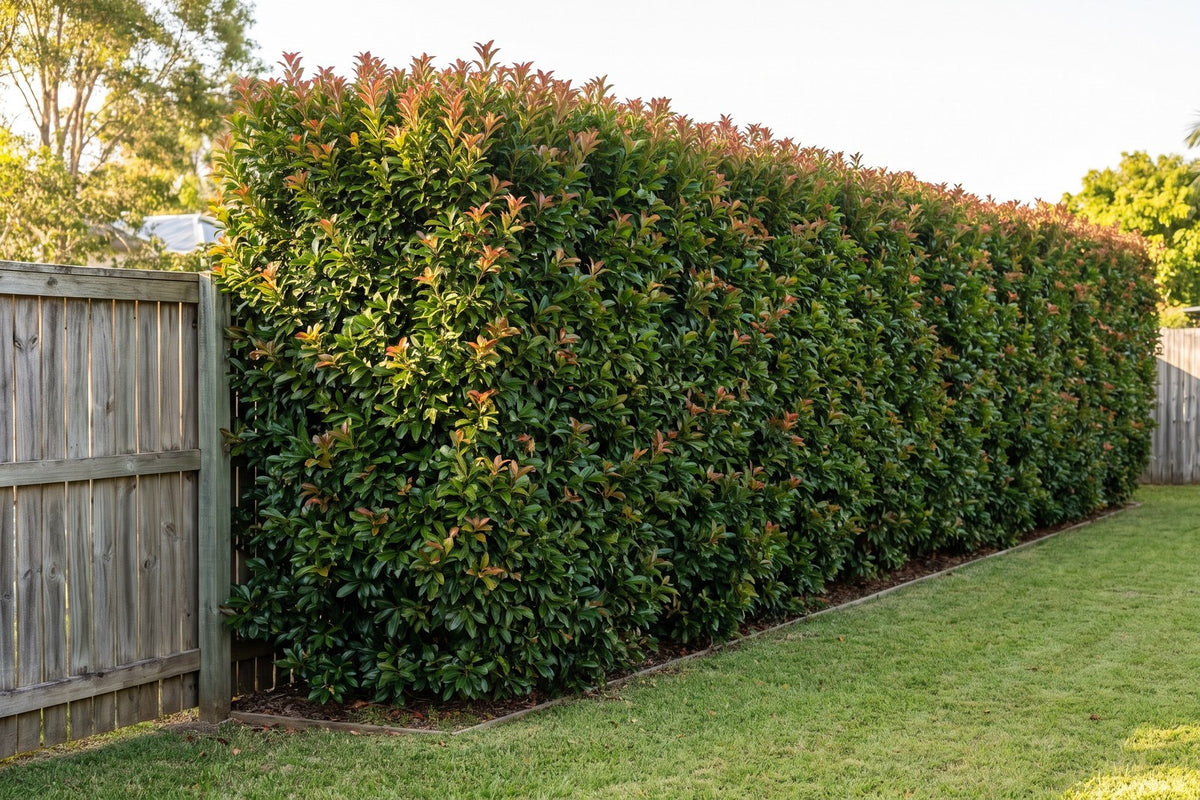
The tree keeps its shape with no pruning at all. For a tighter screen, tip prune the sides once or twice a year from a young age, which thickens the foliage to the ground. It can be held as a formal hedge at 3 to 5 metres if the trimming starts early. Avoid cutting back hard into bare wood.
Pests and problems
- Scale and sooty mould. Bumps on the stems and a black film on leaves. Treat with horticultural oil.
- Chewed leaves. Caterpillars and beetles do some damage in summer. An established tree grows through it.
- Brown leaf edges. Usually dry soil or hot wind. Water deeply and mulch.
- Yellowing and dieback. Usually wet feet. Improve the drainage.
Planting Eumundi quandong with other natives
Eumundi quandong belongs to the same genus as the blueberry ash, and the two share a liking for warmth, humidity and soil that drains. Our blueberry ash tree guide is worth reading beside this one if you are choosing between the two for a feature position. For a wholly native planting, our guide to rare Australian native plants suggests understorey companions for the same rainforest edge conditions, and if speed matters most on a boundary, compare the quandong with the options in our roundup of fast growing screening trees.
Common questions
How tall does Eumundi quandong grow?
About 8 metres tall and 3 metres wide in a garden, and taller in rainforest. It can be kept lower by trimming.
How far apart should I plant Eumundi quandong for a screen?
1.5 metres apart for a dense screen.
How fast does Eumundi quandong grow?
Moderately. With water and feeding it puts on steady growth each year, faster in warm, humid districts than in the south.
Are the roots a problem?
It is not known for aggressive roots, but as with any tree of this size, keep it clear of pipes and footings.
Ready to plant?
Few native trees give you glossy evergreen foliage, coppery new growth and a narrow footprint at once. Browse our Australian native trees collection, or shop advanced trees if you want height on a new boundary from the first season.


