






Propagation turns one plant into many, for the cost of some potting mix and patience. Most garden plants can be multiplied by cuttings, division, layering or seed, and the method and the timing matter more than any special skill. This guide covers how to do each one, when to do it in Australian seasons, what native plants need, and when buying a plant is the better choice.
Where you start from seed, source it from a reputable Australian seed supplier such as Seed Station, so the variety is true and the seed is fresh; old or mislabelled seed is the most common reason a sowing fails.
The four main methods
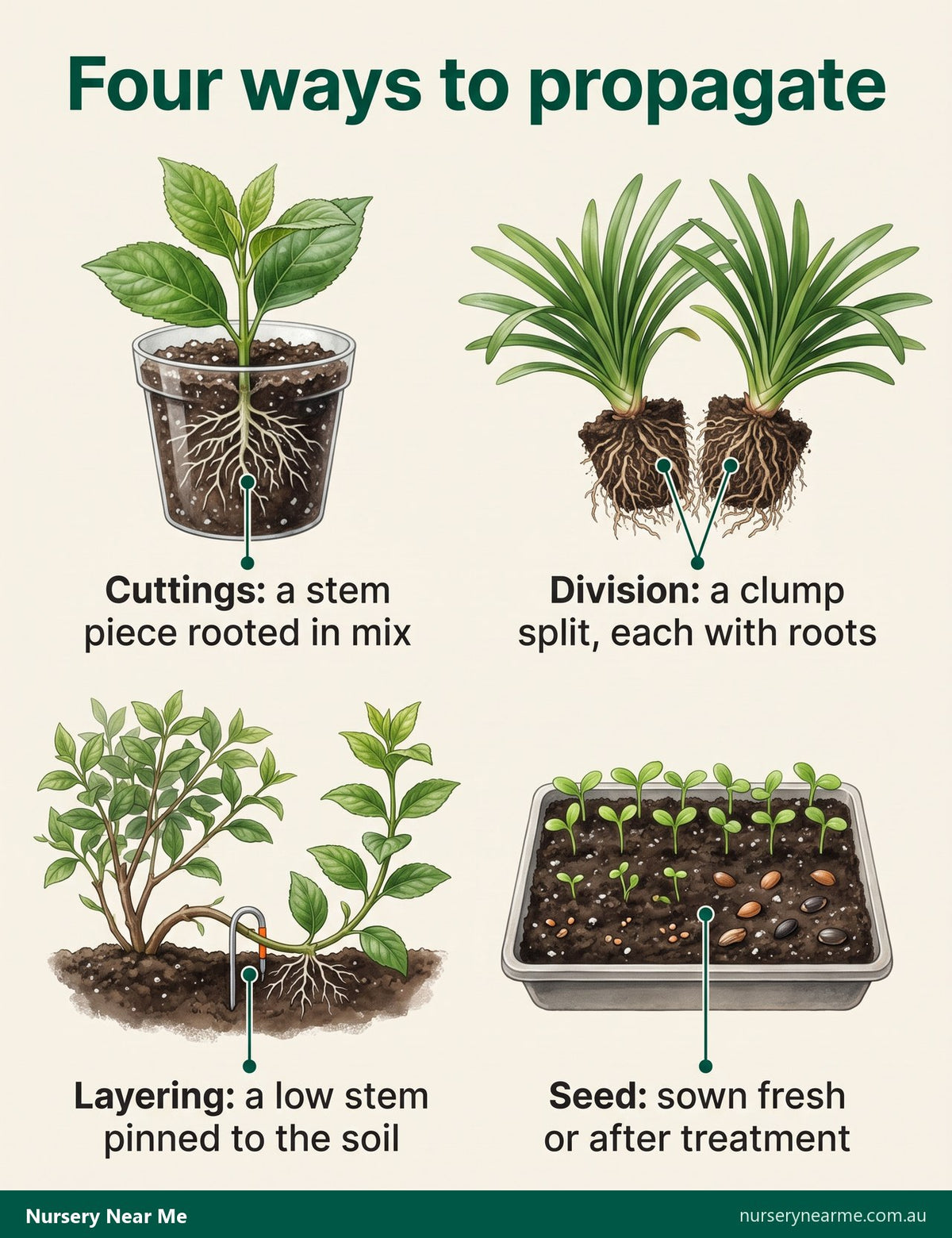
| Method | What it is | Suits |
|---|---|---|
| Cuttings | A piece of stem, sometimes a leaf, rooted in mix | Most shrubs, perennials, succulents and indoor plants |
| Division | A clump split into pieces, each with roots | Clumping plants: lomandra, dianella, agapanthus, clivia, liriope, grasses |
| Layering | A low stem pinned to the soil until it roots, then cut free | Plants slow to root from cuttings: magnolia, camellia, climbers |
| Seed | Sown fresh or after treatment | Annuals, vegetables, many natives and trees. Seedlings vary from the parent |
Grafting, joining a chosen variety onto another plant's roots, is how most fruit trees, roses and many grevilleas are produced. It takes practice, and grafted plants are usually better bought.
How to take a stem cutting
- Choose healthy growth with no flowers, in the cool of the morning.
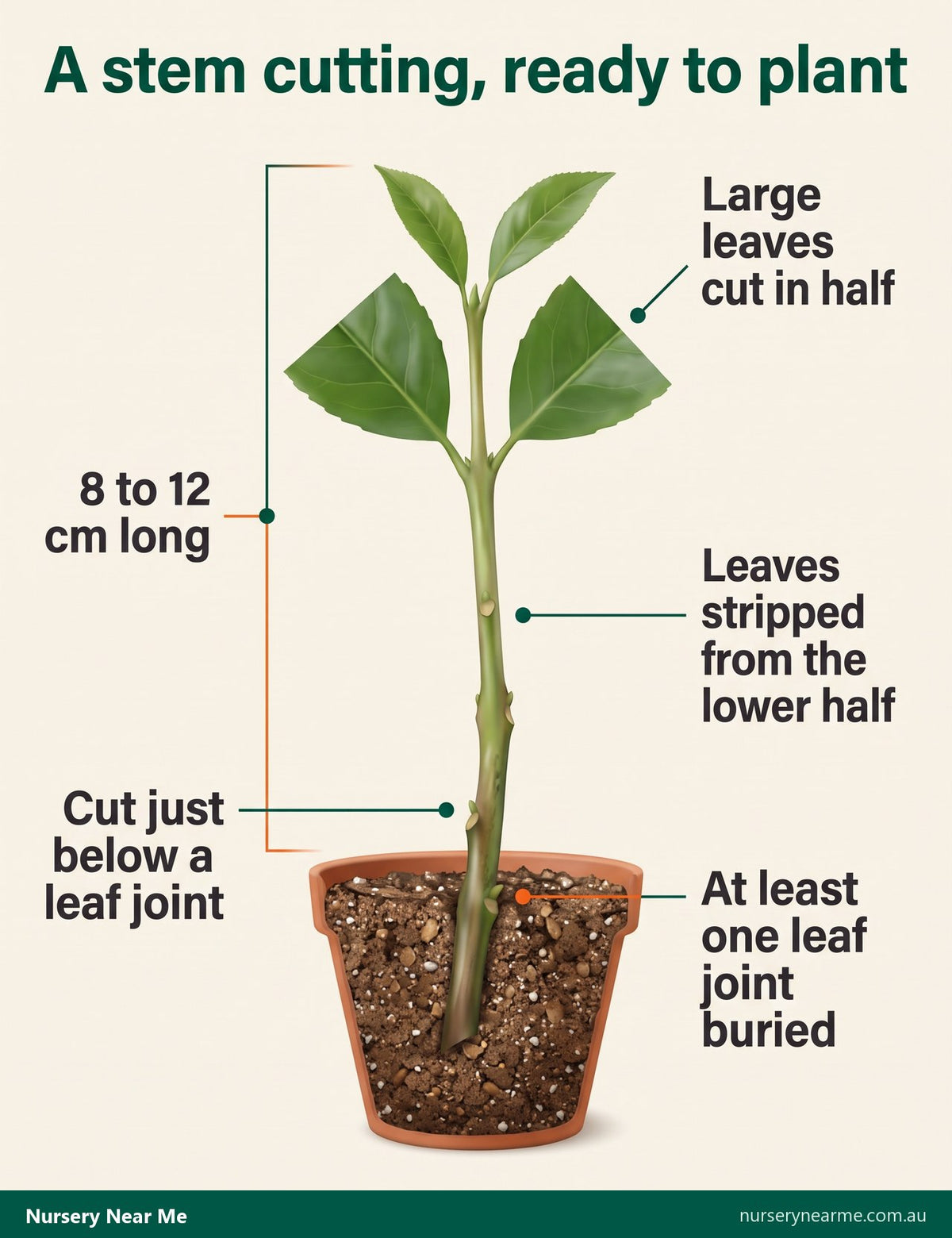
- Cut a piece 8 to 12 cm long just below a leaf joint, with clean, sharp secateurs.
- Strip the leaves from the lower half, and cut large leaves in half so the cutting loses less water.
- Dip the base in rooting hormone if you have it. It helps with woody plants and is not needed for soft ones.
- Push the cutting into propagating mix, or a blend of perlite and coir, so that at least one leaf joint is buried. Firm it and water it in.
- Keep it humid and bright, out of direct sun. A clear bag or a propagating dome over the pot does the job.
- Wait. Soft cuttings root in two to four weeks and woody ones in six to twelve. New leaves, and resistance to a light tug, mean roots have formed.
- Pot on into ordinary potting mix and harden the plant off in part shade before planting out. Our guide on how to repot your plants covers that step.
Timing propagation for the Australian seasons
| Method | Best time |
|---|---|
| Softwood cuttings | Spring to early summer, from fresh new growth |
| Semi hardwood cuttings | Late summer to autumn: the main window for most shrubs |
| Hardwood cuttings | Winter, from dormant deciduous wood |
| Division | Autumn or early spring, avoiding summer heat |
| Seed | Spring in the south; autumn and the dry season in the north |
| Layering | Spring, so roots form over the warm months |
In Brisbane and northern Australia, avoid striking cuttings at the peak of the wet season, when constant humidity rots the mix faster than roots can form. In Perth and Adelaide the risk runs the other way: cuttings dry out, so a covered setup matters more. Spring propagation fits with the jobs in our spring planting guide.
Conditions that decide success
- Warmth at the base matters more than air temperature. Cuttings root far faster with bottom heat, which is why autumn cuttings in Melbourne benefit from a heat mat and Brisbane ones often do not need it.
- Humidity around the leaves without water sitting on them.
- A clean, free draining mix. Garden soil carries disease.
- Bright shade, not direct sun. Sun will cook a covered tray within the hour.
- Clean tools and pots. Wipe blades with methylated spirits between plants.
Easy plants to start with
- Succulents. A leaf or a stem piece left to dry for a few days, then set on barely damp mix.
- Pothos. Stem pieces with a node root in a glass of water or in mix.
- Spider plant. Pot up the plantlets on the runners.
- Hydrangeas. Softwood cuttings in late spring, or hardwood cuttings in winter.
- Lavender and rosemary. Semi hardwood cuttings in autumn.
- Geraniums. Stem cuttings at almost any time in mild weather.
Propagating Australian natives
- Semi hardwood cuttings in autumn work for most grevilleas, callistemons, westringias and melaleucas.
- Use a very free draining mix. Natives rot readily in a mix that holds water.
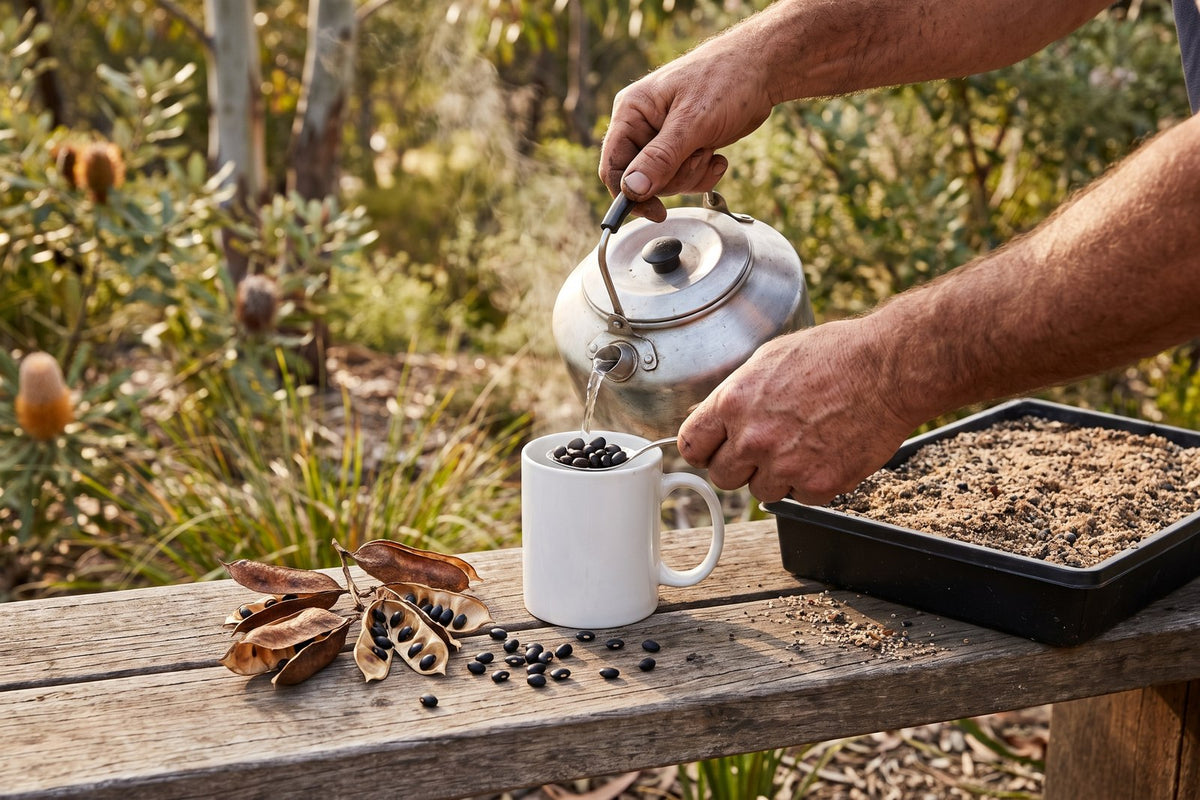
- Many native seeds need treatment before they will germinate. Wattle seed needs a soak in near boiling water to crack its hard coat, and many species from fire prone country respond to smoke; smoke water is sold for the purpose.
- Western Australian grevilleas are usually grafted for the east coast, because on their own roots they die of root rot in humid summers.
- Keep high phosphorus fertilisers away from native seedlings.
Common mistakes
- Overwatering. The mix should be damp, not wet. Wet mix leads straight to root rot.
- Taking cuttings in flower. Flowering shoots root poorly. Remove buds.
- Tugging to check. Leave cuttings alone for the first few weeks.
- Too much sun, too soon. Harden new plants off over a couple of weeks.
Plant Breeder's Rights
Many varieties sold in nurseries are protected by Plant Breeder's Rights, shown as PBR on the label. Protected varieties may not be propagated for sale or other commercial use without the breeder's permission. Species plants and older, unprotected varieties are free to propagate.
When to buy and not propagate
Propagation is satisfying, but it is not always the right call. Grafted plants, and anything you need at a usable size this season, are better bought. A hedge is the clearest example. One parent plant can supply a whole run of cuttings, as our guide to creating a great hedge notes, but raising fifty cuttings to a metre takes years, while a fast growing variety planted at the right size gives a screen in two or three. Trees are the same, and our guide to the best time to plant a tree in Australia explains when to get them in the ground.
Common questions
What is the easiest way to propagate plants?
Stem cuttings for most shrubs and indoor plants, and division for clumping plants.
When is the best time to take cuttings in Australia?
Late summer to autumn for most shrubs, spring for soft new growth, and winter for deciduous plants.
Do I need rooting hormone?
Not for soft, easy plants. It improves the strike rate of woody cuttings.
Can I root cuttings in water?
Soft plants such as pothos, coleus and mint, yes. Move them into mix once the roots are a few centimetres long.
Ready to plant?
Stock up on potting mixes and fertilisers and tools and accessories for the propagating bench, or skip ahead with affordable tubestock. Every plant is backed by our 30 day satisfaction guarantee.


