

Randia fitzalanii, the native gardenia, is a small Queensland rainforest tree with large glossy leaves and strongly scented white flowers. In warm gardens it makes a dense evergreen screen that needs very little clipping. This guide covers where it grows, how to space and plant it for privacy, how to look after it, and how it compares with the other screening plants.
Introduction to Randia fitzalanii
Randia fitzalanii comes from the coastal rainforests of north Queensland. Botanists now call it Atractocarpus fitzalanii, and it is also sold as brown gardenia and yellow mangosteen. In a garden it grows 4 to 6 metres tall and about 3 metres wide, with a naturally neat, rounded shape. The leaves are dark, glossy and up to 20 cm long, with a pale midrib.
Not a true gardenia
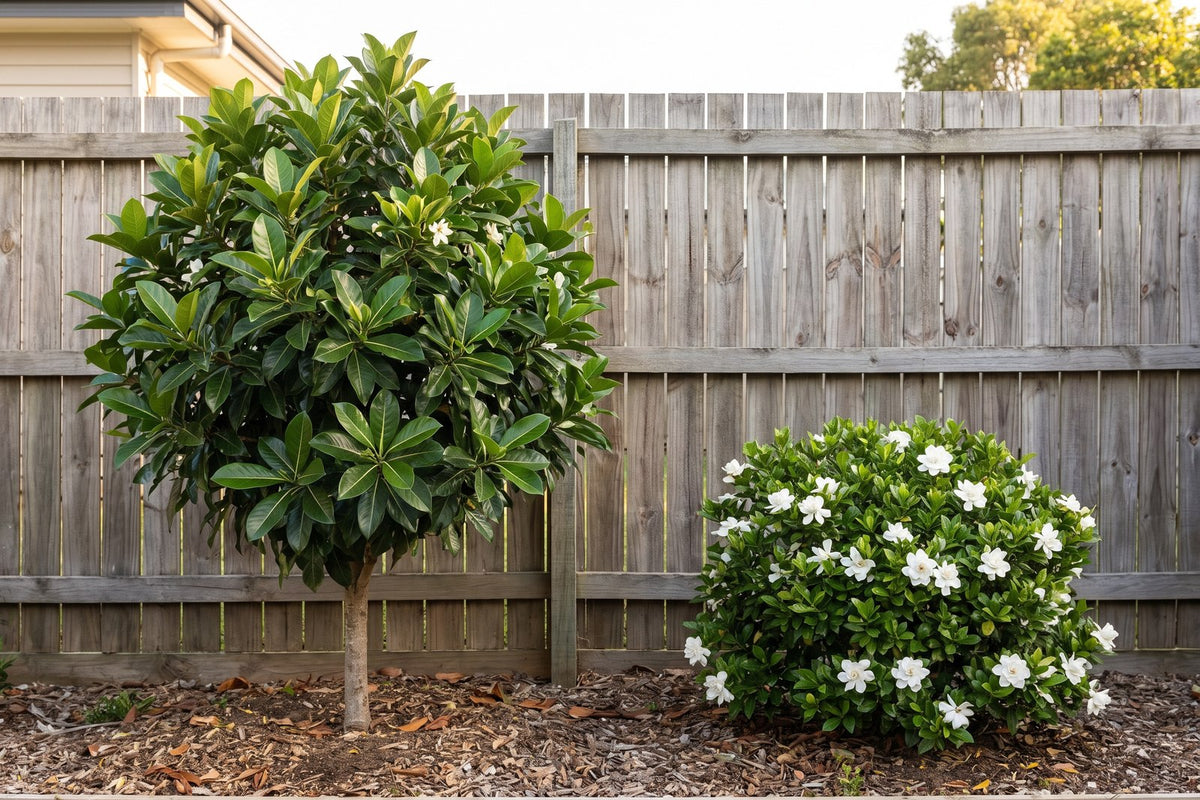
Despite the common name, it belongs to a different genus from the shrub gardenias, though both sit in the coffee family. The difference matters in the garden. Native gardenia does not suffer the yellowing that makes shrub gardenias hard work in alkaline soil, and it grows into a small tree, not a metre high shrub. If you like gardenia perfume and have given up on keeping the shrubs healthy, this is the plant to try. The shrubs have their own guide: growing gardenias.
Where native gardenia grows in Australia
| Location | How it performs |
|---|---|
| Cairns, Townsville and tropical Queensland | Home ground. Fastest growth and heaviest flowering |
| Brisbane, Gold and Sunshine Coasts | Very good, and widely planted for screening |
| Northern NSW | Very good in frost free positions |
| Sydney | Workable in a warm, sheltered spot; slower |
| Perth | Needs irrigation and shelter; not its preferred climate |
| Melbourne, Adelaide, Canberra | Too cold. Frost damages it badly |
It suits much the same range as the tree in our guide to using Elaeocarpus eumundi for tall screen trees.
Ideal growing conditions
- Light. Full sun to part shade. In the wild it grows under and beside taller rainforest trees, so it takes more shade than most screening plants, which is useful along a shaded boundary.
- Soil. Moist, well drained and rich in organic matter. It dislikes both waterlogging and long dry spells.
- Climate. Warm and frost free. Protect young plants from cold wind.
Using it as a privacy screen

- Spacing. Plant 1.5 to 2 metres apart for a dense screen, and 4 metres apart for separate small trees.
- Timing. Plant in spring or early autumn.
- Soil preparation. Dig compost through the whole row, not single holes, and plant on a low mound in clay.
- Depth. Set the plant at the same depth as in the pot.
- Mulch. Spread mulch 75 mm deep, kept clear of the trunks.
- Water. Water deeply once or twice a week through the first two summers.
Expect steady, moderate growth. If speed matters most, compare it with the plants in our guide to fast growing screening trees for privacy, or buy larger plants to start with. Against a fence, it works well with the layered planting in our guide to softening fences and retaining walls.
The flowers and fruit
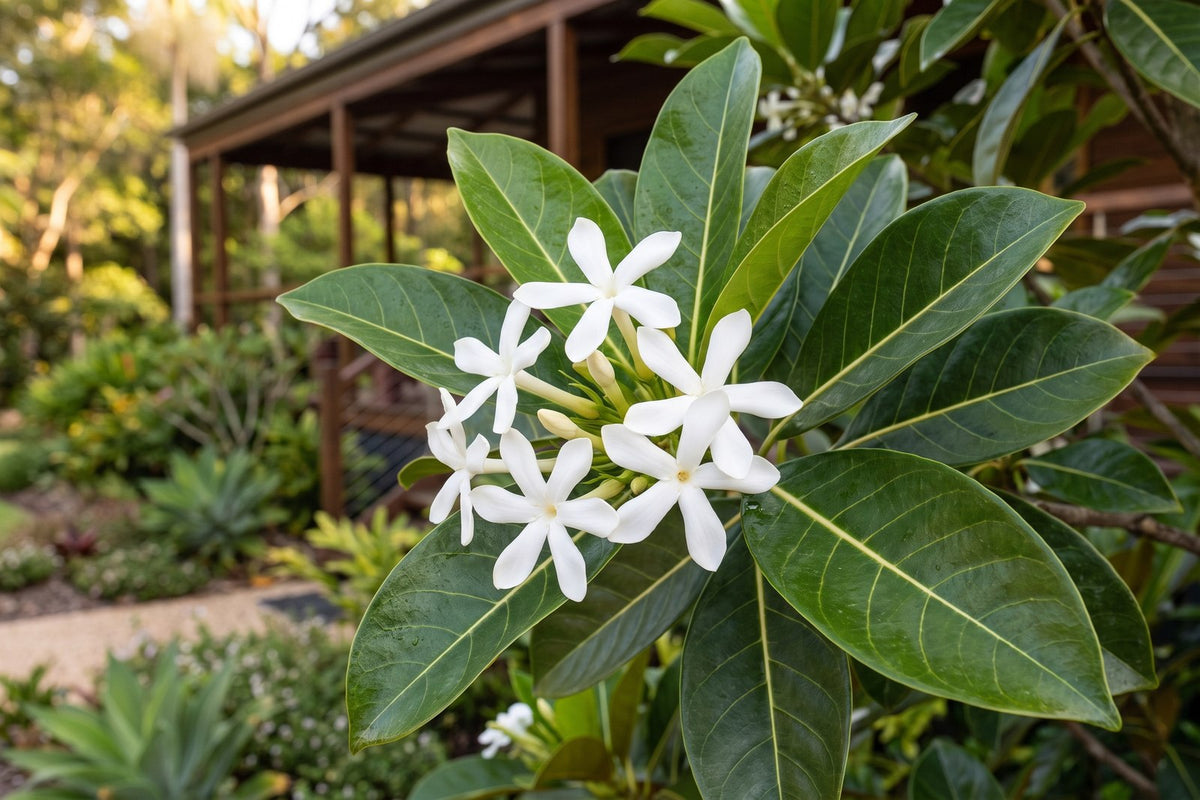
White, star shaped flowers appear in spring and early summer and are strongly perfumed, most of all in the evening. That makes it one of the better scented natives to plant near a door, a window or an outdoor seat. Male and female flowers are carried on separate plants. Female plants follow with round yellow fruit, which birds eat and which is edible when ripe.
Watering, feeding and pruning
- Water. Once established, water deeply every week or two in dry weather. The large leaves droop and scorch when it is left dry.
- Feed. Apply a slow release fertiliser for native plants in early spring, and top up the mulch.
- Prune. Trim lightly after flowering to shape. It is naturally tidy and does not need the regular clipping of a formal hedge. Tip prune young plants to thicken them low down.
- Pests. Watch for scale and sooty mould in still, shaded positions, and treat with horticultural oil.
Compared with the alternatives
| Plant | How native gardenia compares |
|---|---|
| Lilly pilly | Slower, but needs far less clipping, and it has the perfume |
| Murraya | A native with no weed concerns and better shade tolerance; less suited to a tight formal hedge |
| Eumundi quandong | Shorter and broader, so better under eaves and power lines |
Common mistakes to avoid
- Planting it where frost settles.
- Letting it dry out in the first two summers.
- Planting in heavy soil that stays wet.
- Shearing it hard like a box hedge. Light shaping keeps the flowers and the natural form.
Common questions
How tall does Randia fitzalanii grow?
4 to 6 metres tall and about 3 metres wide in a garden. It can be kept lower with light pruning.
How fast does native gardenia grow?
Moderately. It is slower than lilly pilly, and faster in tropical and subtropical gardens than further south.
How far apart should I plant native gardenia for a hedge?
1.5 to 2 metres apart for a dense screen.
Does native gardenia grow in shade?
Yes. It takes part shade well, with slightly more open growth and fewer flowers than in sun.
Ready to plant?
A row of native gardenia gives you a screen, a small shade tree and a perfumed flowering plant in one. Compare it with the rest of our privacy and screening range, or browse our Australian natives collection for companions that suit the same conditions.


