


December is the month the garden has to look after itself for a while, and the month that tests whether spring's work was done. In the north the wet season opens and the storms arrive; in the south the first real heat does. Across the country it is the month of fruit fly, hibiscus beetle, armyworm and frangipani rust, and the month most people go away. This checklist sets out the jobs by region and in order: the watering and holiday set-up first, then the pests, the pruning and the few things still worth planting.
Quick facts
| Region | What December is like | The one job that matters most |
|---|---|---|
| Subtropical and tropical coast | Hot, humid, storms most weeks; the wet season starting | Drainage, staking and fungal watch; plant only tropical foliage |
| Warm temperate (Sydney, Perth, Adelaide) | Hot days, first heatwaves, dry in the west and south | Deep watering and mulch; set the garden up for the holidays |
| Cool temperate (Melbourne, Hobart, Canberra, tablelands) | Warm, variable, a late planting window still open with water | Water new plantings, tip-prune hedges, plant the last shrubs |
| Inland and arid | Very hot and dry; water restrictions in places | Mulch, shade, dawn watering, nothing new in the ground |
Water, mulch and going away
Shift to deep, infrequent watering. Beds twice a week to a spade's depth, pots every day in the heat, lawns once or twice a week. Water at dawn. If the soil beads water or stays dry under a damp surface, apply a wetting agent such as Plant Doctor's liquid soil wetter before you go any further. Our watering guide has the method.
Top up the mulch to 75 mm wherever storms or spring growth have thinned it, using a coarse grade such as hardwood mulch that lets rain through and stays put.
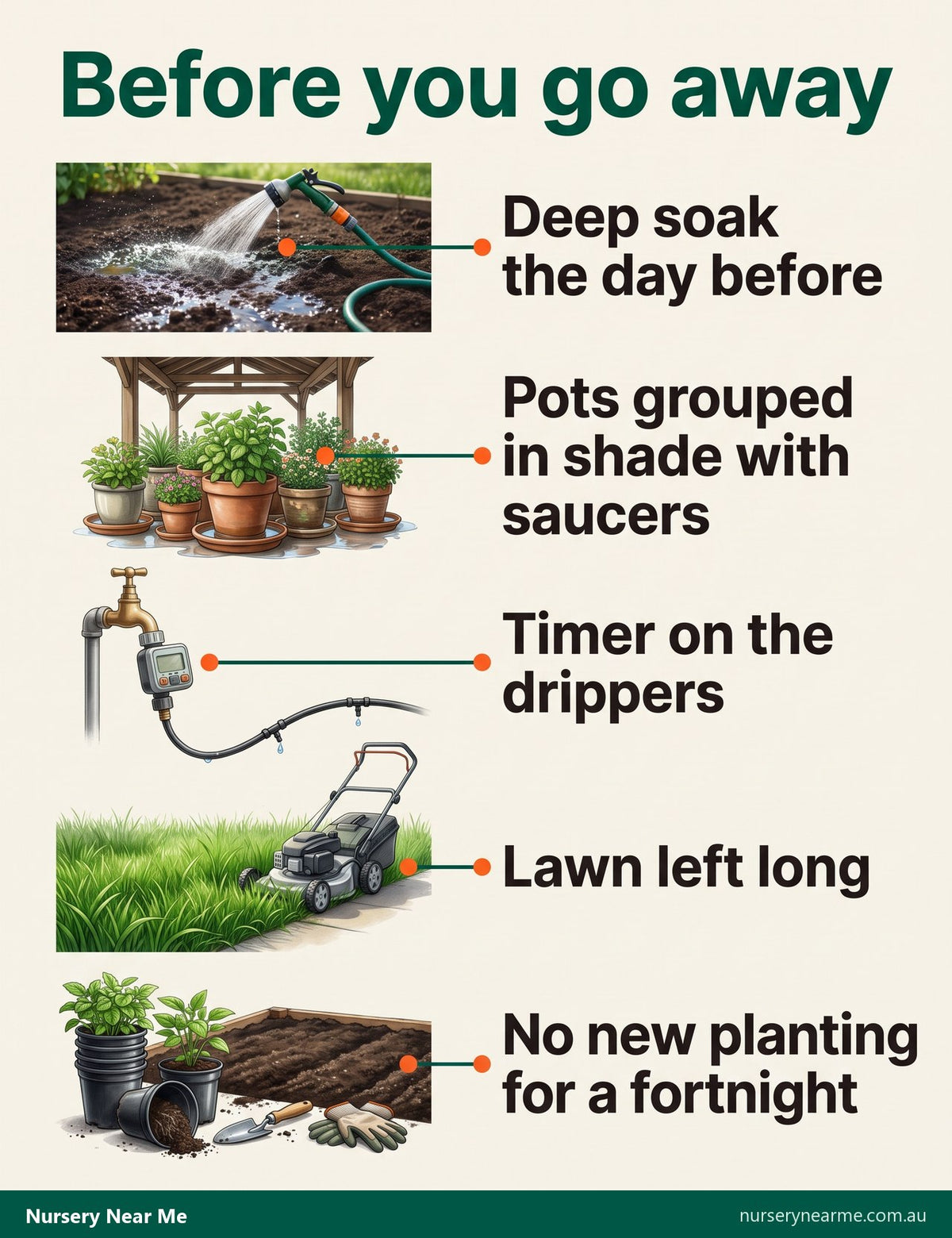
Set the garden up for the holidays. If you will be away, do it in the week before you leave: a deep soak of everything, pots grouped in shade with saucers, a timer on the drippers if you have them, the lawn left long, and a neighbour briefed on the three plants that matter most. Hold off on any new planting in the fortnight before a trip.
Be ready for the first heatwave. Shade cloth and pegs on hand, pots off hot paving, and a deep watering the evening before a forecast 38-degree day. Our guide to getting plants through a heatwave sets out the 24 hours before and the week after.
Storms and the wet season
Check the stakes on every tree planted in the last year and loosen ties that have cut in. Two stakes with a soft, slightly loose tie let the trunk thicken; one tight stake snaps in a gust.
Get water away from the beds. On the clay soils of the subtropical coast, a December storm leaves beds waterlogged for days and that is when murraya, viburnum and lavender die. Clear the downpipe outlets, cut a shallow drain if a bed floods, and plan to mound that bed in autumn. Our guide to fixing a waterlogged garden covers the longer-term options.
Thin top-heavy canopies before the storms rather than after, lifting low branches and opening the crown so wind passes through. The full list is in our guide to preparing the garden for storm season.
Pests and diseases to watch

Fruit fly. In full swing across the warm half of the country. Keep baits and traps going, bag or net ripening fruit, and pick up every dropped fruit daily and bin it; a fallen mango or peach under a tree is next month's flies.
Hibiscus beetle. Small black beetles in the flowers and buds of hibiscus, which drop before they open. Shake the flowers over a bucket of soapy water in the morning, pick up fallen buds, and keep the plant watered so it sets more.
Frangipani rust. Orange powder on the undersides of frangipani leaves from mid-December in humid areas, then yellow leaves dropping early. It does not kill the tree. Rake up and bin fallen leaves, avoid overhead watering, and accept an early leaf drop; our frangipani care guide covers it.
Lawn armyworm and curl grub. Brown patches that spread overnight, or turf that lifts like a carpet. Treat early and feed the lawn to recover; the lawn care range has what you need.
Spider mite in the heat. Pale, stippled leaves with fine webbing beneath, on anything in a hot dry spot. Hose the undersides of the leaves, mulch, and water more. For the longer list, read our guide to identifying common pests and diseases.
Fungal leaf spots in the wet. Normal on the subtropical coast in December. Improve airflow, water the soil not the leaves, and rake up fallen foliage. Most plants grow through it.
Pruning and feeding
Tip-prune the hedges after each flush, taking a third of the new growth and no more; lilly pillies, murraya, viburnum and photinia all thicken on this routine and a light trim now removes the soft growth psyllid lays its eggs in. Do not clip in the days before a heatwave. The routine is in our guide to creating a great hedge.
Prune jacarandas and spring shrubs as they finish. Jacarandas need little, but a crossing or low branch can come off now; azaleas, may bush and spring-flowering natives are trimmed straight after flowering. Leave crepe myrtles, hibiscus, frangipanis and gardenias alone; they are about to flower or already are.
Deadhead. Spent spikes off agapanthus and kangaroo paws, spent heads off roses and hydrangeas, so the plants keep producing instead of setting seed.
Feed lightly, if at all. A seaweed tonic every fortnight through summer suits most plants. Hold full-strength fertiliser until the weather cools, and never feed in a heatwave or a drought.
What to plant in December
In the north: tropical foliage only. Gingers, heliconias, cordylines, palms and shell ginger go in happily through the wet; our ornamental gingers guide covers them. Hedges, trees and most shrubs wait for March.
In the south: still possible with water. Melbourne, Hobart and Canberra gardens can plant hedges and shrubs through December if someone is home to water them twice a week. Lilly Pilly Resilience planted now in Melbourne is established by autumn. Plant in the evening, water the hole first, mulch the same day, and shade for the first week.
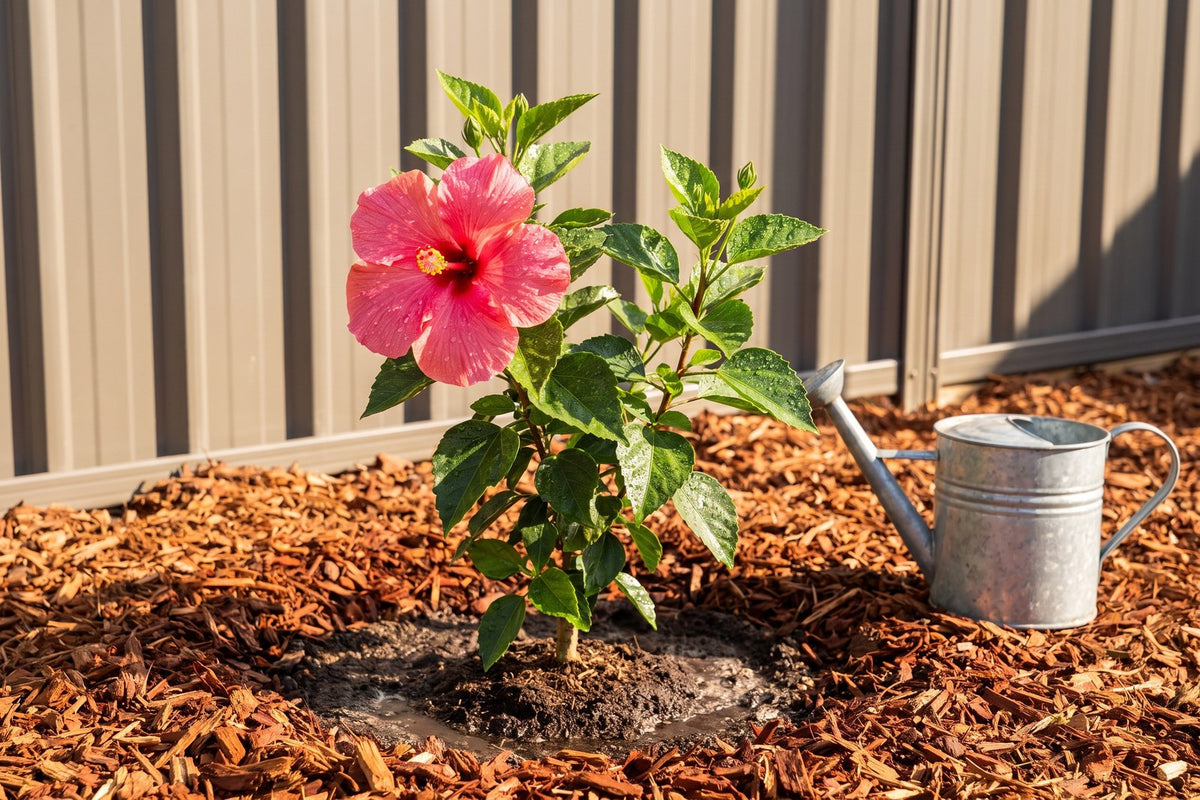
Everywhere: summer flowers and pots. Hibiscus, frangipani and crepe myrtle are in flower and establish in warm soil; potted colour for the entertaining season goes in now. Repot only if the plant is root-bound and you can keep it in shade for a fortnight after.
Gifts. A plant arrives better than most presents, and an eGift card arrives instantly for the people who prefer to choose; our guide to plant gifts for Christmas has ideas by budget.
Common problems and fixes
Hydrangeas and maples wilting every afternoon. They are on the wrong side of the house. Shade them for now and move them to morning sun in autumn.
Buds dropping off gardenias and hibiscus. Irregular watering or a sudden hot spell. Water deeply and consistently, mulch, and the next set holds.
Citrus dropping small fruit. Normal December thinning; the tree sheds what it cannot carry. Water deeply and do not feed until it has finished.
Mulch washing out in storms. Too fine, too deep or on a slope. Use a coarse grade at 75 mm and plant a groundcover on any bank.
Frequently asked questions
Is it too late to plant a hedge in December?
In the cool south, no, as long as it is watered twice a week through its first summer. In Sydney, Perth and Adelaide it is possible with daily water for the first fortnight but easier in March. In Brisbane and north, wait for autumn; the exception is tropical foliage, which goes in now.
How do I keep the garden alive while I am away?
Deep-water everything the day before you leave, group pots in shade with saucers of water, mulch every bed, set a timer on any irrigation, leave the lawn long, and ask a neighbour to water the pots and the newest plantings twice a week. Do not plant anything new in the fortnight before a trip.
What is the orange powder under my frangipani leaves?
Frangipani rust, a fungus that appears in humid weather from December. It causes early leaf drop but does not kill the tree. Rake up and bin fallen leaves, keep water off the foliage, and the tree refoliates in spring.
Should I fertilise in December?
Lightly at most: a seaweed tonic every fortnight suits most plants through summer. Save the full-strength feed for autumn, and never fertilise a plant in a heatwave or one that is drought-stressed.
When can I prune my jacaranda?
Straight after flowering, in December, and only lightly: a crossing branch, a low limb, a broken one. Jacarandas pruned hard throw ugly vertical shoots, so the less you cut the better the tree.
Ready to plant?
The soil wetters and mulch range cover the first jobs on this list. For the north's planting window, browse tropical plants; for the south, hedging and screening plants. Our summer maintenance guide carries the routine through to March.


