


A heatwave does most of its damage on the first afternoon. A plant that goes into a 40-degree day with dry soil around its roots wilts by two o'clock, scorches by four, and may not recover; the same plant watered deeply the evening before comes through with a few burnt leaves. Almost everything in this guide comes back to that: the preparation in the 24 hours before the heat matters more than anything you do during it. Here is what to do before, during and after, for beds, pots, lawns, hedges and the plants you put in last month.
Quick facts
| Detail | Heatwave rules |
|---|---|
| The day before | Water everything deeply in the evening; move pots to afternoon shade; put shade cloth over new plantings |
| During | Water at dawn, not midday; do not fertilise, prune, repot or plant; do not cut off scorched leaves |
| After | Water deeply again, wait for new growth before pruning damage, replace what died with a tougher choice |
| Most at risk | Plants put in within the last three months, pots, hydrangeas, maples, camellias, ferns, anything on a west wall, and lawns cut short |
| Least at risk | Established natives, succulents, olives, westringia, lomandra, and anything with a thick mulch over damp soil |
The day before: water, shade, mulch
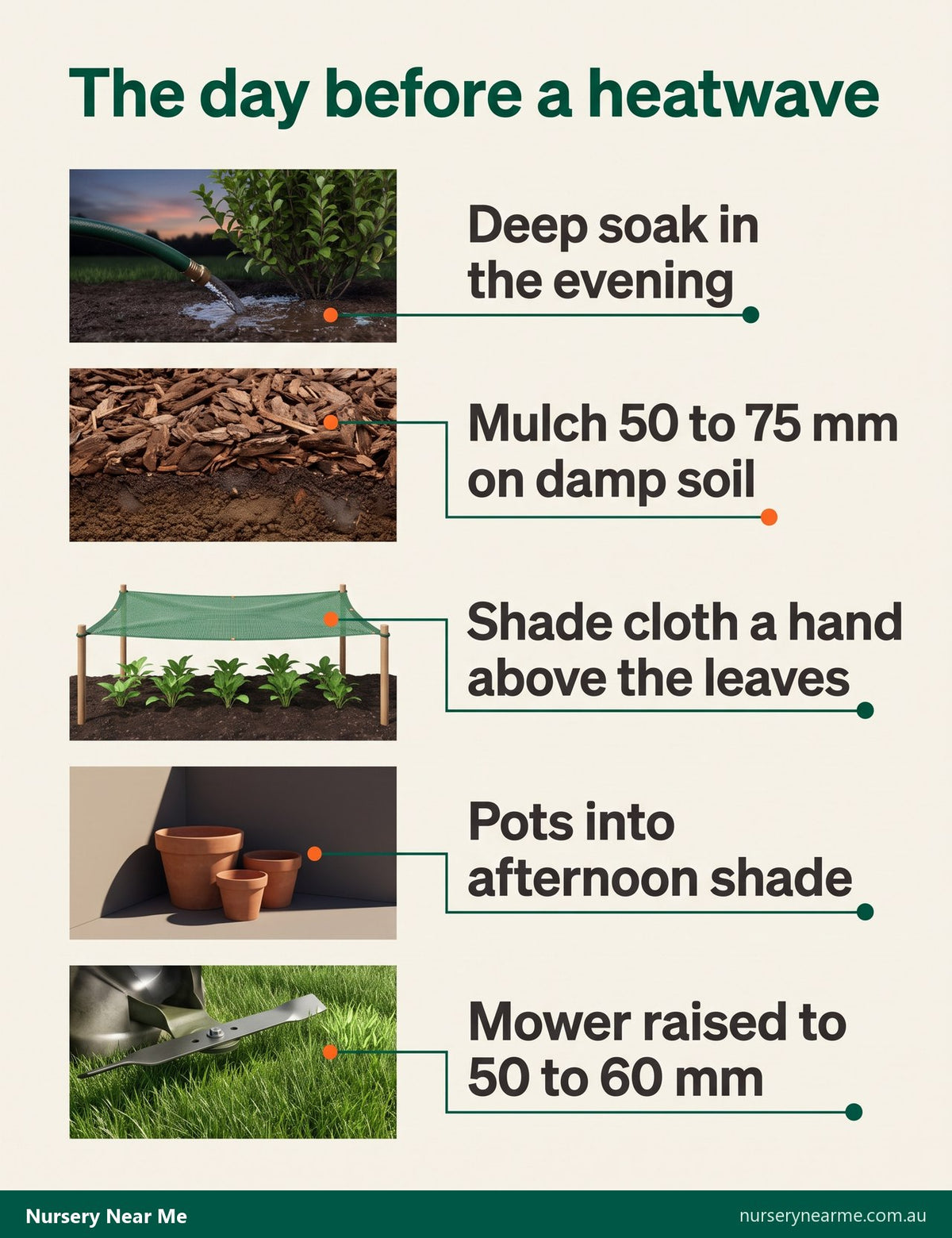
Water deeply, not often. A thorough soak the evening before the heat, to a spade's depth, is worth more than a sprinkle every morning for a week. Deep water reaches the roots; a sprinkle wets the mulch and evaporates. Check the soil is actually taking it: push a trowel in an hour after watering. If the surface is damp and the soil beneath is dry, the bed has gone water repellent, which happens to sand, old potting mix and long-mulched beds. Apply a wetting agent such as Plant Doctor's soil wetter granules, water it in, and the water will go where it should. Our guide to watering properly covers the method.
Mulch anything bare. A 50 to 75 mm layer of coarse mulch such as hardwood mulch over damp soil can keep the root zone ten degrees cooler than bare ground. Lay it the day before, on soil you have just watered, and keep it clear of the stems. If the beds were done in spring, as our guide to mulching before summer recommends, top up the thin spots.
Shade the vulnerable. Thirty to fifty per cent shade cloth over new plantings, seedlings, hydrangeas and ferns, pegged a hand's width above the foliage so air moves. An old sheet on stakes does the job for a day or two. Do not drape plastic over anything.
Move the pots. Pots on hot paving or against a west wall cook from the sides. Shift them into afternoon shade, group them so they shade each other, stand the smallest ones in saucers of water for the worst afternoons, and water each pot until it runs through. Terracotta dries fastest; slip it inside a larger pot if you can.
Raise the mower. A lawn cut short burns; one left at 50 to 60 mm shades its own roots. Do not mow during the heat at all.
During the heat
Water at dawn. Early morning water is in the soil before the sun gets to it. Midday watering is not harmful, despite the old warning about droplets burning leaves, but most of it evaporates; it is only worth doing to rescue a plant that is collapsing. Evening water is fine in a heatwave, when the leaves dry within minutes.
Leave the plant alone. No fertiliser, which draws water out of stressed roots. No pruning, which removes the leaves shading the ones beneath. No repotting or transplanting. No planting, unless you can water it morning and evening for a fortnight.
Mist the ferns and the tender things. A light hosing of the foliage in the late afternoon cools ferns, hydrangeas, maples and new plantings; it does not replace deep watering at the roots.
Watch for wilting that does not recover. Afternoon wilt that straightens by morning is normal. A plant still flat at dawn is dry at the root ball, which on a new planting can be a dry pot-shaped core inside damp soil. Soak it with a slow trickle for twenty minutes and shade it.
Keep the hedge trimmer in the shed. A hedge clipped just before a heatwave has its soft inner foliage exposed and burns badly. Trim a week after the heat has passed, not before.
After the heatwave
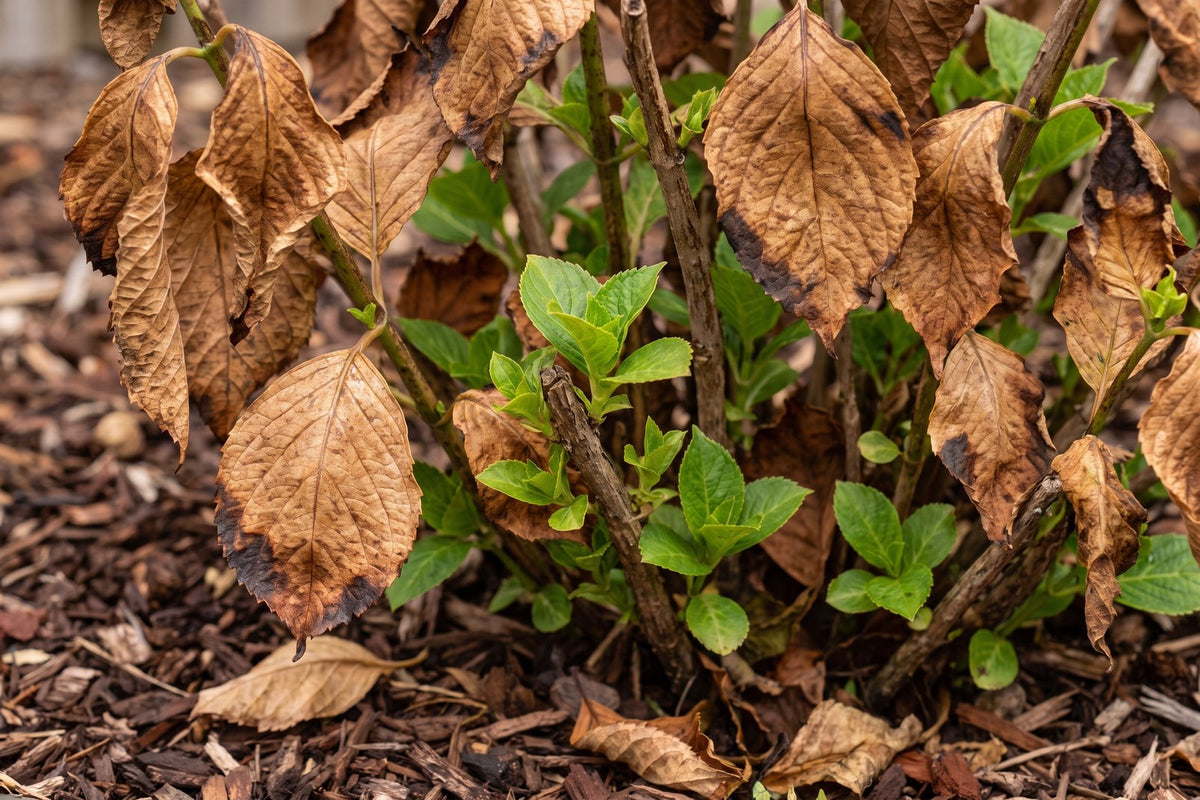
Water deeply again the evening the heat breaks, then return to the normal routine.
Do not cut the scorch off. Brown, crisped leaves look terrible but they still shade the growth beneath and the plant has not finished with them. Leave the damage for a fortnight until you can see where new growth is coming from, then prune to just above it. A plant cut back hard straight after a heatwave is often cut back into dead wood. Our guide to leaf burn explains how to read the damage.
Feed later, lightly. A seaweed tonic once the plant is growing again helps; a full-strength fertiliser within a week of the heat does not.
Replace what died with something tougher. A plant that died in its first heatwave was probably the wrong plant for that spot. A west-facing bed in Brisbane or Adelaide wants the plants in our guide to drought-tolerant plants, not hydrangeas.
The plants that cope, and the ones that do not
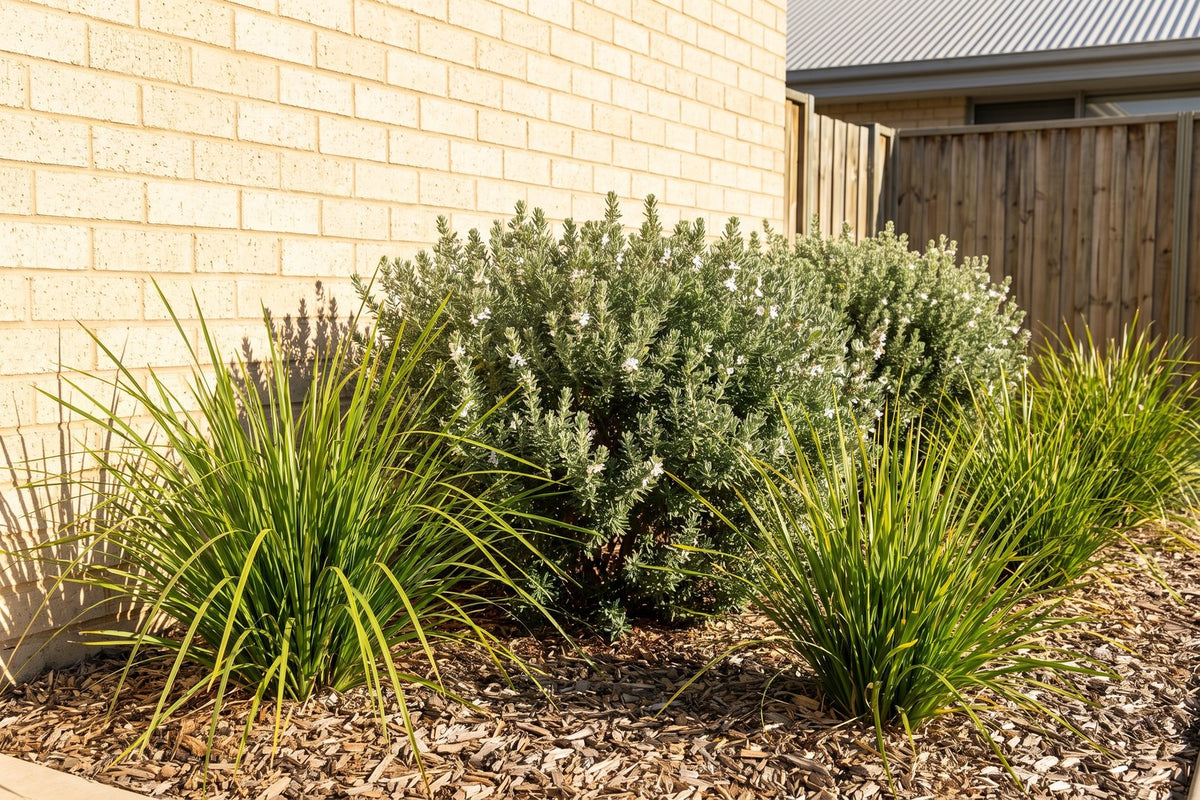
Built for it. Established natives such as coastal rosemary, lomandra, dianella and most grevilleas; olives, rosemary and lavender in the south; succulents and agaves; crepe myrtles and frangipanis, which flower through the heat; and any shrub that has had two summers in the ground with mulch over it. The drought-tolerant collection is built from this list, and our waterwise garden guide shows how to put it together.
Need help. Hydrangeas, Japanese maples, camellias, azaleas, ferns, fuchsias and most indoor plants moved outside. They want morning sun only, shade cloth in a heatwave, and deep water the night before. Grow them on the east or south side of the house, or in pots you can move, and never on a west wall.
Most at risk whatever the species. Anything planted in the last three months, because its roots are still in the shape of the pot. Water these daily through a heatwave, shade them, and accept some leaf loss.
Trees as the long-term fix. A deciduous shade tree on the west side of the house or the bed cuts the afternoon temperature in its shadow by several degrees and does it every summer; our guide to shade trees that cut cooling bills covers placement.
Common problems and fixes
Scorched patches on one side of a shrub. Reflected heat from a wall, a fence or paving. Shade the surface, mulch to the base, and over time plant a tougher outer layer on that side.
Pots that dry out in half a day. The mix has gone water repellent or the roots have filled the pot. Soak the pot in a bucket until the bubbles stop, add a wetting agent, and repot once the weather cools.
Flower and fruit drop. Normal in extreme heat on citrus, tomatoes, capsicums and many flowering shrubs; the plant sheds what it cannot support. Keep the water up and the next flush sets.
Lawn going brown in patches. Heat stress on a short-cut or compacted lawn, or dry patches from water-repellent soil. Raise the mowing height, apply a wetting agent, water deeply and infrequently, and it comes back in autumn.
Brown hedge tops after a trim. Clipped too close to the heat. Water deeply, leave it, and let the next flush cover the damage; trim a week after the next heatwave rather than before it.
Frequently asked questions
Should I water in the middle of the day during a heatwave?
Only to rescue a plant that is collapsing. Water droplets do not burn leaves, but midday water mostly evaporates before it reaches the roots. Deep watering at dawn, or in the evening before the heat, does far more.
Should I cut off the burnt leaves?
Not straight away. Burnt leaves shade the growth beneath them and the plant has not finished drawing nutrients from them. Wait a fortnight, see where the new growth comes from, and prune to just above it.
Can I plant during a heatwave?
Better not. A new plant's roots are the shape of the pot and cannot reach water in the surrounding soil. If you must, plant in the evening, water the hole first, mulch, shade it with cloth and water morning and evening for two weeks.
How much water does a pot need in extreme heat?
Until it runs out of the base, every morning, and often again in the evening for small pots. Stand small pots in a saucer of water on the worst afternoons, and move everything you can into shade. A pot in afternoon shade needs half the water of one on hot paving.
What should I do with my lawn?
Raise the mowing height to 50 to 60 mm before the heat and do not mow during it. Water deeply once or twice a week rather than lightly every day, apply a wetting agent if water beads on the surface, and keep off it as much as you can. It will brown in places and recover with the first cool rain.
Ready to plant?
The soil wetters and the mulch range cover the day-before jobs. For a garden that shrugs off the next heatwave, browse drought-tolerant plants and plants for full sun, and read our summer maintenance guide for the routine between the hot spells.


